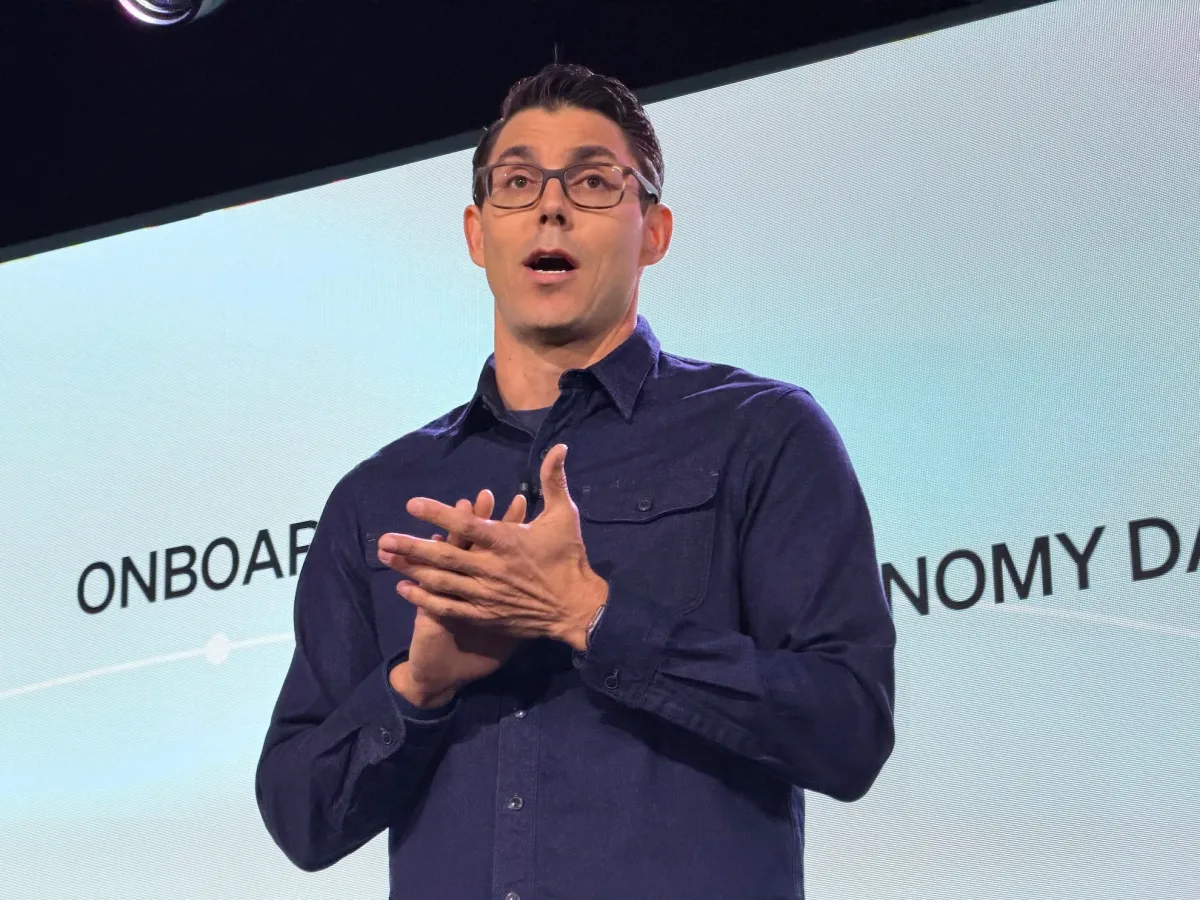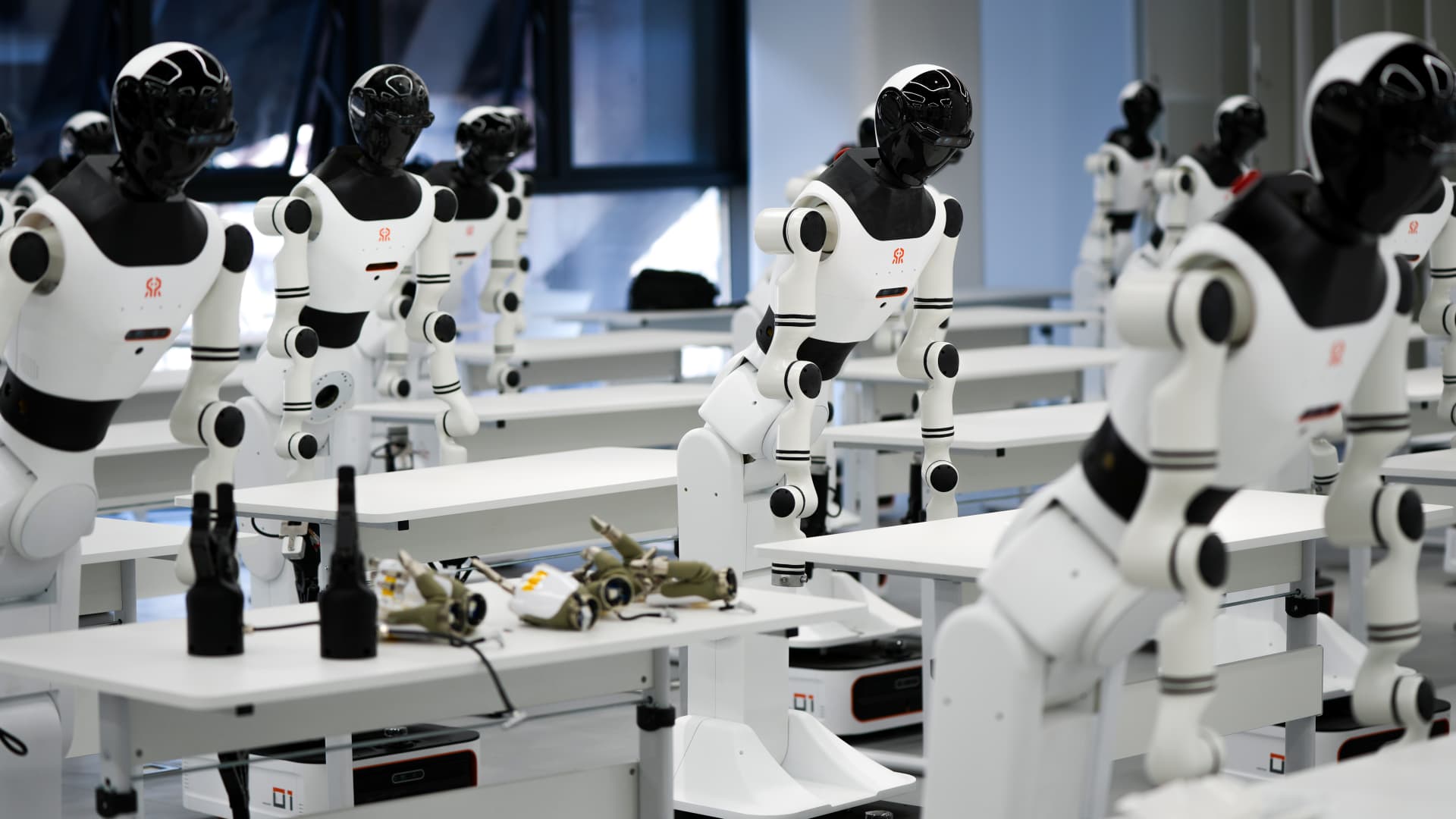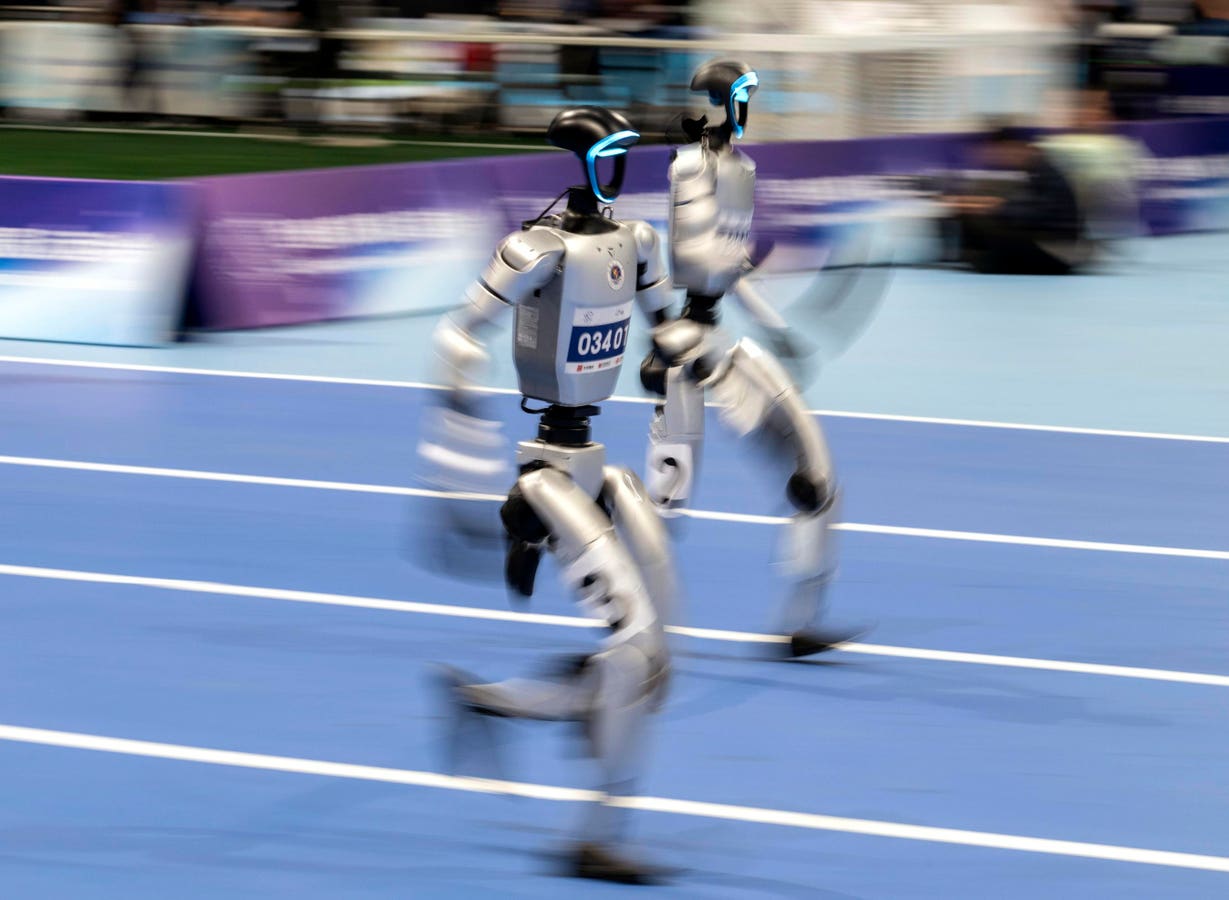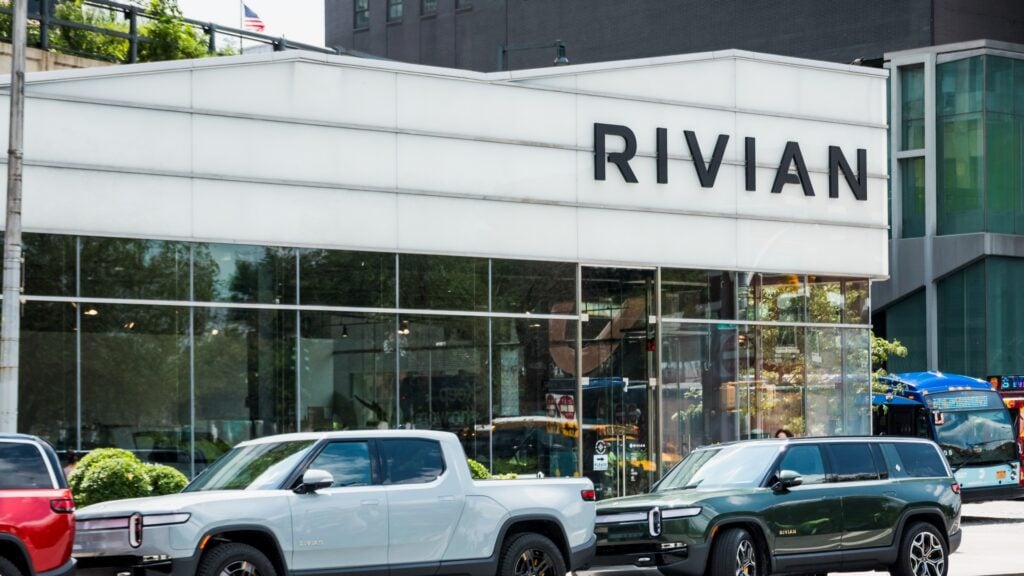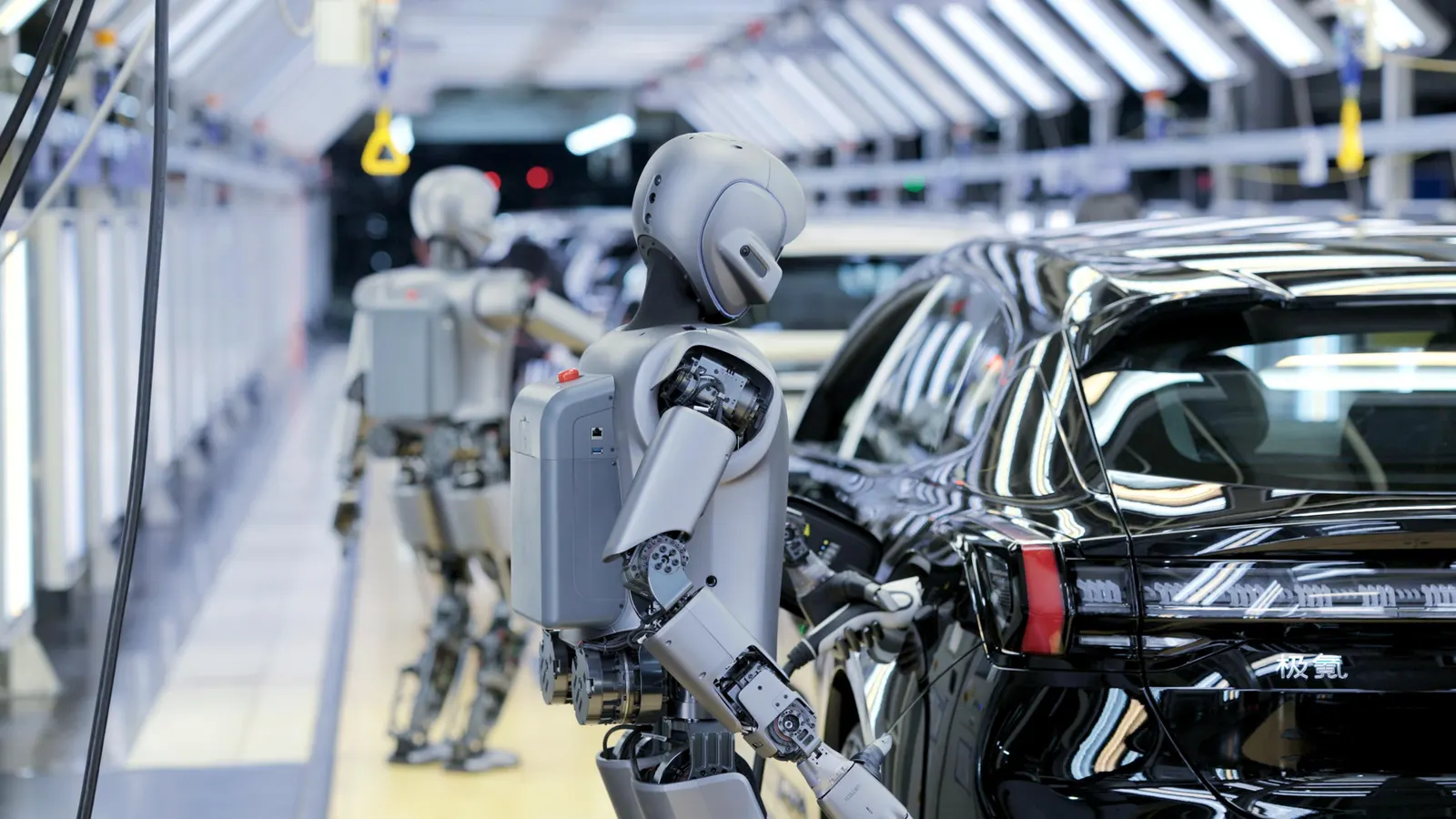
The founder of Rivian Automotive has launched a new company aimed at developing more effective humanoid robots. (Photo by VCG/VCG via Getty Images)VCG via Getty ImagesIn a conversation about humanoid robotics JR Scaringe references Rosie, the robotic house cleaner in the 60’s animated TV show “The Jetsons,” and C3PO and R2D2, the “Star Wars” saga droids, and personal digital assistants Siri and Alexa. R1T trucks on the assembly line at the Rivian electric vehicle plant in Normal, Illinois. (Brian Cassella/Chicago Tribune/Tribune News Service via Getty Images)TNSTo the founder and CEO of electric vehicle company Rivian Automotive Inc. those thoughts are just reflections of how humans dream up technologies to help them get things done, including robots that have a human-like form. While traditional factory robots do their work in confined spaces, programmed to perform a handful of tasks, so-called humanoid robots are more mobile and can be trained using AI to perform myriad tasks.But as Scaringe explained in an interview, it became apparent to Rivian much more needed to be learned about how to best use a loop where AI continuously improves by taking in information from ongoing processes, known as a data flywheel, for training humanoids and better integrating them into factory workflow.MORE FOR YOUHe also noted that humanoids require much different physical environments in order to operate properly.Those were issues that deserved to have a separate company address them, so that’s what Scaringe created. It’s called MIND Robotics with Scaringe as its chairman and Rivian, a “significant partner” and launch customer. MIND Robotics chairman/Rivian Automotive CEO Robert "RJ" Scaringe. (Photo by Patrick T. Fallon / AFP) (Photo by PATRICK T. FALLON/AFP via Getty Images)AFP via Getty Images“These are robots being deployed into manufacturing environments, and a lot of the newer companies in the robotic space that are developing robots with human-like skills, there's a very light understanding of what it takes to integrate into a plant, and so everything from MES integrations to plant logistics, floor design, or floor management to the overall orchestration of activities in the plant that they've been often looked at through the lens of like one task, not an ecosystem, and so that's a really key observation for us in building MIND that we absolutely need to understand how the robots plug into the plant,” he explained. Indeed, the fascination over humanoid robots has created a myopia of sorts on the part of some industries to the necessity of the understanding MIND Robotics was created to discover and create robots based on those discoveries. In other words, humanoids can’t simply be placed on a factory floor and expected to perform correctly pointed out Tal Cohen, founding partner at Israeli innovation hub Drive TLV.Dr. Tal Cohen, founding partner at Israeli innovation hub DRIVE TLV. Aya Wind“The habitat should have also a mechanism that governs it in a way that instills trust in the human side,” pointed out Cohen, in an interview. “So it's like the right places to put humans in the loop and understand how to build the particular measurements and trust. The most important part is basically ability to have a closed loop between the AI and what are the goals of what we want to achieve from the AI.” Global engineering firm Automated Industrial Robotics, or AIR, works with its customers, including Rivian, to provide the engineering necessary to successfully manufacture products for consumers, according to CEO Darragh De Stonndun.It’s not always easy when it comes to humanoid robots.Darragh De Stonndun, CEO, Automated Industrial Robotics.Automated Industrial Robotics“If you ask a robot to say, do what that person’s doing, it’s most likely going to fail, or it is a very nuanced success case," said De Stonndun, in an interview. "So when we look at the deployment of humanoid robots, we need to re-architect our systems to enable that technology to be successful, and that we are doing that at AIR so we are not recreating and trying to make the accuracy of the robot’s fingers good enough to do this. We're understanding what it can do, and then we engineer that as part of the solution.” At AIR’s facility in Rochester Hills, Michigan outside Detroit, a number of stations with conventional robotics are on the floor, although they are set up to demonstrate how humanoids could operate, including wider space between the stations. The floor at Automated Industrial Robotics in Rochester Hills, Michigan is set up with wide spaces to allow mobility for humanoid robots.Ed GarstenAIR president Chris Mcilroy pointed out movable stations that could be brought to a humanoid robot and in the video below, a station where a humanoid could conduct a task for which finding actual humans can be difficult. So much more needs to be learned to create humanoid robots that can not only function in a vehicle factory but, safeguarded against AI hallucinations that could cause production mistakes potentially threatening the safety of the eventual occupants of the car or truck. “It’s sort of incredible how similar some of the dynamics are in developing a robot is to developing an autonomous car,” said Scaringe. “Much the same way that the car can't hallucinate and decide it's going to go left into a golf course, you can't have the robot decide that it's going to decide to just walk over into somebody, or in our case, move into somebody, and so the way we think about building these models is they do have some safety nets, if you will, around them, that's true in the Rivian, where it's very much an AI-based, neural net based approach, but we have created essentially some constraints around how the model is deployed to ensure that it's safe, which is a rules-based set of constraints, and the same thing is happening in the robot as well.” He also points out that vehicle production is unique requiring operations both inside and outside the product in some hard-to-reach places, which would be difficult for robots by themselves without some sort of human collaboration.“I think lots of people are recognizing this unique idiosyncratic element of how cars are built, where you have to climb inside them, but because of all those complexities, we think the importance of making this collaborative is very, very high. I just had a big design review yesterday with some of our operations team, and 50% of it was like the UI design for the robot interacting with the humans, so we're really thinking hard about that.” Investors are stepping up to back MIND Robotics and Scaringe’s quest to produce humanoid robots that are more flexible, capable and accurate. Shortly after MIND was founded in late 2025, it raised a $115 million seed round of funding. That was followed by $500 million, led by Excel and Andreessen Horowitz and just last week, another $400 million, for a total of just over $1 billion, according to Scaringe. “The goal, is to deploy not like 10 robots, and not even like hundreds of robots,” he said, “but ultimately thousands of robots, and then growing to tens of thousands, hundreds of thousands and ultimately millions of robots that we see really playing a key part in enabling the U.S. to have a competitive manufacturing base.”
Rivian Founder’s New Company Aims To Evolve Humanoid Robots
Rivian Automotive founder RJ Scaringe has founded a new company aimed at developing better humanoid robots as the auto industry learns how to use them more effectively.
1,201 words~5 min read