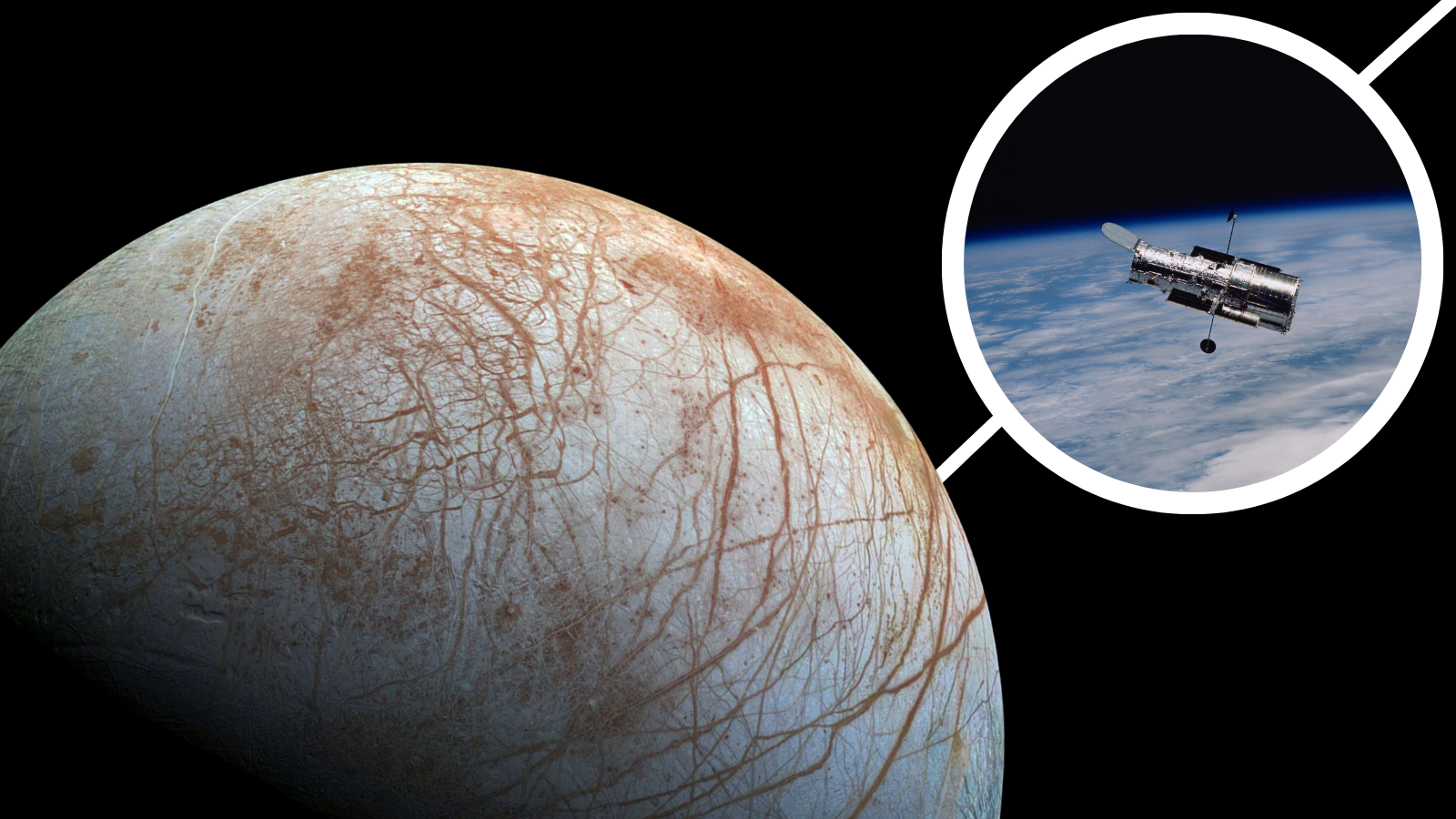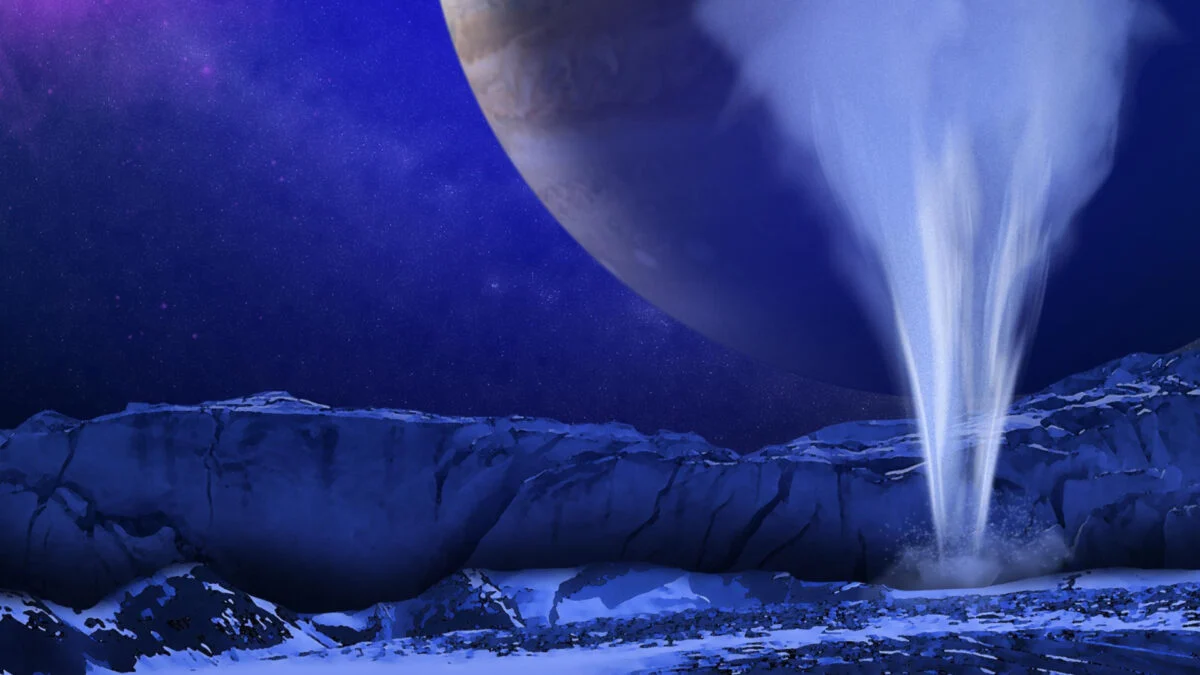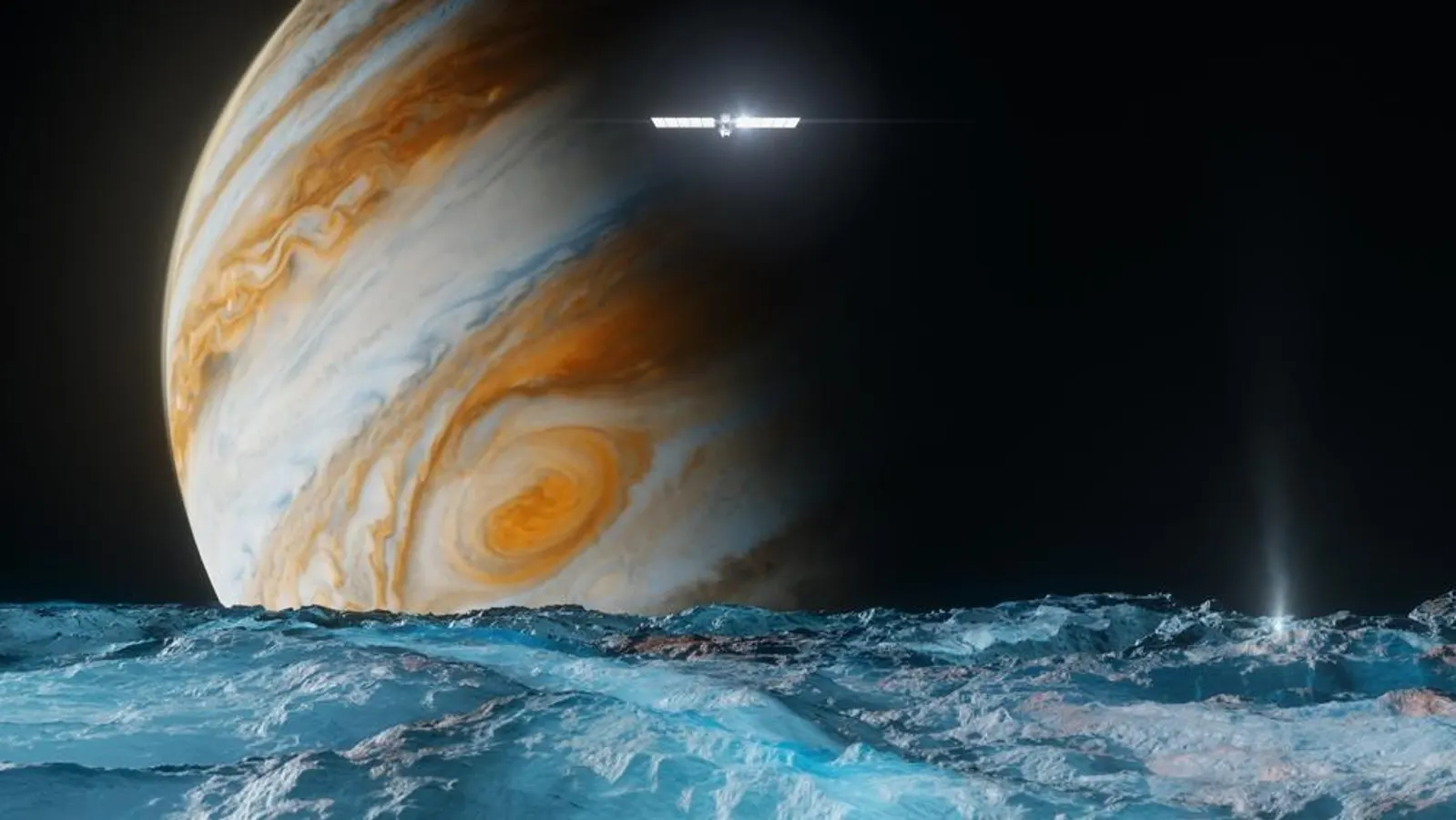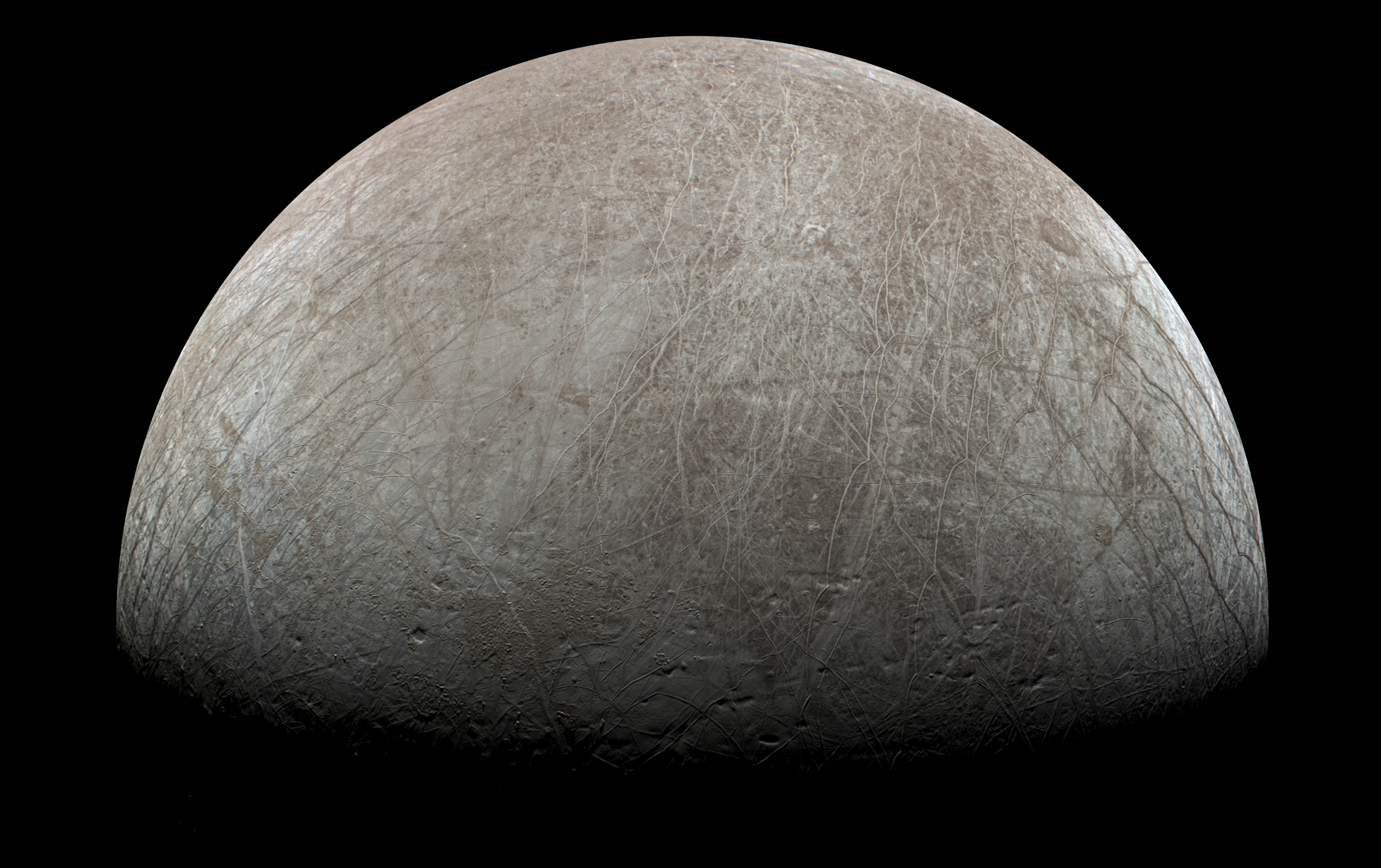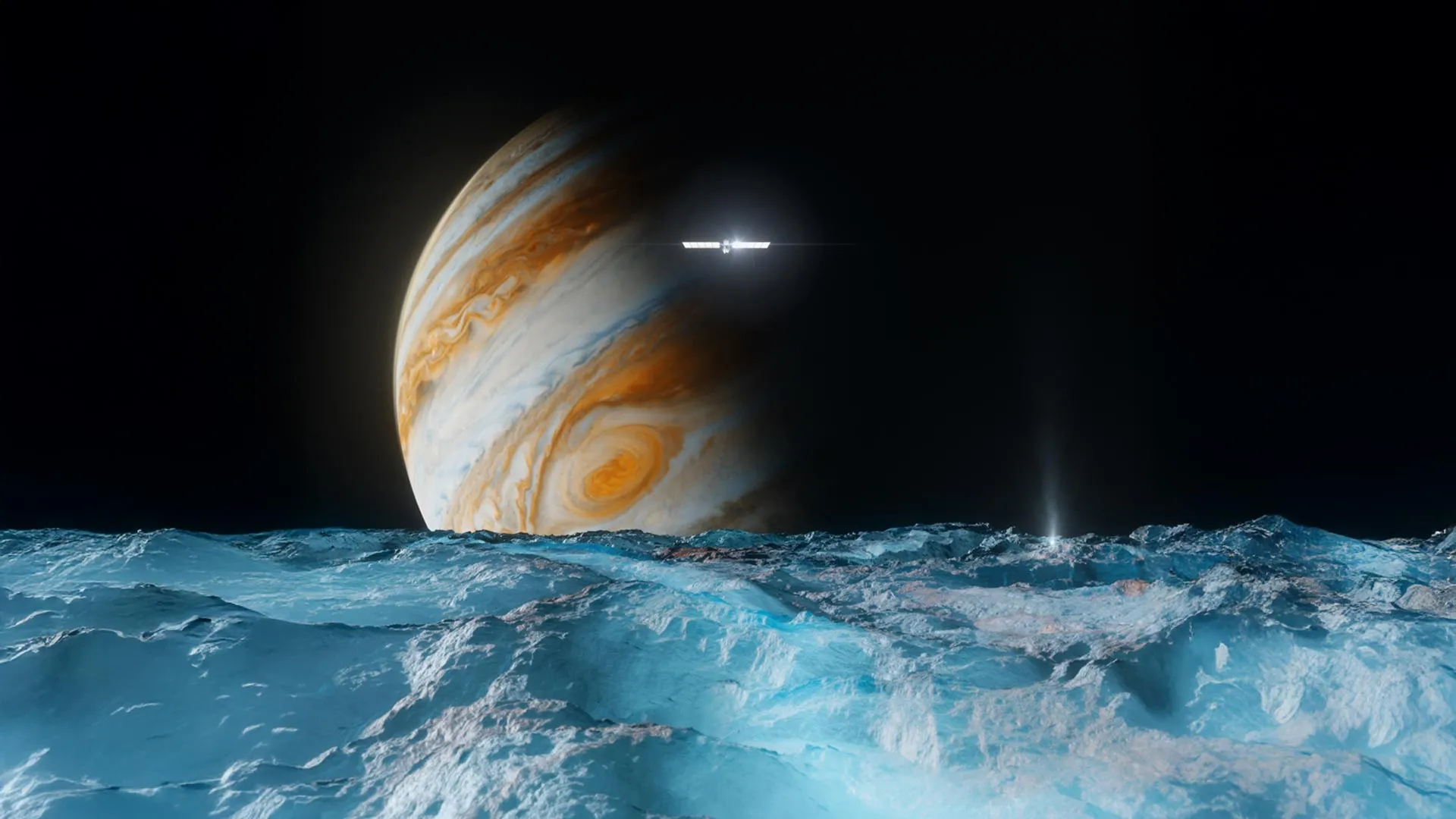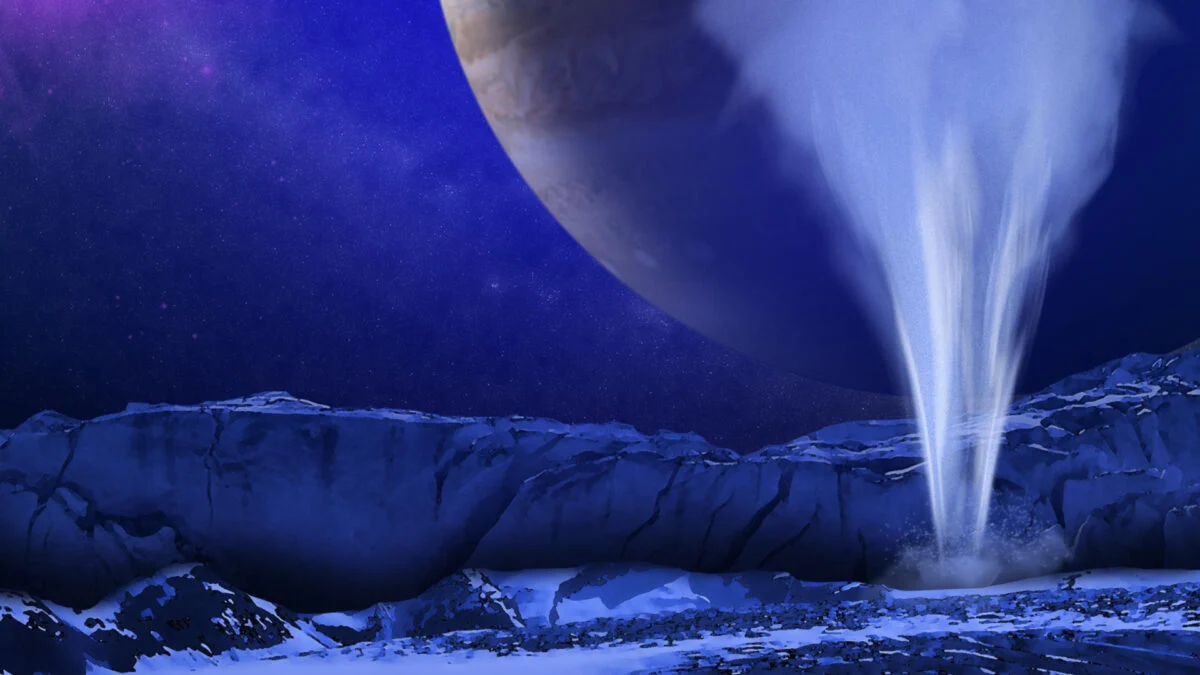
SAN ANTONIO — May 18, 2026 — Looking back at 14 years of Hubble telescope data for Jupiter’s moon Europa has given Southwest Research Institute (SwRI) scientists a better understanding of its tenuous atmosphere. The findings have cast doubt on previous evidence suggesting that the icy moon intermittently discharges faint water plumes from a presumed subsurface ocean.
“The evidence for water vapor plumes on Europa isn’t as strong as we first understood it,” said SwRI’s Dr. Kurt Retherford, one of the authors of a 2014 paper initially making that assertion. Retherford and his colleagues have recently published a new paper reanalyzing the data.
The new paper looks at the last 14 years of data from the Hubble Space Telescope’s Space Telescope Imaging Spectrograph (HST/STIS) focused on Europa’s Lyman-alpha emissions. Lyman-alpha is a specific wavelength of ultraviolet light emitted and scattered by hydrogen atoms. From 2012-2014, the team was pushing the limits of the Hubble telescope’s capabilities.
“One of the difficulties in interpreting the data back then was determining where to place Europa within its context,” Retherford said. “The way Hubble works left some uncertainty in terms of placement relative to the center of the image. If Europa’s placement was off even just by a pixel or two, it could affect how the data gets interpreted.”