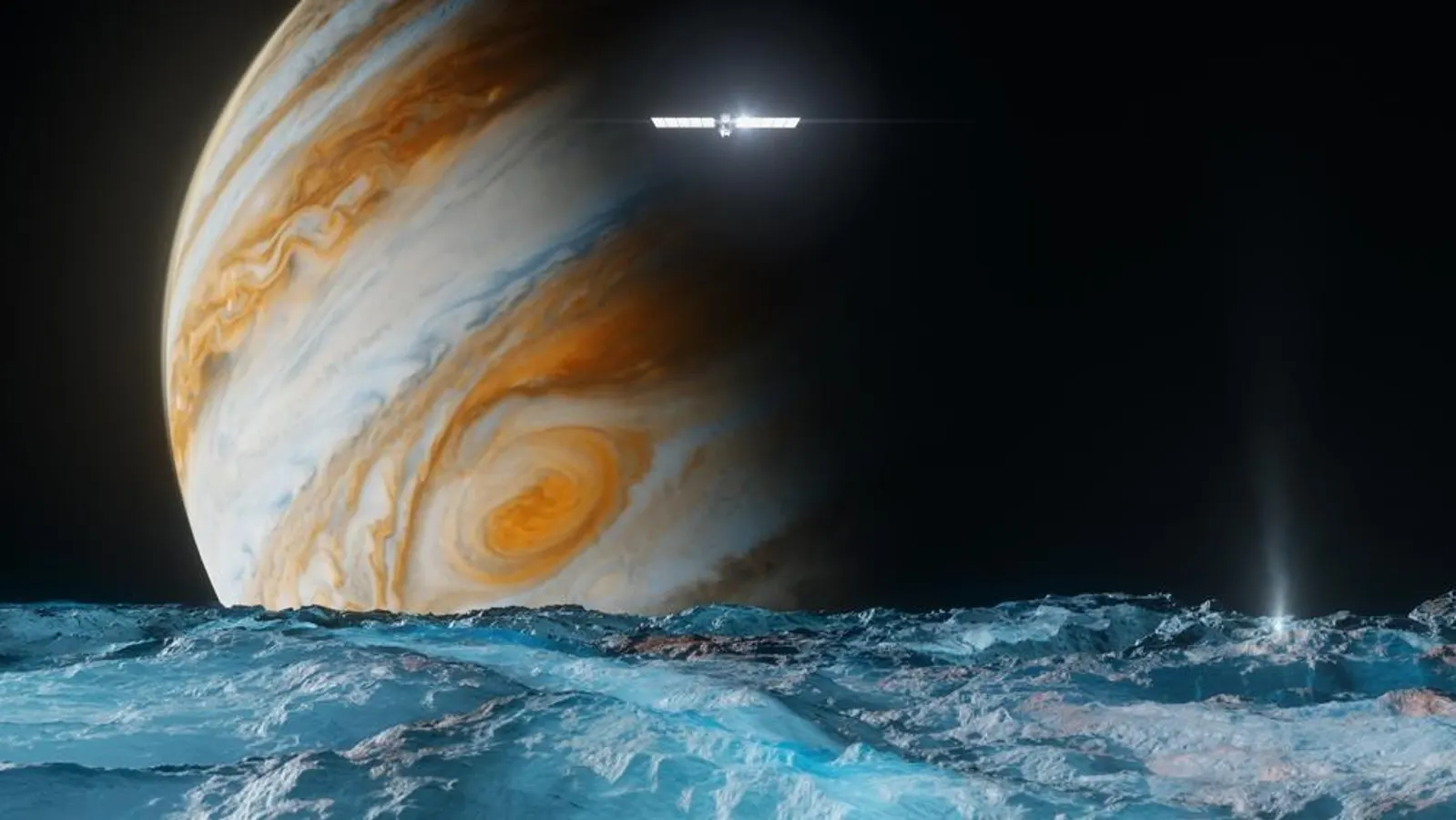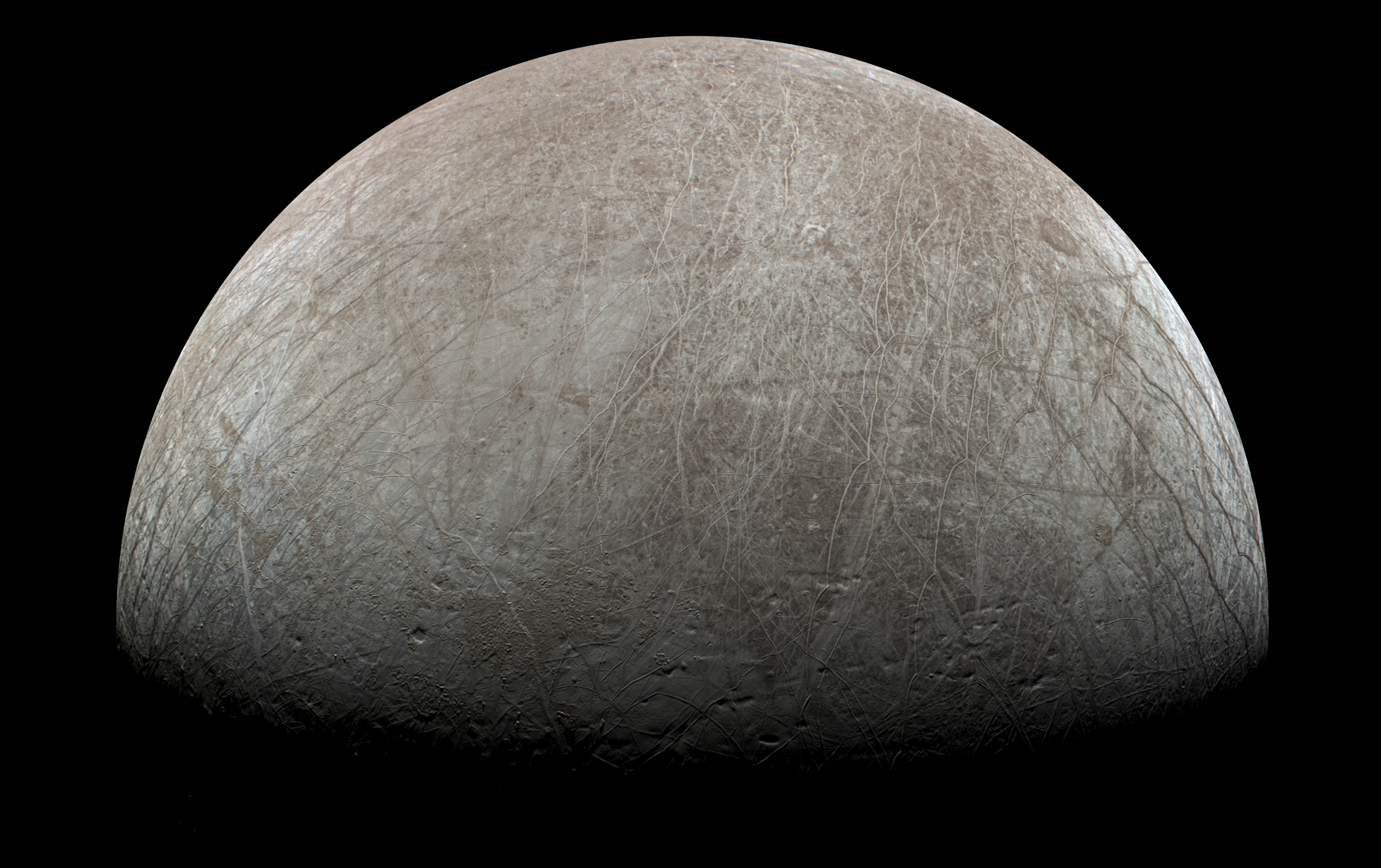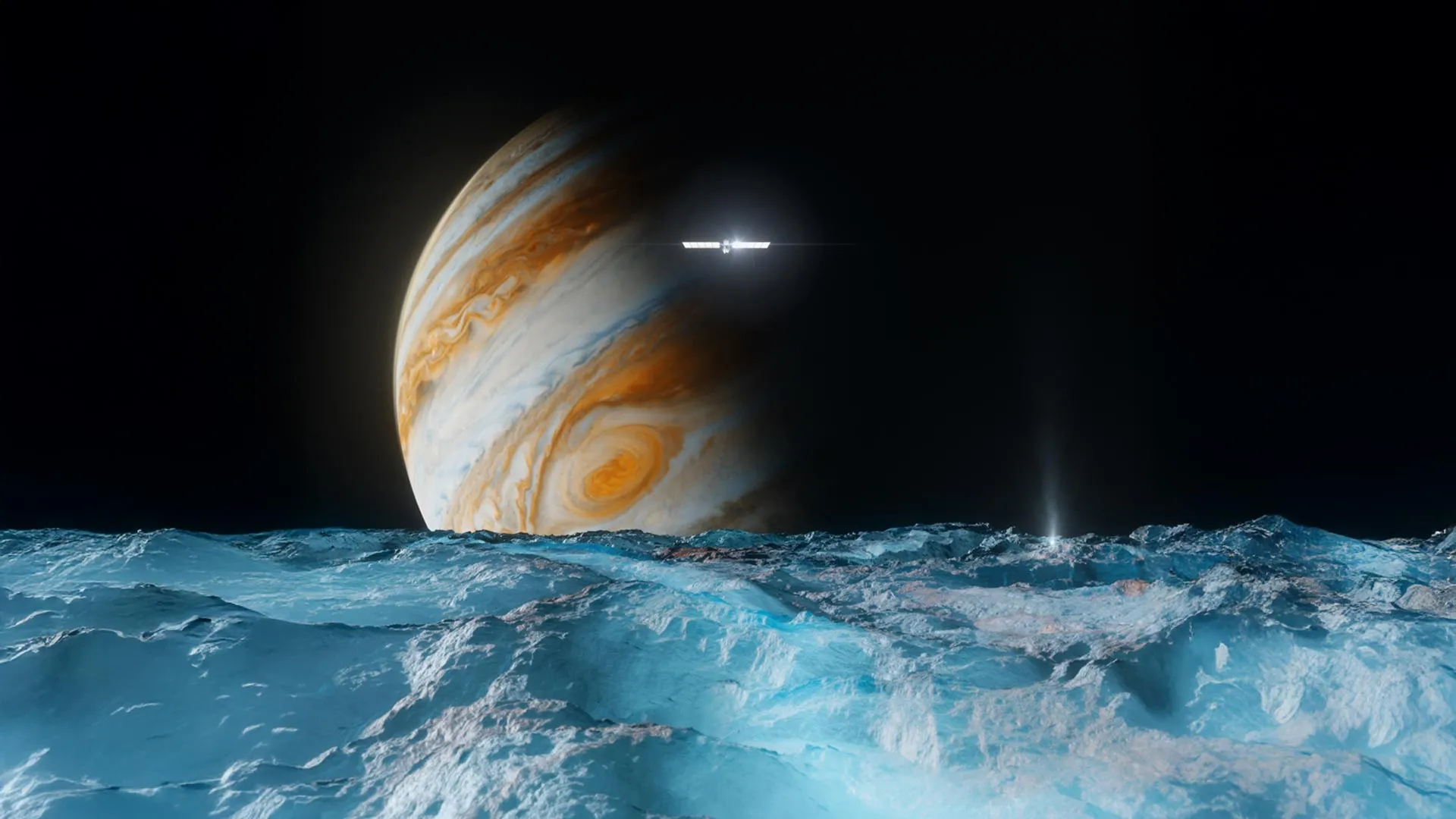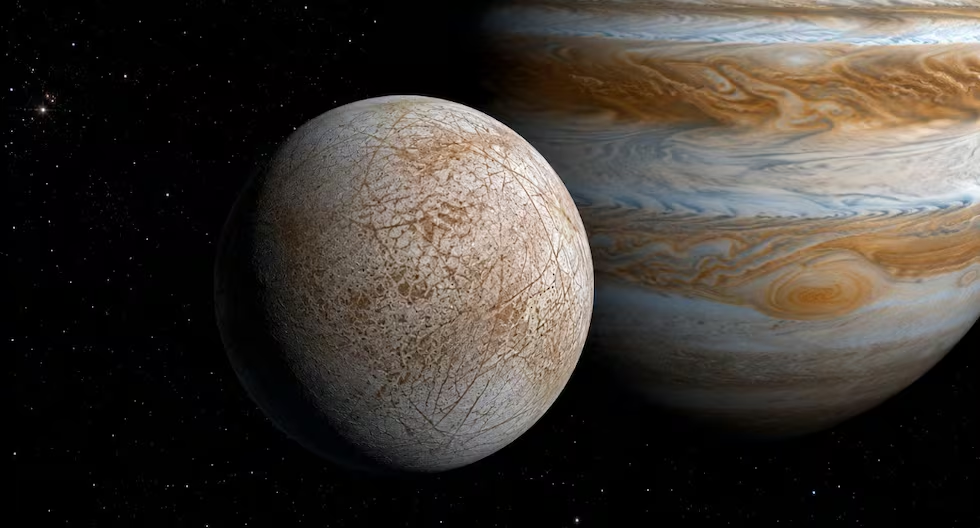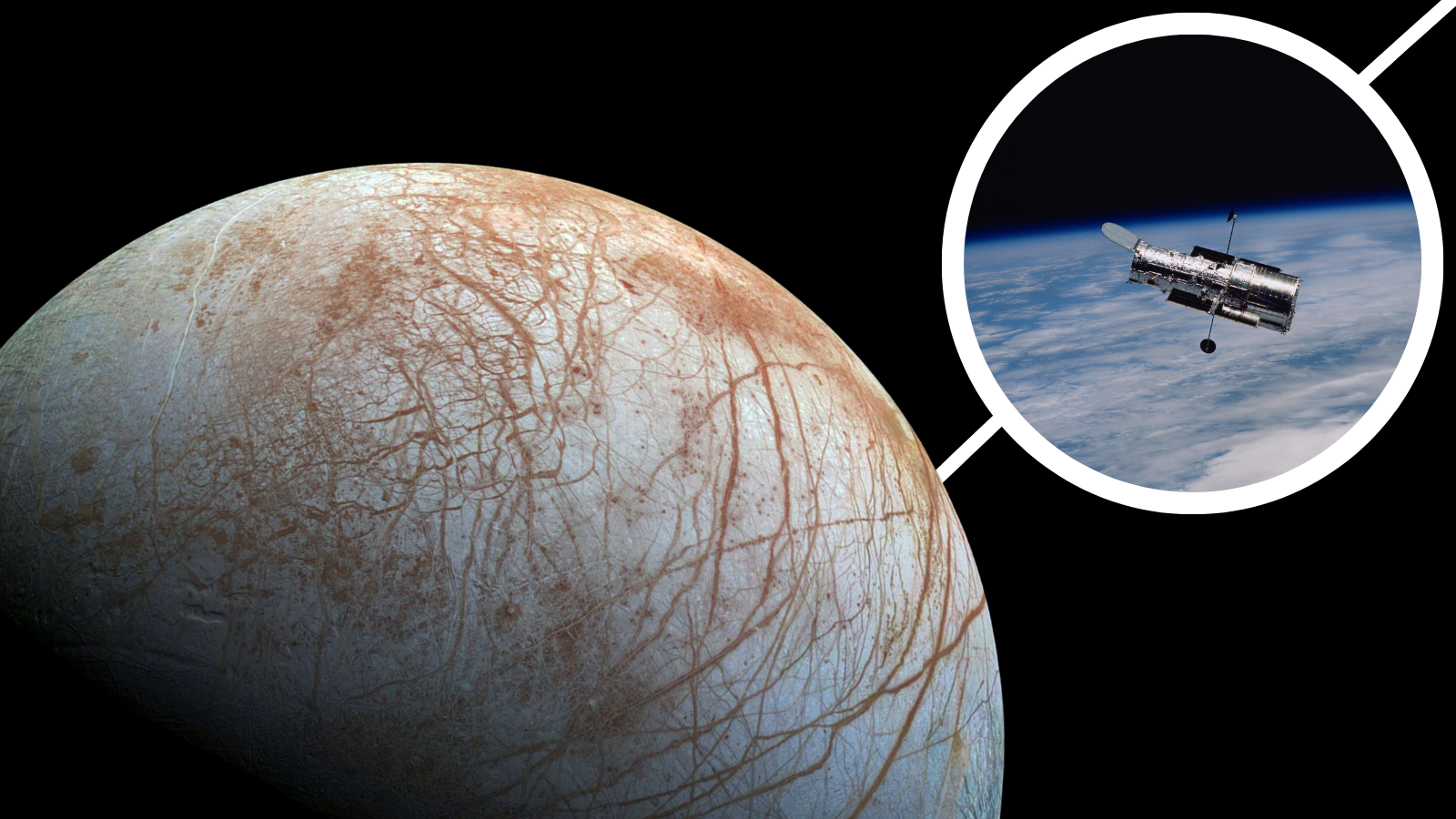
(Main) Jupiter's moon Europa and (Inset) Hubble Space Telescope
(Image credit: NASA)
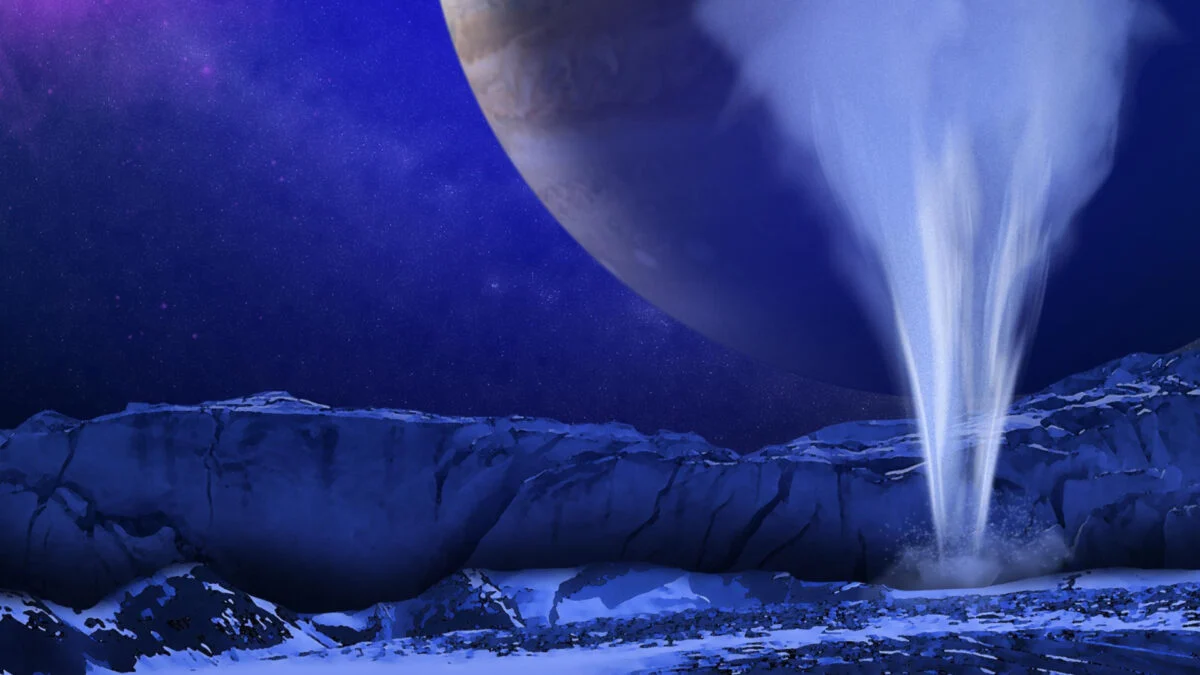
Astronomers have studied 14 years of Hubble Space Telescope observations of Jupiter's icy moon Europa, and now suspect that its infamous water vapor eruptions may not exist as was previously thoughtEuropa has long been a hot target for scientists aiming to investigate the habitability of nearby worlds and the possible existence of life elsewhere in the solar system. That is because this Jovian moon is thought to host a global subsurface ocean that possibly harbors some of the essential elements for life under its thick and icy shell, including complex organic chemicals and water.The faint and difficult-to-detect plumes were previously thought to originate from the vast global saltwater ocean lurking beneath the icy shell of Europa. This material is thought to erupt from cracks in the icy shell of the moon. Now, previous evidence of the existence of these plumes has been called into question by the very scientists who initially proposed them."The evidence for water vapor plumes on Europa isn’t as strong as we first understood it," team member Kurt Retherford of the Southwest Research Institute (SwRI) said in a statement. Retherford was part of a team that in 2014 suggested the existence of these European water plumes, but he and his colleagues now reconsider this conclusion.Another look at Europa To reconsider the existence of Europa's water plume eruptions, Retherford and colleagues looked at 14 years of data regarding Europa collected by Hubble using its HST/STIS instrument (Hubble Space Telescope’s Space Telescope Imaging Spectrograph). In particular, they honed in on a specific wavelength of ultraviolet light called Lyman-alpha emissions, which is emitted and scattered by hydrogen atoms.Retherford and team had been detecting Lyman-alpha emissions from Europa between 2012 and 2014, but this investigation was pushing Hubble to its very limits."One of the difficulties in interpreting the data back then was determining where to place Europa within its context," Retherford explained. "The way Hubble works left some uncertainty in terms of placement relative to the center of the image. If Europa’s placement was off even just by a pixel or two, it could affect how the data gets interpreted.”