Thursday 14 May 2026 12:25 pm
| Updated:
Friday 15 May 2026 11:11 am
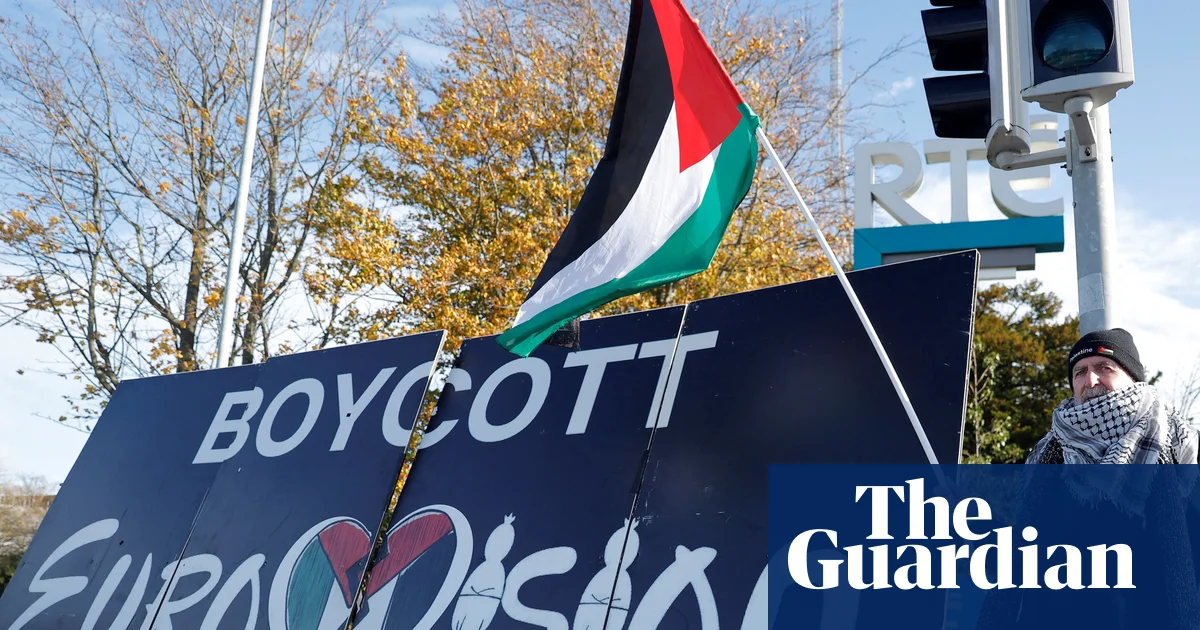
It’s not just politics but economics driving this year’s high profile Eurovision withdrawals, says Matthew AllenI’ve watched Eurovision for years, and one thing longtime fans quickly realise is that the contest has never really been just about the music. Yes, it is still glitter, spectacle and outrageously over-the-top staging. But underneath that, Eurovision has increasingly become a mix of politics, branding, economics and soft power.This year, with the big finale airing this Sunday, that tension feels impossible to ignore.Spain, one of Eurovision’s “Big Five” alongside Ireland, the Netherlands, Slovenia and Iceland, has withdrawn from the 2026 contest amid controversy surrounding Israel’s participation. While the politics dominate headlines, there is also a wider issue at play: Eurovision is becoming an increasingly expensive and risky investment for broadcasters.The price of Eurovision participationParticipation is not cheap. Countries pay entry fees to the European Broadcasting Union (EBU), whilst the ‘Big 5’ – the UK, France, Germany, Italy and Spain – contribute more heavily to the contest’s funding structure.Winning only increases the financial pressure. Liverpool’s hosting of Eurovision 2023 reportedly cost around £20m in public funding through support from the UK Government and the BBC. At a time when broadcasters across Europe face tighter budgets, that is a major commitment. For smaller public broadcasters especially, Eurovision can become difficult to justify when budgets are already under pressure from wider cuts to entertainment and cultural programming. Spending millions on participation or hosting becomes politically sensitive very quickly if audiences begin questioning the value of the contest itself.Eurovision can also generate huge returns. Liverpool’s contest delivered an estimated £54m boost to the local economy, attracting hundreds of thousands of visitors and a television audience of more than 160m worldwide. Hosting also gave the city a branding opportunity that most tourism campaigns could only dream of.For artists, Eurovision can still be career changing. Måneskin, Duncan Laurence and Rosa Linn all used the contest as a launchpad to global success. The problem is that those rewards are unevenly distributed.Success has become harder to predictAs a fan, one thing that has become increasingly noticeable is how disconnected jury votes and public votes now feel. Switzerland’s 2025 entry received 214 jury points but zero from the public, one of the biggest mismatches in Eurovision history. Israel saw the complete opposite: just 60 jury points but a massive 297 from televoters.Anyone who watches Eurovision every year already knows the contest is not judged purely on musical quality. The inevitable Greece and Cyprus “douze points” joke appears every year for a reason. Beyond the humour, voting patterns increasingly reflect diaspora networks, geopolitics and visibility as much as the songs themselves. One thing casual viewers often miss is how differently juries and televoters now behave. Juries tend to reward technical vocals, composition and staging. Public votes are much more emotional and reactive. A performance that goes viral online or becomes politically symbolic can completely reshape the scoreboard. Take Finland’s ‘Cha Cha Cha’ from 2023, many fans took to social media stating they should have won over Sweden’s Loreen.That is partly why Eurovision results now feel less predictable than they did a decade ago. Songs are no longer competing in a vacuum. They are competing within wider political and cultural conversations happening across Europe at that moment in time.That creates a major disadvantage for smaller countries. Malta is probably the clearest example. In 2021, it received 208 jury points but just 47 from the public, despite entering the final as one of the favourites. Over time, smaller broadcasters inevitably start asking whether the investment is worth it. This is not new. Countries including Montenegro, Moldova, Bulgaria and Romania have all stepped away from Eurovision in recent years before later returning, often citing financial pressures or limited returns.The Eurovision marketplaceThat is why the current withdrawals matter. Politics may have accelerated some decisions, but the underlying issue is that Eurovision increasingly resembles a marketplace where countries weigh up costs, risks and reputational exposure against the potential rewards.As a fan, I still love Eurovision. Millions of people across Europe clearly do. Part of Eurovision’s appeal has always been that it brings together countries, languages and cultures that rarely share the same stage elsewhere. For one night, Europe feels connected through music in a way that very few events manage.That is why the current tensions surrounding the contest feel so significant. Eurovision has always contained politics beneath the surface, but it now feels much harder for organisers to maintain the idea that the competition is politically neutral.It would be naive to pretend the contest is simply about the music anymore. Eurovision today is about influence, identity, politics and economics, all wrapped up in three minutes on stage.Matthew Allen is a lecturer in economics at the University of Salford