https://arab.news/5p6nb
The Iran war is confronting African economies with a brutal reckoning. Once again, most of the continent finds itself at the mercy of volatile global oil and gas markets, owing to energy system dependencies and structural deficiencies rooted in decades of neocolonialism. With oil prices shooting above $100 per barrel, African economies need to embrace a strategic push toward clean energy sovereignty.
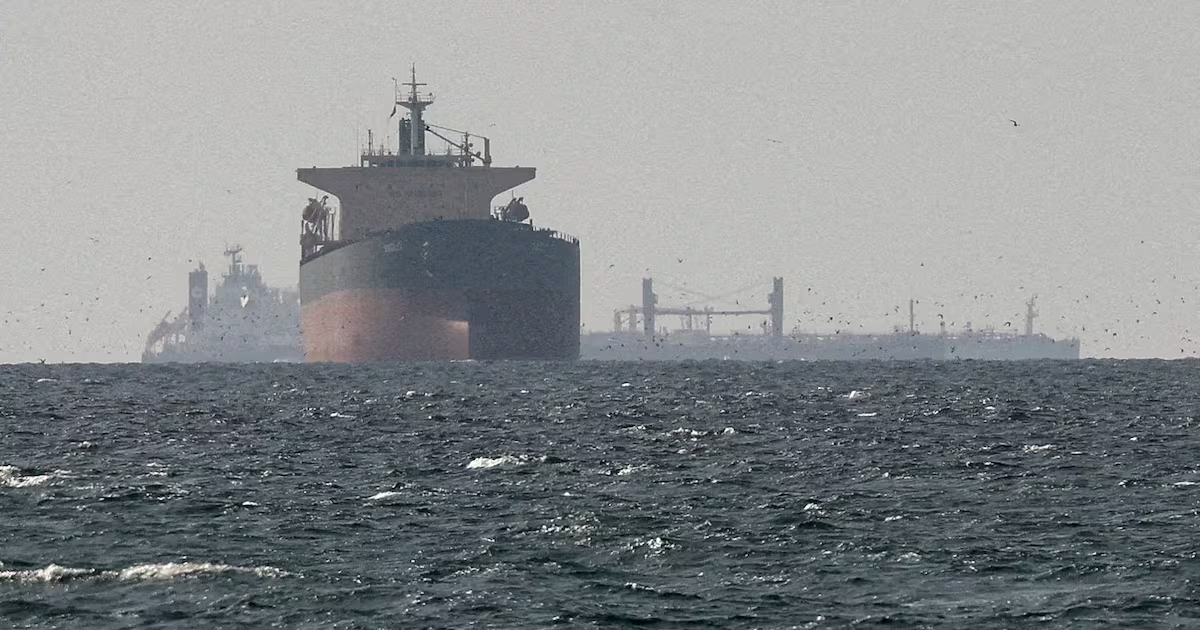
Anyone following the news now knows that the Strait of Hormuz is a critical global chokepoint, through which roughly one-fifth of global oil supply flows. Disruptions there will send inflationary reverberations throughout the broader global economy, including African countries that are not even direct buyers of Gulf oil.
For example, fertilizer prices are expected to surge because the Gulf region accounts for one-third of the global supply of nitrogen fertilizers. The timing could not be worse. Global food producers in the Northern Hemisphere are in the middle of planting season, with most fertilizers being applied between February and May. The price of animal feed, eggs, meat, corn, wheat, rice and other major food items is expected to rise within the next three to six months. For African economies already heavily dependent on imported food, higher prices will create a second wave of inflation.