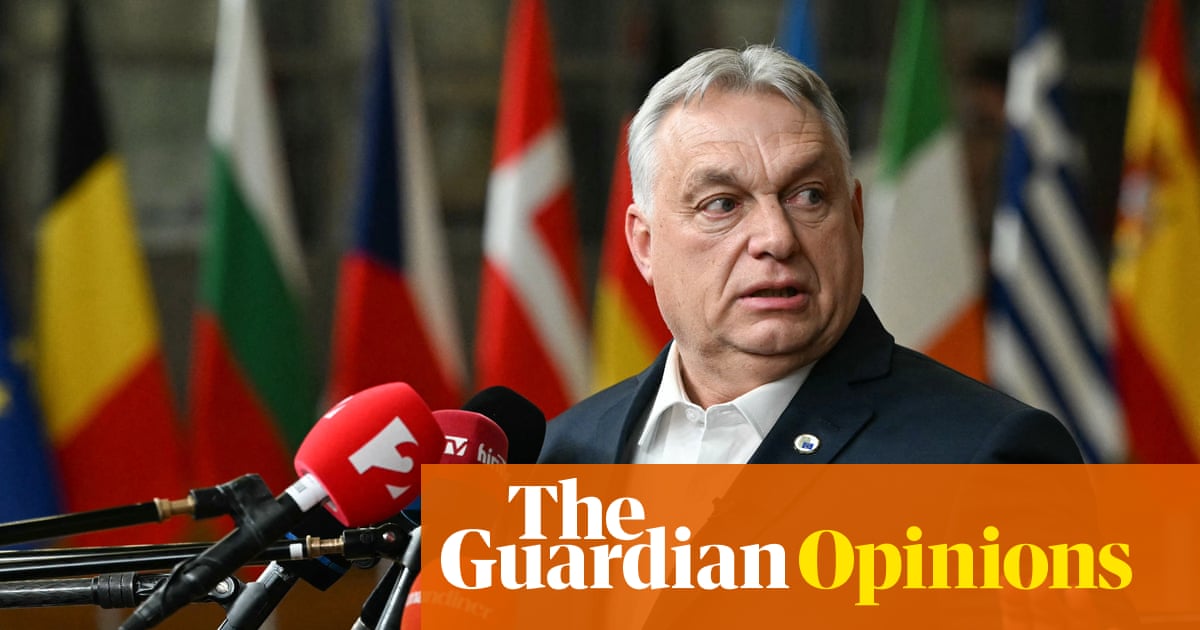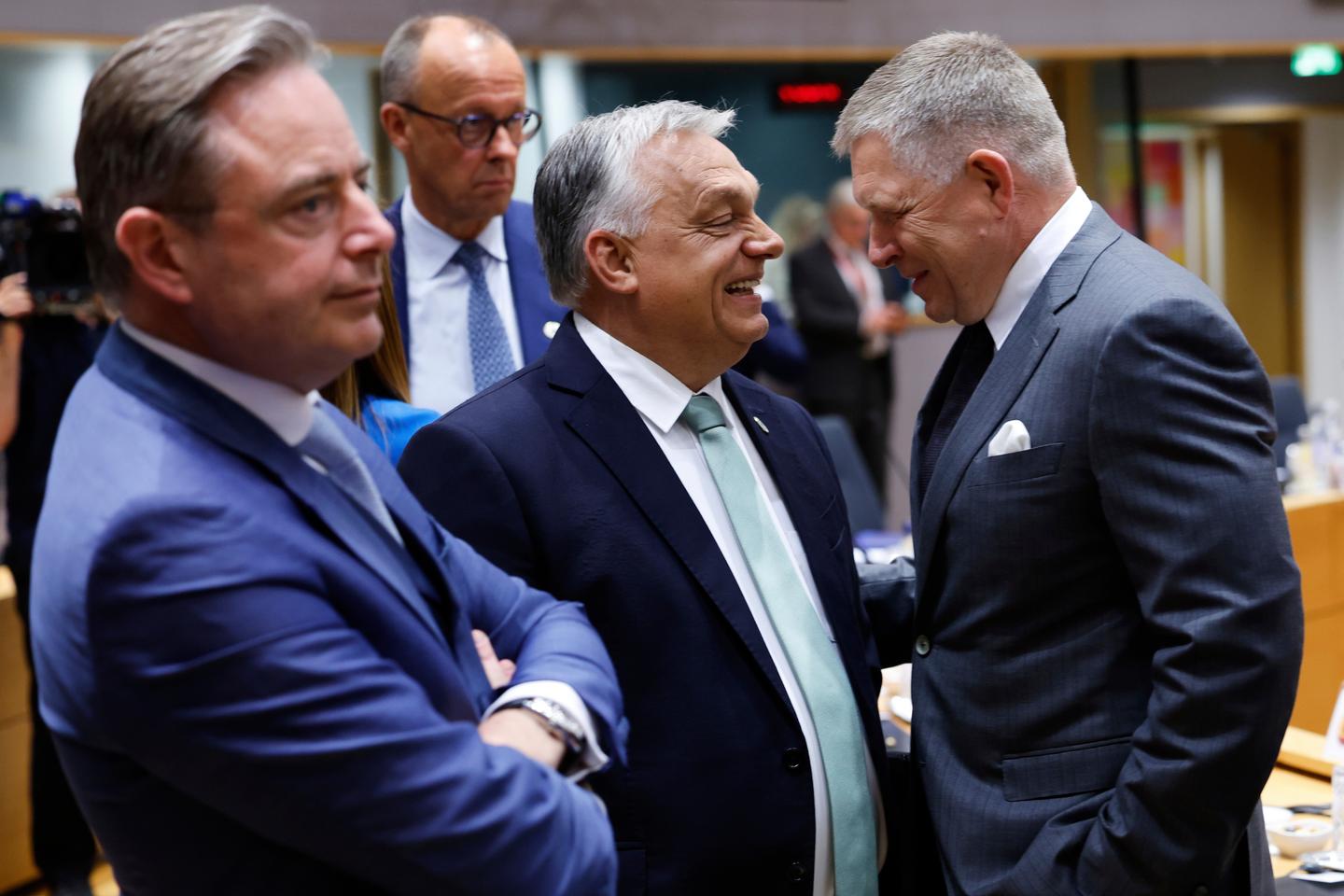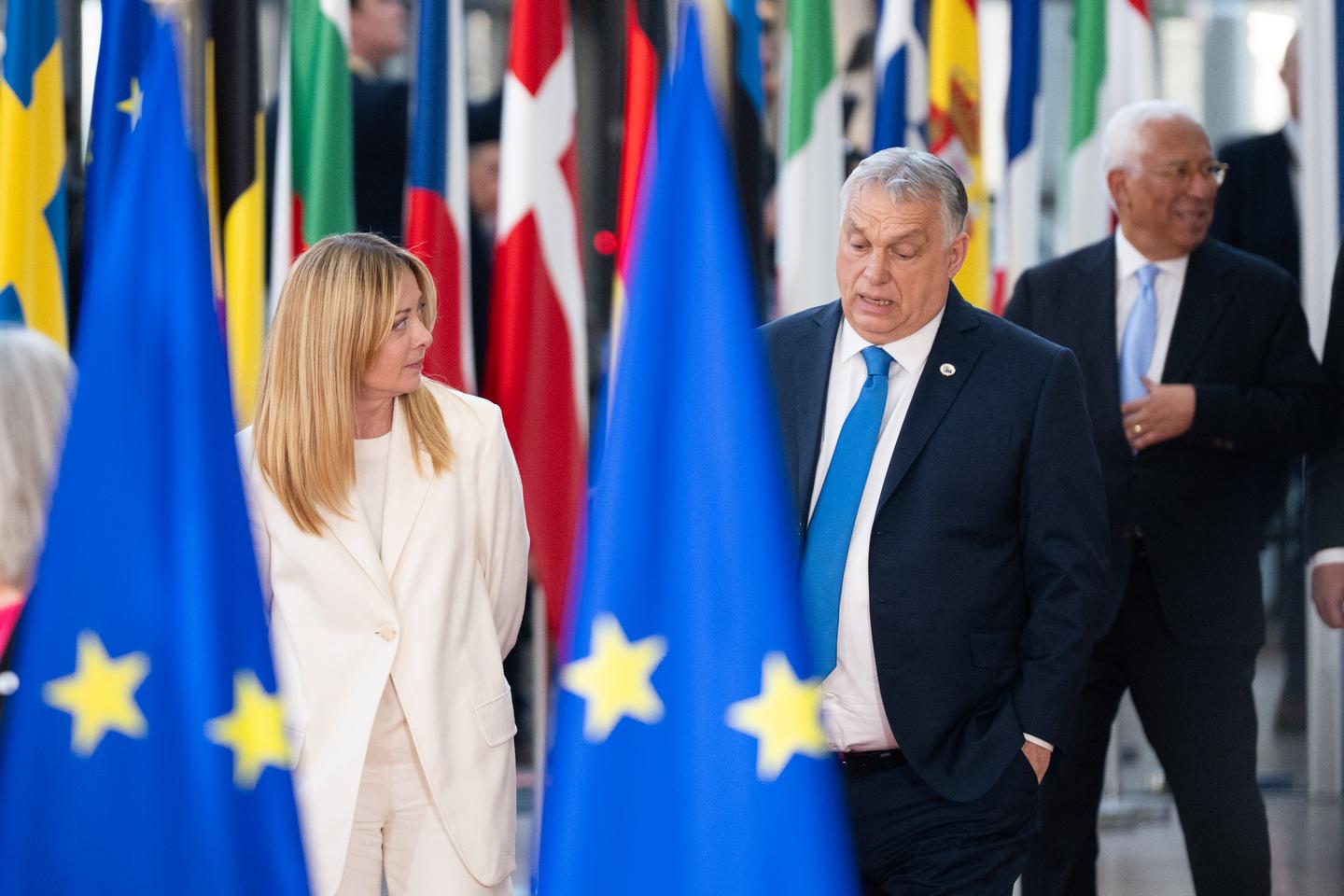
Italian Prime Minister Giorgia Meloni and Hungarian Prime Minister Viktor Orban, at the European Council in Brussels, on March 19, 2026. JEANNE ACCORSINI/SIPA FOR LE MONDE
A photograph captured the scene on March 19 in the European Council chamber in Brussels. Hungarian Prime Minister Viktor Orban stands in the foreground, with his outstretched arms resting on a desk. He stares down his 26 counterparts, who are seated around a large oval table a little further away, watching Volodymyr Zelensky deliver an address through a screen. Admittedly, Orban does often stand up during meetings to stretch, as he suffers from back pain.
Yet this time, according to a European Council source, he stayed "out of frame" throughout the discussion with Kyiv so that the cameras could not show the Ukrainian president an image of him. The message was clear: There was no question of Budapest supporting a €90 billion loan to Ukraine, even though all 27 European Union member states, including Hungary, unanimously committed to it on December 19, 2025.
By going back on his word, Orban crossed "a red line," according to European Council President Antonio Costa, who has since repeatedly hammered home that it was "unacceptable." This about-face, which German Chancellor Friedrich Merz called "a blatant act of disloyalty," and Finnish Prime Minister Petteri Orpo dubbed "a betrayal," has exasperated officials in Brussels as well as in most European capitals. Since then, media outlets have revealed that Hungarian Foreign Minister Peter Szijjarto informs his Russian counterpart, Sergey Lavrov, of everything that happens in the Brussels halls of power and sometimes even tries to defend Moscow's interests there. This has not helped matters.