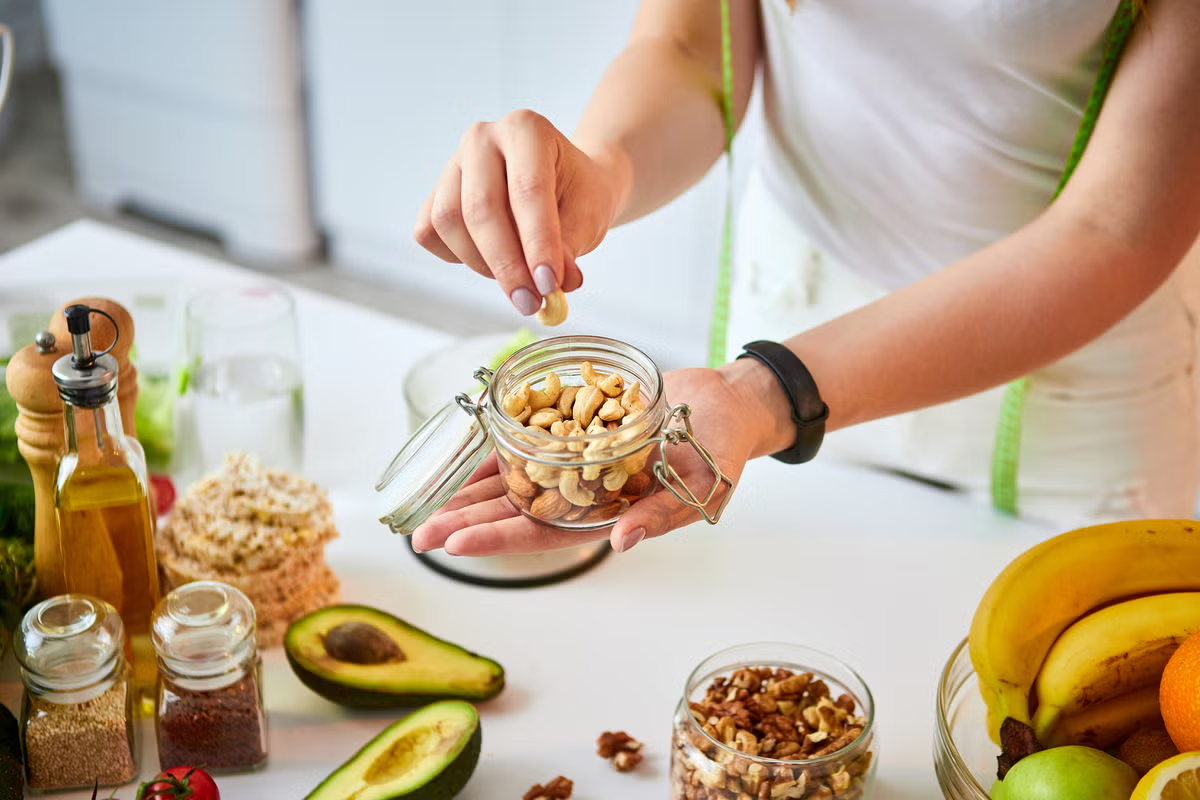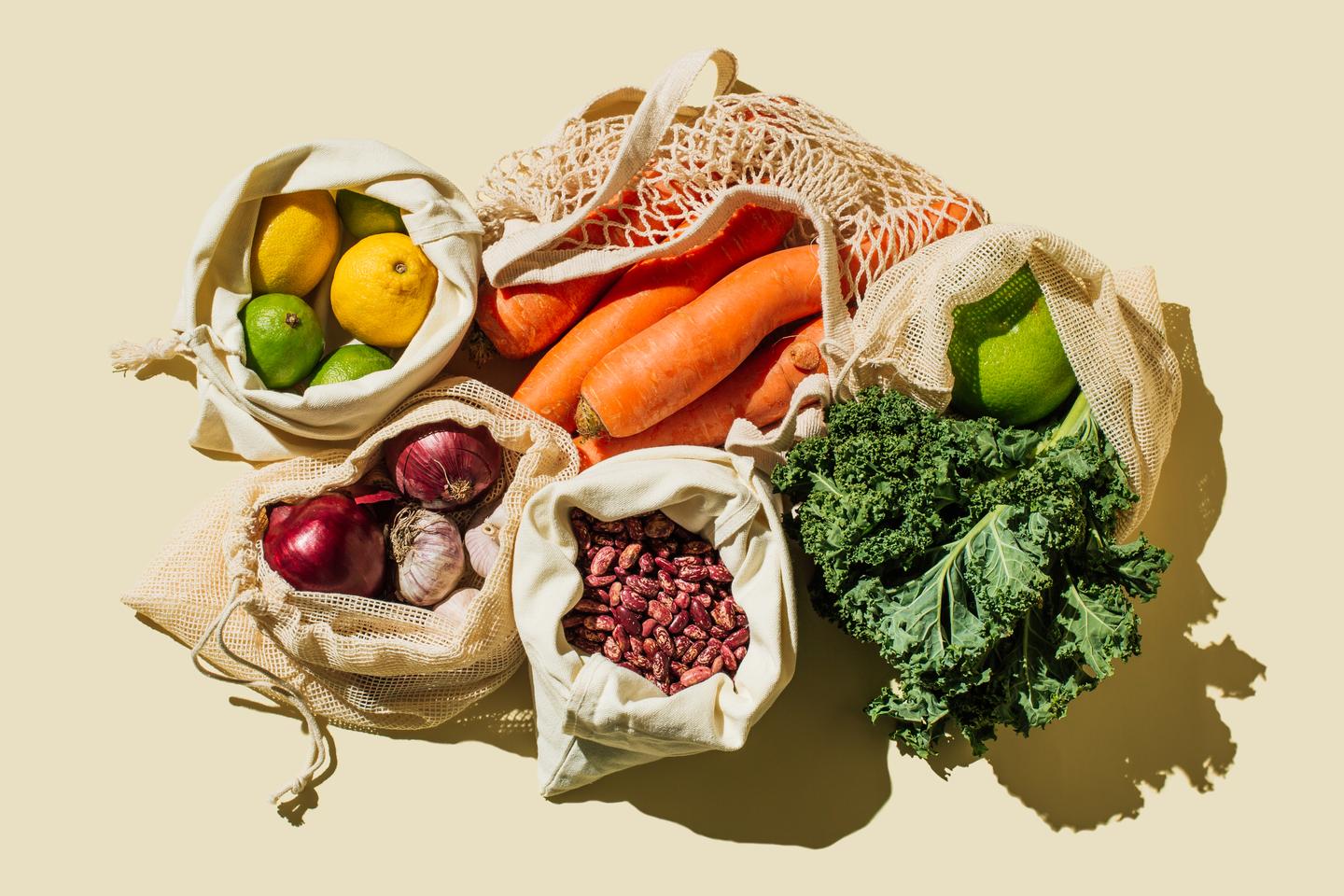
Illustration of shopping bags of fresh fruit and vegetables, 'Remettez du bon sens dans votre assiette' ('Bring Common Sense Back to Your Plate'). TANJA IVANOVA / GETTY IMAGES
Anthony Berthou is a nutritionist and the author of Remettez du bon sens dans votre assiette ("Bring Common Sense Back to Your Plate"), a book that debunks 41 misconceptions about our diet. A university lecturer, he also co-authored Le Guide de l'alimentation saine ("The Guide to Healthy Eating") with Julie Chapon, co-founder of the Yuka app, which scans food labels and rates their health impact. For Le Monde, he offers several pieces of advice for consumers who want to eat in a way that protects both their health and the planet.
Choose whole, well-sourced foods
"First and foremost, even before talking about contaminants, my primary advice to my patients is to consume whole, seasonal foods from short supply chains. More and more studies show the impact of ultra-processed foods on the food matrix, which provides the full nutritional benefits. In my view, it is important to follow a Mediterranean-style diet, which includes fruits, vegetables, legumes and whole grains.
All these foods should preferably be organic, because pesticides tend to concentrate on the surface of the food. However, that does not mean that products with the Agriculture Biologique [organic farming] label are entirely free of them. Depending on the soil and the level of environmental contamination nearby, any organic food can still retain some residues, even if the farmer does not use pesticides. Moreover, the organic label does not guarantee the absence of heavy metals and environmental pollutants, such as dioxins or polychlorinated biphenyls, in foods. Another point: rice, even when certified organic, can contain arsenic, so it is recommended to rinse it thoroughly and cook it in plenty of water to remove most of it.