Ari Daniel
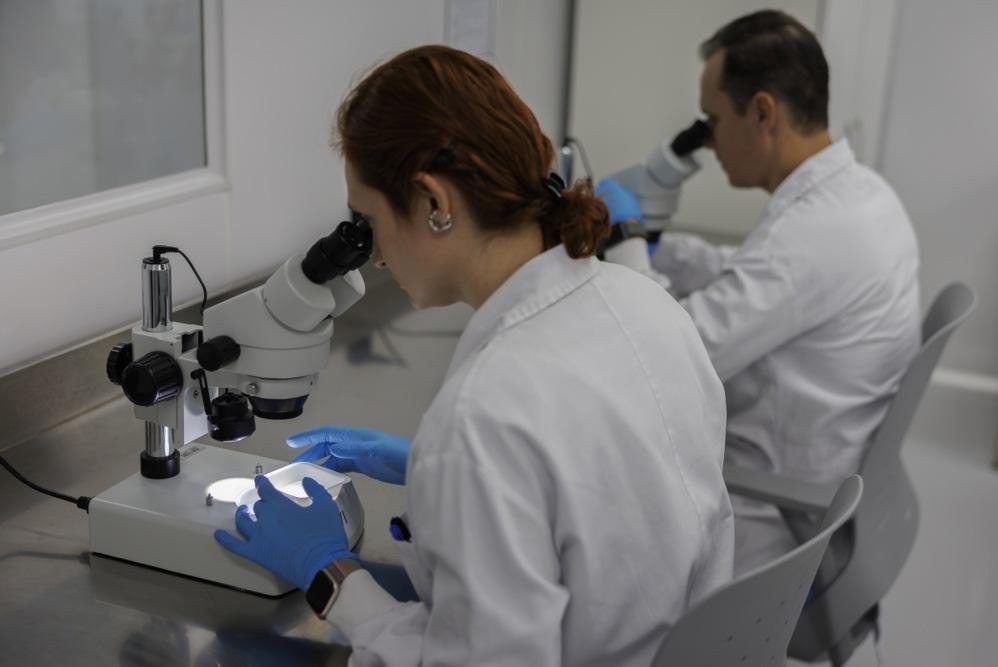
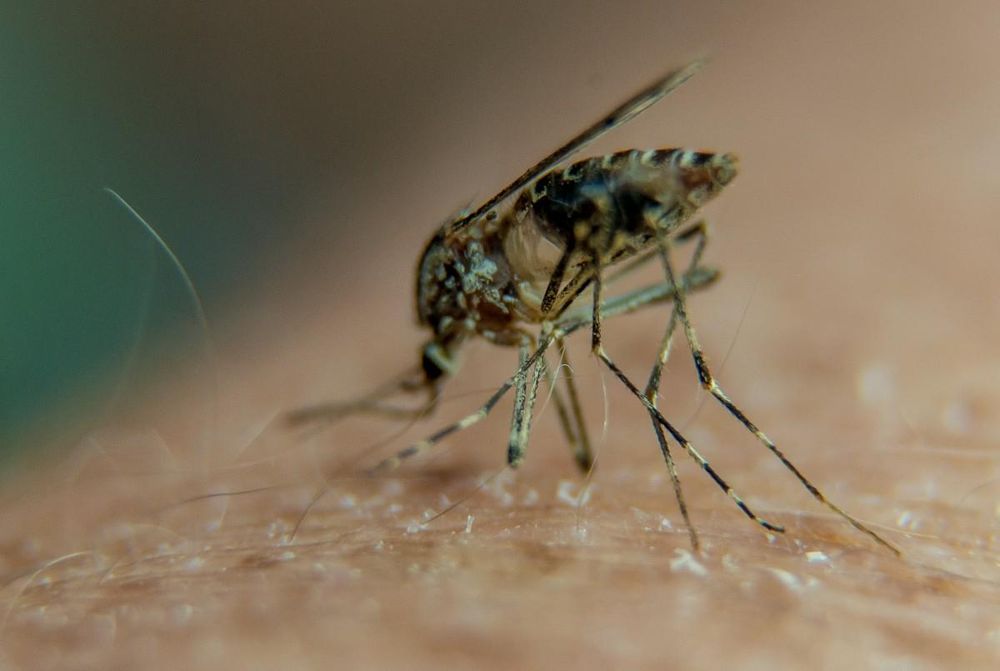
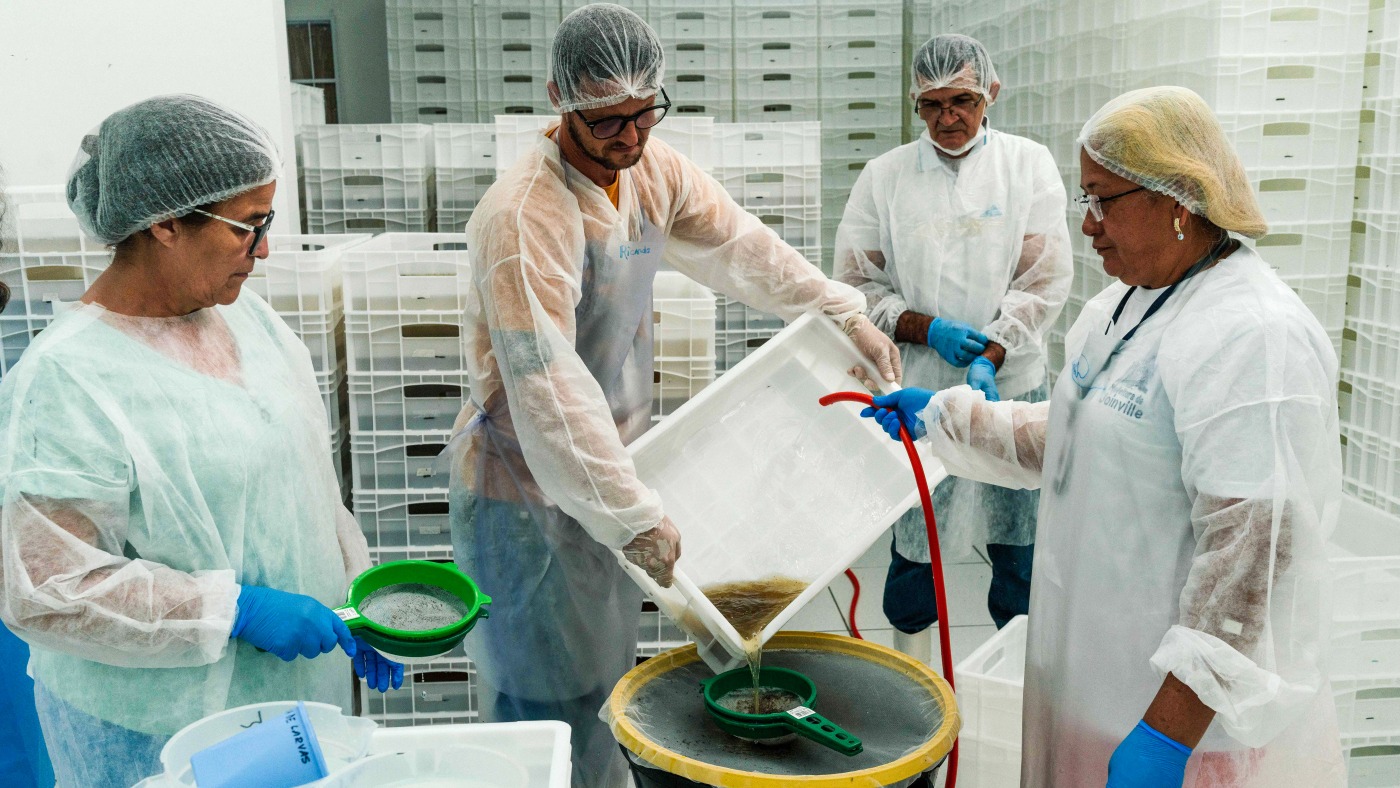
Inside a bug-making factory in Rio de Janeiro, a team of workers transfer loads of mosquito larvae to cleaner water. These mosquitoes are special — they've been engineered to shut down the transmission of the very diseases they usually spread.
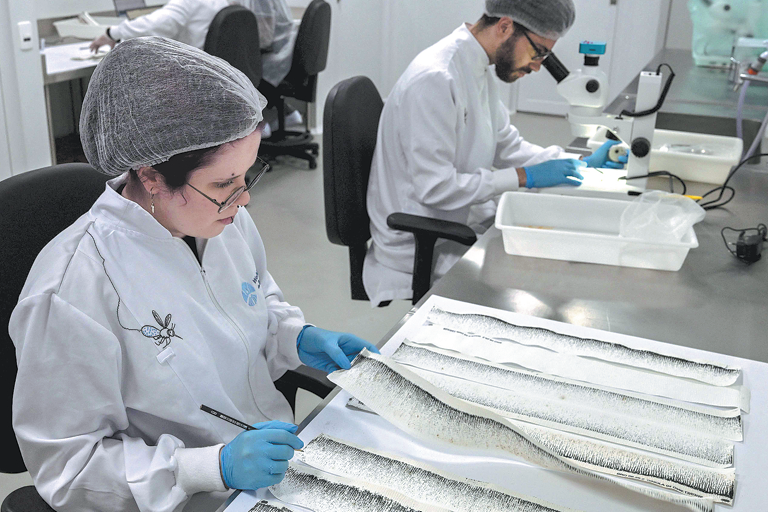
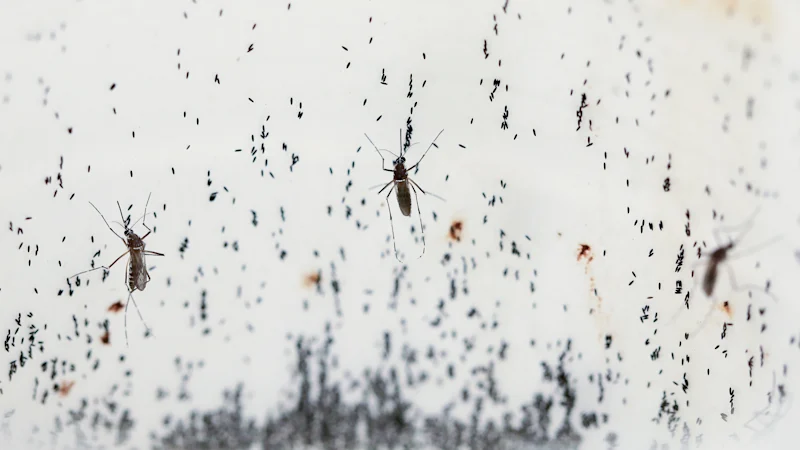
Inside a small building in eastern Rio de Janeiro, Brazil, Cátia Cabral holds up a jar filled with what looks like fine black pepper. But this ain't pepper. Each granule is actually a tiny mosquito egg.
Cabral estimates this container holds some half a million eggs.
Next door, untold numbers of tiny larvae wriggle in bins filled with water. "It's like it's the mosquito nursery room," she says through an interpreter.