People are the best option to capture black flies that cause the incurable disease of river blindness
E
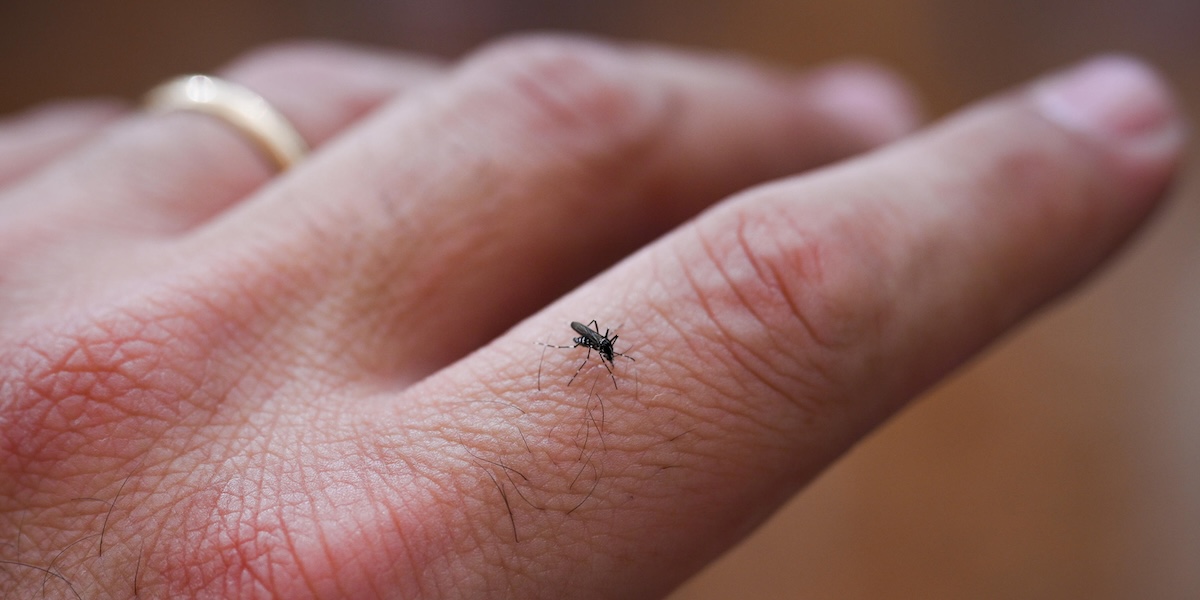
very Monday and Tuesday morning, Bosede Oluwaokere, 48, wakes up at home in Ilorin city in west Nigeria, gets dressed and walks to a nearby stream. She sits beneath a tree and pulls her skirt up around her thighs. For the next six hours she stays in the same spot waiting for a specific type of fly to land on her, so she can catch it using a small plastic tube.
Oluwaokere is a human flycatcher – or human landing catch, as the World Health Organization (WHO) terms it – which is considered the “gold standard” for collecting black flies. Black flies, which breed near rivers, are blood-sucking insects that spread the debilitating neglected tropical disease onchocerciasis, also known as river blindness.
When someone is bitten by an infected black fly, the larvae of the parasitic Onchocerca volvulus invade their body and grow into worms that can live for up to 15 years. Female worms produce thousands of microscopic larvae that spread throughout the body. If the larvae reach the person’s eyes, it can cause permanent loss of sight.