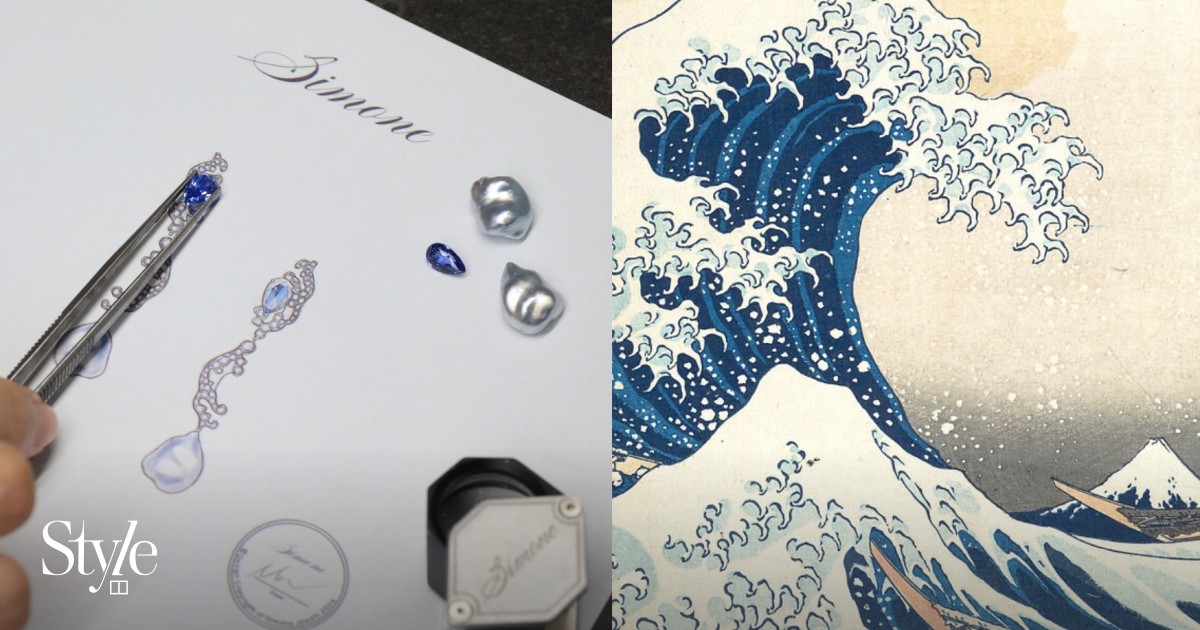
Iconic Japanese themes continue to be reinterpreted by jewellery designers today, weaving stories of the country’s culture and nature into contemporary collections
After two centuries of isolation from foreign powers, Japan reopened its ports for trading in 1854. Europeans were enthralled by the arts and culture that emerged, and Japonisme became a major influence within the late 19th-century art nouveau movement.
The art nouveau style was defined by sinuous curves called whiplash lines, which were inspired by simple forms seen in Eastern design. Eastern – and particularly Japanese – style was also known for featuring natural elements; artists such as Claude Monet and Vincent van Gogh and jewellery designers including Réné Lalique and Georges Fouquet, for whom nature was the principal source of inspiration, were influenced by their exposure to the Japanese artistic style of presenting plants and animals.
In jewellery, plants like chrysanthemums and Japanese azaleas, which were newly popular in Western gardens, were now being depicted in precious stones, while motifs incorporating wisteria and irises were borrowed from Japanese prints.
In Paris, dragonflies, whose popularity in art nouveau jewellery around 1900 was attributed to their frequent appearances in Japanese art and poetry, featured in several ravishing Lalique pieces as a decorative motif, their iridescent wings decorated with plique-à-jour enamel. Over in New York, Louis Comfort Tiffany was also drawn to interpreting plants such as the chrysanthemum, which appeared in his jewellery, lamps and pottery, although orchids were his particular favourite.