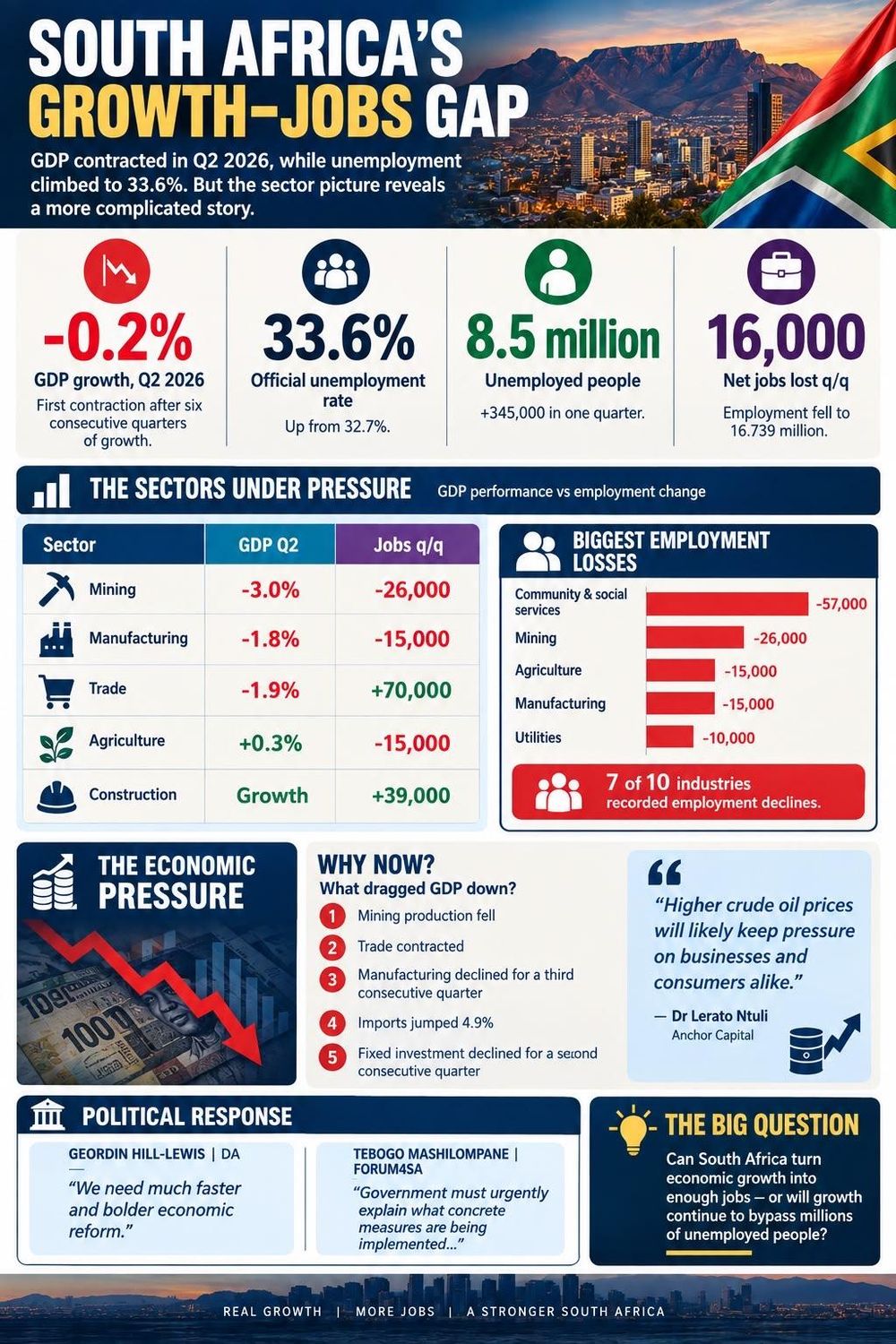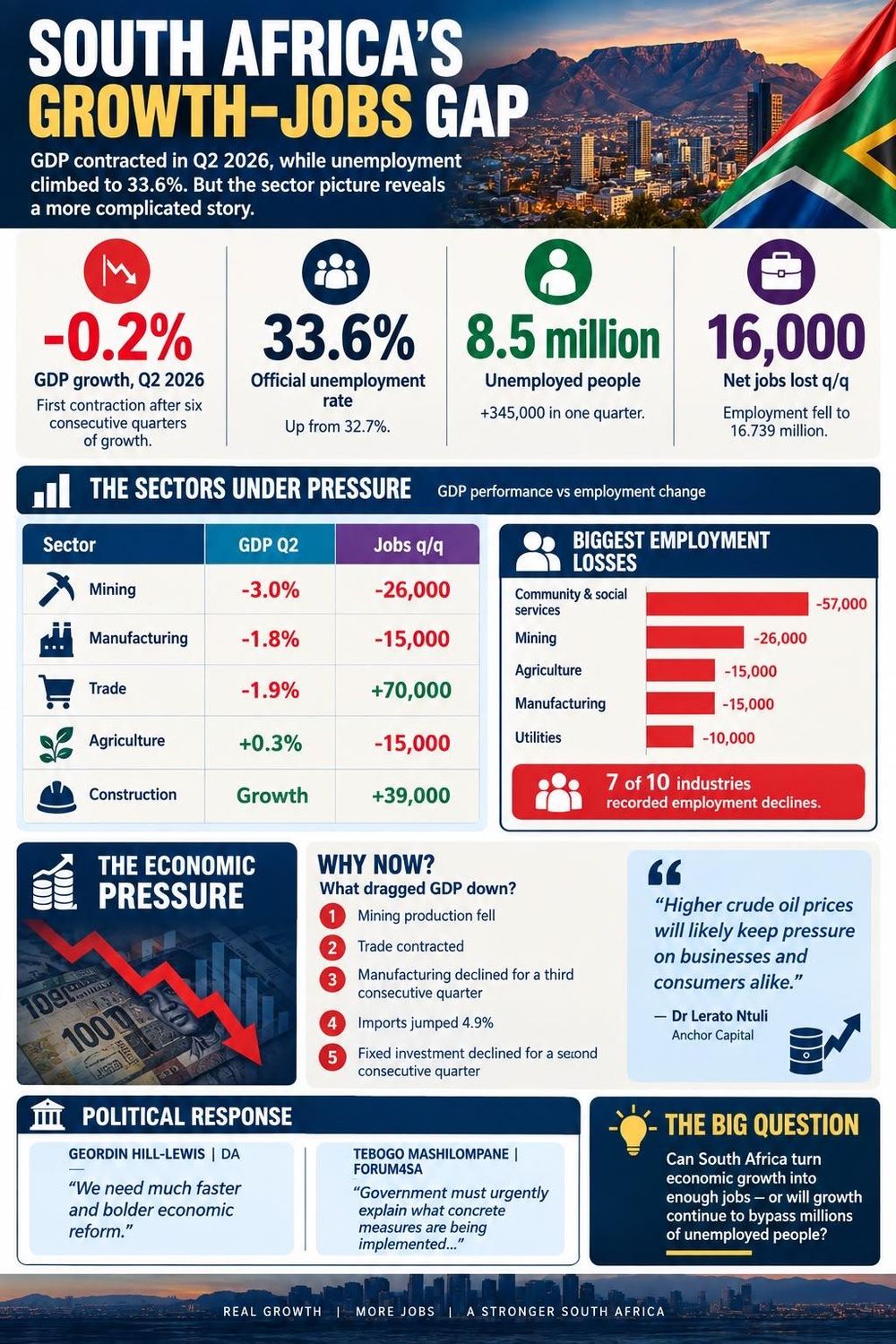
South Africa’s current account switched to a deficit of R205.5bn in the second quarter of 2026 after recording a downwardly revised surplus of R181.6bn during the first quarter, the South African Reserve Bank said on Thursday.As a ratio of GDP, the current account balance swung to a shortfall of 2.6% in the second quarter from a surplus of 2.3% in the first.The current account is a key component of the country’s balance of payments, showing the net flow of income, goods, services and transfers such as aid between residents and non-residents.It comprises the trade balance — the net total of the export and import of goods and services — and the primary income, which is the difference between earnings on investments made abroad and payments to foreign investors domestically, and the secondary income, which is money sent abroad or received without a specific quid pro quo, such as foreign aid or workers’ remittances.In April, banking group Citi warned a prolonged war between the US and Iran extending into the second half of the year was likely to put pressure on net oil importer South Africa’s current account, in addition to hindering its GDP growth prospects for 2026.Since the conflict broke out in late February, fuel prices have soared. The retail cost of 95-grade petrol has jumped by about 33% to R26.92/l in Gauteng between March and September, while the wholesale price of 0.005% sulphur-grade diesel has surged by 59% to R29.56/l.The higher input costs emanating from the war have weighed on GDP, particularly the key mining and manufacturing sectors. Data from Stats SA on Tuesday showed the economy contracted 0.2% in the second quarter after ticking up 0.4% in the first, as it faced headwinds from geopolitical tension and weak domestic demand.Thursday’s current account data showed the trade surplus narrowed sharply to R146.4bn in the second quarter from R428.8bn in the first three months of the year, as the value of merchandise imports increased more than that of merchandise and net gold exports. “The value of exports of goods and services in the second quarter of 2026 increased by R92.3bn, reflecting higher prices and volumes, while the value of imports of goods and services increased significantly by R376.6bn as both volumes and prices increased,” the Reserve Bank said.The shortfall on the services, income and current transfer account — a sub-account of the current account — widened to R351.9bn from R247.2bn, or 4.5% of GDP from 3.1%, marking the largest deficit since the 5.5% recorded in the second quarter of 2022.South Africa’s terms of trade — the ratio of its export prices to its import prices — deteriorated in the second quarter as the rand price of imported goods and services increased more than that of exports, the report showed.Business Day
South Africa’s current account swings to R205.5bn deficit in second quarter
Trade surplus shrinks as import costs surge on higher fuel prices
460 words~2 min read