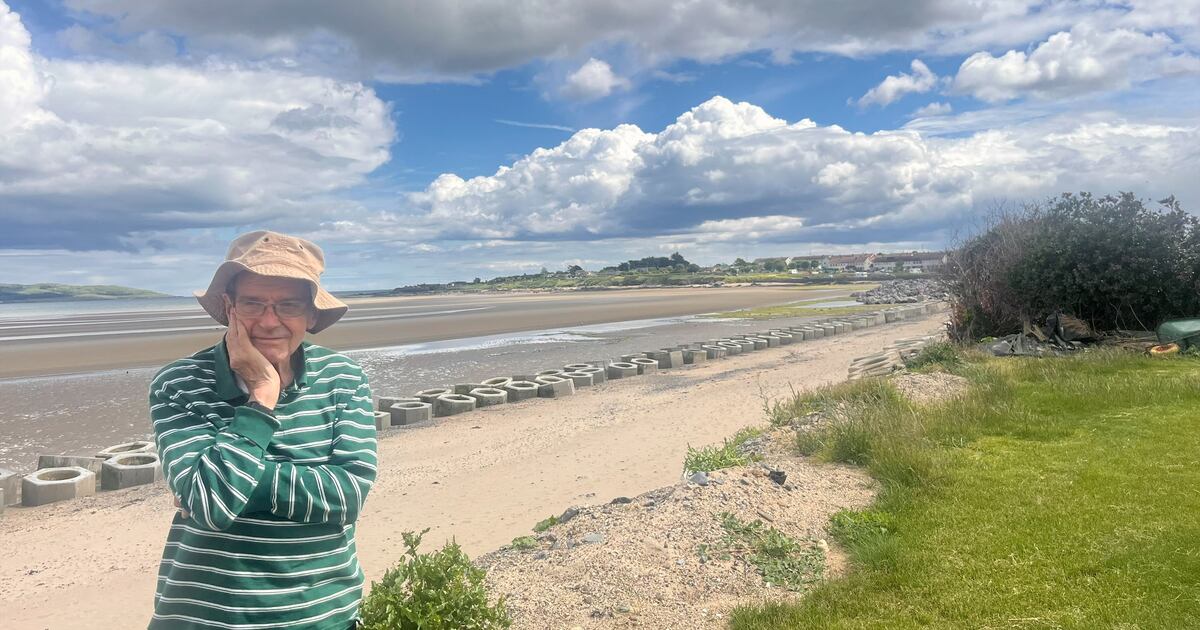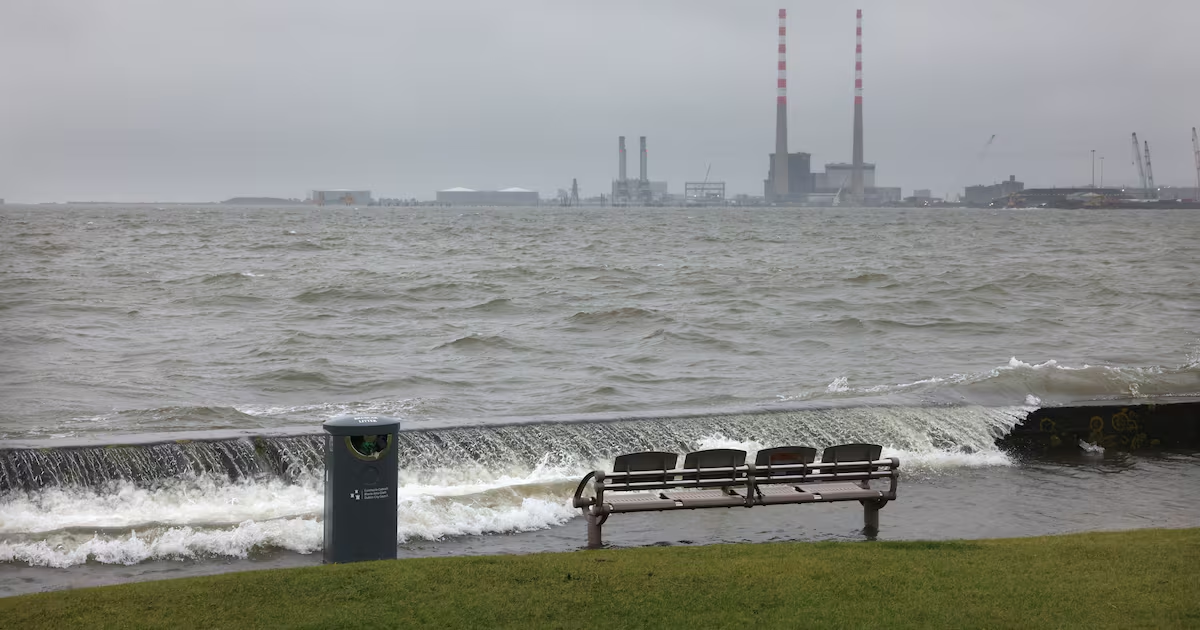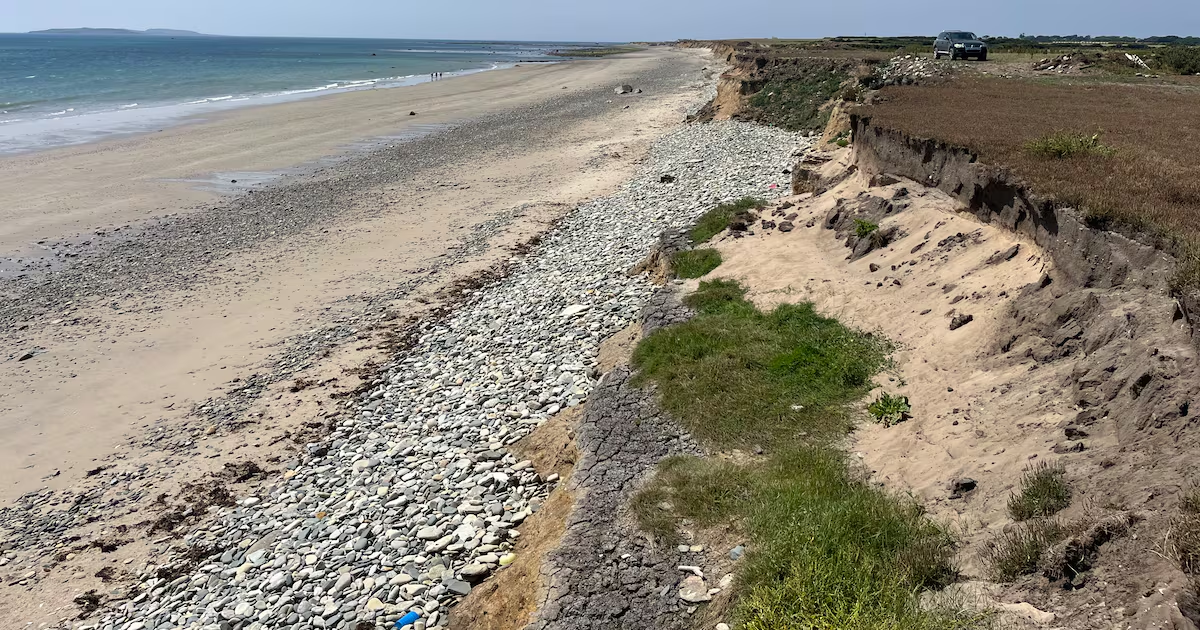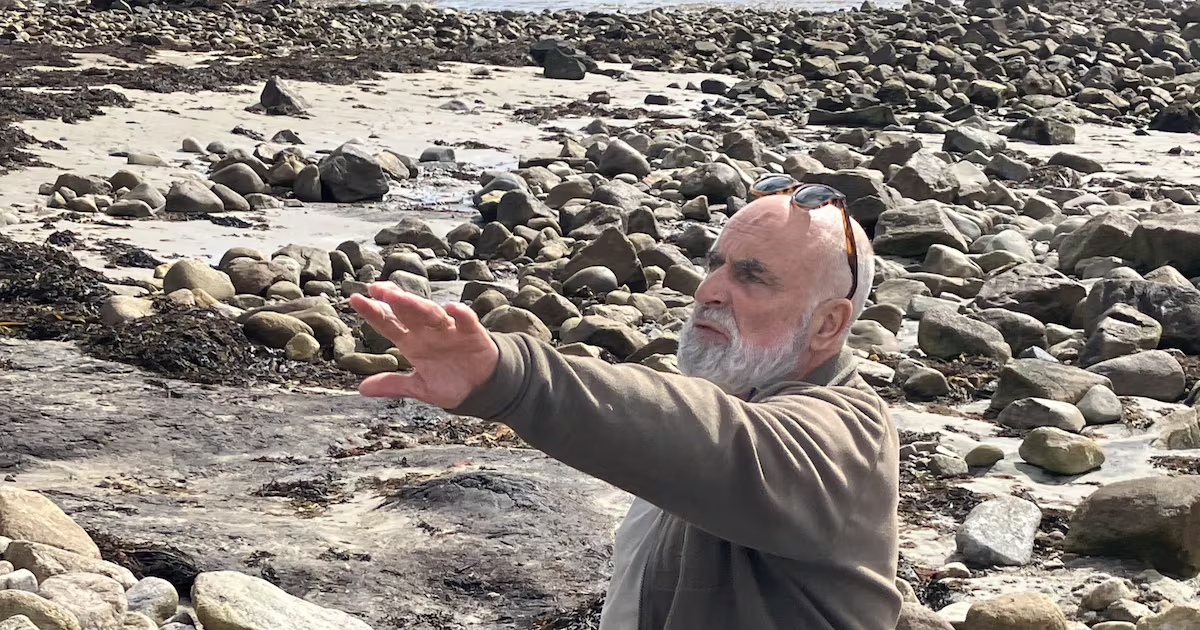
Pádraig Campbell sees the impact of climate change every day on his morning walks along Mags’ Boreen Beach in Bearna, Co Galway. “You don’t hold back water – the power of it,” he says, at low tide on Tuesday, as he points to human-built rock armour at the beach that has been steadily damaged by storm waves over the years. Bearna is a former fishing village 7km west of Galway city. It used to be a small, rural settlement, but has experienced a population explosion since the noughties when it was dubbed “G4″, in part due to Dublin 4-like eye-watering prices for properties overlooking Galway Bay. It is not only house prices that have risen in the satellite village; a report from researchers at University College Cork has warned that this picturesque coastal community is one of many areas nationwide poised to feel the effects of rising sea levels. The study found that more than 20,000 people in Dublin, and almost 10,000 people in Galway city, live within 500 metres of coastline classified as being at very high risk of flooding, erosion, sea level rise or coastal hazards. [ Flood map: See the Irish coastline areas at ‘very high’ risk from flooding, erosion or sea level rise ]Campbell, who has lived for more than four decades with the Atlantic on his doorstep at Freeport, Bearna, and who spent his working life on oil rigs in the North Sea, is not surprised by the analysis. “Massive storms had huge impact on the rigs, everything would have to stop. Often a storm would be dissipated by the time it reaches land, but now it continues in. I can see now the storms are having more of an impact,” he says. Rock armour erosion at Mags' Boreen. Photograph: Dara Bradley Campbell points to layers of blanket surface peat bog, and tree stumps of bog oak and Scots pine dating to 2000 BC, protruding from sand at Mags’ Boreen beach. This is evidence, he says, of the sea encroaching over time on to what was once a Neolithic forest. About 500 metres west of Mags’ Boreen is Bearna Pier, rebuilt by Alexander Nimmo in the 1820s, which offers some protection, but storms continue to cause erosion, Campbell says. “There are more frequent storms. They come in further; you can see that from the seaweed lines. They’re more powerful. The storm surges move boulders. The sea is churning into the rock armour and it’s undermining it.” The risks posed to the village by climate change have been the subject of public debate in recent years when the topic of development on the coastline has come up. Campbell says locals should be allowed to build homes on family land, but he supports the retention of a 30-metres exclusion zone in the Co Galway Development Plan that prevents building close to the shore in the village core. This is to protect against future flooding. “Planning in Bearna needs to take account of the latest [climate] reports,” he says, while referencing the controversial and ultimately unsuccessful efforts in 2022 to cut the exclusion to a 15-metre setback. Author and educator Margie Connolly, who lives in New Village, on the coast towards Furbo, is the fourth generation of the Hernon family reared next to the sea in Bearna. In her recently published book, Come to Your Landing Pier, Connolly reflects on a small pier to the rear of her home, where her father used to fish for mackerel in traditional currach boats. The landing pier has deteriorated through lack of investment and sea damage over the years, but there has been “no dramatic change”, says the retired teacher and former deputy principal of Salerno Secondary School in Salthill. “I am very mindful of climate change, especially the weather we are getting, [but] I don’t remember any flooding in the back garden; nothing like that has happened. “I’m living by the sea all my life. I know from walking the shore since we were children that it’s a different place now. One time it was very even and flat, whereas now, with every storm that comes, the shoreline is rocked up more. “As a child, it was much more even down by the shore, but maybe if my father was alive, he’d be saying that totally changed in his lifetime as well.” Born and raised in Bearna, Eugene Greaney has seen many changes in the village over his almost 80 years.'The sea is coming up, all right. In the beginning I didn’t believe it, but it is,' Eugene Greaney says. Photograph: Dara Bradley The retired gardener for many years tended the flowers at the village’s pub and seafood restaurant, Donnelly’s, known for its Guinness, chowder and floral hanging baskets. He has lived at Lacklea in a cottage within 500 metres of the coastline for more than 60 years and has seen the sea levels slowly creep up over his lifetime. His back-garden greenhouse, where he grew cherry tomatoes, was destroyed when Storm Éowyn, one of Ireland’s most powerful storms, brought record-breaking gusts of wind off Mace Head, Connemara, in January last year. Greaney’s home is on a hill, which offers protection, but he predicts the might of the Atlantic will be felt more acutely in years to come. “The sea is coming up, all right. In the beginning I didn’t believe it, but it is. It will come up in time – but not my time,” he says. Galway West TD and Bearna native, John Connolly, says while there has been flash-flooding during heavy rain in the village previously, coastal flooding poses a more immediate risk to Galway city. The Fianna Fáil politician is concerned about slow progress on the long-awaited Galway City Flood Relief Scheme being developed by the local authority and Office of Public Works. Known as Coirib go Cósta, the proposal promises to offer protection from flooding along an expansive area of coastline stretching from Lough Atalia in Renmore, to the east of Galway City, as far as Silverstrand, where the western city boundary meets Bearna. Connolly says the scheme – designed to protect against a one-in-100-year weather event – was mooted a decade ago, but it could be another eight years before it is completed. “I understand in Galway they’re designing a flood-relief project that protects against river, stormwater and coastal flooding and they have merged them all into one project. It has far greater complexity than they had an awareness of initially and that has been the reason for the substantial delay,” he says. “Galway City Council has described it as the most important infrastructure project for the city. Parts of the city are in peril if we don’t get it developed. But even by [the council’s] own timeline, they’re saying they won’t have it done before 2033.”
‘Powerful storms are more common’: Threat of rising sea levels and coast erosion in Galway
A fifth of State’s coastline is at grave risk from hazards such as flooding, with climate change playing key role
1,133 words~5 min read