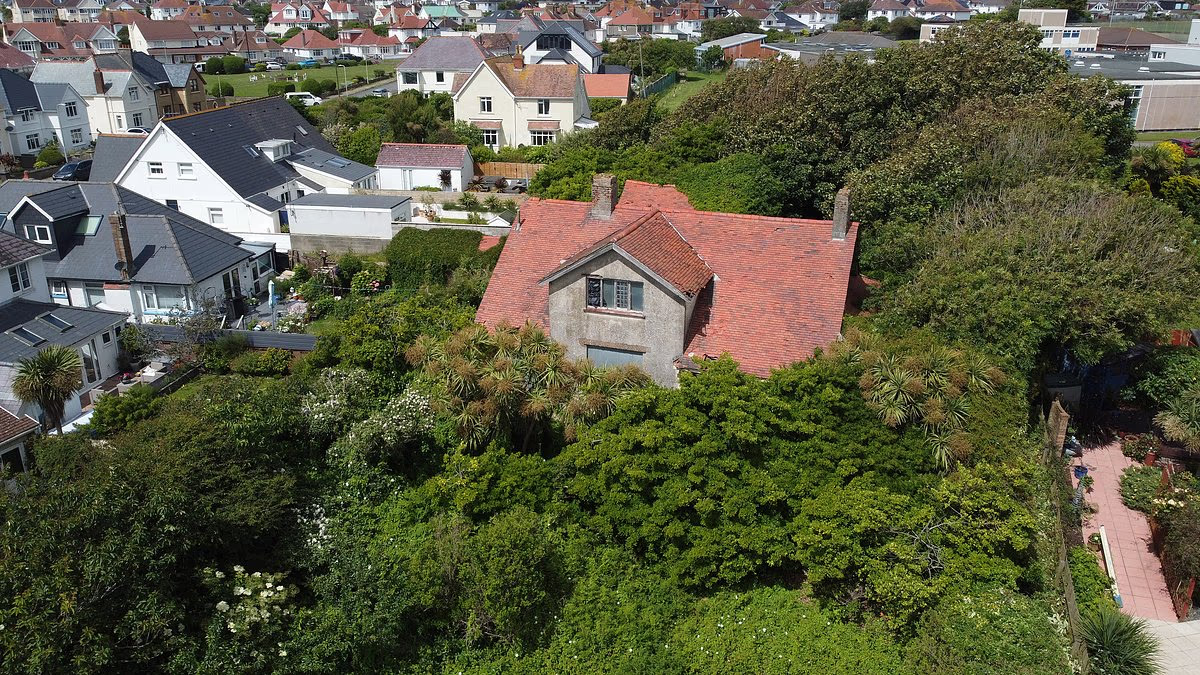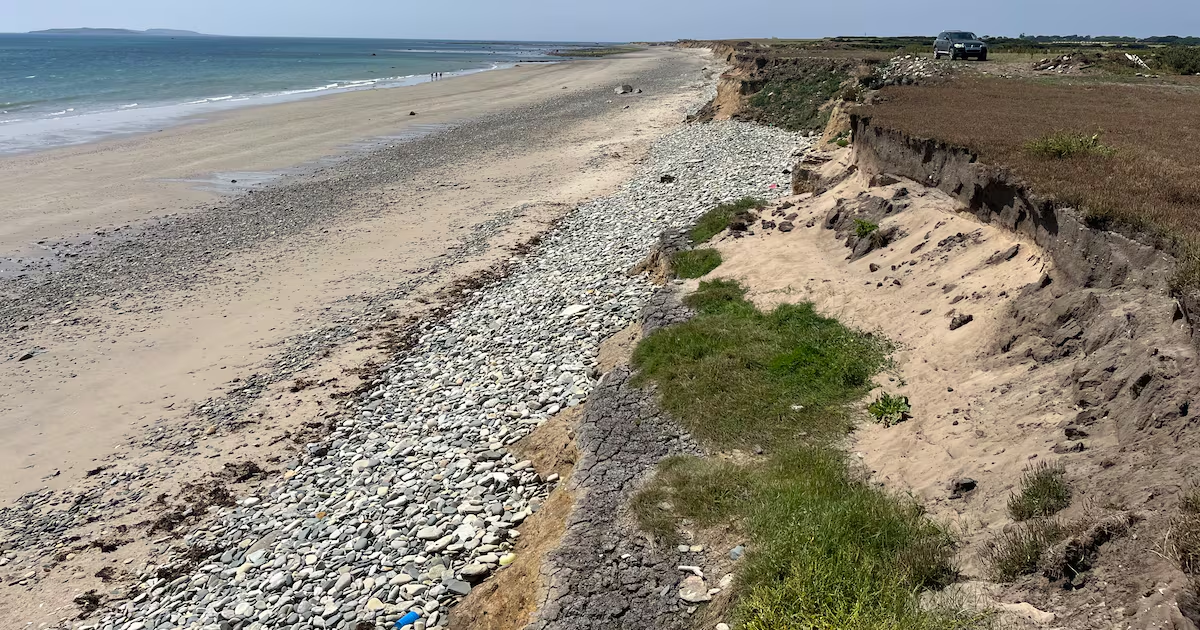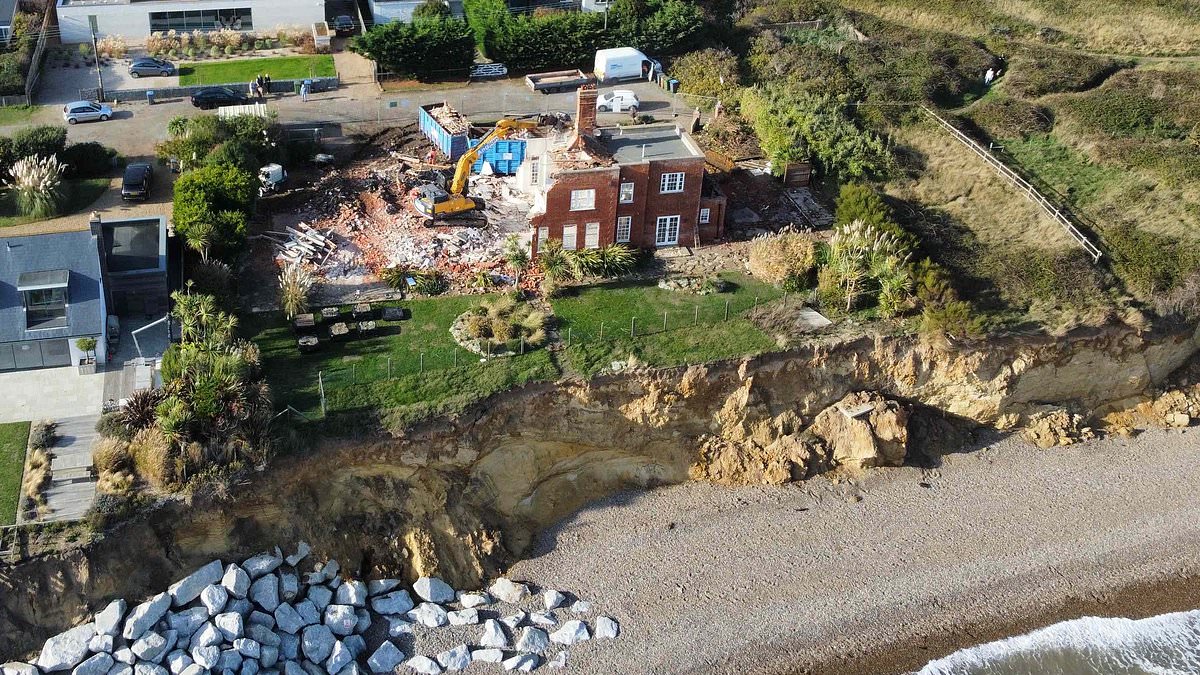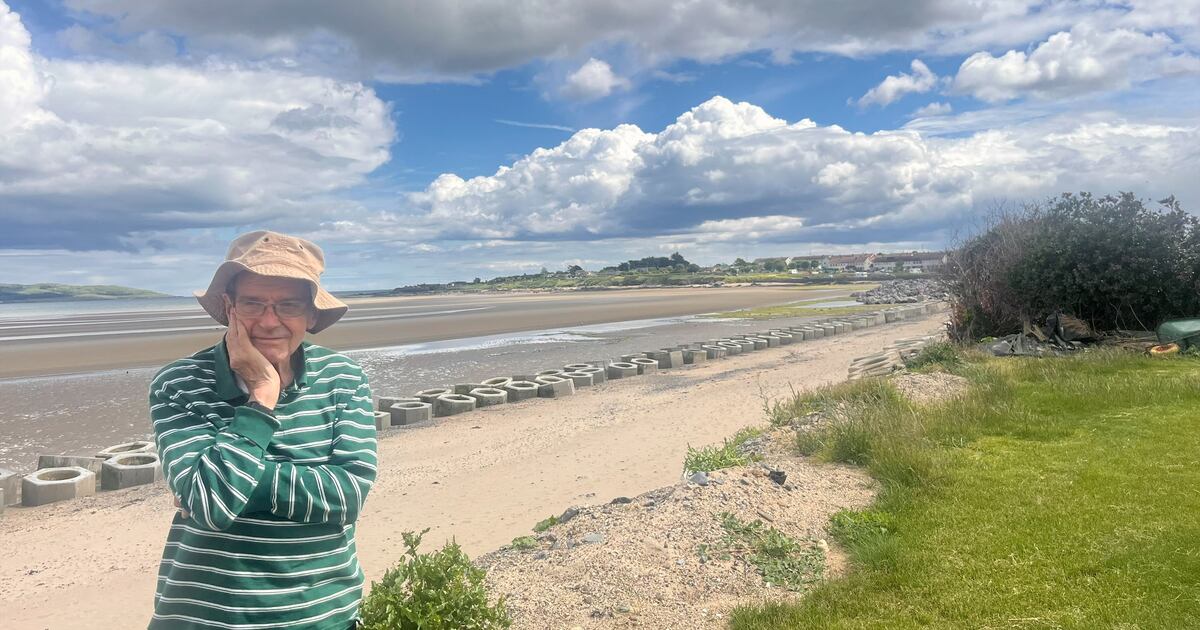
Portrane in north Co Dublin may be the most extreme example of coastal erosion in IrelandEamann Cahill has lost almost 100sq m of his garden to coastal erosion in Portrane. Photograph: Jade Wilson/The Irish Times Thu Jun 11 2026 - 06:00 • 4 MIN READEamann Cahill spends a lot of time tending to his garden. It is full of gooseberries, red berries, apple trees, plum trees and other plants. He lights up when he speaks about some of the “magic” flowers that blossom in the spring.But in recent years, he’s lost almost 100sq m (1,076sq ft) of his garden to coastal erosion. Visible from his garden, further down the coast in Portrane, north Co Dublin, people are at work in crawler cranes, lifting large rocks which will form a barrier for the homes and businesses along the stretch that’s most at risk. Originally from East Wall in the inner city, Cahill, who was previously the parish priest in Finglas, moved to Portrane in 1982. When he first moved to the area, he did a lot of canoeing. “I’d be complaining at the time that I had to carry the canoe all the way up and across the sand dunes, between here and high water. Now there’s a sheer drop at the top of my garden,” he says. “I couldn’t see the sea from my garden a few years ago. I had to go upstairs. Now I can see it on this level.”Such is the extent of the changes in just the last handful of years – the change has been “rapid”, he adds. Eamann Cahill: 'We’re all hugely concerned.' Photograph: Jade Wilson/The Irish Times Standing in his garden, where Cahill has been spending the morning collecting cuttings and taking up weeds to compost, there’s a marvellous view of Lambay Island, just a few kilometres beyond the layers of rock boulders which have been put up to protect his and other homes along the coast.“We have meetings all the time with residents groups and the local councillors. The work that’s been done so far, in fairness, has slowed down the power of the water. But when you’ve a big storm ...” he says, trailing off. Now there’s a sheer drop at the top of my garden— Eamann Cahill, Portrane residentBefore Christmas, there was a bad storm and the spray hit the glass house far down his garden. “I’d never seen that before,” Cahill says. The glass house and the raised beds in his garden were originally planted at the top, facing the sea. “Had I not moved them, they’d be down on the beach now,” he says.Cahill is speaking to The Irish Times following new research published this week by the University of Galway, commissioned by the Climate Change Advisory Council, that said the Government must start preparing to relocate communities away from coasts that cannot be saved from erosion, repeat flooding and sea level rise. [ Ireland must prepare ‘evacuation’ plans for coastal areas as climate change intensifies, says expertOpens in new window ]It said law must be written now to provide for “managed retreat” from coastal lands and money set aside to fund the costs.Almost 4,500 properties and 570km (354 miles) of road have been identified as being at risk of being lost to the sea over the next 25 years but that data comes from assessments by just eight out of the 31 local authorities across the country.Minister for the Climate Darragh O'Brien on Portrane beach in February with Kevin ‘Boxer’ Moran TD as €700,000 funding announced for flood mitigation. Photo: Collin Keegan/Collins Portrane may be the most extreme example of coastal erosion currently. Wexford has also seen similarly high volumes of erosion in recent years.Cahill is aware of such reports and recommendations, but tries “not to obsess about it”. “I can’t control it. Whatever is required, we’re trying to do it. And this stuff does take time; there is such a thing as a planning process. But of course we’re all hugely concerned,” he says.This is our home. This is serious— Lorraine Field, Portrane residentThere are nine houses along the particular stretch of Portrane in which Cahill lives that the council designates as being seriously vulnerable.“If the water were to come in, the houses on the far side are lower than we are and would also be badly affected,” he says. Lorraine Field, who is one of those neighbours, says: “If water comes over that bank, down is the way it’s coming, and we’re on a slight slant downwards. It hasn’t happened yet, but it’s getting hairy.”She recalls moving to the area when there were “metres and metres of dunes” between the houses and the beach. When those began disappearing, a boardwalk was put down, “but that was demolished by the sea, and then the gardens started to be demolished”. While work has been “slow”, part of the problem was that the area is a special area of conservation. The neighbours were all conscious of that too, but wanted works to press ahead. However, there were objections at various stages of planning processes. “The council and the Office of Public Works were tied,” she says. “Now that it’s an emergency, it’s different.”Field says she would never want to relocate. “When I first came out here to visit a friend 40 years ago, I said: this is where I want to live. I fell in love with it. I still love it,” she says. “But sometimes you see the weather forecast and all of a sudden you think: ‘Oh my God.’ I used to worry about just one particular house and now I worry about the lot of them.”There’s a “strong community” in the area, who check on each other, particularly if there’s a storm. “You find that during war ... And this feels like war,” she says.“This is our home. This is serious. So of course we’re going to band together.” IN THIS SECTION
‘There’s a sheer drop at the top of my garden’: The Dublin homes facing coastal erosion
Portrane in north Co Dublin may be the most extreme example of coastal erosion in Ireland currently
987 words~4 min read