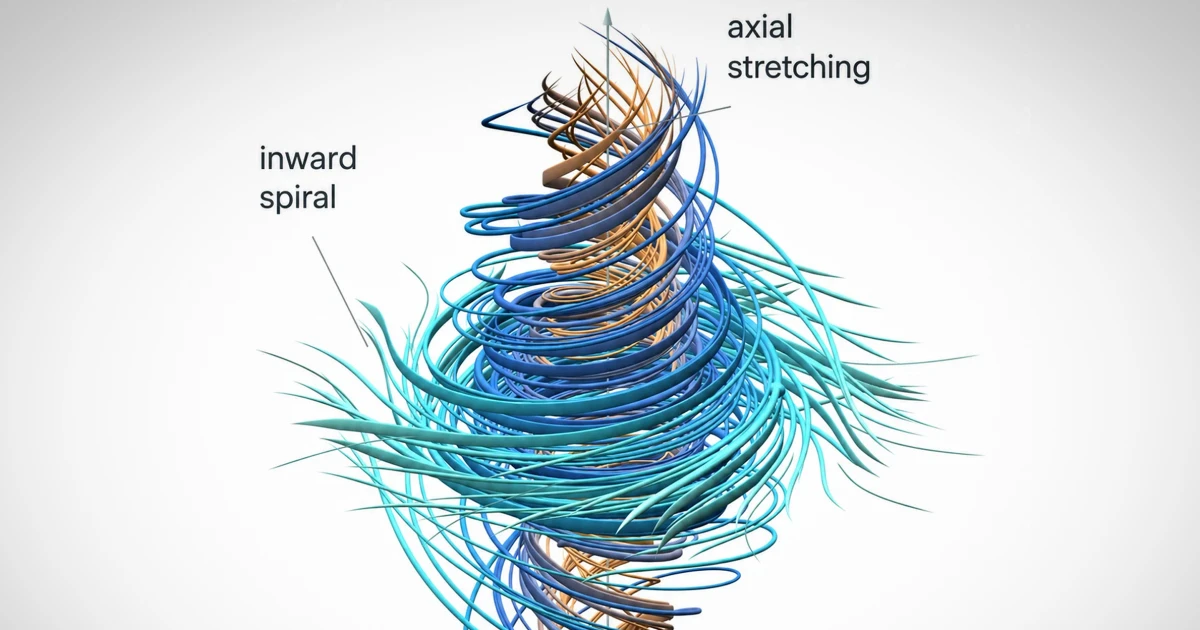
Most anyone involved in computing has heard about the P-NP problem, but fluid engineers and mathematicians would love to know if the Navier-Stokes equations have smooth, globally defined solutions. Both questions are part of the Millennium Prize Problems, solutions to which are worth a cool $1 million and eternal renown. OpenAI is claiming that its staff and internal models have solved the conditions of Navier-Stokes solutions set forth in the Millennium Prize. But the company's shouting from the rooftops is being met with a chorus of boos over claims it might have plagiarized the work of a research team that had been toiling on a related, stepping-stone problem for a year.Tristan Buckmaster (a scientist at NYU) and Levent Alpöge (a member of Anthropic's staff) had been quietly working on proving Euler's equations — another long-standing mathematical problem, and one that is generally acknowledged to be a stepping stone to solving Navier-Stokes.
OpenAI solution for the Navier-Stokes problem overshadowed by plagiarism controversy — researcher working on related proof claims his work with Codex influenced OpenAI's direction
OpenAI announced that a team using one of its internal frontier models has solved the Navier-Stokes problem. However, the announcement has been mired in controversy.
151 words~1 min read