Free daily briefing on global business news.
The lab used roughly 10,000 AI agents to crack the Navier-Stokes problem, but rivals contested OpenAI's account of events before the proof was published
Cheng Xin / Getty Images
OpenAI published a claimed solution on Tuesday to the Navier-Stokes existence and smoothness problem, one of seven Millennium Prize Problems — a set of mathematical questions that carry a $1 million award each. The proof was produced by an internal AI model, not human mathematicians.
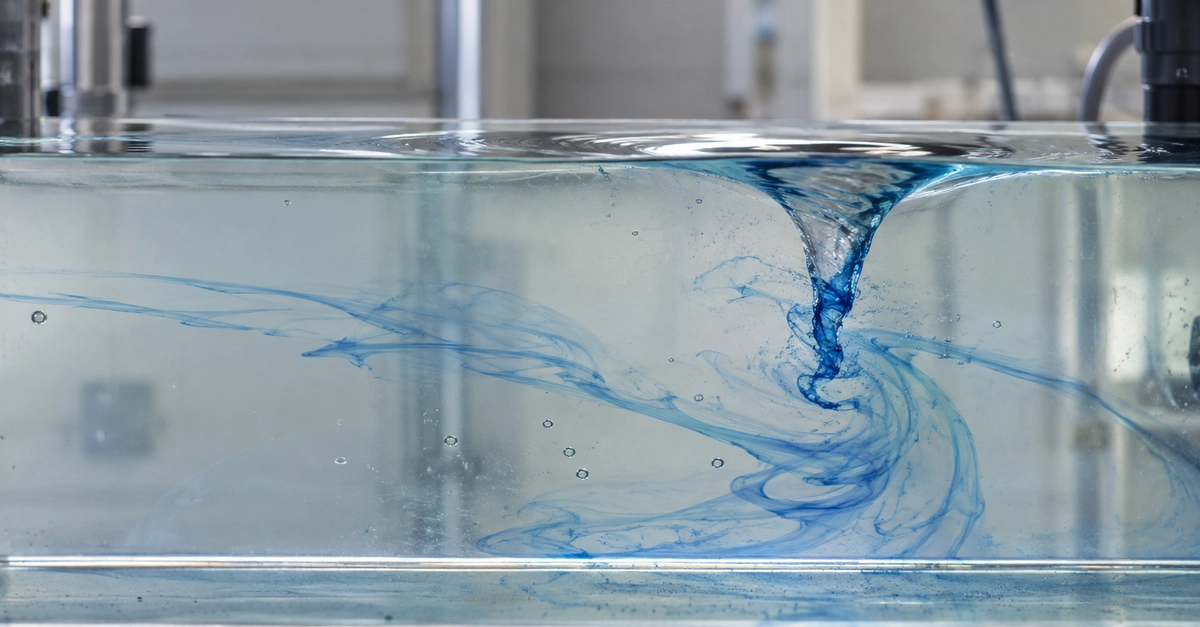
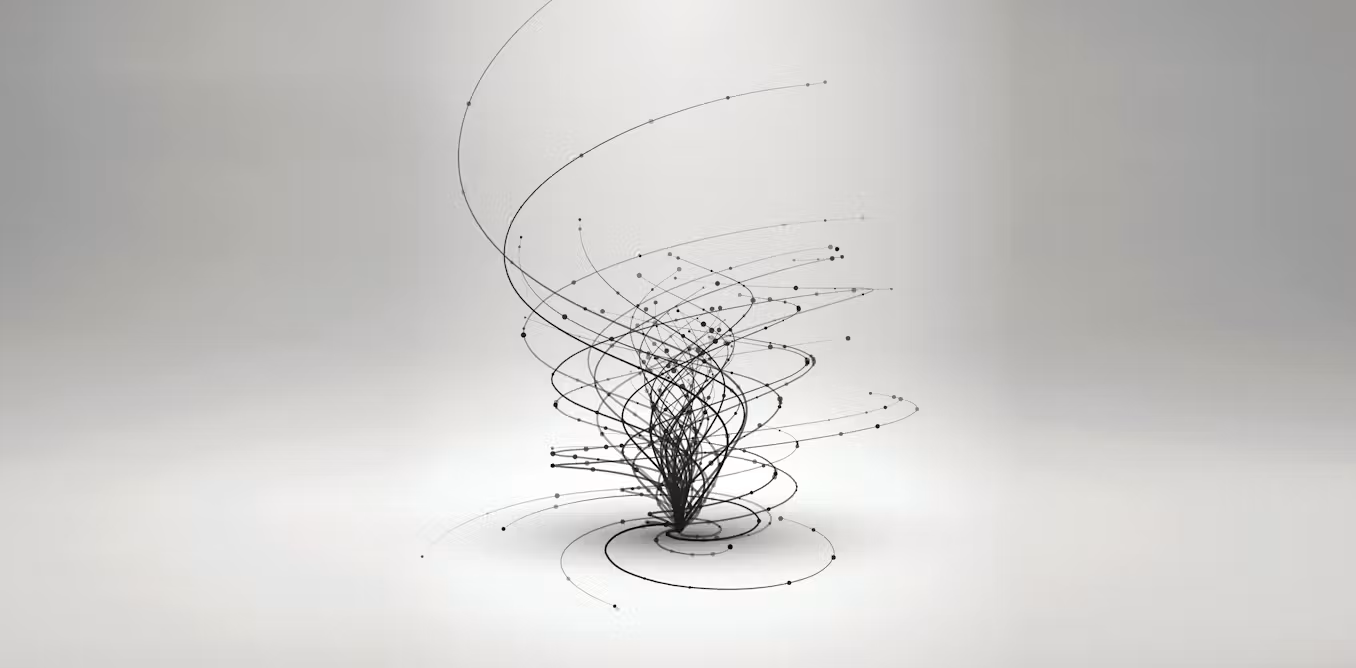
Only one Millennium Prize Problem had previously been solved. The Navier-Stokes problem, which has gone unresolved for roughly 90 years, asks whether smooth three-dimensional fluid motion can break down under the equations that govern how liquids and gases move. OpenAI's model found that it can, describing a configuration in which a vortex tightens and spins ever faster — a phenomenon mathematicians refer to as finite-time blowup — while the fluid's energy stays bounded throughout.