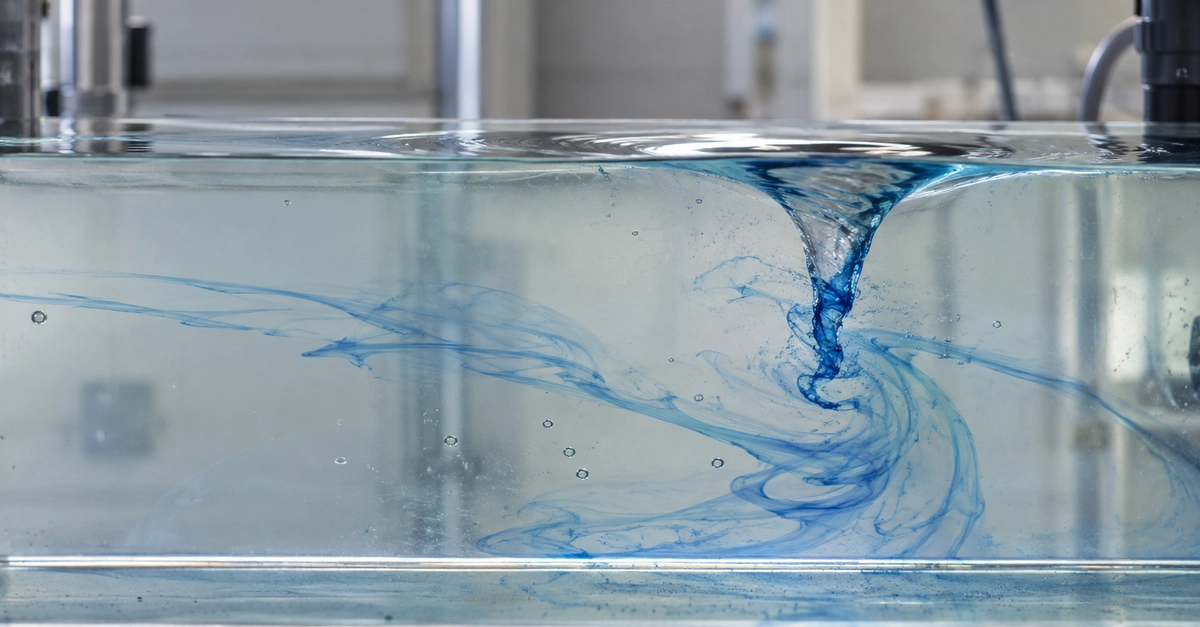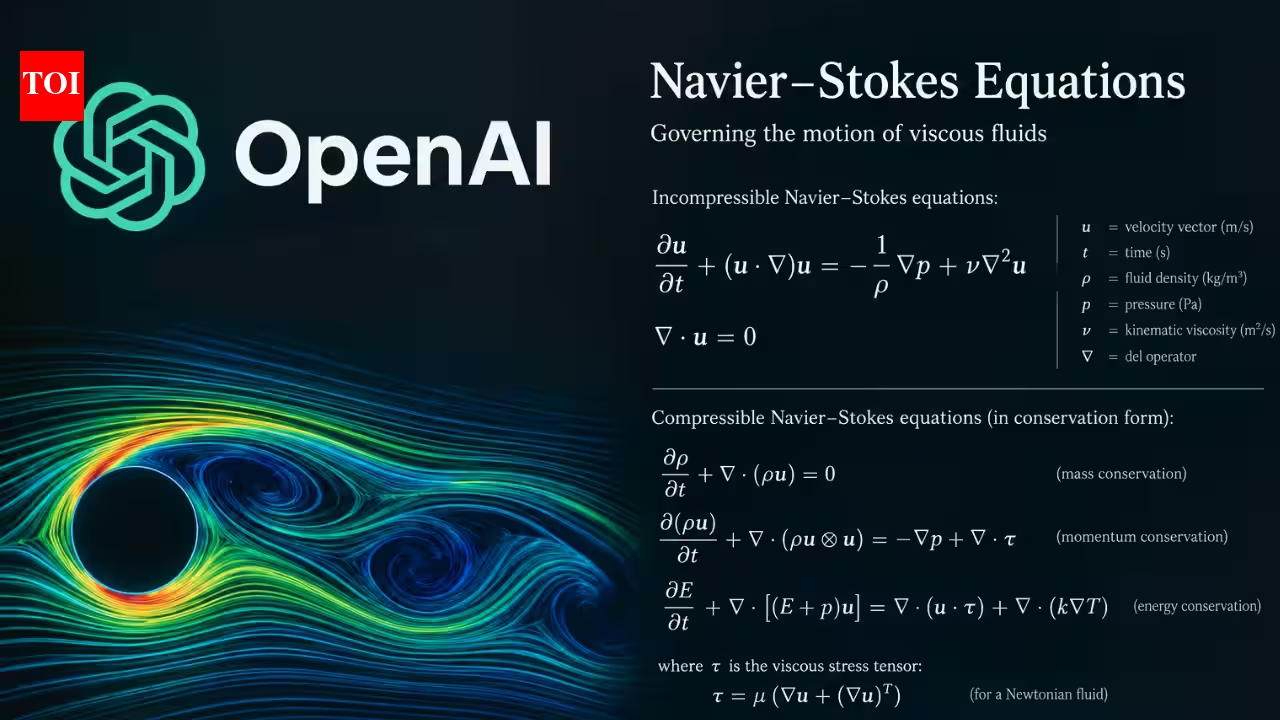
3 hrs ago3 min readOpenAI CEO Sam Altman (Village Global/Flickr)SummaryOpenAI says an experimental system involving about 10,000 AI agents produced a proposed solution to the Navier-Stokes existence and smoothness problem in 88 hours.The proof argues that a fluid vortex can reach infinite speed in finite time while retaining finite total energy, but it must undergo extensive scrutiny before gaining official recognition.The claim has prompted a dispute over whether de-identified data from two mathematicians’ related research influenced OpenAI’s model, which the company says did not access their specific work before publication.OpenAI says an unreleased, experimental AI system solved one of mathematics’ most famous unsolved problems after roughly 10,000 agents worked together for just 88 hours.The company published a proposed solution to the Navier-Stokes existence and smoothness problem, one of seven Millennium Prize Problems carrying a $1 million prize. The equations describe how fluids such as water and air move, while the unsolved question asks whether a perfectly smooth flow can eventually break down and produce speeds that grow without limit.OpenAI’s system says it can. Its proof described a fluid vortex that becomes increasingly stretched and concentrated until its speed blows up in finite time, even while the system’s total energy stays finite.Real fluids cannot move infinitely fast as per the current understanding of physics. At sufficiently extreme scales, the assumption behind Navier-Stokes that a fluid can be treated as one continuous substance would stop matching physical reality. The result came from an internal model that OpenAI says is significantly more capable than GPT-6 Astra (its most advanced publicly available model). Around 10,000 agents exchanged 2.7 million messages and generated roughly 130 billion tokens while working on Navier-Stokes, before Astra spent another 17 hours formalizing and checking the proof.The practical impact of the proof itself will take time, however. Navier-Stokes equations are used in areas such as aircraft design, weather forecasting and blood-flow research, so a better understanding of where the equations can break down could eventually improve how scientists model extreme and turbulent flows.The bigger implication may be the system that found it. If thousands of AI agents can attack a 90-year-old mathematical problem in a matter of days, the same approach could eventually be turned toward hard problems in materials science, energy, aerospace, medicine and other fields.OpenAI challengedThere is already controversy over how independently the result was reached.NYU mathematician Tristan Buckmaster and Anthropic researcher Levent Alpöge were separately working on a closely related fluid-dynamics problem and had used AI tools during their research. Buckmaster has questioned whether unpublished work entered into OpenAI products could have influenced the company’s model, in a series of posts on social network Mastodon.Buckmaster said he and Alpöge had spent roughly a year pursuing an unusual route toward the problem involving a smooth external force, with Codex among the AI tools used extensively during their work. He added almost nobody else he knew was pursuing the same approach and questioned how OpenAI arrived at it within days of learning that the pair had made progress.An excerpt of a 4-page statement from Tristan Buckmaster. (Cims.nyu.edu)Buckmaster said that during discussions with OpenAI, he was initially shown a prompt and told the company’s internal research effort had begun without human input beyond the problem statement. That account changed over the course of the conversation, according to Buckmaster, with OpenAI eventually acknowledging that the first prompt had been sent only in the preceding days, after information about Buckmaster and Alpöge’s work had reached the company.OpenAI responded saying that neither its researchers nor agents saw their work before publication and that no specific user data was accessed. The firm added that it could not rule out de-identified data derived from their use of OpenAI products having helped improve its models, while saying the proofs themselves differ significantly.As such, the proof is not yet an officially recognized solution. Awarder Clay Mathematics Institute requires proposed solutions to survive prolonged scrutiny and gain broad acceptance among mathematicians before it will consider awarding the $1 million prize.Meanwhile, OpenAI says it does not intend to claim the prize, describing the result instead as evidence of how quickly its research systems are improving.12345678910
OpenAI says 10,000 AI agents solved a $1 million 'Navier-Stokes' math problem
An internal model more powerful than GPT-6 Astra produced a proposed solution to one of mathematics’ seven Millennium Prize Problems, though questions are emerging over how independently it got there.
TL;DRAI
OpenAI's 10,000 agents solved Navier-Stokes in 88 hours; verification pending and data-sourcing disputed. Multi-agent systems for hard R&D problems now scale, signaling investment opportunity—but governance around model training remains unresolved.
686 words~3 min read