OpenAI says it cracked one of the hardest unsolved problems in mathematics. Two researchers think the company’s AI might have peeked at their homework along the way.
On September 8, OpenAI announced that its internal AI model had produced a solution to the Navier-Stokes existence and smoothness problem, one of seven Millennium Prize Problems established by the Clay Mathematics Institute. Only one of those problems, the Poincaré conjecture, had ever been solved before. If verified, this would represent the second solution in the program’s 26-year history, and the first generated primarily by artificial intelligence.
What OpenAI claims to have done
The solution was reportedly generated by approximately 10,000 autonomous AI agents working in coordination over 88 hours, beginning around September 1. The computational effort was followed by a 17-hour period of formal verification using Lean, a proof assistant language, conducted with the recently released GPT-6 Astra model.
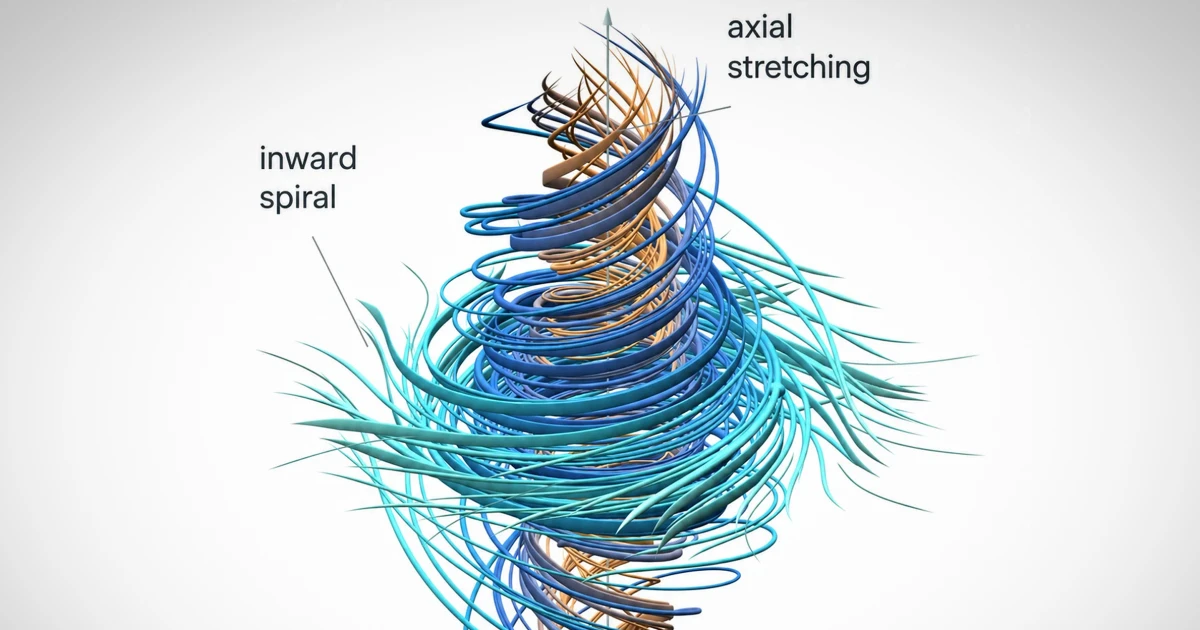
The result specifically demonstrates the possibility of a finite-time singularity, or “blow-up,” in three-dimensional solutions to the Navier-Stokes equations. In plainer terms: the AI found a scenario where the equations describing fluid flow break down, producing infinite values in finite time. That matters because the Millennium Prize challenge essentially asks whether such breakdowns can occur.