The artificial intelligence (AI) company OpenAI has come under scrutiny after concerns that it may have used unpublished work by two mathematicians to scoop their solution of one of mathematics’ hardest open problems.The Navier-Stokes equations describe the motion of fluids such as water and air. As OpenAI wrote on its website, the equations “use Newton’s second law of motion to describe how fluids move” and have applications in “aircraft design, weather forecasting, and the study of blood flow”.The open problem asks whether the equations always spit out sensible results about how an incompressible fluid flows in three dimensions in finite time or if its answers tend to infinity or become undefined, an outcome called a finite time blow-up.New York University mathematician Tristan Buckmaster and Anthropic researcher Levent Alpoge had reportedly spent the last year working on a very particular solution to the problem, building on the work of their peers Diego Córdoba and Luis Martínez-Zoroa.In this approach, the equations are modified to include a smooth external force driving the fluid to behave in unexpected ways.Buckmaster and Alpoge had reportedly made a breakthrough by mid-August, heavily assisted by large language models (LLMs) including Anthropic’s Claude and OpenAI’s GPT-5.6. They were in the process of cleaning up the proofs and preparing a readable paper when events took an unexpected turn.According to a statement Buckmaster published online on September 8, he had contacted an OpenAI researcher last week after hearing that the company was probing rumours that Anthropic had solved a major mathematical problem.Then, on September 6, Buckmaster said he joined an urgent discussion called by OpenAI computer scientist Sebastien Bubeck and another company representative, where Bubeck allegedly revealed that OpenAI had committed resources worth “millions of dollars” to solve the Navier-Stokes problem in under four days.However, Buckmaster said, he found OpenAI had used the same approach he and Alpöge had been working on, which for him raised a “bright red flag”.The revelation raised concerns as to whether OpenAI had managed to access the researchers’ unpublished efforts on Codex, an OpenAI tool where Buckmaster said he had been logging his and Alpoge’s progress.While Buckmaster said OpenAI told him that the internal model had not “looked up user data”, he also did not receive a direct answer when he checked whether the model had been trained on his and Alpoge’s work.Buckmaster also alleged that Bubeck had proposed arrangements that Buckmaster rejected to publish OpenAI’s work that would have excluded Alpöge from authorship, as the latter works for OpenAI rival Anthropic. Bubeck has since called the allegations “false and inflammatory”.OpenAI’s claimed proof of the Navier-Stokes problem had yet to be released at the time of writing. Mathematicians have also expressed concerns about whether the proof could be human-readable and sufficiently detailed.The Navier-Stokes problem is one of the seven Millennium Prize problems designated by the Clay Mathematics Institute, New York. The solution to each problem carries a reward of $1 million. That said, any claim to a solution must first survive rigorous scrutiny lasting multiple years.Published on September 9, 2026
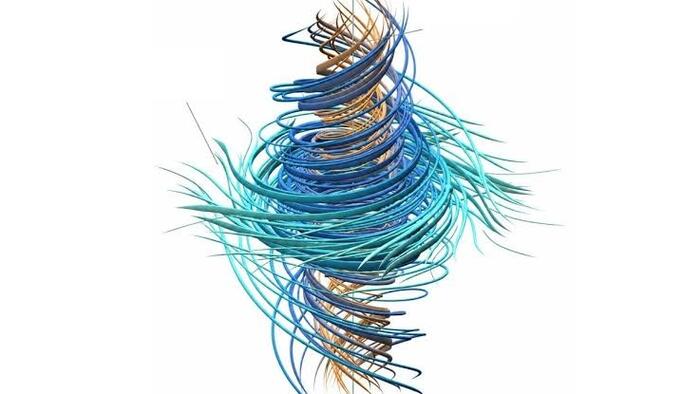
OpenAI faces scrutiny over alleged Codex leak for Navier-Stokes
Mathematician Tristan Buckmaster says the company’s claimed proof followed the same approach he and Anthropic’s Levent Alpoge were preparing to publish
TL;DRAI
OpenAI solved Navier-Stokes in four days replicating Buckmaster-Alpoge's work, fueling unauthorized Codex access allegations. Critical signal for tech leaders: data governance risks in proprietary platforms and IP conflicts when competing AI vendors pursue breakthroughs.
504 words~2 min read