Academia
When freak disasters render historical weather data useless, Indonesia's real climate crisis isn't about predicting the next storm—it’s learning how to govern a future that no longer plays by the rules.
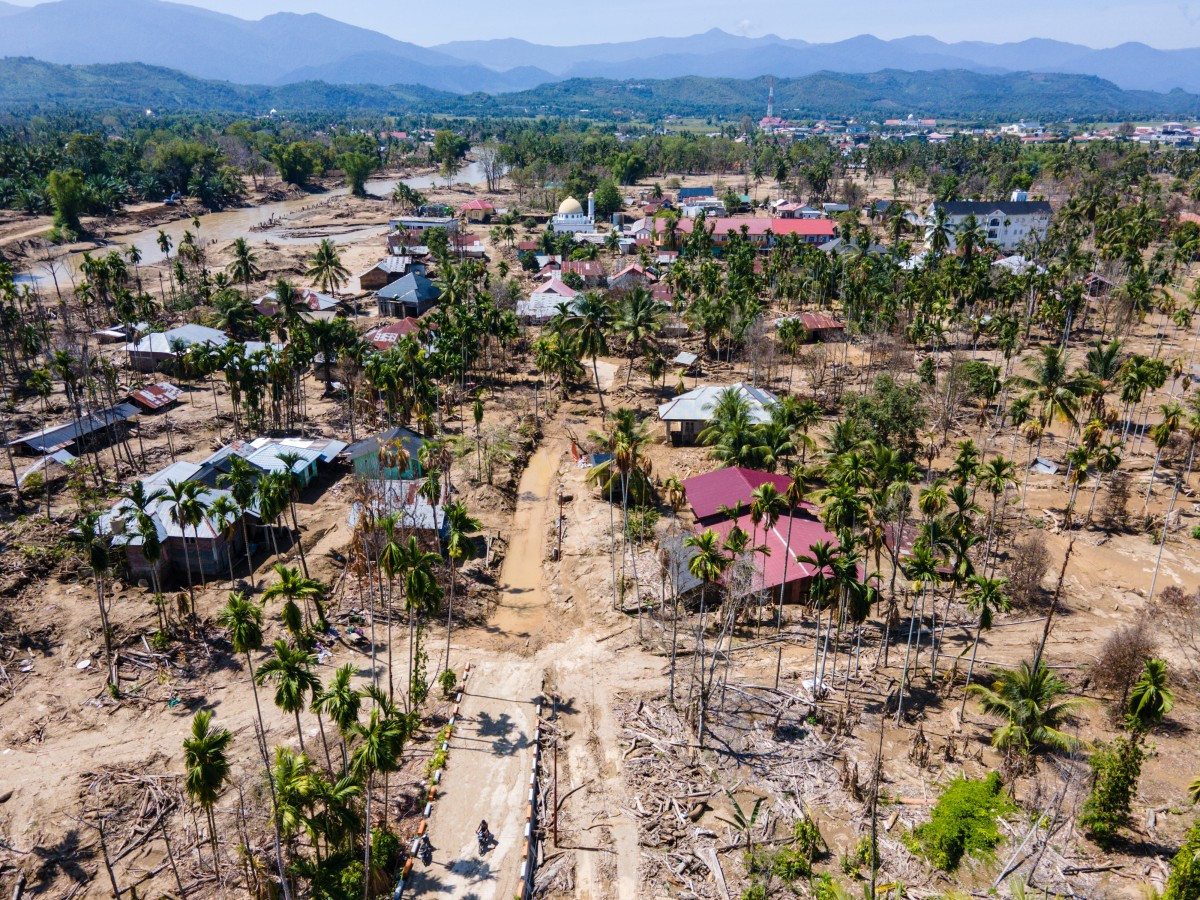
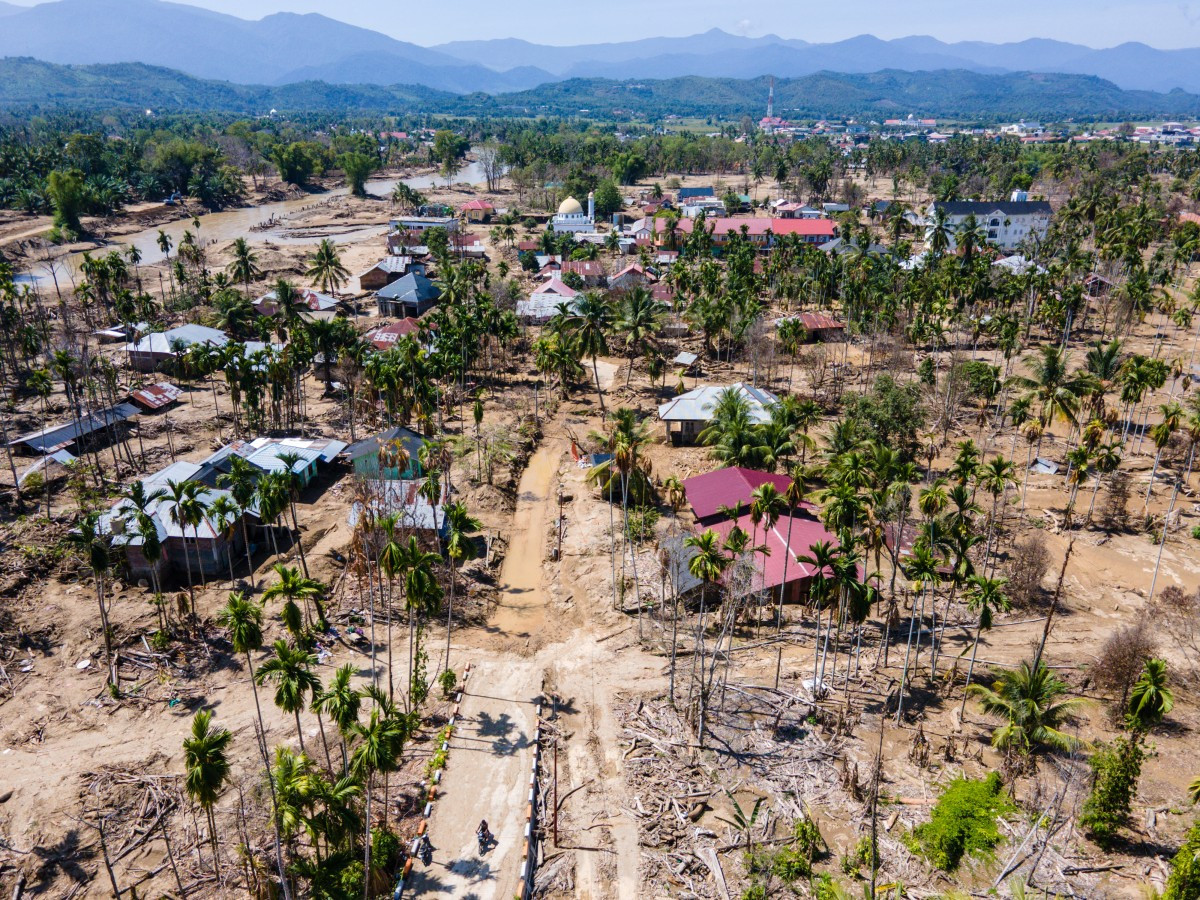
An aerial view shows flood damage to a residential area in Meurah Dua, Pidie Jaya regency, Aceh on Feb. 22, 2026, after devastating cyclone-induced floods and landslides struck northern Sumatra in November 2025. In hardest-hit Aceh, which accounted for most of the more than 1,000 deaths, families have become increasingly frustrated over authorities' sluggish response. (AFP/Chaideer Mahyuddin)
What does a massive glacial landslide in the Nepalese Himalayas have to do with a tropical cyclone churning through the Malacca Strait?Physically, almost nothing. One struck high among Central Asian peaks; the other developed thousands of kilometers away in the equatorial waters of Southeast Asia. They occurred months apart, driven by entirely different mechanics of earth and sky.
Set them side by side, however, and a sharper question emerges, one meant less for meteorologists than for governments: What happens when the historical assumptions we use to plan for risk stop holding up?