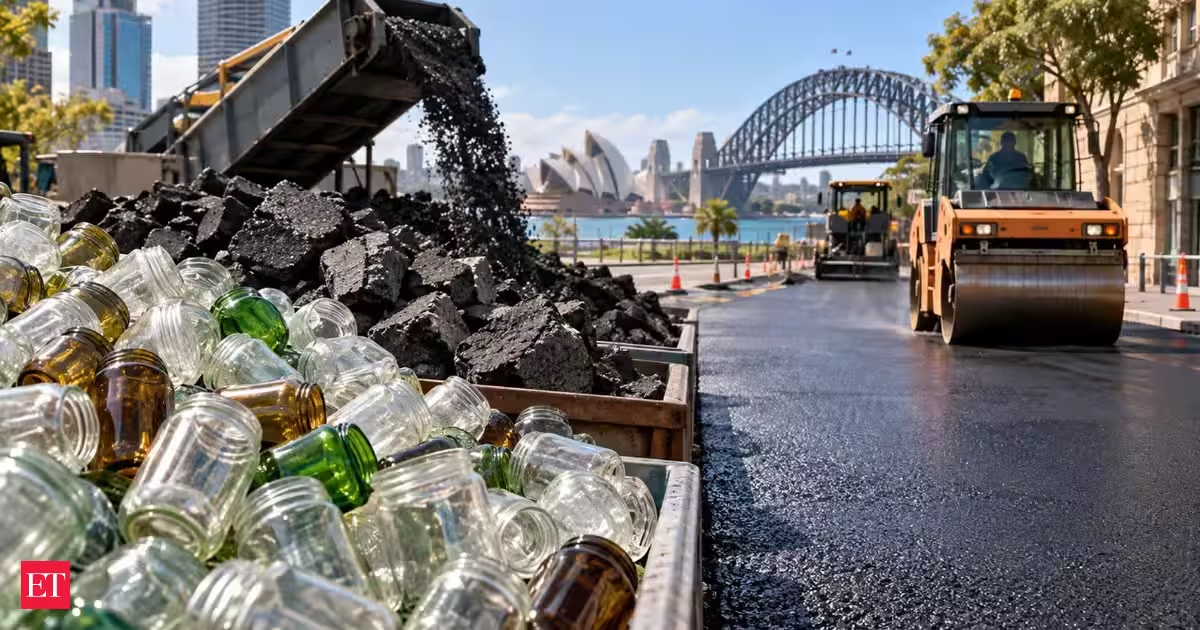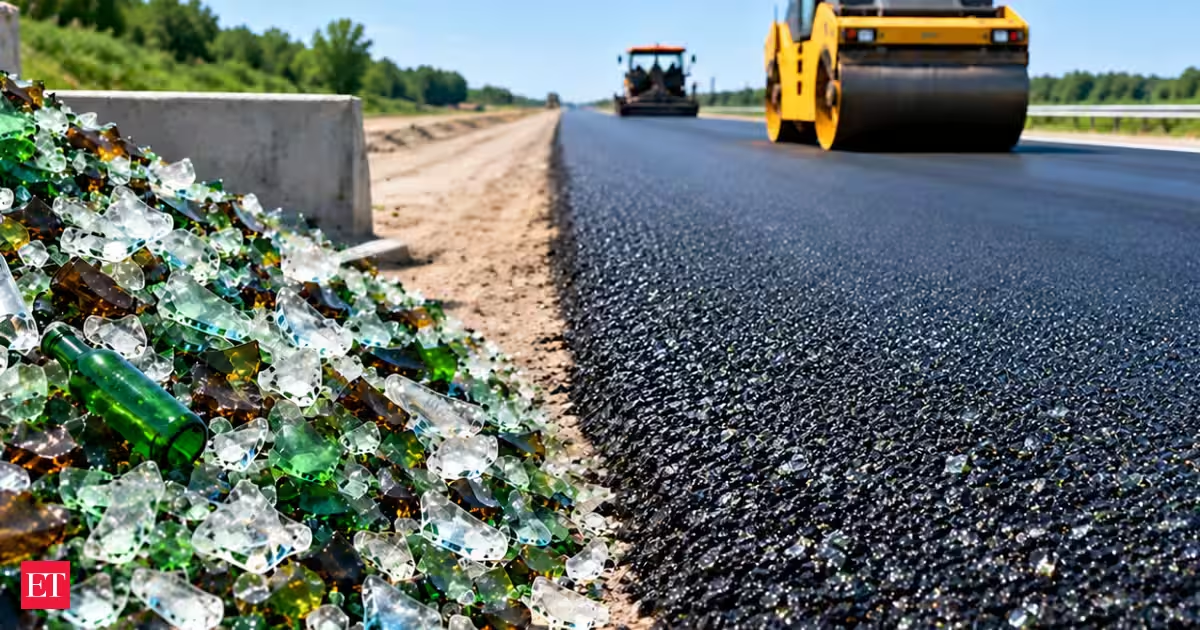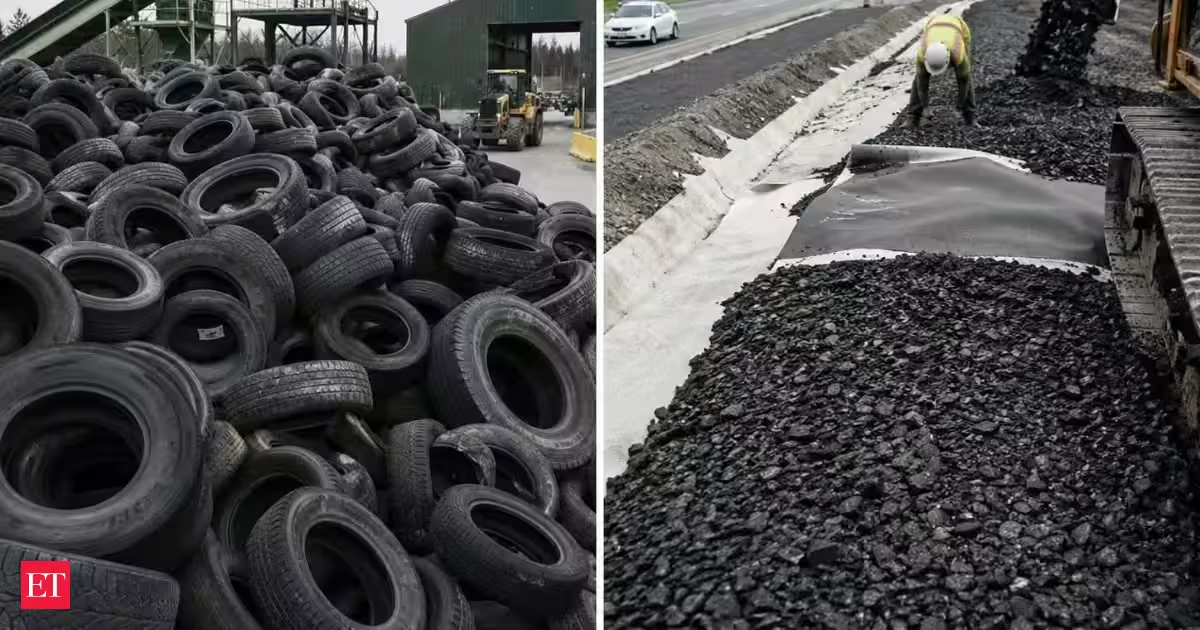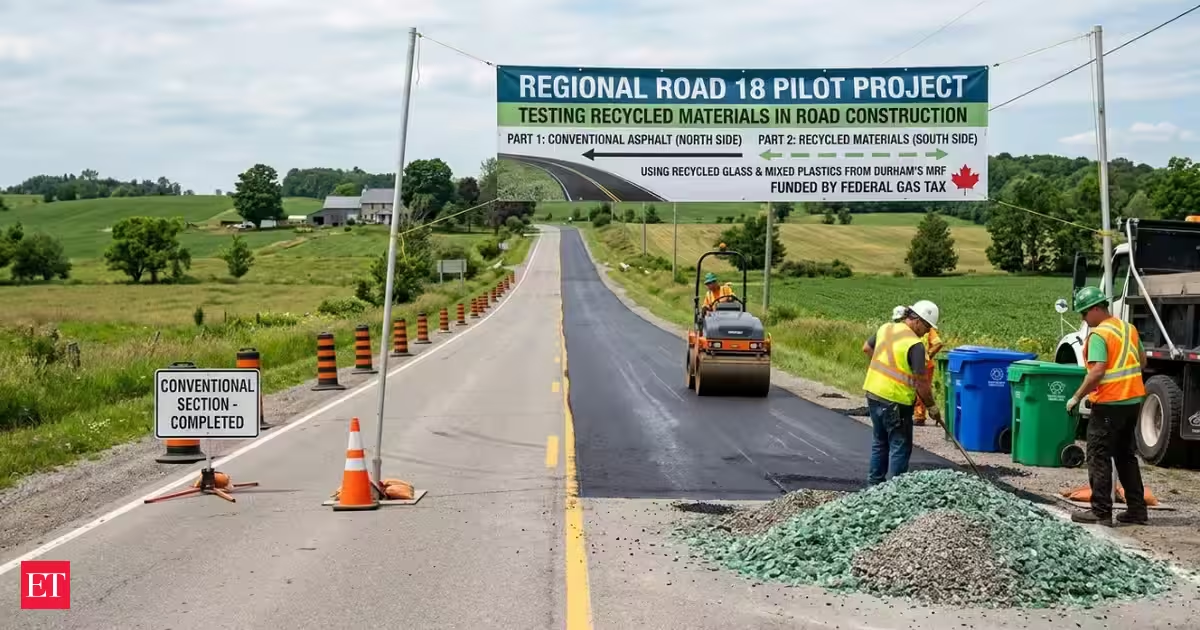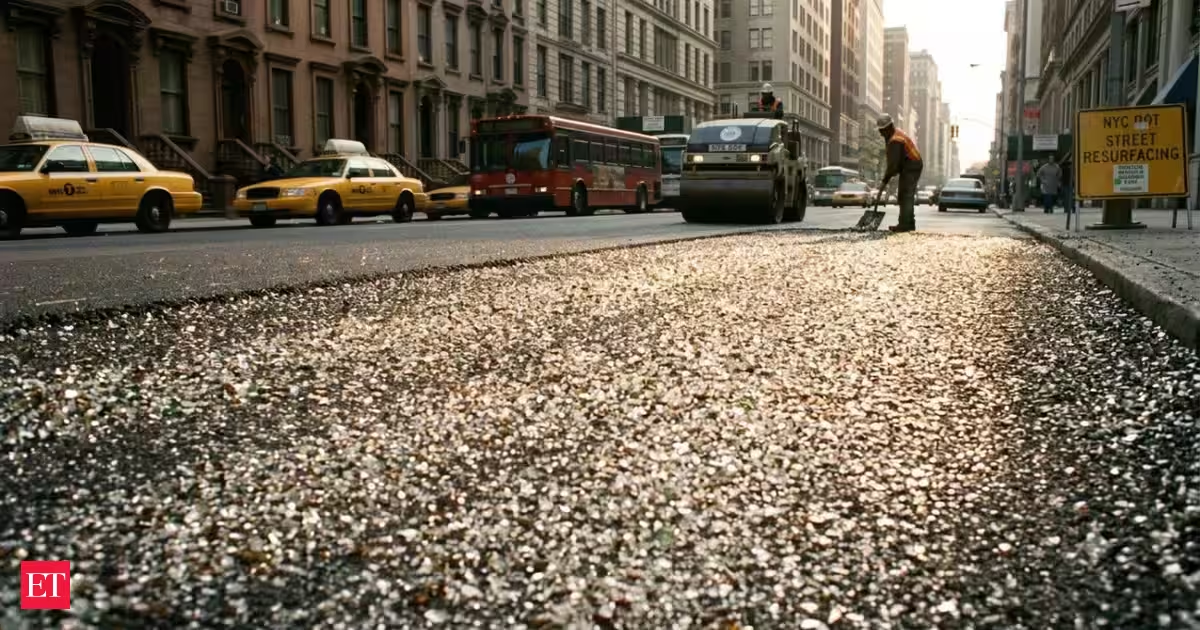
New York City had the most aggressive waste-glass paving program described in research into recycled materials for road construction.Between 1990 and 1995, the New York City Department of Transportation used approximately 225,000 metric tonnes, or 250,000 tons, of waste glass in resurfacing applications. The use of waste glass followed years of research and field demonstrations examining whether crushed glass could replace conventional aggregate in asphalt pavement.How waste glass was tested for road constructionStudies in the United States and Canada examined waste glass as an aggregate substitute in hot mix asphalt in the late 1960s and early 1970s. Field demonstrations included test paving strips at about 33 locations across the US and Canada, as per a FHWA report.Baltimore later used glass in street pavement on at least 17 streets between the mid-1970s and mid-1980s. The glass created a distinctive “sparkle” when sunlight or street lamps reflected from the pavement.Research on Long Island in the mid-1980s led to the development of a glass processing plant that processed more than 12,600 metric tonnes, or 14,000 tons, of mixed waste glass for use as an aggregate substitute in paving.You Might Also Like:How crushed glass is used in asphaltWaste glass needs to be crushed and screened before it can be added to asphalt. Processing helps produce appropriately sized particles while removing flat, elongated and sharp-edged pieces.For surface pavements, the best results have been associated with using crushed glass as a fine aggregate, with particles smaller than 4.75 millimetres. The glass can be blended with conventional aggregates using standard mix-design procedures.Larger particles can be used in base or binder courses. Glass measuring about 9.5 to 15.3 millimetres can be suitable for base-course applications, where pavement is less exposed to some of the concerns associated with surface mixes.Why particle size mattersOne of the main concerns with waste glass in asphalt is stripping, in which the asphalt cement binder separates from the glass.You Might Also Like:Glass does not absorb asphalt cement and is hydrophilic, so moisture-related damage can become a concern. Early “glasphalt” projects sometimes used more than 25% glass by weight along with coarse particles larger than 12.7 millimetres. Later data indicated that high glass percentages and larger particles contributed to stripping and raveling problems.For surface mixes, keeping the glass below 4.75 millimetres and limiting the amount to about 10% to 15% can help achieve performance comparable to conventional mixes.Glass can also be brittle, meaning larger particles may break during handling. Particles larger than 19 millimetres can become slick when wet and should be avoided in surface mixes.How glass affects pavement performanceProperly sized crushed glass has a highly angular shape compared with conventional rounded sand. This can increase friction between particles and contribute to mix stability, with stability reported as comparable to and sometimes better than conventional mixes.You Might Also Like:Glass also has low absorption, lower specific gravity and low thermal conductivity. Its lower specific gravity means a ton of glass can produce a greater volume of asphalt concrete than a ton of conventional aggregate.Studies have reported skid resistance within recommended limits when glass is appropriately sized. However, higher amounts of glass can increase reflectivity, creating potential glare, particularly on wet pavement. Smaller particles and lower percentages can reduce this effect.Preparing glass for asphaltWaste glass collected for pavement must be processed to remove materials such as ferrous and nonferrous metals, plastic and paper.Processing methods can include screening, magnetic and eddy-current separation, air classification and handpicking. Complete removal of unwanted material is unlikely, but an acceptable product can be produced, particularly when glass accounts for only 10% to 15% of the mix.Excess debris from material recovery facilities can affect asphalt quality by increasing void content, although adjustments to asphalt content and gradation can address some of these effects. Recent recommendations have suggested limiting debris to about 5% of the glass weight.Hydrated lime has also been used as an antistripping agent, at about 2% of aggregate weight in previous demonstrations.What limited wider useMost highway departments have allowed relatively small amounts of recycled glass in pavement, commonly around 5% to 10%, as per the FHWA report. Research has generally favored fine glass for surface applications, while larger particles can be used in base courses.Waste glass can be handled, mixed, placed and compacted using methods and equipment similar to those used for conventional aggregate. Standard laboratory and field quality-control procedures can also be applied.The main challenges to wider use have included developing consistent specifications for glass size, debris and mix limitations, as well as maintaining an adequate and reliable supply of properly processed material.New York City was one of the few places where the quantity of waste glass produced and collected provided enough incentive to establish a continuous market for using the material in pavement.
In 1990, New York City began recycling waste glass into street pavement. 5 years later, the city had reused 250,000 tons of glass in resurfacing projects across the city
Discover how New York City's innovative recycling program turned waste glass into street pavement, reusing 250,000 tons of glass and setting a benchmark for eco-friendly urban development.
784 words~4 min read