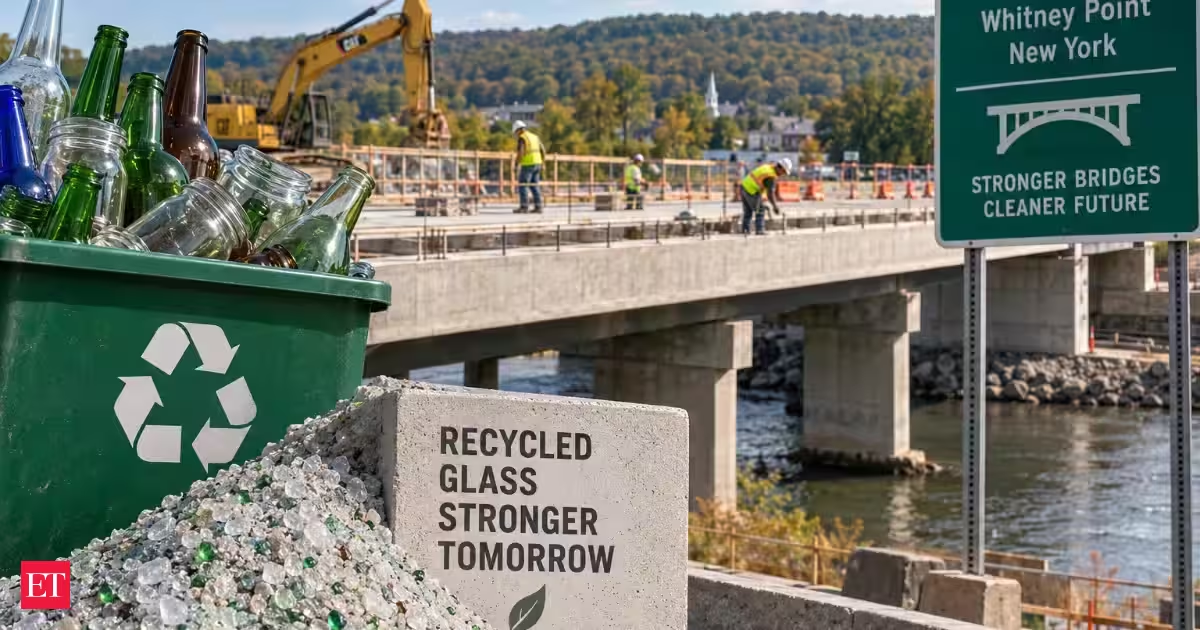
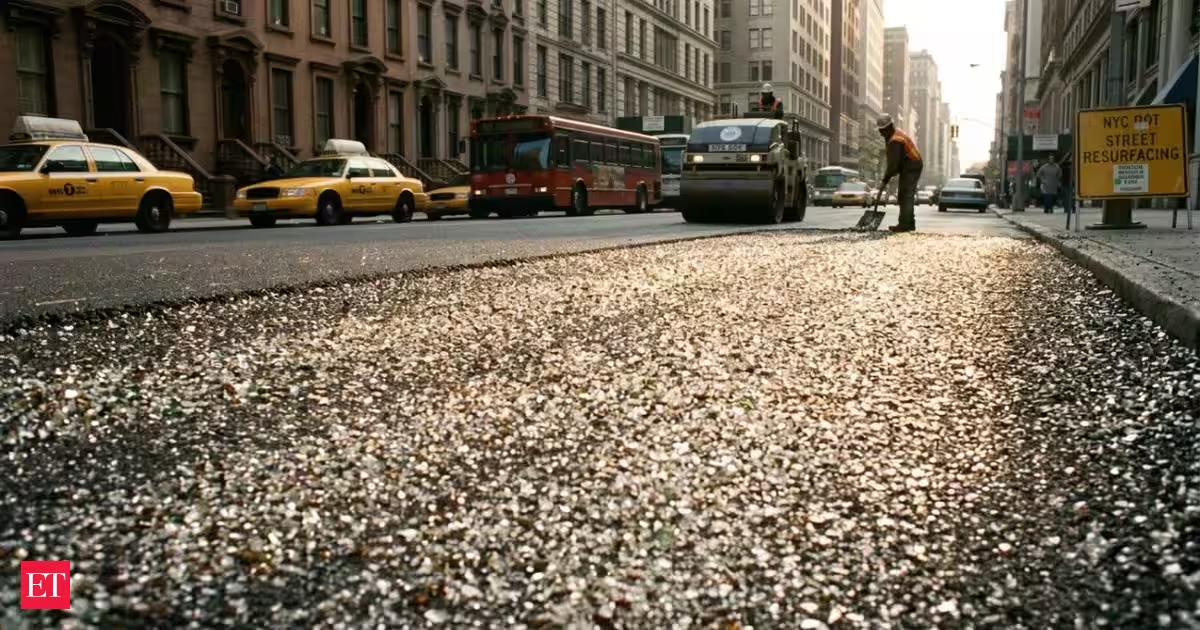
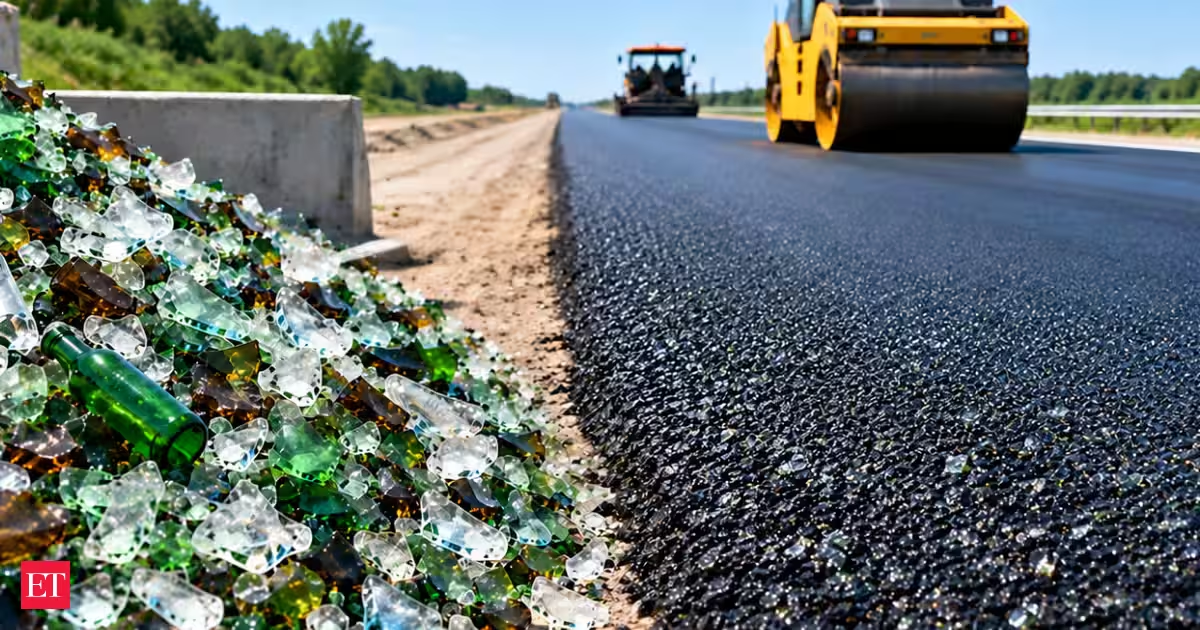
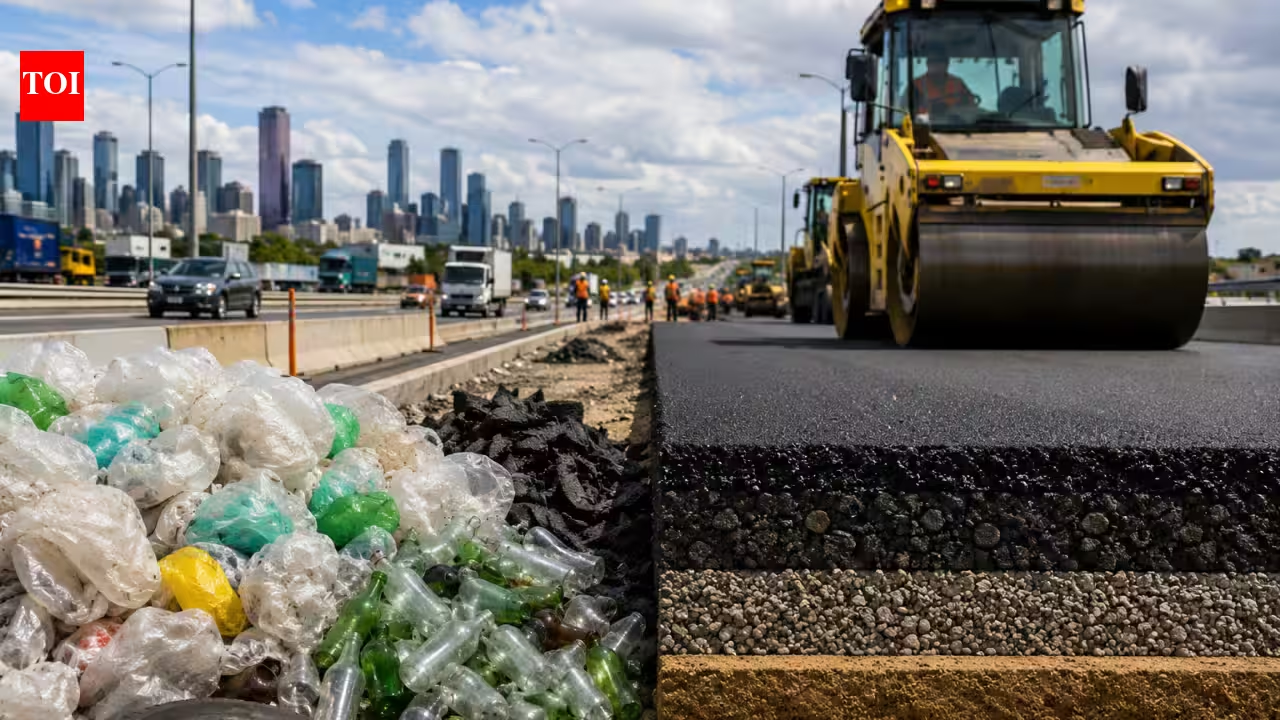
Discarded glass usually ends up in recycling bins, processing plants or landfills. But in Idaho, engineers once found a surprisingly useful place for it — under a highway.In 2002, nearly 300 tonnes of unwanted glass from central Idaho faced an uncertain future. Instead of sending it away or burying it in a landfill, engineers crushed it into small pieces called glass cullet and used it as part of the foundation beneath Highway 75 near Ketchum.It was an unusual experiment that tackled two problems at once: what to do with low-value waste glass and how to reduce the need for conventional road-building materials.Turning bottles into a road foundationThe pilot project covered a roughly 200-foot stretch of Highway 75, where transportation officials placed an 8- to 12-inch layer of crushed glass beneath the road surface.The material came from the Ohio Gulch Recycling Center, where discarded bottles were processed locally rather than transported to distant recycling facilities.You Might Also Like:The project was championed by the late Idaho State Senator Clint Stennett, who saw it as an example of what could happen when government, businesses and local communities worked together to find uses for materials that would otherwise become waste.And despite how it sounds, putting crushed glass beneath a highway isn't as strange — or as fragile — as it might seem.Crushed glass can behave like aggregateOnce processed to the appropriate size, glass cullet can have properties similar to sand and other granular construction materials.The Federal Highway Administration has studied processed glass for uses including road embankments, structural fill and pavement base layers.You Might Also Like:Its engineering characteristics are part of the reason it can work beneath roads. Properly processed glass can compact well, provide drainage and remain relatively stable when exposed to moisture.That drainage capability can be especially useful in road construction because water trapped beneath pavement can weaken the underlying structure.There was also another potential benefit in central Idaho: temperature.Crushed glass can have relatively low thermal conductivity compared with some natural aggregates. In regions exposed to freezing temperatures and repeated freeze-thaw cycles, that property could potentially help reduce some of the stresses placed on roadbeds.You Might Also Like:The recycling problem nobody talks aboutThe Idaho project also addressed a less obvious challenge with recycling: moving the material.Glass is heavy, while its value can be relatively low. That means transporting large quantities of waste glass to distant processing facilities can become expensive, particularly for rural communities.By crushing and using the glass locally, Idaho could change the economics.Instead of paying to haul hundreds of tonnes of material away, the community could turn it into a useful local construction material. At the same time, the approach reduced the amount of waste going to landfills and could reduce demand for newly quarried aggregate.Of course, engineers couldn't simply dump bottles beneath a road and call it recycling.The glass had to be properly processed and evaluated for factors such as particle size, safety and environmental suitability. Processing reduces the sharp edges associated with broken bottles, while testing can help ensure the material doesn't introduce harmful contaminants into surrounding soil or groundwater.Idaho wasn't aloneThe Highway 75 experiment was part of a much larger investigation into whether recycled glass could become a legitimate construction material.Federal research has examined glass cullet for applications ranging from granular subbase and structural fill to asphalt mixtures and utility-trench backfill. Some states have also developed specifications permitting processed glass in certain pavement applications.The underlying idea is simple but powerful: waste doesn't always have to remain waste.For communities dealing with limited landfill space, expensive recycling logistics and growing demand for construction materials, discarded glass can potentially solve more than one problem.Instead of hauling unwanted bottles hundreds of miles just to get rid of them, a community can sometimes process them nearby and put them back to work — literally building the infrastructure around it.And beneath one stretch of Highway 75 in Idaho, nearly 300 tonnes of discarded glass got a second life as part of the road itself.
Nearly 300 tonnes of unwanted glass were headed for the landfill. Idaho used them to build a highway instead and solved a local landfill crisis
Engineers have ingeniously repurposed discarded glass as a foundation material for highways, utilizing around 300 tonnes of crushed glass cullet beneath road surfaces. This transformative pilot project highlights the successful synergy between government and business efforts. By creatively tackling waste, it provides an innovative and sustainable solution to material sourcing and waste management challenges.
661 words~3 min read