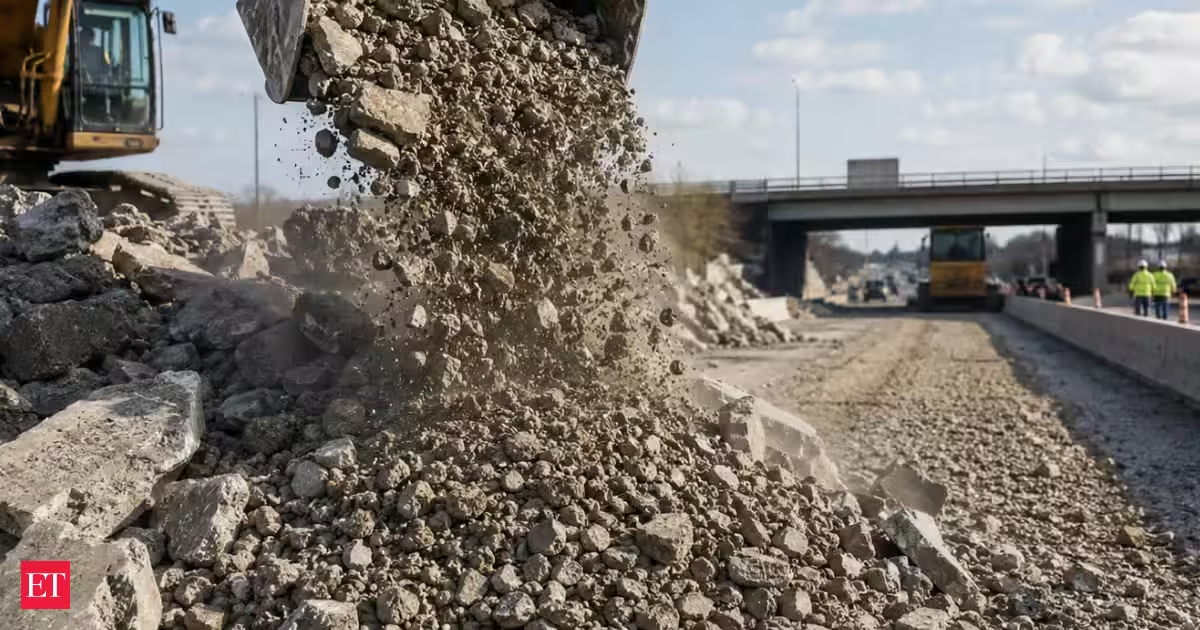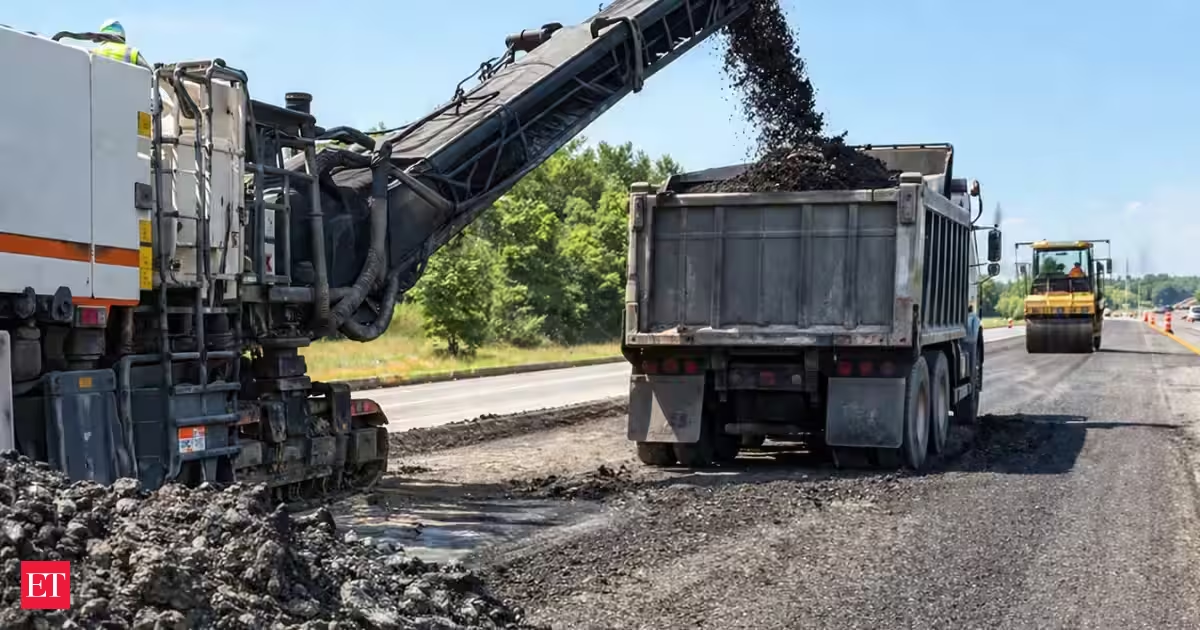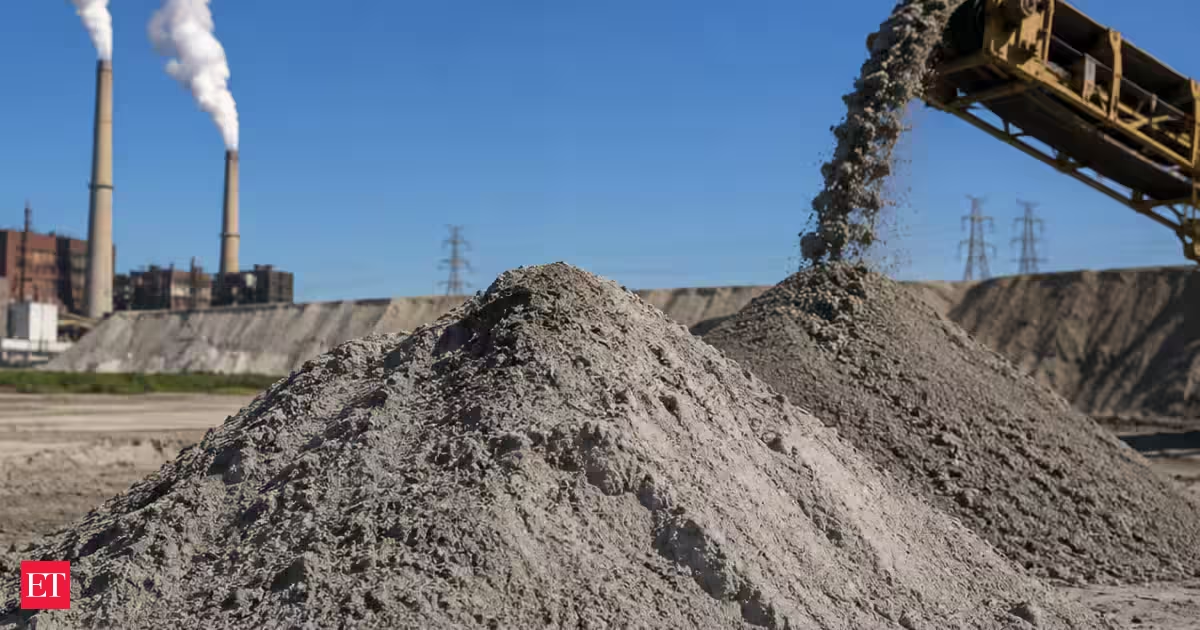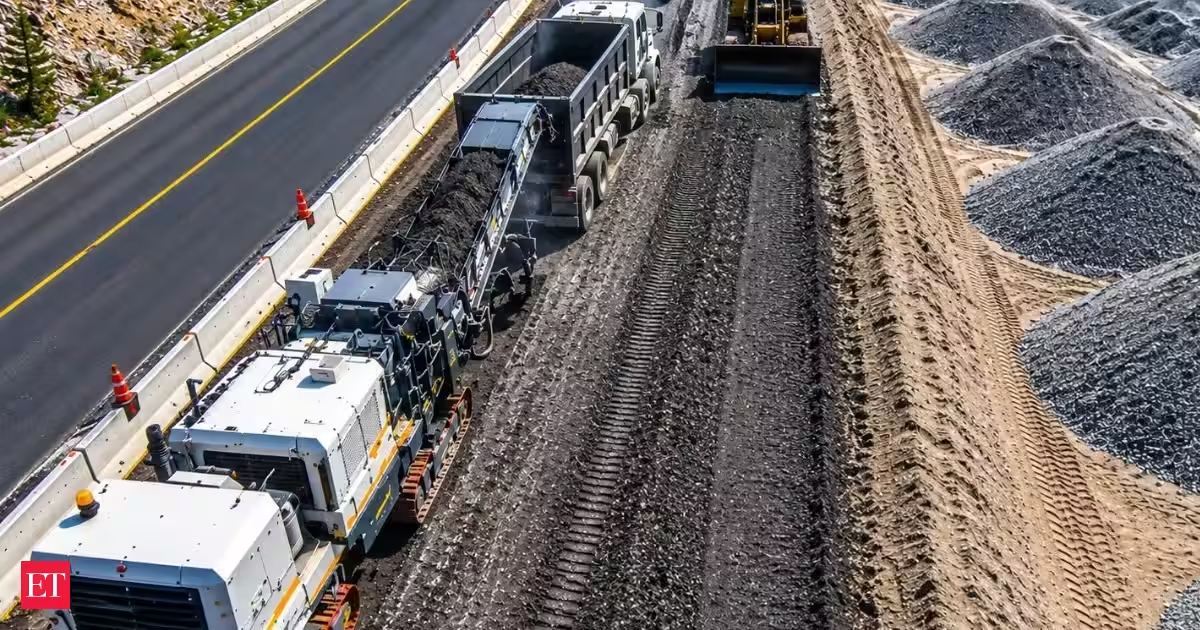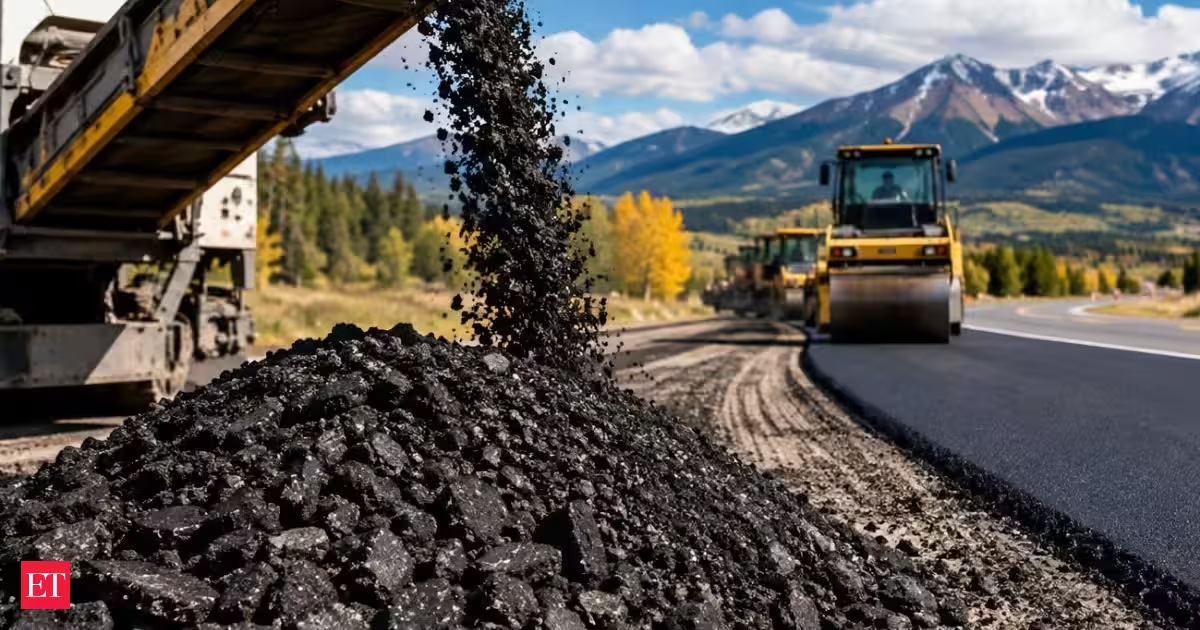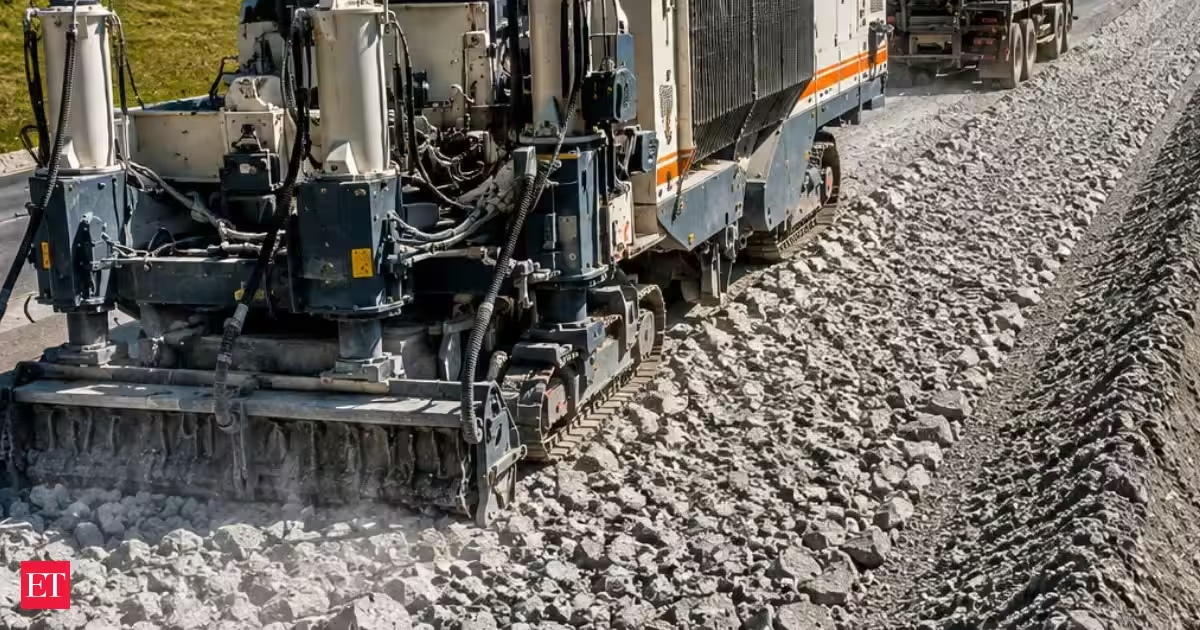
Infrastructure upgrades often get expensive because of the materials that must be hauled in and hauled away. Arkansas avoided that expense on a stretch of Interstate 30 just outside Little Rock by crushing the old slabs and reusing the material as subbase for the new highway. According to a case study indexed by the Transportation Research Board, part of the National Academies of Sciences, Engineering, and Medicine, the 20-mile project avoided quarrying more than 95,000 tons of new crushed stone. It saved about $15,000 in truck fuel costs. As any work zone shows, much of a highway's needed material is already beneath it, and bringing in fresh rock is not always the cheapest option.What actually happened on I-30In Arkansas's first in-place concrete recycling job, crews broke up the old, deteriorated concrete on a 20-mile section of I-30, crushed it there, and used the material as aggregate in the new subbase layer. That decision spared the state from opening a quarry, extracting fresh stone, and trucking it to the site.How in-place concrete recycling actually worksThe process is simple in concept but requires heavy-duty equipment. Rather than digging up old concrete, loading it onto trucks, and hauling it to a different facility to be crushed, crews bring a crusher to the road. The old slab is broken up and crushed on the corridor and placed back down as the base layer underneath the new pavement. Because the material stays on site, it avoids the multiple trucking trips a traditional demolition-and-rebuild process would require.Heavy equipment crushes old concrete for recycling into road-base material. Image Credit: Wikimedia CommonsWhy skipping the quarry run mattersCrushed stone has to come from a quarry, which is often many miles from the job site. The Federal Highway Administration points out that for large reconstruction projects, processing and recycling concrete on site tends to lower cost by reducing aggregate hauling. On I-30, that meant over 95,000 tons of stone that weren't quarried, loaded, or driven in. Fewer tons hauled means fewer truck trips, which means less fuel burned and less wear on the surrounding roads. There is also a resource benefit. Quarries are a limited local resource, and every ton taken from one is a ton that cannot be replaced. By reusing aggregate from the old highway instead of mining new stone, the I-30 project left more quarry material available for other projects.Where the fuel savings came fromHauling reclaimed concrete off-site to a recycling plant and then hauling processed aggregate back to the road burns diesel with every mile driven. Crushing the concrete in place eliminated most of that back-and-forth hauling on I-30. The case study credits that shorter supply chain with roughly $15,000 in truck fuel savings and notes a secondary benefit: the case study says reduced truck exhaust may improve local air quality along the corridor.A method the federal government still touts todayThis is not a concept left behind in the 1990s. The Federal Highway Administration has formally stated that reusing the material used to build the highway system makes sound economic, environmental, and engineering sense, provided it doesn't affect performance or safety. Reclaimed concrete material is now used in base and subbase applications across many states, and current federal guidance still points to on-site processing as the option most likely to reduce hauling costs on large reconstruction jobs.Crushed stone aggregate. Image Credit: Wikimedia CommonsWhy the old case study remains relevant to infrastructure spending todayTransportation budgets are tight, and every dollar not spent on gravel can be spent on paving or other safety improvements elsewhere. The I-30 project shows that cost savings can come from reusing existing materials on site. It is a useful lesson for readers watching state and federal budgets closely: some of the cheapest improvements are already built into the system.What Arkansas proved about fixing roads without new materials lineArkansas used specialized equipment and an on-site recycling process to save money on I-30. It crushed the old concrete where it lay instead of hauling the material away and bringing new aggregate from a quarry. This one change, documented by the Transportation Research Board, eliminated the need to quarry more than 95,000 tons of crushed stone and saved about 25,000 to 30,000 gallons of truck fuel, worth roughly $15,000. The project, carried out in 1994 and 1995, was an early Arkansas example of in-place concrete recycling, a practice that remains part of modern concrete-recycling guidance.
Arkansas recycled old I-30 concrete in place, avoiding more than 95,000 tons of new stone and about $15,000 in truck fuel
Discover how Arkansas saved approximately $15,000 in fuel costs and recycled over 95,000 tons of concrete in their I-30 project, revolutionizing highway construction and improving environmental impact.
729 words~3 min read