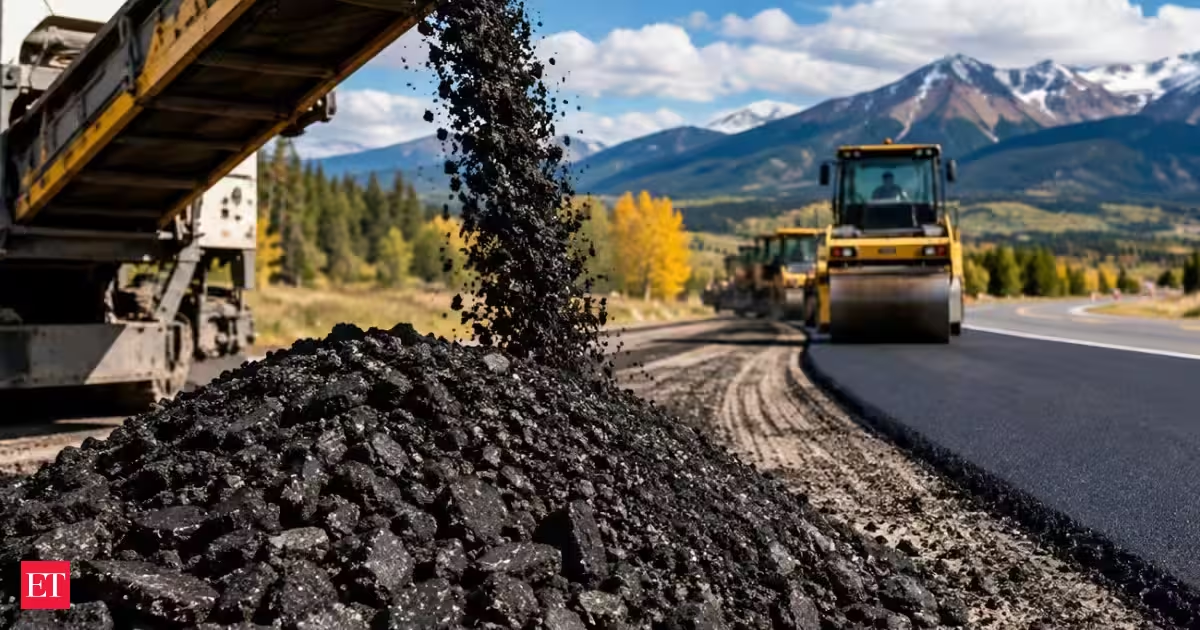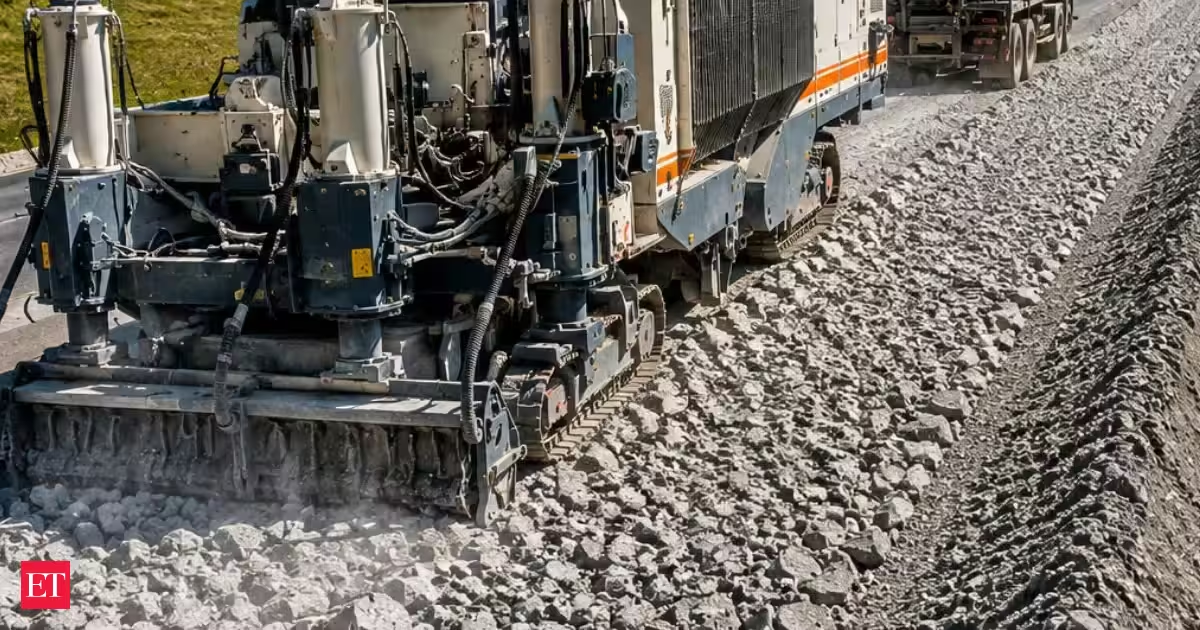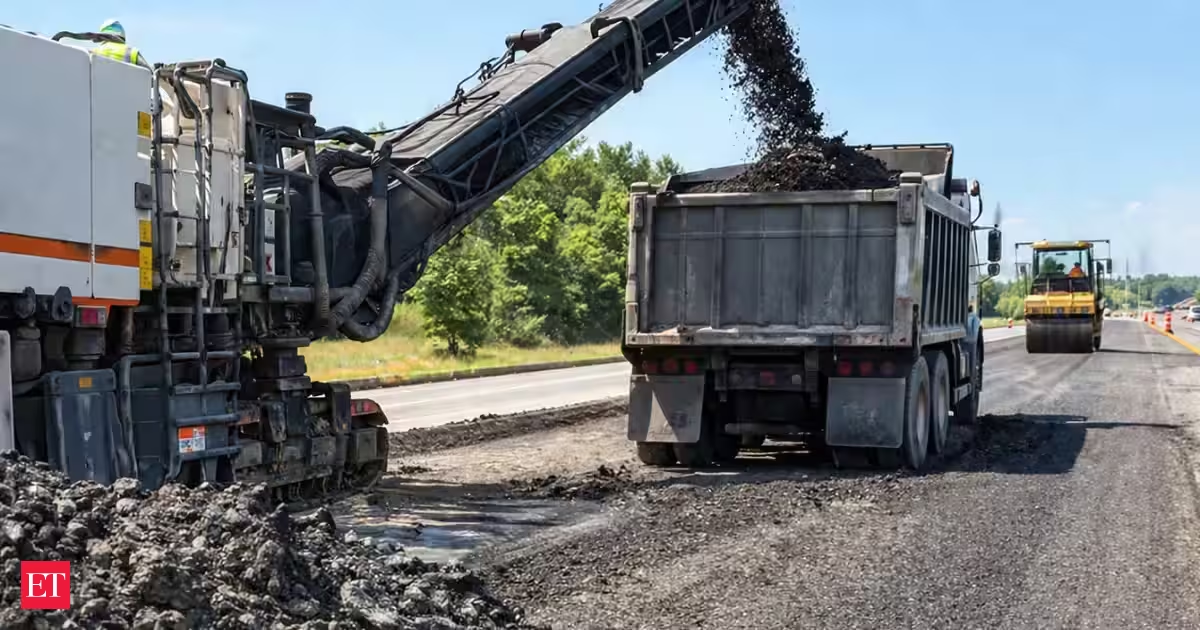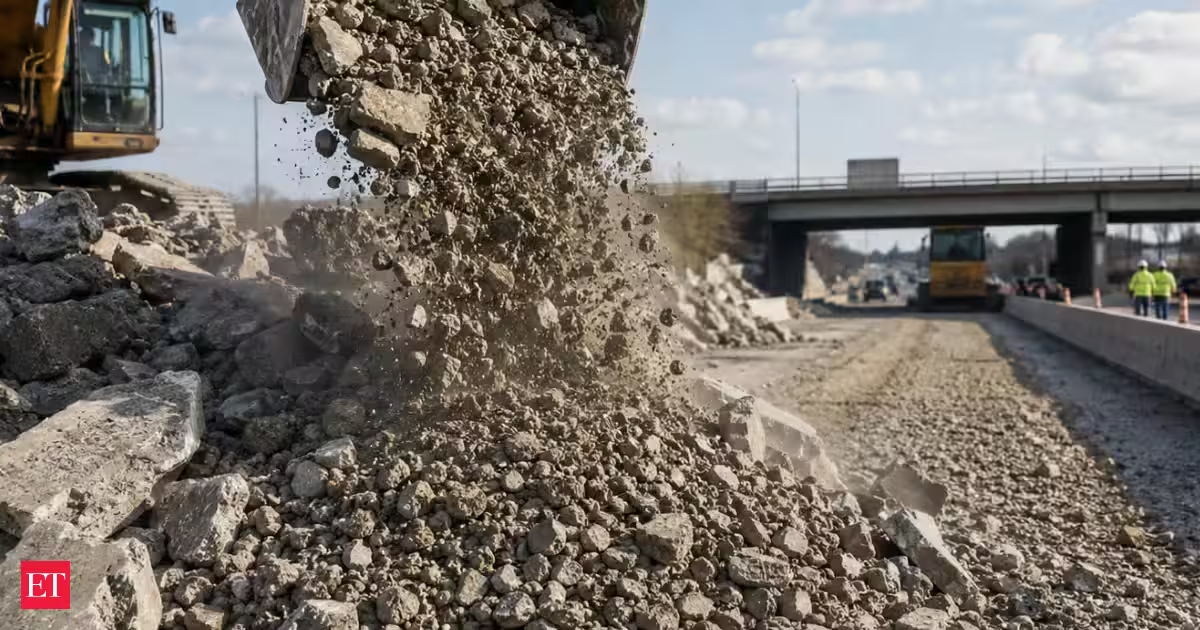
Every time an old bridge or cracked stretch of highway is torn down, someone has to decide what happens to the rubble. In Illinois, much of it ends up being reused for the new construction project. A 2011 IDOT report covering calendar year 2009, from the Illinois Department of Transportation's Bureau of Materials and Physical Research, estimated that 284,715 tons of Recycled Concrete Material were used during highway construction projects in the state that year. Instead of relying solely on freshly mined stone, IDOT spent nearly $3.18 million buying and using this crushed concrete. It may seem like a small line item in the state budget, but it points to a broader practice in how states handle old concrete in road construction, and Illinois has done so for years.Where does old concrete actually go?When crews tear down concrete pavement, bridges, or curbs and gutters, the debris does not automatically become trash. IDOT's report explains that the rubble is crushed into smaller pieces and stockpiled; small percentages of subbase soil and other debris are sometimes included. Once processed, this crushed concrete is officially labeled Recycled Concrete Material, or RCM. The agency says it is similar to natural aggregates in appearance and behavior, but rougher and more absorbent because of hardened cement paste on the stones.What Illinois actually built with itThe 2009 figures show that RCM was not used for anything out of the ordinary. It was used in aggregate surface course, as well as in granular embankments, stabilization bases, and subbase layers beneath roads with pavements, all bulk roadbed roles rather than a single narrow substitution for gravel. It was also used in drainage layers and membrane waterproofing, where its angular shape helps water pass through while limiting settlement over time. At 284,715 tons, RCM was the second-highest recycled material IDOT used in 2009, behind only reclaimed asphalt pavement.Recycled Concrete Material, crushed from old pavement and bridge decks, ready to become subbase for new highways (representative image). Image Credits: ChatGPTA national pattern, not just an Illinois habitIllinois was not an exception in this regard. A national study by the Federal Highway Administration found that the process of recycling concrete is commonly practiced when dealing with roads, and the primary application of recycled concrete is using it as a base for laying down new roadways. This matches the way Illinois used its recycled concrete. There is also a rich history behind this. A 2018 summary report titled ‘Recycled Concrete Aggregate Usage in the US’ by Iowa State University's Institute for Transportation traces one of the earliest recorded uses of recycled concrete aggregate back to Illinois itself. In the 1940s, during the expansion of Route 66, workers demolished the existing two-lane concrete road and used its rubble as aggregate while building a new road alongside it. Therefore, the 2009 data was just the latest chapter in the long history of a practice Illinois has quietly followed for decades.Why bother crushing concrete instead of quarrying new rock?One reason is cost. IDOT's figures put RCM at about $11 per ton in 2009, more economical than several other recycled materials the agency tracked that year, including fly ash, by-product lime, and reclaimed asphalt pavement. The second reason is landfill capacity. Citing the Illinois EPA's 2008 Annual Landfill Capacity Report, IDOT's report notes that although reported capacity ticked up slightly heading into 2009, ongoing waste accumulation is expected to steadily eat into that space over time. Reusing demolition debris such as RCM is one way to slow that decline.There is a downside to weigh, too. IDOT flags that RCM's cementitious content carries a naturally high alkalinity, and if the material has been exposed to deicing salt, it may bring chlorides that can corrode nearby steel reinforcement. It can also contain aggregate types prone to reactions that weaken concrete over time, such as alkali-silica reaction. None of this rules the material out; IDOT tests and regulates its application rather than using it without restriction.A quiet but steady habitNo one names a highway after a pile of crushed concrete, and that is exactly why this story could be easy to miss. The figures for 2009 indicate something very simple and straightforward: Illinois was not just experimenting with recycled concrete; rather, it was using it just as routinely as it uses asphalt and steel. As older bridges and pavements across the US reach the end of their working lives, that kind of routine reuse looks less like a footnote and more like a habit other states may want to adopt.
In 2009, Illinois used an estimated 284,715 tons of recycled concrete material in highway construction; IDOT spent about $3.18 million on the material for embankments, bases, and subbases
In 2009, Illinois Department of Transportation crushed over 284,000 tons of concrete into aggregate for highway construction, showcasing a sustainable approach to repurposing materials and managing landfill waste.
750 words~3 min read