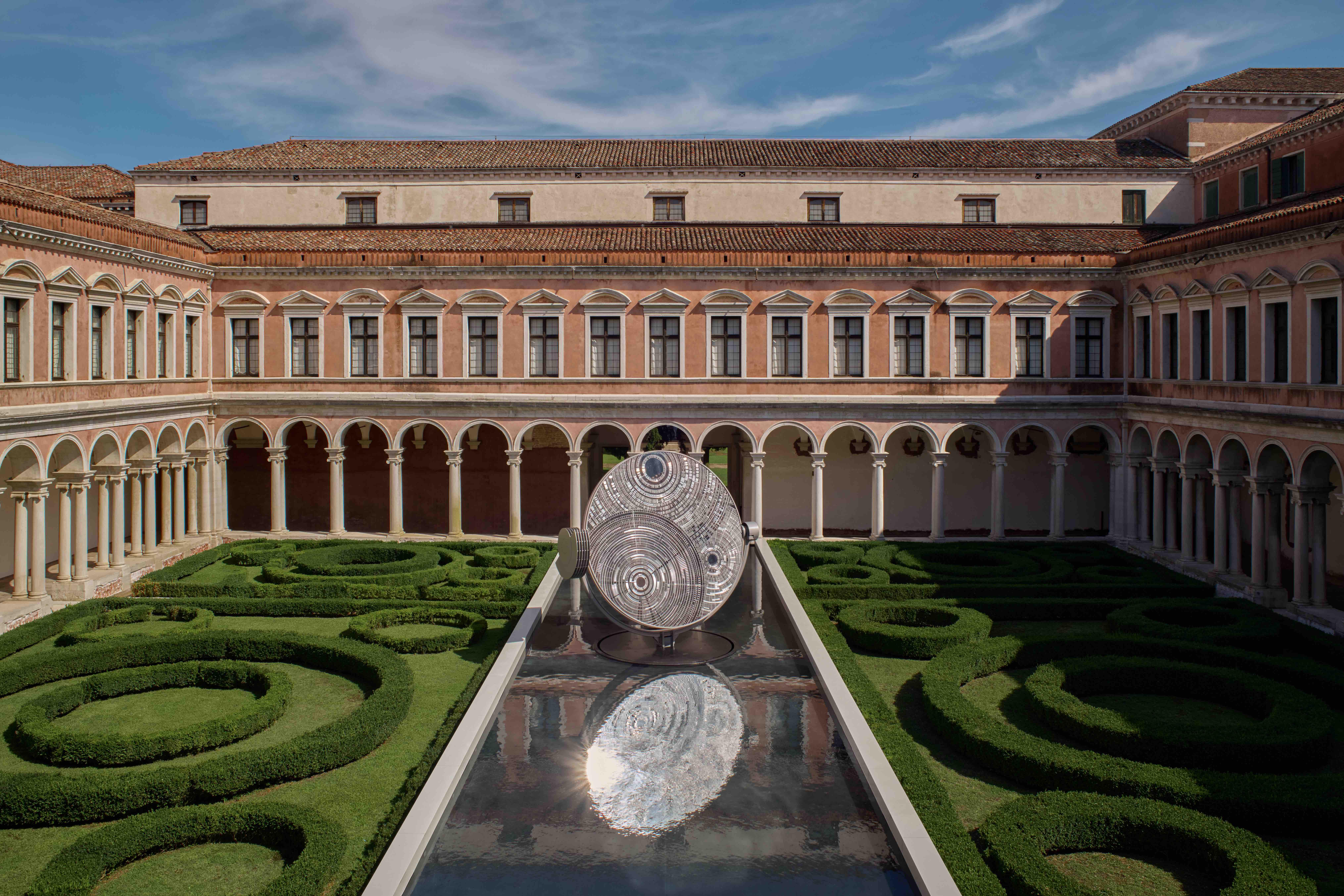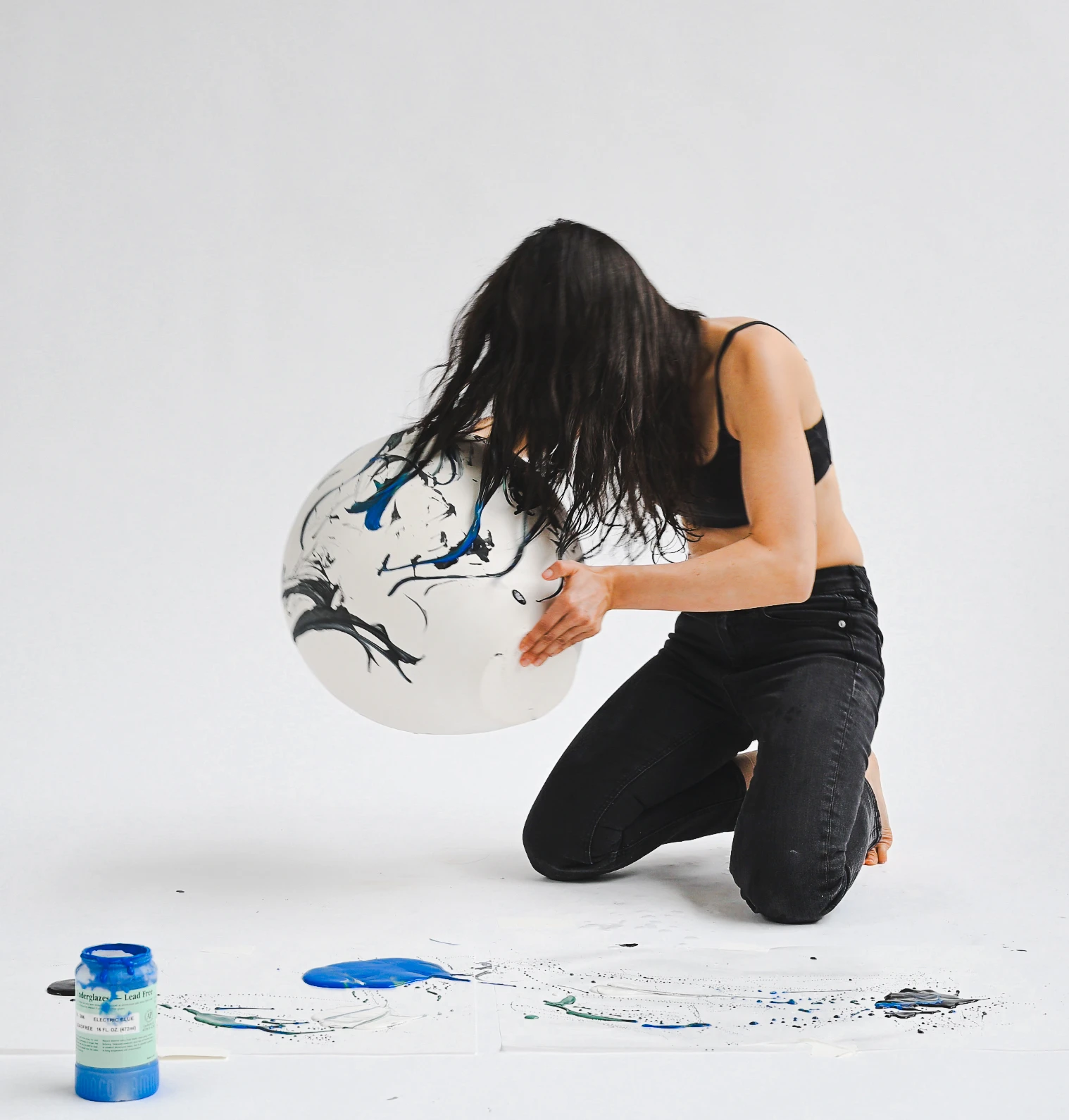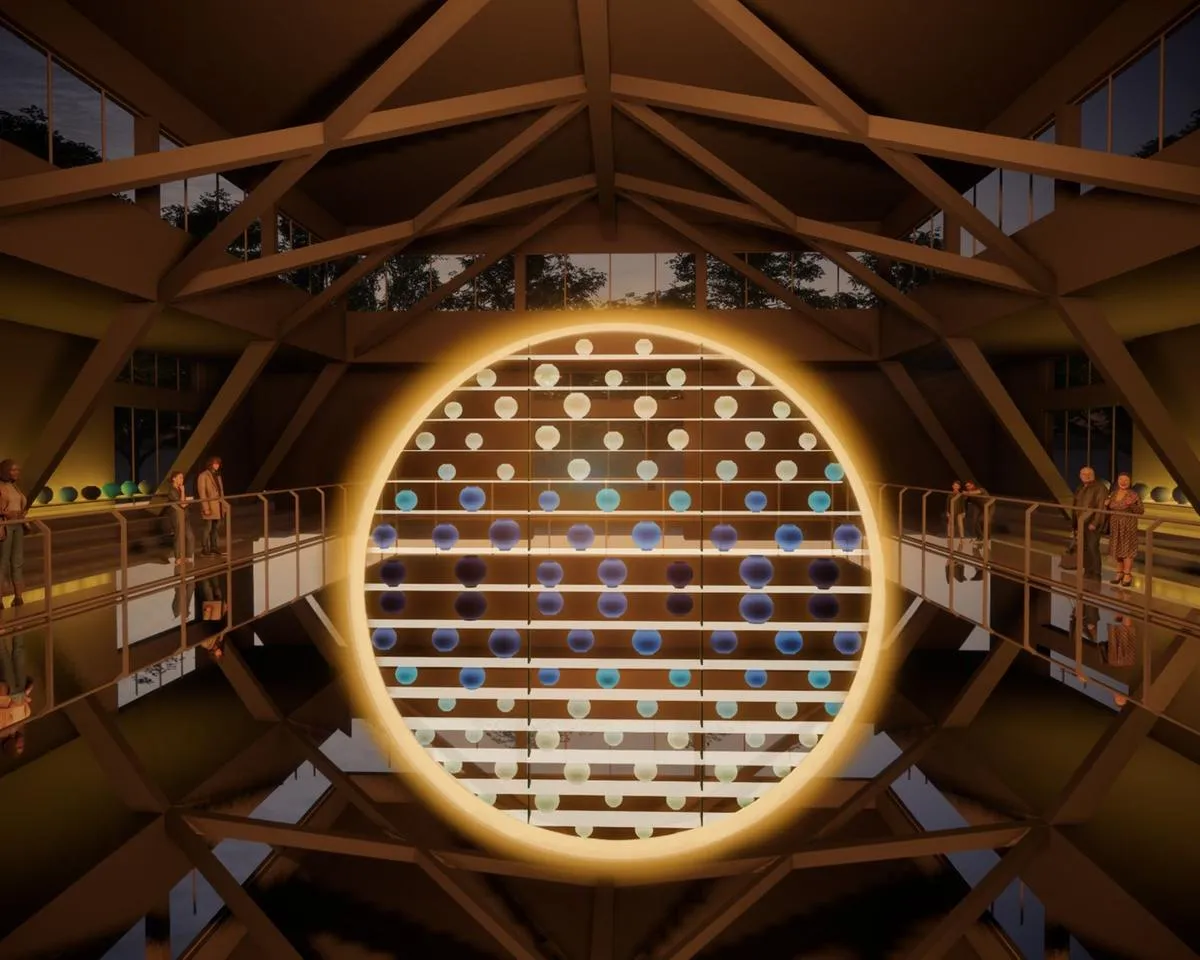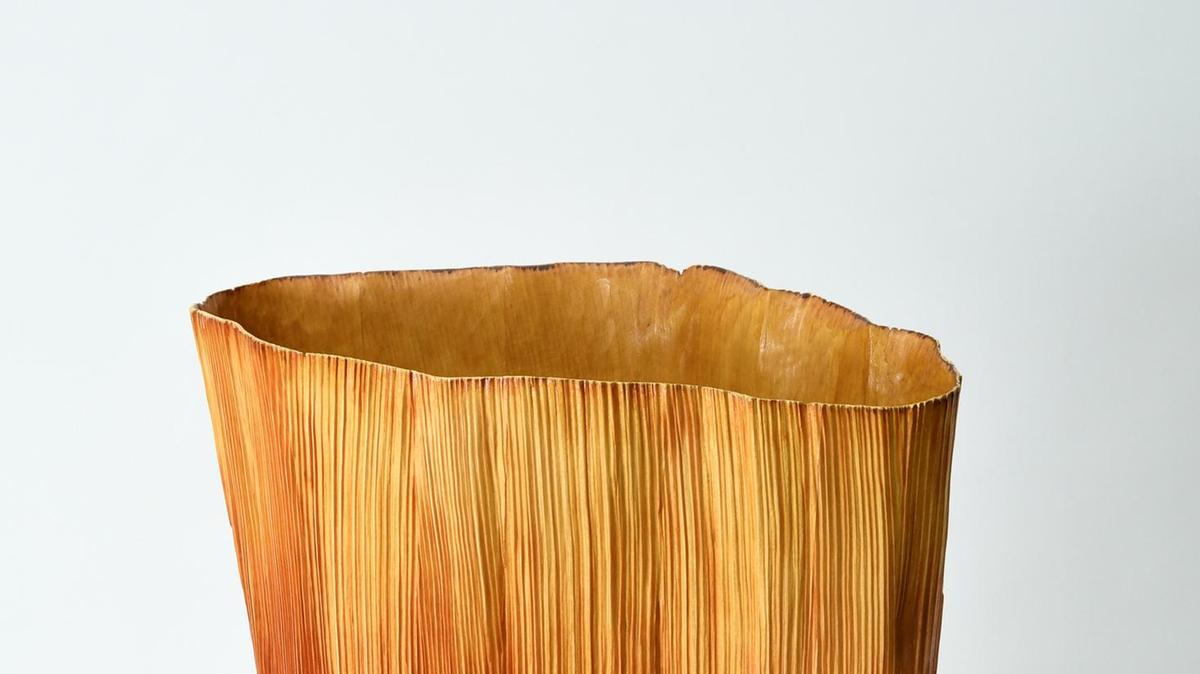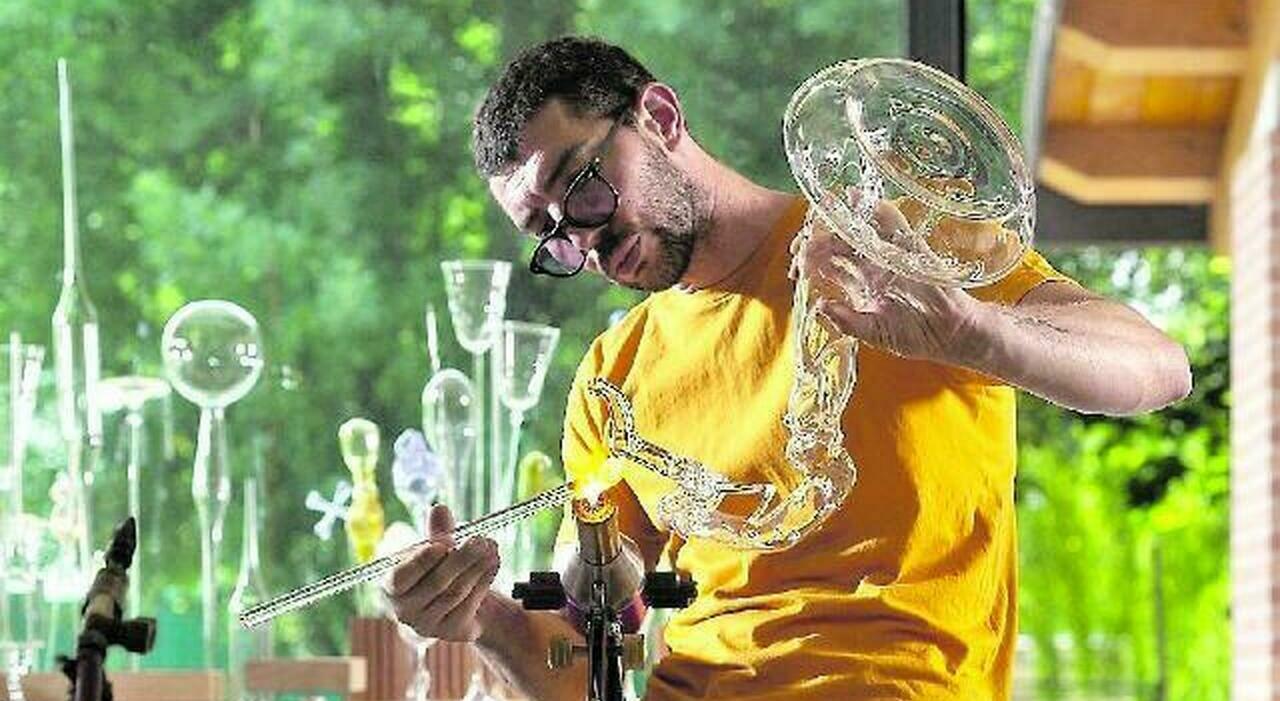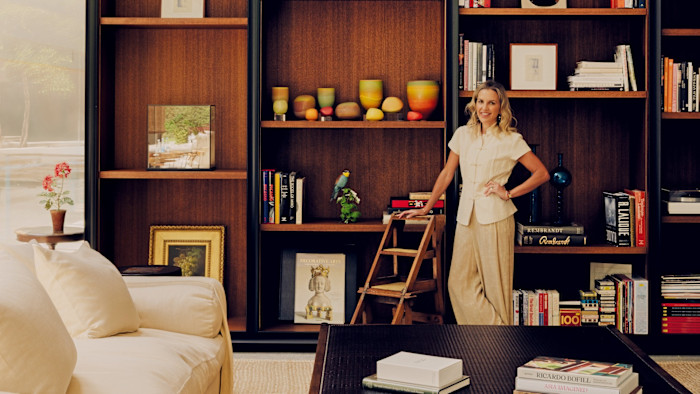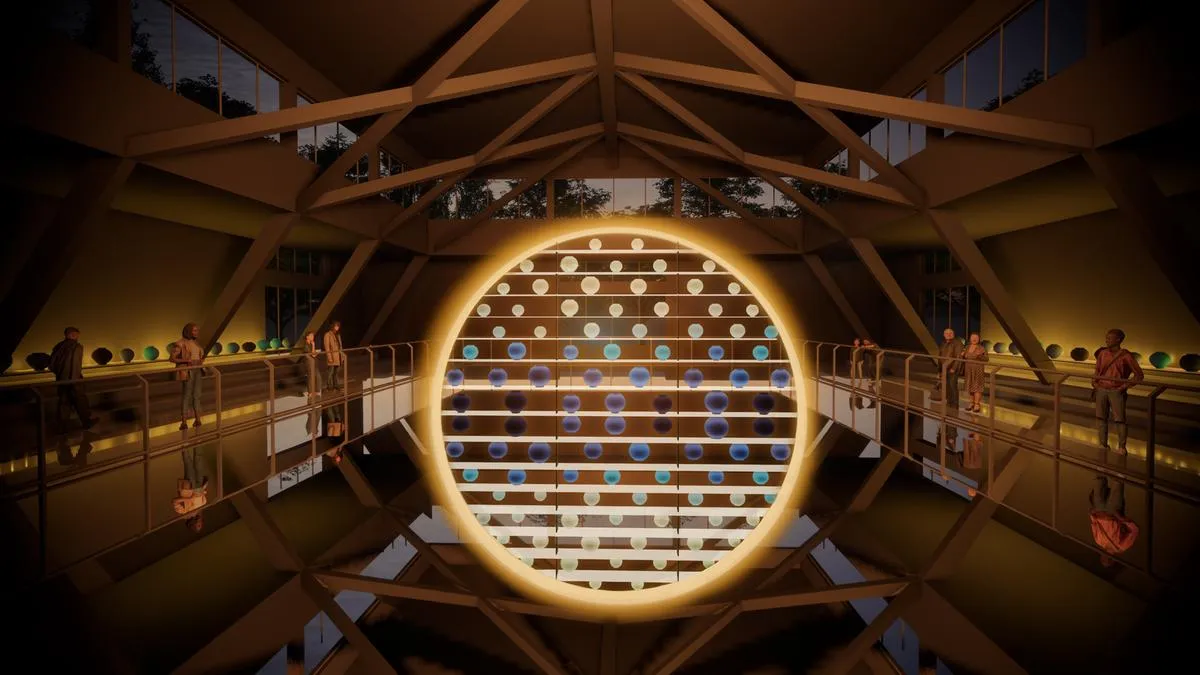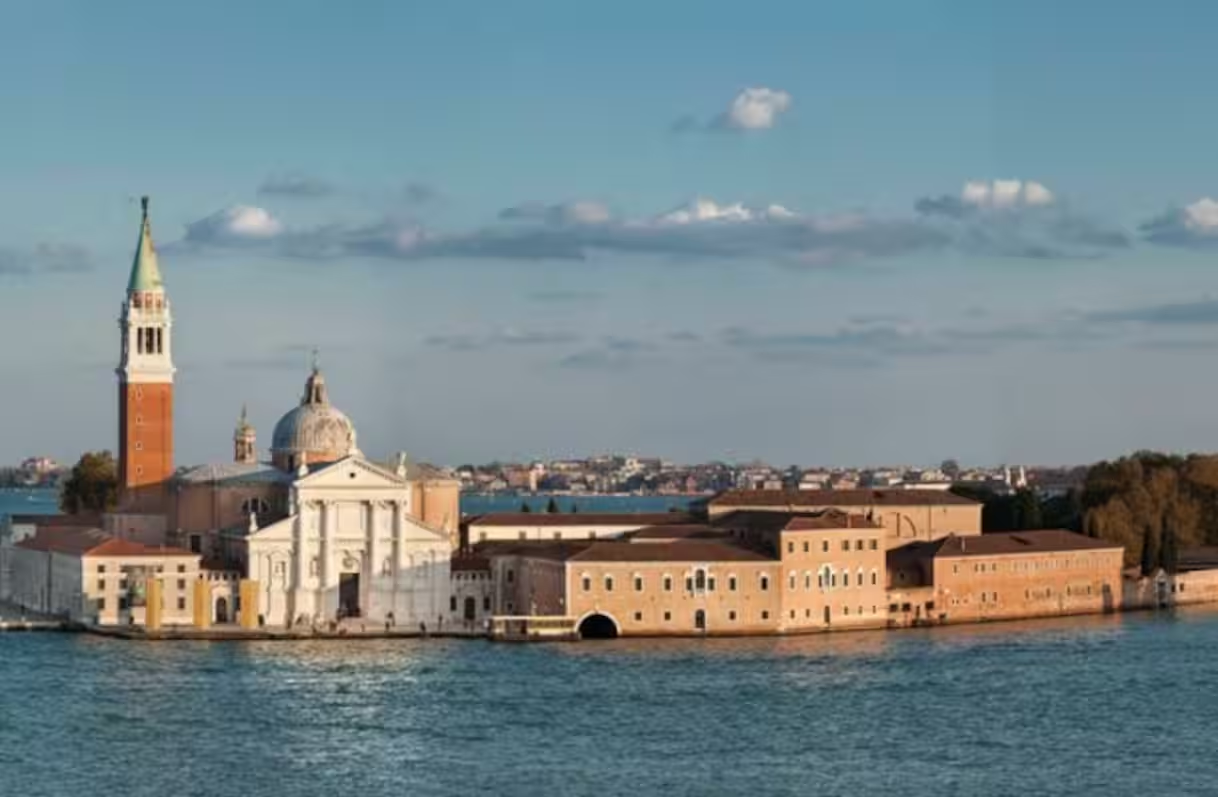
An international showcase of contemporary craftsmanship, the fourth edition of the Homo Faber Biennale will be held in Venice from September 1 to 30. Curated by Michelangelo Foundation, this year’s edition is themed ‘An Island of Light’ and led by Artistic Director Es Devlin. JSW Foundation has collaborated with the Biennale to support the participation of 29 Indian artists who will display works across a range of crafts, including ceramics, glass, metal, textiles, leather, wood, stone and basketry.Says Sangita Jindal, chairperson, JSW Foundation, “We are proud that JSW Foundation will participate... creating an international stage where Indian master artisans engage with global audiences, [and] not as representatives of folklore, but as peers in a shared creative language.” Here are the participants. Kinkar Ghosh and Inderjeet SandhuKinkar Ghosh turns shells into jewellery, cutlery, lamps and vessels, practising the art of mother-of-pearl work. His pieces are constructed by layering and assembling hundreds of shells into vase-like forms. His journey in craft began in 1989, and he founded his workshop, Santoshi Handicrafts, which employs more than 20 artisans. In 2025, he collaborated with artist Inderjeet Sandhu and Aequo on a series of sculptural vessels, winning the ADxJSW Prize for Contemporary Craftsmanship. Inderjeet Sandhu is a multidisciplinary artist whose work weaves together histories of migration, identity and cultural exchange via sculpture, design and craft. He trained at the Royal College of Art, London, where he specialised in jewellery and metalwork.Their vessel Tidal Fragments – made of mother-of-pearl – will be presented at the ‘A Feast of Light’ exhibition.Kavin MehtaKavin Mehta set up his studio in Ahmedabad in 2015. He taught himself to carve using discarded blocks of stone and now works with limestone and calcium-rich marble. He carves the stone by hand and immerses it in natural indigo dye; it takes 10–15 days for the colour to show. Alongside this, he is the museum director of the Indigo Art Museum, the world’s first museum dedicated solely to indigo.The sculpture Prelude – made of hand-carved natural limestone, dyed in natural indigo – will be presented at the ‘A Rooted Ascent’ exhibition.Suraj SahuSuraj Kumar Sahu explores transformation and temple architecture, ensuring that the makers are not erased by time. He builds terracotta sculptures as homage to the forgotten makers of ancient India’s heritage sites. He works only by hand, pinching red clay from the Ganges — a material he treats as a living force, incorporating limbs and faces into its surface so that maker and monument become inseparable.His two sculptures will be displayed at the exhibition ‘An Alphabet of Objects’. The first, Ritual in Ruin, is made from red clay. The second, Shelter of Lost Offerings, shows a ruined shrine where a human body merges with the architecture.Jesmina ZeliangZeliang grew up working with cane, bamboo and wood to make furniture, lighting and other objects. She founded Cane Concept, a family atelier. Her curiosity led to Heirloom Naga, her textile initiative, where she works with women who practise the age-old traditional loin-loom weaving. The space now hosts a shop, gallery, eatery, guesthouse and organised craft tours.Made from cane, Zing Fuh will be shown in the ‘A Rooted Ascent’ exhibition.Sumakshi Singh and Mohan Kumar VermaSumakshi Singh is an artist, curator and educator. Turning domestic craft into contemporary art, she creates immersive, life-sized thread and textile installations inspired by architecture, memory, loss and belonging. Her work has been exhibited globally, including at the Kochi-Muziris Biennale, MAXXI and MCA Chicago. She received a special mention at the Loewe Foundation Craft Prize 2025 for “Monuments.” In May 2026, she presented “Permanent Address” at the Venice Biennale, a thread reconstruction of her ancestral home.Mohan Kumar Verma is a fourth-generation practitioner of Sanjhi, an intricate paper-cutting tradition of Braj, a cultural region surrounding Mathura and Vrindavan. His compositions turn Lord Krishna’s childhood and life into elaborate stories cut from paper, featuring figures, animals, birds, flowers, ornate garments, jewellery and richly patterned settings.‘Shot’ and ‘Tall Pillar’, their two paper pieces, will be displayed at the ‘An Atelier Alive’ exhibition. They are made of banana fibre paper pressed between acrylic sheets, offering a glimpse into impermanence.Reha SalviSalvi has over a decade of experience as an architect and interior designer. However, her passion led her to become a self-taught woodcutter in Chennai. She founded Lakkadghoom, her studio, where she turns, carves and chars neem and teak wood into vessels and sculptures. She collects shells and seed pods from the shore and shapes her work around them.Her two works, From The Shore and Beej – made from neem wood, charred and finished with raw linseed oil, waxed and buffed – will be showcased at ‘A Rooted Ascent’.Klove StudioPrateek Jain and Gautam Seth founded Klove Studio in 2005, working between New Delhi and Haryana with around 150 people across glass, metal, assembly and design. They found their glassblowers in Ambala, a town long known for supplying laboratory glassware. Fifty glassblowers, led by 10 master artisans, shape heated glass rods and tubes at the flame. The glass is turned on a lathe, softened, then pulled, pinched and formed with tongs and hand tools. Metal armatures are fabricated separately, and each glass element is assembled by hand. The resulting chandeliers, screens and monumental installations are now found in residences, hotels and airports in India and abroad.Their piece Enchanted Forest Lamp will be shown in the exhibition space ‘An Atelier Alive.’Valay GadaValay Gada is a multidisciplinary artist whose work revolves around sculpture, drawing and video installation. His theme is the impact of urbanisation and climate change. He is known for hyper-realistic botanical sculptures — flowers and plants scaled far beyond life size, their forms altered as if by genetic modification or a hostile environment.His piece Square Petal will be shown in the exhibition space ‘A Rainbow of Forms’.Dhruv AgarwwalDhruv Agarwwal is a New Delhi-based designer whose work revolves around memory, material and long-term collaborations with craft communities. He turns spatial references to his childhood in India — such as board games and mosaic floors — into furniture, lighting and large-scale installations. Agarwwal has spent years with craftsmen in Channapatna, Karnataka, where artisans make wooden toys. He channels his learnings into chandeliers, armchairs and tables while retaining the glossy brightness of the originals.His sculpture Glim will be shown in the exhibition space “A Rainbow of Forms.”Gopal SainiGopal Saini specialises in Jaipur’s blue pottery, a craft that nearly disappeared in the 20th century and now has a Geographical Indication tag. He trained under Kripal Singh Shekhawat, who revived the craft in the 1960s, before starting his own studio in 1993. At the atelier, Gopal incorporates miniature painting and the lotus motif into blue pottery, traditionally known for geometric and floral patterns.The piece Neel Baug, featured at ‘A Full Moon Rising’, is made of a ceramic body of quartz stone powder, crushed glass powder, atira Gond (natural gum), saji (salt) and multani mitti (fuller’s earth).Vernacular ModernEnsuring the full use of regional craft knowledge, this design studio located in Bengaluru was founded by architect Abhirup Dutta and interior designer Deeptashree Saha. The name is inspired by Charles Correa’s philosophy about building contemporary work from local materials. The duo work with carpenters, woodworkers, weavers, etc.Their piece Sarpa Gaja Asandi will be shown in the exhibition space ‘A Rooted Ascent’.Sarpa Gaja Asandi represents transformation and resilience. Made in collaboration with K. Mohan of Mysuru, the snake uses the Mysuru wood inlay tradition, drawing on over fifty species of timber from naturally fallen trees of the Deccan Forest. It will be shown at the ‘A Rooted Ascent’ exhibition.Akon Mitra and Shalini MithalAkon Mitra is an architect, landscape designer and sculptor. His passion for observing nature and the human body led to the founding of Oritecture, a multidisciplinary atelier based in New Delhi dedicated to origami as a language of contemporary craft, sculpture and spatial design. It was founded in 2008.A former English teacher, Shalini Mithal is a self-taught fibre artist and facilitator based in Gurgaon. She started with embroidery and macramé sessions, which soon grew into a sustained practice.Mother, We Cut You Down to Sculpt You and Weave You is a paper sculpture made of macramé with paper twine, assembled onto seasoned acacia driftwood and protected with matte varnish. This will be shown at the ‘A Rooted Ascent’ exhibition.RajkaRajka Pottery is a family-run studio founded in 1982 on the outskirts of Ahmedabad. Founded by Kartikeya and Rajshree Sarabhai, the atelier now includes terracotta. The potters build terracotta horses and elephants to heights of over 8 feet.Their piece Ayyanar Guardian Horses will be at ‘An Alphabet of Objects’ exhibition.ShedFounded by Priyanka Shah in 2014, this design and manufacturing atelier is operated from India and Amsterdam. Shah makes carrom and chess boards from wood, hand-carved in marble with metal inlay. Other pieces include cabinets, desks and shrines.Bombay Carousel will be shown at the ‘A Rooted Ascent’ exhibition.Dolon KunduDolon Kundu Mondal, founder of Maarttikee — a studio dedicated to pinch pottery — is a terracotta artist from West Bengal. In this hand-building technique, clay is pressed and thinned into form with the thumb and fingers. From her studio in Kolkata, she makes sculptural panels, figurative works and large votive sculptures drawn from mythology, faith and nature. In 2024, she received the Shilp Guru National Award, one of India’s highest craft honours.Her pot, Mati’r Bon, is made of reclaimed terracotta clay and will be showcased at the ‘An Alphabet of Objects’ exhibition.Nalini MehtaNalini Mehta is a Mumbai-based artist whose career spans eight decades. She trained in painting, batik, pastel and sculpture but is known more for her unique internal carving technique in acrylic. She is the oldest artisan at the biennale. In 2013, Mehta received the National Award for Creative Art at the inaugural Vayoshreshtha Samman, the Government of India’s national honours recognising the achievements of senior citizens.Her piece ‘Parakeet’ will be displayed at ‘An Infinite Birdsong’.ChippiWara and Suresh MohanSpecialising in marquetry (naturally coloured timber inlay) and taarkashi (fine brass wire inlay), ChippiWara is a Delhi-based design studio founded in 2018 by Tanveen Ratti. Ratti blends contemporary design with traditional Indian crafts.Suresh Mohan is a Mysore-based artisan who has specialised in marquetry and wood inlay. He is a second-generation practitioner, trained under his father, K. Mohan, who received India’s National Award for his craft in 2013.Ratti and Mohan revive historical South Indian crafts, moving from traditional iconography to abstract and contemporary themes. Called Summer Garden, the panel — made of natural timber veneers and a wood substrate — serves as a fond reminder of summers spent at their grandmother’s house. This work will be showcased at ‘An Infinite Birdsong’.Rooshad ShroffRooshad Shroff is a Mumbai-based architect and designer. He founded his studio in 2011. His work explores material, structure and making, collaborating with Indian artisans in stone carving, wood joinery, marble inlay, embroidery and metal casting, and he likes to experiment — for example, with embroidery on stone. He is also an adviser at the Kalhath Institute.His piece Balance Vase is hand-carved from orange calcite. His work will be showcased at ‘A Rainbow of Forms’.Vahe EnsembleTrained as an industrial designer, Vaishnavi Walvekar is an artist based in New Delhi. She founded Vahe Ensemble, a studio that reinterprets indigenous Indian crafts as sculptural and functional art. Her practice began with Kashmiri papier-mâché, a centuries-old craft from Srinagar. The process involves two hereditary communities: Sakhta makers shape paper pulp into hollow forms, while Naqash painters smooth the surfaces and decorate them with fine motifs. The finished pieces are small curios, with the paper at their core invisible beneath the ornament.Her piece Gibbous will be presented at the ‘A Rainbow of Forms’ exhibition.ChackoChackoBased in Mumbai, the studio will present a furniture piece in collaboration with Gaia Cairo and Sampige & Co. Chacko provides craft-inspiring spaces and unique products while also specialising in architecture, interiors and product design.Gaia CairoCairo has specialised in editorial illustration and communication for wildlife and the environment. She has worked as a scientific illustrator for marine conservation NGOs. In her illustrations, marine creatures, birds, plants and algae are drawn out of their natural context and recomposed into surreal geometrical designs.Sampige & CoThis Mysore-based craft studio was founded by Meghana Shekar. The studio’s work is rooted in the tradition of Indian wood inlay and takes a contemporary, collaborative design approach to the practice. Working primarily with locally sourced and reclaimed materials, the team of master inlay artisans focuses on precision, material sensitivity and detail.Their tabernacle, made out of reclaimed teakwood, called Mehfil - Wall Mounted Grotto, will be present in the exhibition space ‘A Rooted Ascent’.The Paper Ark – Nayan & Venus BirdThe paper sculptors are based in Ahmedabad. ‘The Paper Ark’ presents a collection of miniature paper sculptures deeply inspired by Earth’s wildlife; their intricate artworks are crafted from 20+ layers of archival paper and detailed with watercolours to capture the essence of each creature. This project aims to spark curiosity and foster a profound appreciation for biodiversity. Nayan & Venus Bird use their art to bridge people and nature, spreading awareness about conservation and the protection of our planet’s ecosystems.Three paper sculptures will be shown in the ‘An Infinite Birdsong’ exhibition. The first, European Bee-eater, captures a fleeting moment in nature; the second, Hoopoe, is rendered in earthy tones with minimal detailing that reflects the quiet of nature and habitat; the third, Budgerigar, reflects social presence and gentleness. Each is perched on a natural twig, set within a base of handcrafted paper flowers and moss.Chanakya School of CraftRecognising a compelling need to address interconnected social, economic and environmental challenges, Karishma Swali established the Chanakya Foundation in 2015. Conceived as a platform for cultural sustainability and holistic advancement, the Foundation advances education, skill development and the preservation of India’s artisanal heritage, while fostering wider engagement with the arts. This vision was extended in 2016 with the founding of the Chanakya School of Craft, a Mumbai-based non-profit institution and artist collective that builds upon the legacy of Chanakya International. Operating at the intersection of pedagogy, research and material exploration, the School brings together learning and experimentation through an interdisciplinary approach spanning weaving, hand embroidery, lacemaking, stone carving and ceramics. Drawing on more than 300 traditions, it positions craft as a vital mode of contemporary expression and has trained over 1,400 women since its founding.Their embroidered piece Origin 1 will be presented in the exhibition space ‘An Atelier Alive.’Surya Mathew – Jewellery MakerSurya Mathew draws cultural inspiration from his French mother and Indian father. Birds and nature, astrology and spirituality are among the themes he explores as he gives new life to old pieces of jewellery. He was the young ambassador for Homo Faber 2018 and 2022.
Homo Faber Biennale 2026: 29 Indian artisans showcase craft in Venice
Explore the Homo Faber Biennale 2026 in Venice, featuring 29 Indian artisans showcasing diverse contemporary crafts.
3,018 words~14 min read