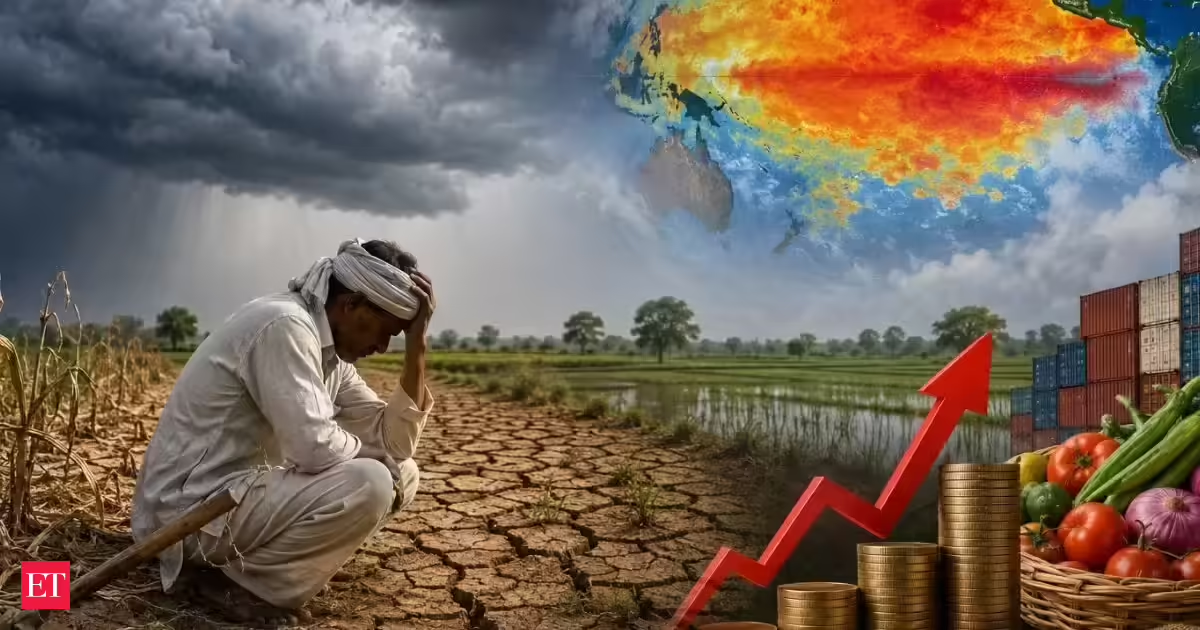
New Delhi: India is likely to receive below-normal rainfall in September, with precipitation expected to be less than 91% of the long-period average (LPA), the India Meteorological Department said Monday.The official weather office cautioned that below-normal rainfall could affect agriculture, water resources, hydropower generation and drinking-water availability, while also escalating heat-stress risks in some regions.Also Read: India’s August rains fall 16% below average, lowest in three yearsAugust was unusually warm, recording the country's highest average minimum and mean temperatures for the month since records began in 1901. Nearly half of India's districts received deficient or largely deficient monsoon rainfall till August 31, while August itself was India's seventh-driest since 2001.ET OnlinePrecipitation put at less than 91% of LPAMany parts of the country are likely to receive below-normal rainfall in September, according to the IMD. However, some parts of northwest, northeast, east, east-central and southeast peninsular India will likely get normal to above-normal rainfall, the weather office said.Temperatures are also expected to remain elevated. Average maximum temperatures are likely to be above normal across most parts of the country, while minimum temperatures are also expected to stay above normal. Parts of northwest, west-central and northeast India could see normal to below-normal minimum temperatures.IMD said strong El Nino conditions are currently prevailing over equatorial Pacific and are expected to strengthen further in the coming months. The impact of El Nino conditions may linger until February-March, said Mrityunjay Mohapatra, director general, IMD.Also Read: India gets the rain in August, but monsoon deficit still widensErratic monsoons due to El Nino conditions in 2023 reduced India's foodgrain production by 6.1% in the 2023-24 crop year (July-June).The Indian Ocean Dipole (IOD) is currently neutral, with IMD's model indicating that neutral conditions may persist through September. The IOD is known to counter the impact of El Nino and can provide a boost to rainfall.Lower farm output could accelerate food inflation and affect farmers' incomes, thereby hurting rural demand for fast-moving consumer goods, motorcycles, tractors and other products.For major monsoon, or kharif, crops such as paddy, cotton, pulses and oilseeds, the distribution and timing of rainfall are critical, as variability in precipitation can influence crop yields and farm output. The kharif season, which starts in June, accounts for more than half of India's foodgrain production, making its outcome crucial for food inflation.
Cloud computing: Weatherman sees weak rains in September, warns of farm risks
India is preparing for an anticipated shortage of rainfall this September, likely affecting agricultural productivity and water availability. High temperatures are expected to persist across various regions. El Nino conditions remain robust, with expectations that they will continue to influence weather patterns for months to come, having historically hampered foodgrain yields. Furthermore, the situation is exacerbated by neutral Indian Ocean Dipole conditions, which do not provide any forthcoming rainfall enhancements.
384 words~2 min read