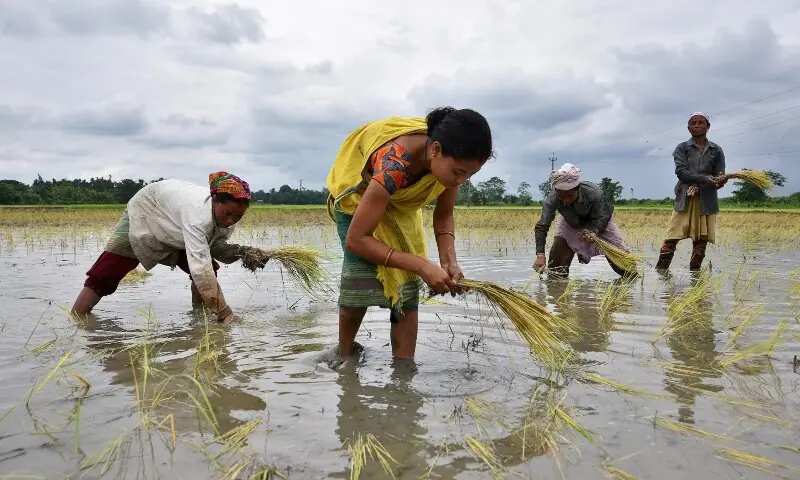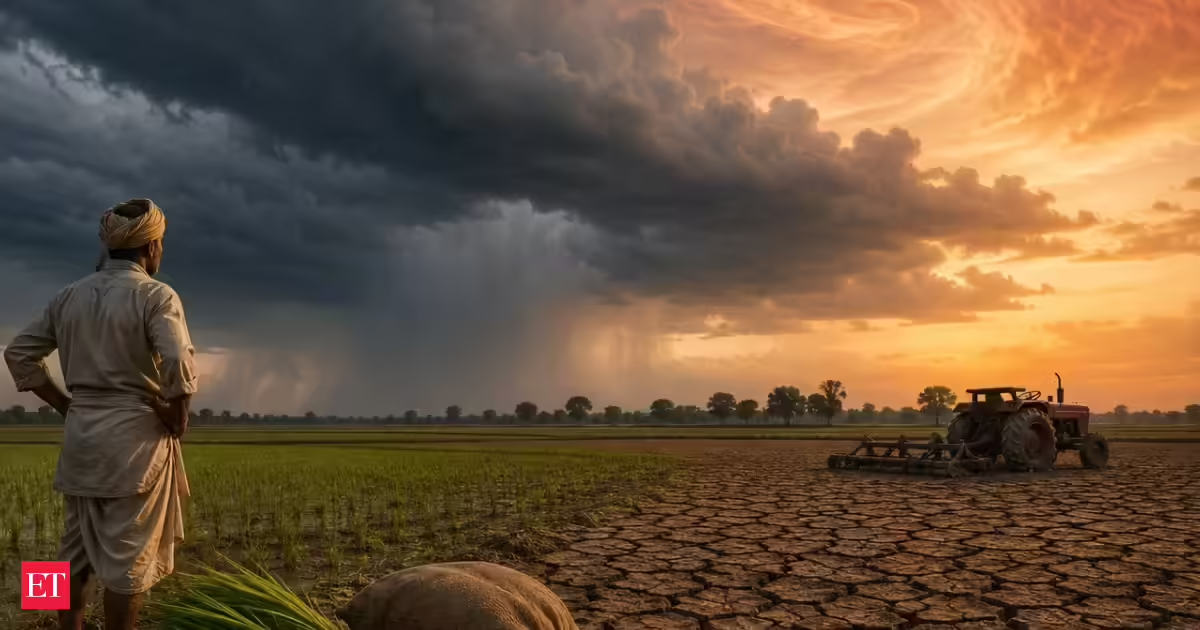
MUMBAI, - A monsoon in India is expected to bring below-average rainfall to the country's western, central and southern regions over the next fortnight, threatening newly planted cotton, soybean, corn and pulse crops, two senior weather officials said.The monsoon delivers about 70% of India's annual rains to replenish crucial water sources in the nearly $4 trillion economy, where nearly half of farmland lacks irrigation and about half the population earns its livelihood from agriculture.Also Read: How the rain gods impact the Indian economyRainfall is expected to ease across most parts of India over the next fortnight, with the exception of some eastern and northern states, said a senior official with the India Meteorological Department, who declined to be named as he was not authorized to speak with media."The rainfall deficit could be quite significant in western and southern states during this period," he said.India has received 12% less rainfall than average so far this monsoon season, which began on June 1, with some states, including southern Andhra Pradesh, recording deficits of as much as 34%.The rainfall deficit is likely to widen by the end of the month as a strengthening El Nino is expected to reduce rainfall in the coming weeks, said another weather department official."Minimum and maximum temperatures are likely to rise and remain above normal in the coming weeks," he said.Also Read: A yo-yo monsoon is threatening India's crops and the power gridFarmers stepped up planting of summer-sown crops, including soybeans, cotton, corn, pulses and paddy, after near-normal rainfall in July boosted soil moisture.The roots of newly planted crops have yet to penetrate deep into the soil, leaving them vulnerable to damage from a prolonged dry spell, said a Mumbai-based dealer with a global trade house.Farmers had planted summer-sown crops on 96.8 million hectares as of August 7, nearly 2% lower from a year earlier, according to data compiled by the Ministry of Agriculture and Farmers' Welfare.
India's monsoon to weaken over west, south in next fortnight
Below-average monsoon rainfall is expected across western and southern India. This forecast threatens newly planted cotton, soybean, and corn crops. Rainfall deficits are likely to widen due to a strengthening El Nino. Minimum and maximum temperatures are also expected to rise. Farmers face challenges as crops remain vulnerable to dry spells.
319 words~1 min read