Warrior Run water quality has taken decades to improve across Pennsylvania’s agricultural landscape. In 1998, the Pennsylvania Department of Environmental Protection listed 67 miles for siltation and flow problems. Twenty-six years later, 8.5 miles were removed from the impaired list after conservation work improved conditions. The number is only part of the story, because restoring a stream rarely happens through one major cleanup project.Much of that work happens away from the water itself. Farmers can change how they manage soil, rainfall and runoff before those materials reach nearby streams. Those changes may seem small when viewed separately, but they can influence an entire watershed over time.Warrior Run flows through central Pennsylvania before reaching the West Branch Susquehanna River near Watsontown. Its watershed includes farmland, wooded areas and developed land, so stream health depends on many different conditions. That makes the progress especially useful for understanding how long-term conservation can address pollution spread across a working landscape.What caused the problems in Warrior Run?Siltation was one of the main concerns behind the original impairment listing. It occurs when soil and other sediment wash into a stream and settle along its channel. Too much sediment can cloud the water and cover parts of the streambed used by aquatic organisms.Agricultural activity can contribute to that problem when exposed soil is carried away during rainfall. Runoff can also transport nutrients and other materials toward waterways. Once that material reaches the stream, removing it becomes much harder than preventing it from getting there.Flow problems added another concern for parts of Warrior Run. Changes in runoff and stream conditions can influence how quickly water moves through a channel. That can affect erosion, sediment movement and the condition of habitats within the stream.How did farmers become part of the solution?The restoration effort depended partly on changing what happens on the land surrounding Warrior Run. Conservation practices can help keep soil in fields and reduce the amount of sediment reaching nearby waterways. They can also slow runoff before it reaches a stream.Practices such as conservation tillage, cover crops and vegetated buffers can serve that purpose. Farmers can use them while continuing to operate productive agricultural land. The goal is not simply to keep farms away from streams, but to reduce the pathways carrying pollution into them.That approach requires cooperation across property lines and agencies. The Natural Resources Conservation Service, Pennsylvania DEP and local conservation organizations have supported work in the Warrior Run watershed. Warrior Run was also selected for the National Water Quality Initiative readiness phase in 2019.Removing 8.5 miles from an impaired listing does not mean the entire watershed has recovered. It means that a specific portion met the necessary water-quality conditions for the impairment being addressed. That distinction matters when judging environmental restoration.The original listing covered 67 miles, while the later improvement involved 8.5 miles. Those figures show both the progress already made and the scale of work that remains. Restoration is measured segment by segment because conditions can vary considerably within the same watershed.The improvement also gives conservation programs something more useful than good intentions. Water-quality monitoring can show whether changes on farms and along streambanks are producing measurable results. In this case, part of Warrior Run eventually provided evidence that conditions had improved enough for delisting.Why can stream restoration take so long?A stream responds to everything happening across the land around it. One heavy storm can move large amounts of soil within a short period. That makes long-term protection just as important as repairing damage that has already occurred.Agricultural watersheds also contain many individual properties. Each farm can have different soils, slopes, drainage patterns and management practices. Coordinating improvements across those conditions takes time, technical support and cooperation.That helps explain why 26 years can pass before a portion of an impaired stream is delisted. The delay does not necessarily mean nothing happened during those years. It reflects how slowly environmental conditions can change when the sources of pollution are spread across an entire watershed.Is Warrior Run completely restored?No, and that is an important part of the story. The 8.5-mile improvement should not be treated as evidence that every remaining water-quality concern has disappeared. The broader Warrior Run watershed has continued to receive conservation attention because agricultural impacts remain.Work has also continued on streambank erosion and sediment movement. A 2024 project near the Warrior Run School District involved several partners working to address stream conditions. That shows restoration does not simply stop when one section reaches the required standard.The next challenge is protecting the improvements already achieved. Conservation practices must continue working through changing weather, land use and farming conditions. Monitoring can then show whether those gains remain stable over time.What does Warrior Run teach us about conservation?The most interesting part of Warrior Run may be how ordinary the solution looks. There was no single moment when an entire watershed suddenly became healthy. Instead, farmers and conservation groups spent years changing how water and soil move across the landscape.That kind of work is easy to overlook because much of it happens outside public view. A cover crop growing in a field does not look like a major environmental project. Neither does a buffer beside a stream, even though both can help reduce the material reaching the water.The 8.5-mile delisting offers a measurable result from that patient approach. It also leaves a larger question for Pennsylvania and other agricultural states. If steady conservation can improve one section of Warrior Run, how much more could similar work accomplish elsewhere?
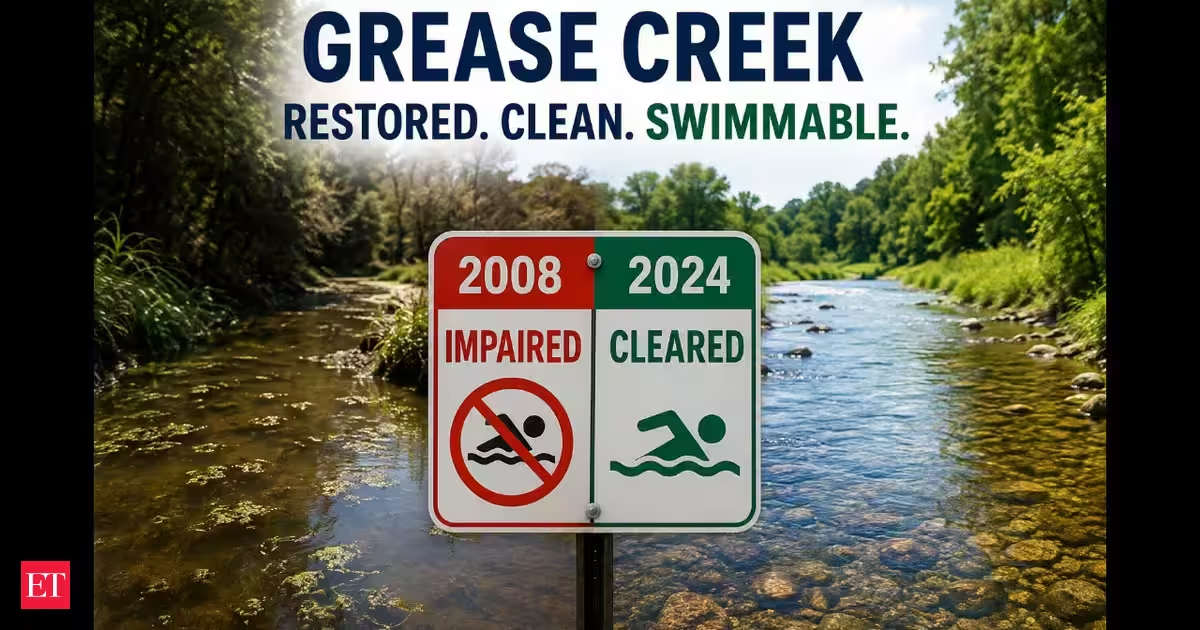
In 1998, PA DEP listed 67 miles of Warrior Run for siltation and flow problems. 26 years later, 8.5 miles were delisted after farmers and agencies improved water quality
Warrior Run water quality has improved after years of work across Pennsylvanias agricultural watershed. In 1998, the state listed 67 miles for siltation and flow problems. Now, 8.5 miles have been removed from the impaired list. Farmers, conservation groups and agencies helped reduce sediment and improve water conditions. The change took 26 years, but it offers a clear example of how steady conservation can restore damaged streams.
911 words~4 min read