WINDBER, Pa.—Standing on the rocky banks of Paint Creek in western Pennsylvania, Jim Panaro pointed out the colors of contamination. The orange staining the boulders is from iron, he explained, and the milky-white pools stagnating at the surface are aluminum. Likely lurking beneath the surface are other metals—copper, cadmium, arsenic—toxic to both aquatic life and humans.
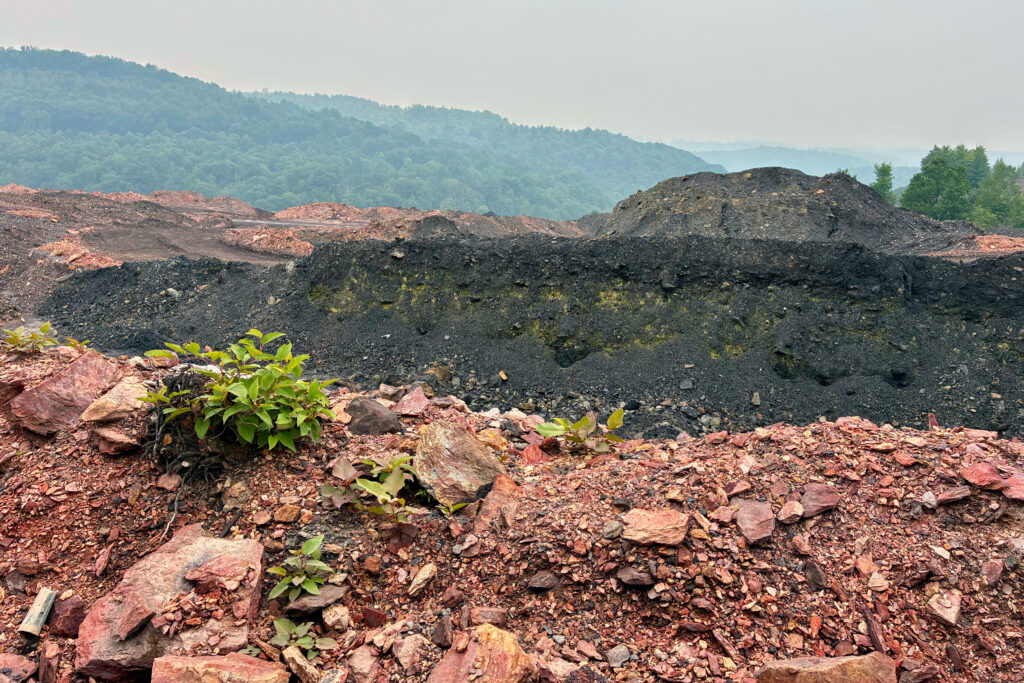
Towering behind Panaro is the source: a mountainside’s worth of coal waste at Windber Mine 37, near the city of Johnstown, one of hundreds of such piles across Pennsylvania discarded during the fuel’s heyday. Often referred to by environmental advocates as waste coal and by industry groups as refuse, “gob” or “boney,” this coal simply didn’t contain enough carbon to burn, and what was there was mixed in with too many other constituents to be efficient or economical as fuel.
Panaro said industry is now helping to undo this legacy of pollution. An executive vice president at Robindale Energy, a company that burns waste coal in specialized plants across the state, Panaro oversees the trucking and combustion of millions of tons of the waste every year. A lifelong resident of the area and avid flyfisherman, Panaro said he’s seen the benefits firsthand.