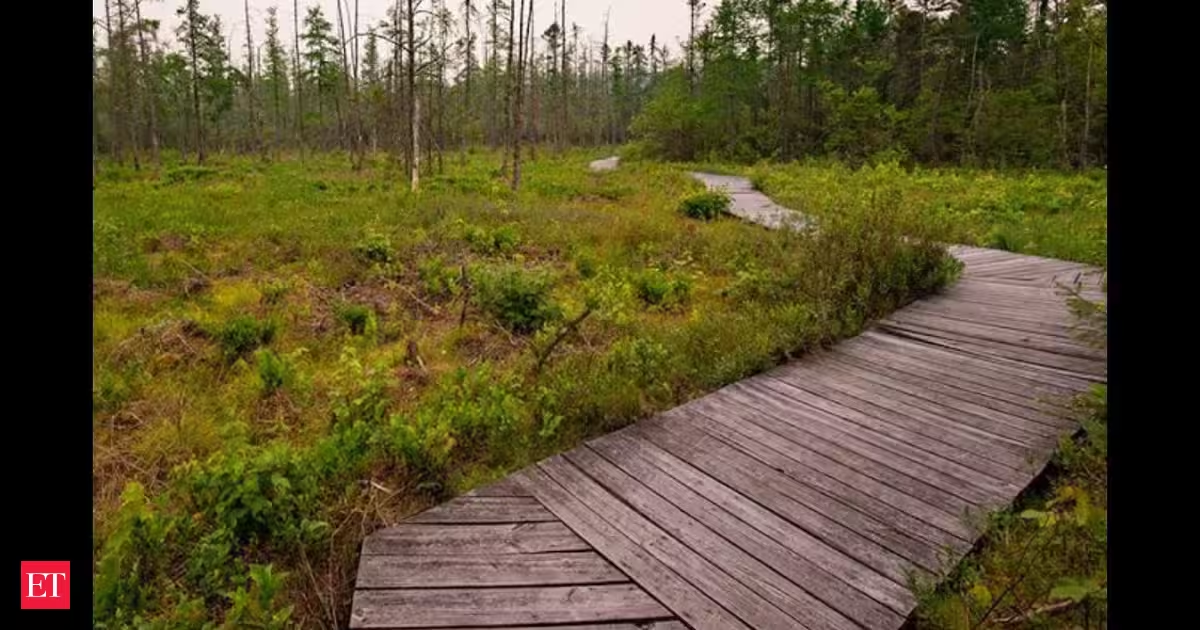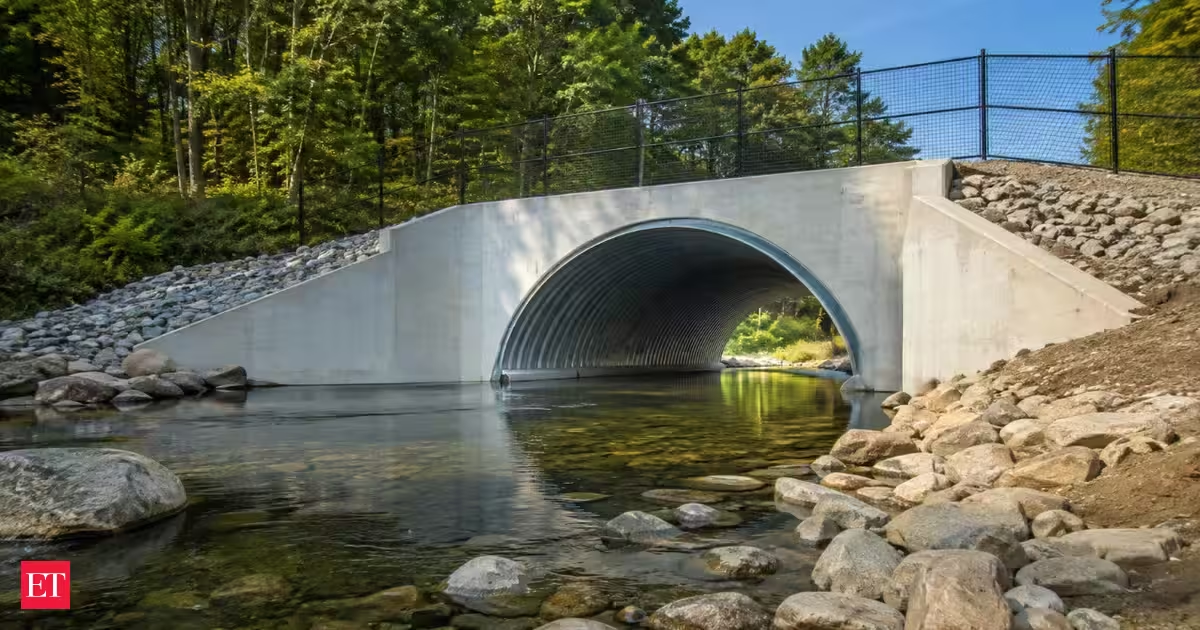
The recovery of Ingrams Branch in Delaware offers a striking example of how sustained agricultural conservation can reverse decades of nutrient pollution. In 2006, Delaware formally established nutrient controls for the Broadkill River watershed after monitoring showed that elevated nitrogen and phosphorus were impairing waterways. Agricultural runoff was identified as an important source of the problem. Nearly two decades later, a combination of best management practices (BMPs), technical assistance, conservation funding and cooperation with farmers helped reduce phosphorus concentrations in Ingrams Branch. In 2024, Delaware’s Department of Natural Resources and Environmental Control (DNREC) removed the phosphorus impairment for the 7.6-mile Ingrams Branch segment from the state’s impaired-waters list. The U.S. Environmental Protection Agency (EPA) now highlights the project as a nonpoint-source pollution success story.The Broadkill River watershed covers approximately 105 square miles in Sussex County and includes communities and landscapes associated with Milton, Lewes and Georgetown. Ingrams Branch is part of the Broadkill headwaters, alongside tributaries including Martin Branch, Beaverdam Creek, Round Pole Branch, Pemberton Branch and Primehook Creek. The watershed contains extensive agricultural land, making nutrient management particularly important to water quality.DNREC monitoring identified elevated nitrogen and phosphorus as significant concerns, while the EPA notes that Delaware used threshold concentrations of 3.0 milligrams per liter for total nitrogen and 0.2 milligrams per liter for total phosphorus when evaluating nutrient-related impairments. Excess nutrients can promote ecological imbalances in surface waters, making reductions in agricultural runoff an important component of watershed restoration.Delaware’s regulatory response established a framework for reducing pollution throughout the Broadkill watershed. In 2006, DNREC adopted Total Maximum Daily Loads (TMDLs) for nitrogen, phosphorus and bacteria in the Broadkill River watershed. The regulations called for a 40 percent reduction in nonpoint-source nitrogen and phosphorus loads from the 2002–2003 baseline and a 75 percent reduction in nonpoint-source bacteria loads.The TMDL approach is important because it recognizes that pollution can originate from many dispersed sources rather than a single discharge pipe. Delaware explains that waters appearing on Clean Water Act Section 303(d) lists require TMDLs, while monitoring is used to determine whether water-quality improvements are occurring. For Broadkill, the long-term objective was therefore to reduce nutrient loading across the watershed rather than rely on a single intervention.You Might Also Like:The restoration effort accelerated through practical conservation measures implemented on working farms. From 2017 through 2023, watershed stakeholders provided technical assistance and helped agricultural producers install BMPs designed to reduce nutrient losses. Between 2017 and 2022, conservation partners enrolled 1,291 acres in cover crops and implemented nutrient-management plans across approximately 3,943 acres.Cover crops can help keep soil covered between production seasons, while nutrient-management planning helps align nutrient applications with crop needs and reduces the potential for excess nutrients to reach waterways. The effort also included a manure relocation program that transferred about 1,002 tons of manure out of the watershed between 2017 and 2022. These measures addressed multiple pathways through which phosphorus and other nutrients can move from agricultural landscapes into streams.Financial investment and technical expertise were also central to the project’s progress. The Sussex County Conservation District worked directly with producers, providing nutrient-management planning and cost-share assistance, while partnering with the U.S. Department of Agriculture’s Natural Resources Conservation Service (NRCS) to develop conservation plans and Environmental Quality Incentives Program contracts. EPA records indicate that NRCS provided more than $3.6 million for implementation efforts within the watershed between 2012 and 2022.Federal Clean Water Act Section 319 funding also supported conservation planning, nutrient-management assistance, manure relocation and related activities. Delaware’s Conservation Reserve Enhancement Program further contributed to watershed protection, including the establishment of 22 acres of hardwood trees in the Broadkill watershed. The restoration therefore depended on a broad partnership rather than a single agency or project.The scientific evidence behind the 2024 delisting decision is particularly significant. EPA reports that total phosphorus concentrations at monitoring Station 303311 in the Broadkill River segment represented by Ingrams Branch had declined since 2016. Historically, another monitoring station in the same segment recorded total phosphorus concentrations above Delaware’s 0.2 milligrams-per-liter threshold.During the 2024 assessment, however, the measured phosphorus concentration declined below the state threshold. That improvement helped support the removal of the phosphorus impairment for the 7.6-mile Ingrams Branch segment. EPA’s database identifies the waterbody as approximately 7.62 miles long and lists its designated uses as supporting fish, aquatic life and wildlife.The Ingrams Branch story also illustrates why environmental recovery can take years. The watershed’s nutrient problems were recognized through regulatory listings long before the most recent conservation projects were implemented. Moreover, Delaware’s water-quality assessment system has evolved: EPA notes that historically Delaware evaluated waterways under a combined “nutrients” standard involving nitrogen and phosphorus, while the 2024 Integrated Report cycle began assessing the two parameters separately.This change allowed the state to evaluate phosphorus conditions specifically and determine that the Ingrams Branch segment no longer met the criteria for phosphorus impairment. Importantly, delisting does not mean that conservation work has ended. EPA says implementation efforts continue, supported by relationships developed among producers, conservation organizations and government agencies.The restoration of Ingrams Branch is a powerful example of how best management practices can produce measurable improvements in water quality when they are applied consistently over time. What began with nutrient impairment concerns evolved into a coordinated watershed effort involving farmers, conservation districts, state officials, federal agencies and local partners. Cover crops, nutrient-management plans, manure relocation, tree establishment and financial assistance collectively helped reduce nutrient pressures, while monitoring provided the evidence needed to document recovery.In 2024, the phosphorus impairment was removed for 7.6 miles of Ingrams Branch, marking an important milestone for the Broadkill River watershed. The achievement demonstrates that restoring waterways affected by agricultural runoff is possible through science-based planning, long-term investment and collaboration—and that successful conservation can turn a regulatory water-quality challenge into a measurable environmental success story.
In 2006, Delaware listed the Broadkill watershed for nitrogen and phosphorus impairment. 18 years later, BMPs restored 7.6 miles of Ingrams Branch, ending the phosphorus
The restoration of Ingrams Branch is a powerful example of how best management practices can produce measurable improvements in water quality when they are applied consistently over time. What began with nutrient impairment concerns evolved into a coordinated watershed effort involving farmers, conservation districts, state officials, federal agencies and local partners.
959 words~4 min read