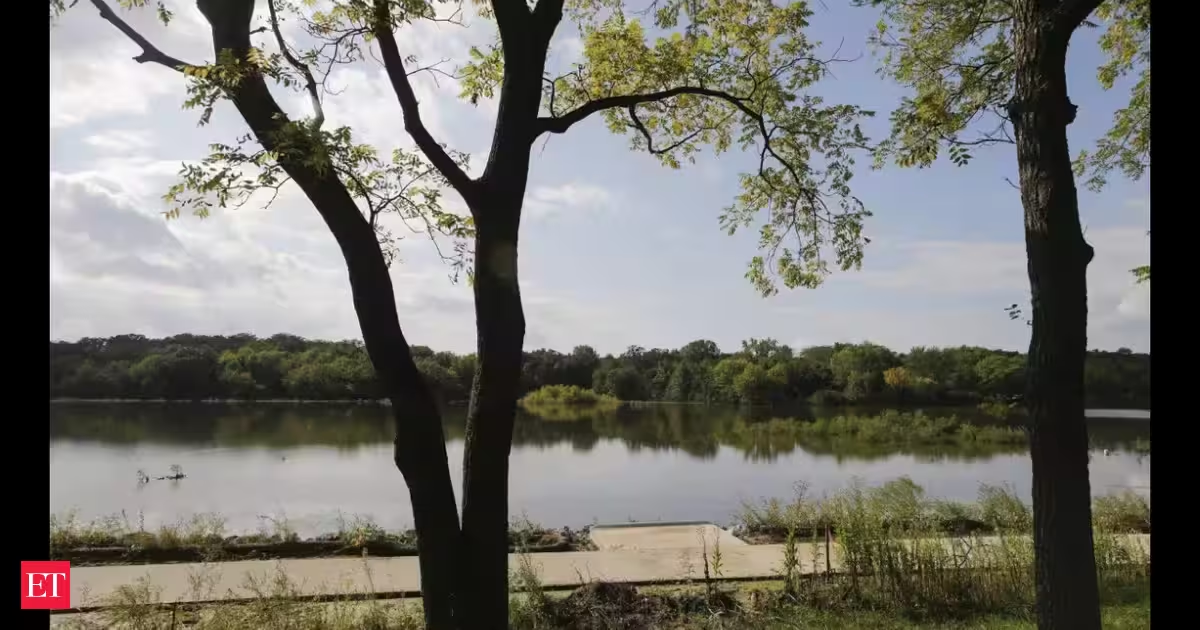
Healthy lakes depend on clean water, balanced ecosystems, and effective management of the land surrounding them. When nutrients and sediment enter a lake in excessive amounts, they can reduce water clarity, contribute to algal blooms, and affect recreational use. Kent Park Lake in Johnson County, Iowa, underwent extensive watershed and in-lake restoration to address these challenges. After the restoration work, monitoring showed improvements in algae and turbidity, and the lake met the requirements for removal from Iowa’s impaired waters list.Kent Park Lake and Its WatershedKent Park Lake is a 27-acre lake in Johnson County and is a popular recreation destination for communities around Iowa City and Cedar Rapids. Kent Park opened in 1970 and occupies around two-thirds of the lake’s 673-acre watershed. The property is owned by the Johnson County Conservation Board (JCCB).The remaining portion of the watershed is mainly agricultural land, with row crops and pasture making up the main land uses. Runoff from the watershed provided nutrients and sediment to the lake, leading to declining water clarity.Impairment From Nutrients and SedimentKent Park Lake was positioned on Iowa’s Clean Water Act (CWA) Section 303(d) list of impaired waters because increased nutrient and sediment delivery contributed to poor water clarity. Iowa DNR used Carlson’s Trophic State Indices (TSI) for chlorophyll a and Secchi depth to analyze the lake’s water quality.High algae levels resulted in poor clarity and created hazardous conditions associated with cyanobacteria. Cyanobacteria can produce cyanotoxins capable of causing serious diseases or death in pets, livestock, and wildlife. The toxins can also affect people, potentially leading to illness as well as red, raised rashes or irritation that involve the skin, ears, and eyes.Phosphorus pollution from the watershed was identified as a significant driver of algal blooms. Reducing phosphorus and sediment reaching the lake therefore became a major part of the restoration strategy. A total maximum daily load (TMDL), or water quality improvement plan, was prepared in 2014.Watershed Restoration BeginsPlanning began in 2014 to develop a watershed plan focused on minimizing phosphorus loading from upland areas. The plan also considered future restoration work within the lake.In 2016, work began on existing sediment-control infrastructure. Six sediment basins in the park were renovated, while six new structures were constructed to capture phosphorus and sediment before they could reach Kent Park Lake. The existing basins were dredged and re-vegetated.A dike was also constructed at the lake’s northern inlet to minimize sediment entering the water. Funding from the Easter Iowa Airport supported the purchase of land that had previously been over-used for cattle and directly drained into the lake.Major In-Lake RestorationThe lake was drawn down in 2017 to allow dredging and installation of fish habitat. More than 12,000 dump truck loads of sediment were removed, elevating the lake’s depth by 6 feet.Additional restoration addressed the lake’s shoreline and habitat. Portions of the shoreline were armored, more than 30,000 emergent plants were planted, and an accessible fishing pier was installed. Work elsewhere in the park included timber stand improvements and native prairie restoration.The listed best management practices included six catch basin cleanings, 1,000 linear feet of structural lake stabilization, 176,743 cubic yards of dredging, 75 acres of native plant community restoration and management, one livestock feedlot relocation, and six catch basins.Water Quality Improvements and DelistingThe restoration work in the watershed improved water quality in Kent Park Lake. Iowa uses the concept of “trophic state”, based on water chemistry and biology, to classify lakes.For Iowa lakes, the median TSI values for both chlorophyll a and Secchi depth must be 63 or less for two consecutive reporting cycles before a lake can be removed from the impaired waters list. Kent Park Lake met this requirement.A TSI value of 63 corresponds to a chlorophyll concentration of approximately 27 micrograms per liter (µg/L) and a Secchi depth of almost 0.8 meters. Secchi depth measures water clarity and visibility by indicating how deeply a person can see into the water.The two-cycle requirement is intended to illustrate that improvements are long-term and relatively stable rather than temporary. Following the successful monitoring results, the Iowa Department of Natural Resources (DNR) removed Kent Park Lake from the impaired waters list in 2024.Funding and PartnersThe restoration was supported by state and county partners. IOWA DNR LAKE RESTORATION provided $1,500,000 in funding, while the JOHNSON COUNTY CONSERVATION BOARD provided $5,777,244.Through watershed conservation practices, sediment removal, shoreline improvements, habitat work, and other restoration measures, Kent Park Lake achieved measurable improvements in water quality. The lake’s ability to meet the required algae and turbidity-related standards demonstrates the outcome of sustained restoration and watershed management efforts.Source: U.S. Environmental Protection Agency (EPA)FAQs:Q1. What is lake restoration?Lake restoration involves actions designed to improve the condition of a lake and its surrounding watershed. Projects may address water quality, sediment, habitat, and shoreline conditions.Q2. Why is water clarity important?Water clarity is an important indicator of lake conditions. Changes in clarity can reflect differences in algae, sediment, and other factors affecting water quality.
In 2004, Iowa listed Kent Park Lake as impaired after nutrient and sediment runoff harmed clarity. 20 years later, monitoring showed it met algae and turbidity standards
Kent Park Lake in Johnson County, Iowa, experienced water-quality problems linked to nutrient and sediment delivery, resulting in its placement on Iowas impaired waters list. Restoration efforts addressed both watershed and in-lake sources through sediment basins, a northern inlet dike, land acquisition, dredging, shoreline stabilization, native plantings, fish habitat, and prairie restoration.
820 words~4 min read