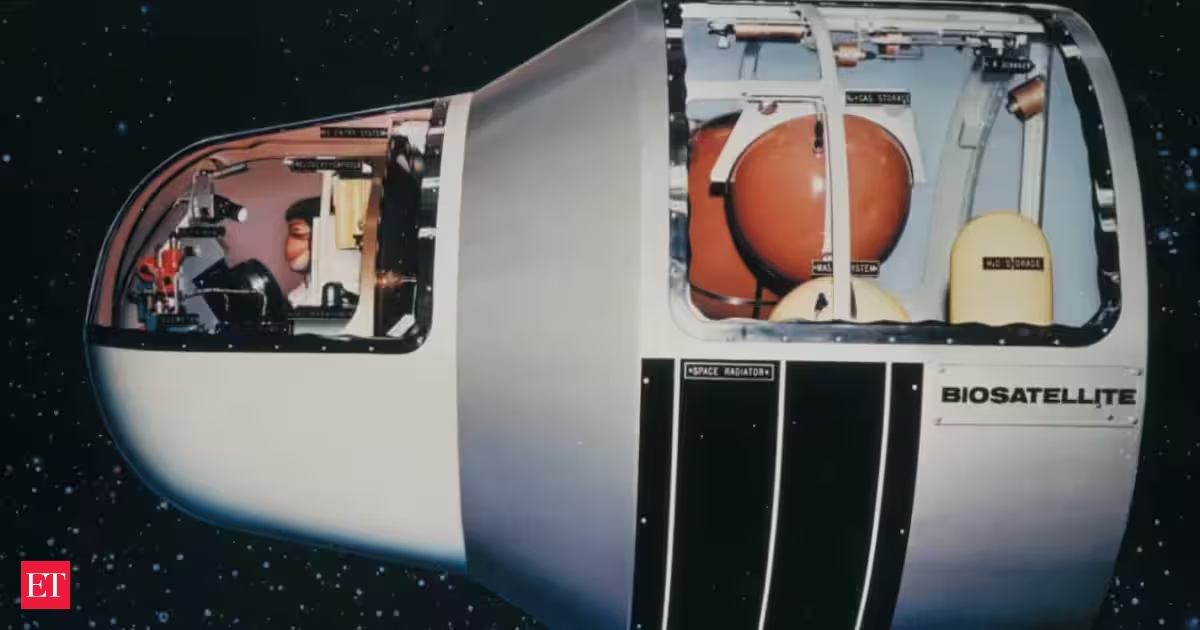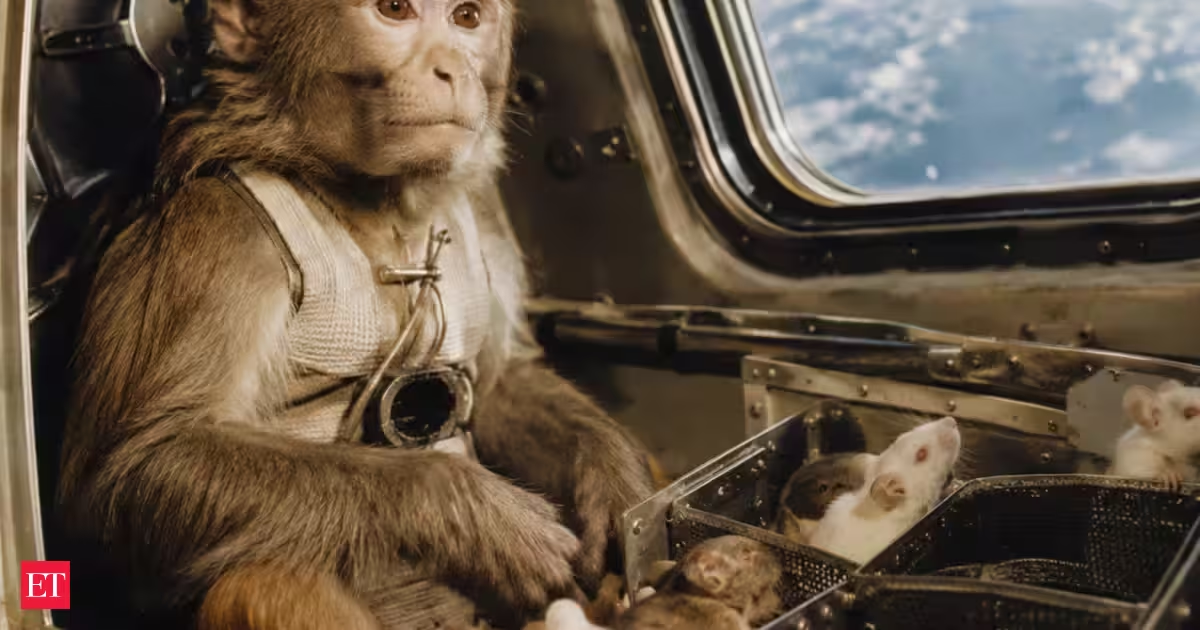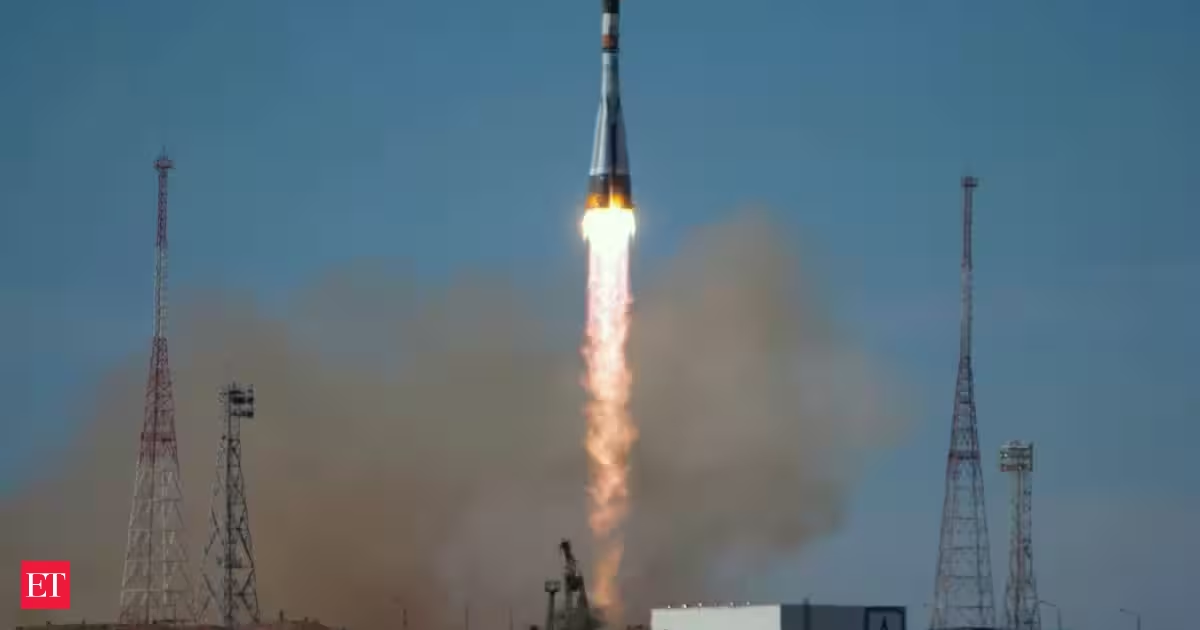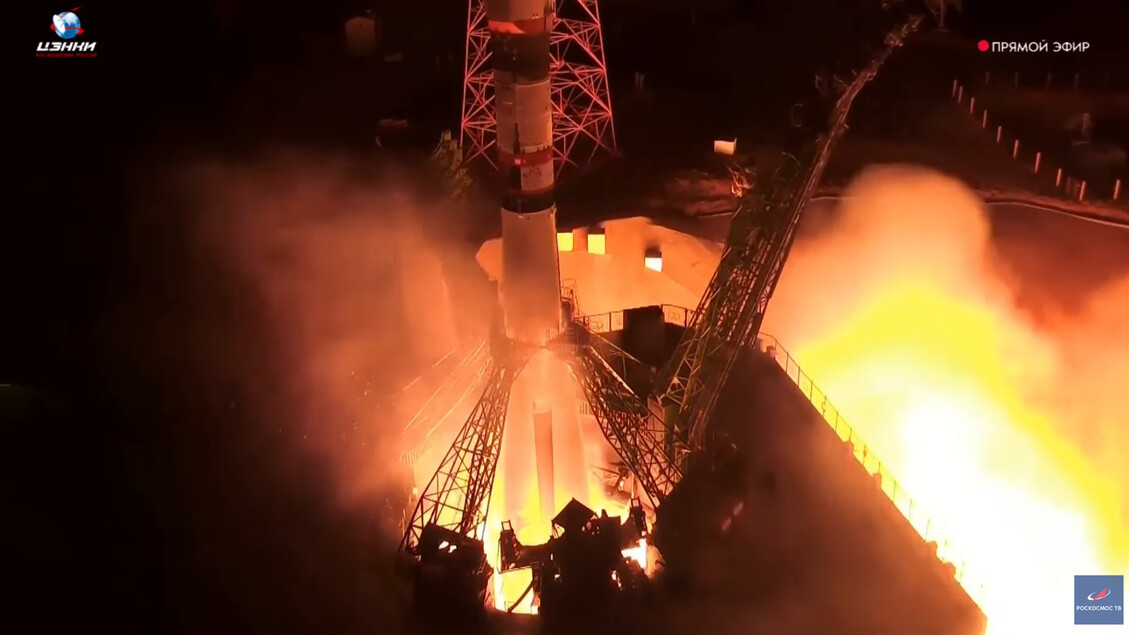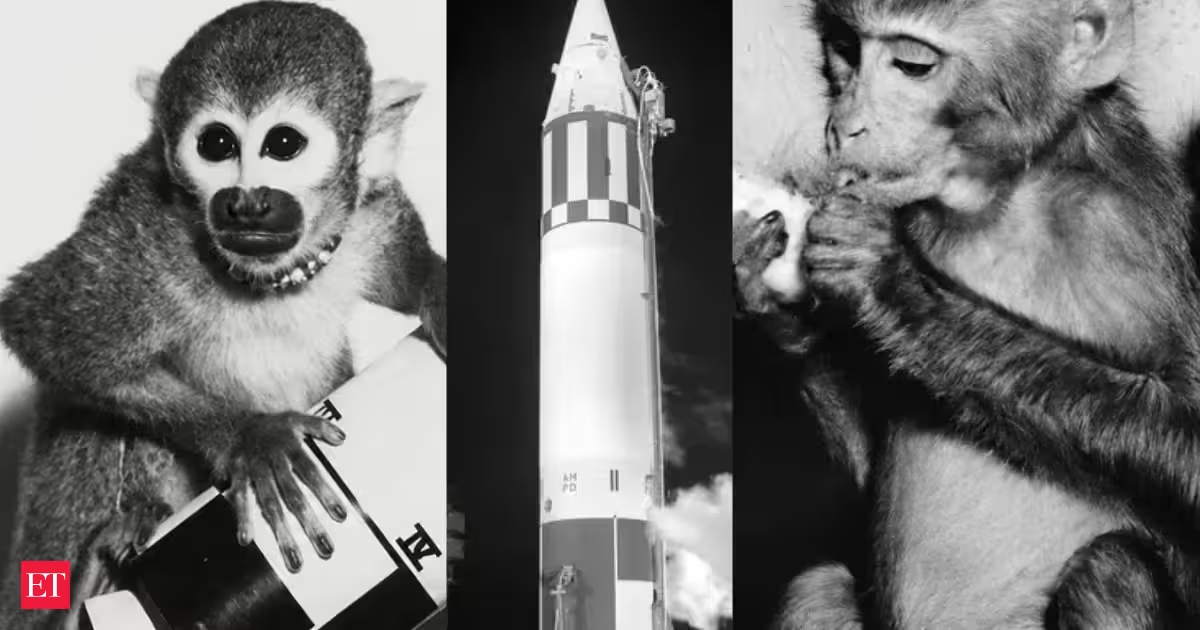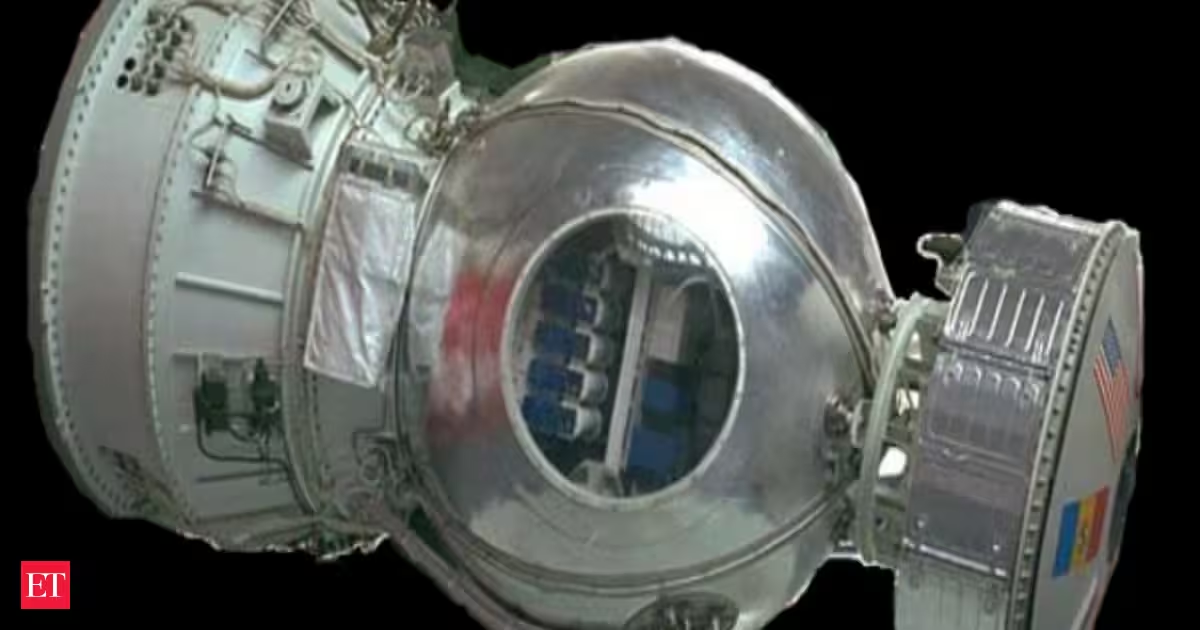
Even before humans were capable of spending months on orbital stations, scientists required information about the effects of prolonged weightlessness on the living nervous system. To provide answers to these questions, the Soviet Bion program was created as a series of biological satellites flown from 1973 to 1996 and used rhesus macaques as subjects to simulate astronauts' experiences, according to NASA’s overview of animals in space. Every new Bion flight collected a little more information regarding muscular, skeletal and vestibular system changes under weightlessness. By the end of the 1980s, the Bion program had already become an international collaboration including not only the Soviet Union but also the USA and a few other countries, NASA's historical news notes on the Bion program record.Bion 8, launched on September 29, 1987, and known as Cosmos 1887 in the Soviet chronology, is, nearly 39 years later, still regarded as one of the most eventful flights in the whole series. Two monkeys, Yerosha and Dryoma ("Drema"), traveled aboard this mission, which was shortened because of a problem with onboard hardware and a spacecraft failure during re-entry and landing. The landing process took place outside the expected landing zone at a distance of hundreds of miles. Despite numerous problems, the mission returned a significant number of scientific results, results that, at the time, were largely overshadowed in press coverage by the flight's hardware and landing troubles, even though the science itself held up.A planned 13-day flight was cut to 12½ days Bion 8 launched on a Soyuz-U rocket from Plesetsk Cosmodrome on September 29, 1987, carrying a 6,700-kilogram spacecraft into low Earth orbit. Aboard were two young rhesus macaques, Yerosha and Dryoma, along with rats, fruit flies, beetles, guppies, salamanders, plants, and radiation physics experiments from nine countries, including the USSR and the US, according to NASA’s biological payload summary for Cosmos 1887. This flight was scheduled for about 13 days, yet some issues arose during its course.According to The US Experiments Flown on the Soviet Biosatellite Cosmos 1887, a NASA technical memorandum describing the mission in detail, one monkey's automatic feeder failed on the second day of the flight, prompting an early end to the mission. The spacecraft returned to Earth after about 12½ days, a figure many later accounts would round up to 13.Yerosha's partial escape from his restraints Space travel was also far from dull for the two monkeys. Yerosha, a name that translates roughly to 'ruffled' or 'shaggy', succeeded in freeing himself partially from the harnesses meant to secure him in the flight cage, NASA's mission summary notes. He proceeded to investigate his orbital habitat somewhat during the flight, making Bion 8 one of the most cited missions when reviewing animal space missions. Dryoma, whose name translates to 'drowsy' or 'slumber,' didn't display this kind of behavior and was mostly found in mission logs in relation to the physiological studies conducted during the flight.A reentry malfunction that sent the capsule 1,850 miles off course However, the greater problem occurred at the end of the mission. During reentry, a system malfunction sent the capsule roughly 1,800 miles off course on October 12, 1987, according to NASA's technical memorandum on the mission; a separate NASA historical account puts the figure slightly higher, at about 1,850 miles. The capsule came down in a remote part of Siberia, still well within Soviet territory, whose vast size meant even an 1,800-mile miss could land it hundreds of miles from the intended recovery zone in Kazakhstan without crossing the border. Delays in the postflight procedures, needed to preserve the value of the biological specimens collected during the flight, meant recovery teams took more than 40 hours to locate and begin processing the capsule. Some of the fish aboard as biological specimens died of cold exposure, per the same NASA account.What Bion 8's experiments revealed about the nervous system in microgravityLooking past the shortened flight and the rough landing, the underlying scientific objectives of the Bion 8 experiments were largely met, the same data that had been overshadowed in the immediate aftermath. More than 50 NASA-sponsored scientists took part in 33 American experiments carried aboard Bion 8, covering the heart, lungs, muscles, bones, connective tissue, and the immune and endocrine systems, run alongside a separate Soviet research program that included the neurovestibular studies for which the primates were mainly flown. Among those findings are some described in the article titled ‘Vestibular Experiments in Space’.Rhesus macaque monkey. Image credits: Wikimedia CommonsThis peer-reviewed article is an overview of primate neurovestibular experiments in space flights published in ‘Advances in Space Biology and Medicine’. Based on data gathered from neural recordings on Bion flight Cosmos 1887 and subsequent flight Cosmos 2044, the paper notes some changes in the activity of the medial vestibular nucleus and flocculus, which are responsible for balance control and eye movement, respectively, with the first changes occurring on the very first day of the space flight. The levels of activity partially stabilized after two to three days, but then increased further to form a new plateau, which the authors saw as an indicator of adaptation of the nervous system to microgravity conditions.The legacy of Bion 8 in later missions All of the issues faced during the Bion 8 mission, from the faulty feeder to the reentry mistake, were incorporated into the future planning and execution of Bion flights. The Bion 9 flight in 1989, with Zhakonya and Zabiyaka aboard for 14 days, conducted many of the experiments performed on Bion 8, again for the sake of comparing the results of these two missions in relation to neurovestibular, muscular and circadian rhythm studies, which Yerosha and Dryoma started nearly two years before, despite their mission falling short of the initial duration by half a day. Other missions followed, including the Bion 10 in 1992 and Bion 11 in 1996, until the original Bion satellite was substituted for the new Bion-M spacecraft, which first went to space in 2013, this time without a monkey crew.
In 1987, Bion 8 carried monkeys Yerosha and Dryoma for 13 days; Yerosha escaped part of his restraints before the capsule landed 1,850 miles off target
Explore the pioneering Bion 8 mission of 1987, where monkeys Yerosha and Dryoma traveled into space. Discover their experiences, the challenges faced during re-entry, and the scientific discoveries made about the effects of microgravity on living organisms.
995 words~5 min read