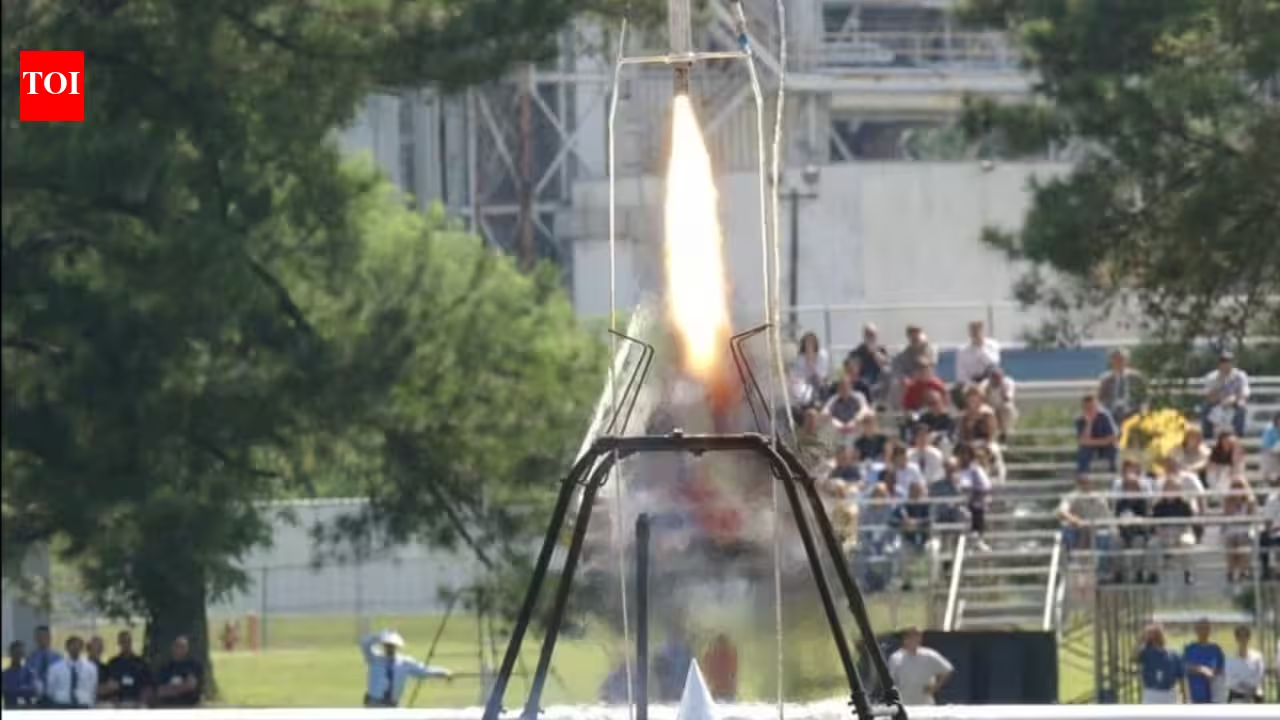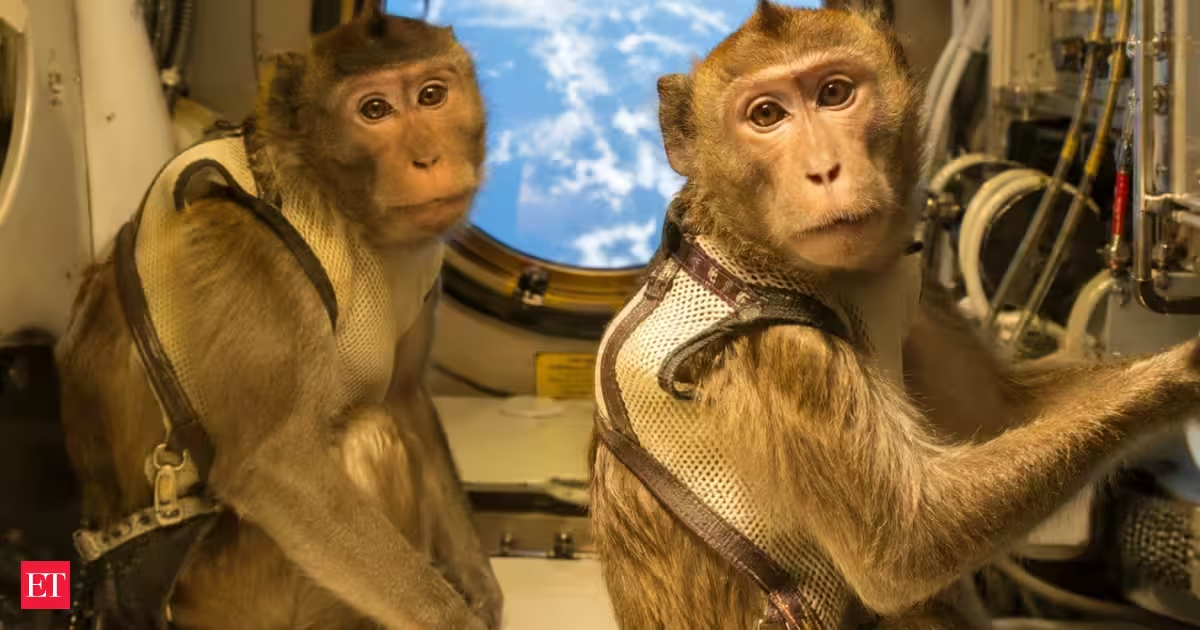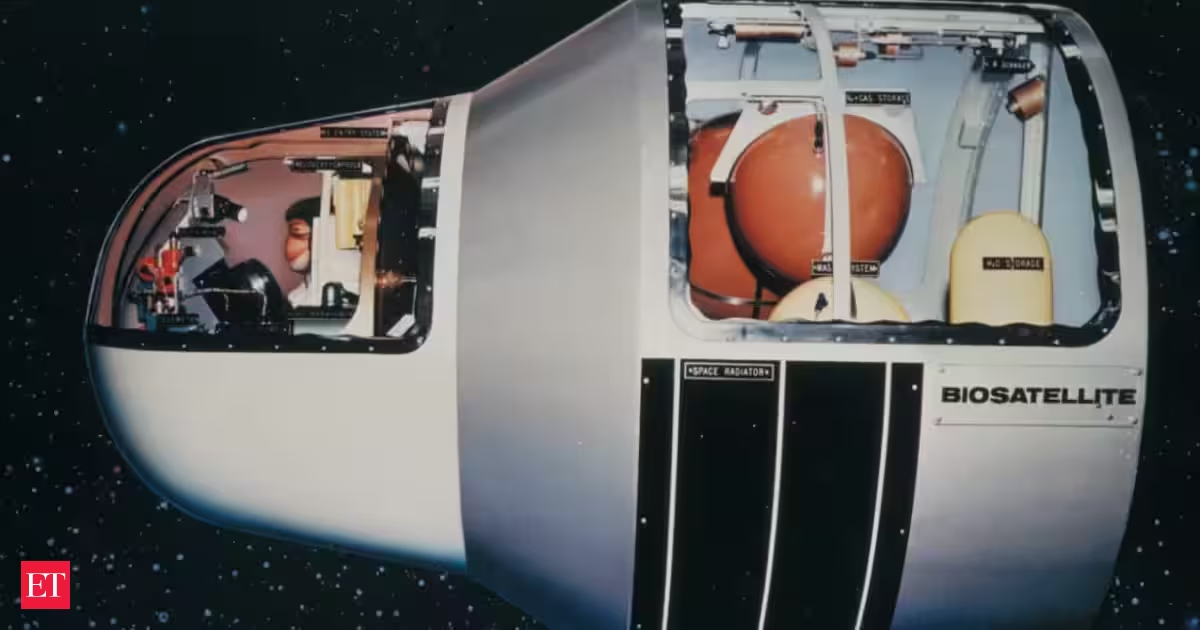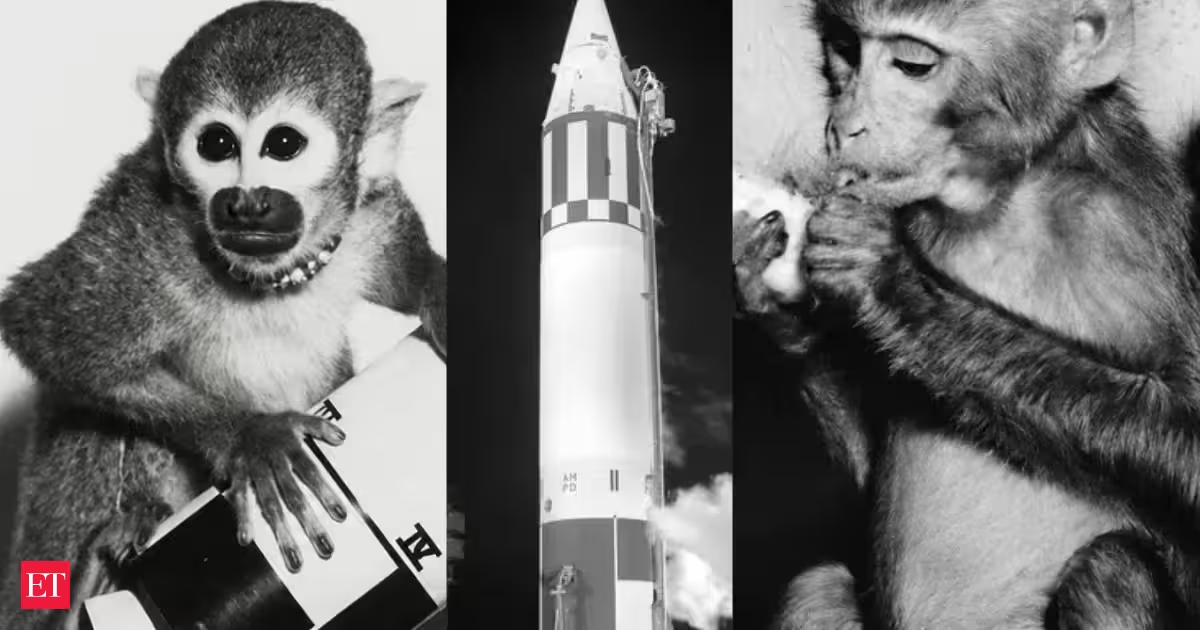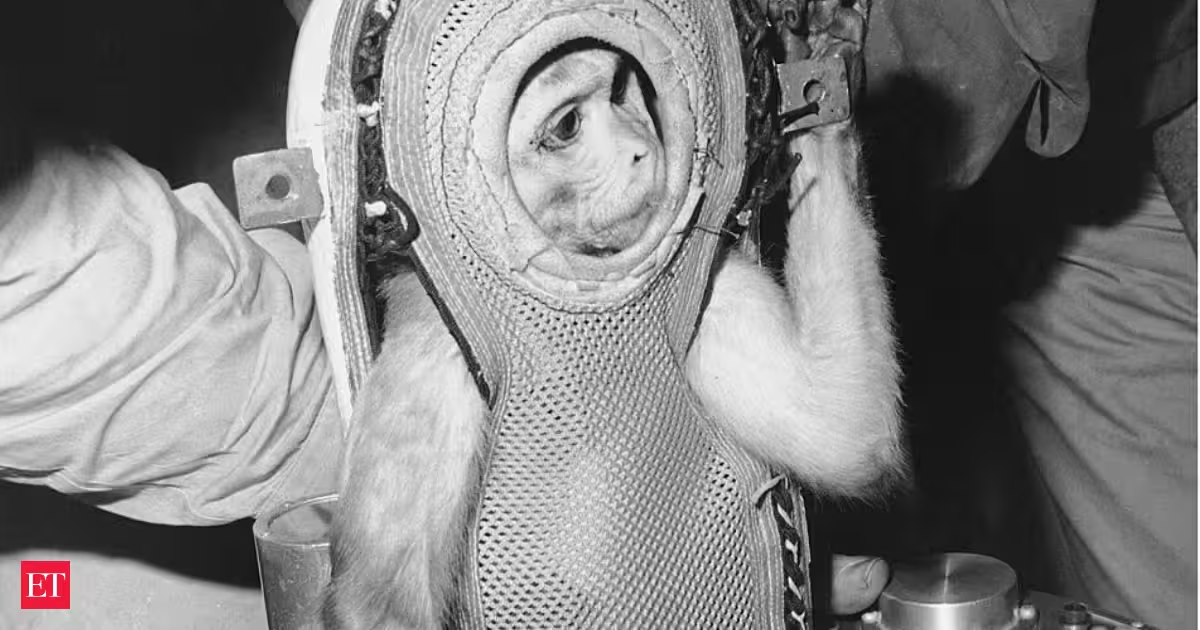
On September 20, 1951, a rhesus monkey named Yorick was strapped into the nose cone of a US Air Force rocket and shot straight up into the New Mexico sky. He didn’t fly alone. He took eleven mice with him. Almost 45 miles above the desert, the Aerobee missile carried its passengers 236,000 feet up before the capsule turned around and fell back to Earth, according to NASA’s own history office. The flight succeeded, and that made Yorick briefly notable, but the full tale of what happened after he landed is far less triumphant than some retellings suggest.Why was a monkey strapped to a rocket?Nobody knew what a rocket flight would do to a living body in the years after World War II. There was concern among scientists about a person being killed outright by the intense acceleration of launch, the sudden weightlessness, or the thin air at extreme altitude. So before any person went into a capsule, the US Air Force sent monkeys and mice first. This work centered on Holloman Air Force Base in New Mexico, whose main research rocket was the Aerobee. Yorick’s flight was not the first attempt. Five months before, on April 18, 1951, a rhesus monkey believed to be Albert V had been launched aboard an Aerobee rocket. It was an easy ascent. Then the parachute failed to open, and the monkey didn't survive the fall. As Space.com explains, the engineers took the next few months to redesign the parachute system before attempting another launch with Yorick that September.A landing that almost went rightWhile the technical designation for Yorick's mission was Aerobee-19, the flight became known in some accounts as the 'arkful of animals' mission, as he was accompanied by eleven mice. This time the parachute worked. The capsule landed safely in the desert, and for a moment it seemed that Yorick and his mice had done something no American animal had done before.Ham's 1961 Mercury-Redstone flight built directly on lessons learned from earlier animal launches like Yorick's. Image Credits: NASAHowever, recovery crews were slow to reach the landing site and the sealed capsule baked in the New Mexico sun. Space historian Jordan Bimm, a Guggenheim fellow at the Smithsonian’s National Air and Space Museum, told Inverse that recovery teams “weren't able to reach the rocket in time, and the specimen overheated and died of heat prostration.” Yorick survived the launch, the fall, and the landing, but died of heat before help could reach him. By most accounts of the mission, the mice survived.Why altitude alone does not equal spaceYorick's flight reached 236,000 feet, about 45 miles up, nowhere near the 62-mile-high Kármán line, the internationally accepted boundary of space, according to Space.com. Bimm told Inverse that medically, the distinction matters less than it sounds. Once a body is high enough that keeping it alive depends on the same problems as true space, he told Inverse, "it's essentially space."A partial success that still matteredThat flight was a turning point, even with the death of Yorick. The parachute system itself worked as redesigned: Yorick and his mice made it through launch, weightlessness, and the descent to a safe touchdown, the phase of the mission engineers most needed to prove out. His death afterward, from heat exposure during a delayed recovery, was a separate failure in ground logistics rather than in the flight itself, and it gave engineers strong evidence that the rocket and parachute system could carry a living animal through launch, weightlessness, and landing without killing it, provided recovery teams reached the capsule in time. Earlier attempts had a grim record. NASA's history office notes that Albert II reached an altitude of 83 miles in 1949 but died on impact when his parachute failed, and Albert IV met the same fate later that same year. Yorick's flight suggested that such a failure could be reduced through design changes.Lessons learned from Aerobee-19 were applied to the next round of tests, including a 1952 flight that carried two more monkeys, Patricia and Mike, to investigate how the body coped with rapid acceleration during launch. This research fed directly into Project Mercury, the effort that would send Alan Shepard and John Glenn into space about a decade later. Space.com's chronology of primate spaceflights traces that throughline from the earliest V-2 monkey launches to the astrochimps that preceded Mercury.A name that history nearly forgotYorick never achieved the same kind of fame as Laika or Ham the chimpanzee. Bimm says the flight did not make many headlines at the time, and interest in animal spaceflights waned for a few years. After the Soviet Union’s Sputnik launch in 1957, American scientists returned to their old data with renewed urgency. Seventy years later, Yorick’s flight is a reminder that early space history rarely followed a neat, triumphant path. It came through failed parachutes, cramped capsules, and, in Yorick's case, one long, hot afternoon in the New Mexico desert before help arrived.
In 1951, Yorick the monkey and 11 mice rode an Aerobee rocket to 236,000 feet; the flight showed animals could survive launch and landing, though Yorick died after touchdown
Discover the remarkable story of Yorick the monkey, who, along with eleven mice, made a groundbreaking flight to 236,000 feet in 1951, paving the way for human space travel. Explore the trials, triumphs, and aftermath of this pivotal moment in space history.
820 words~4 min read