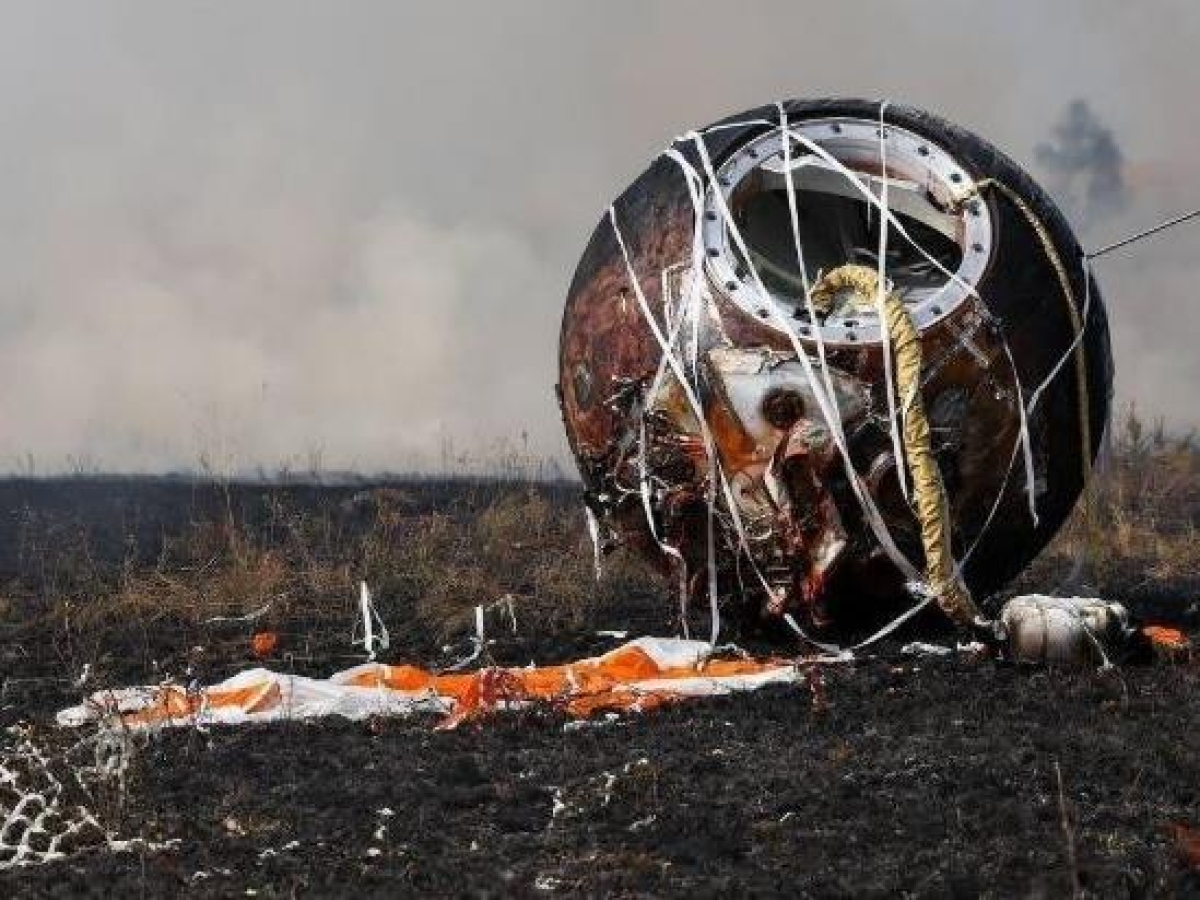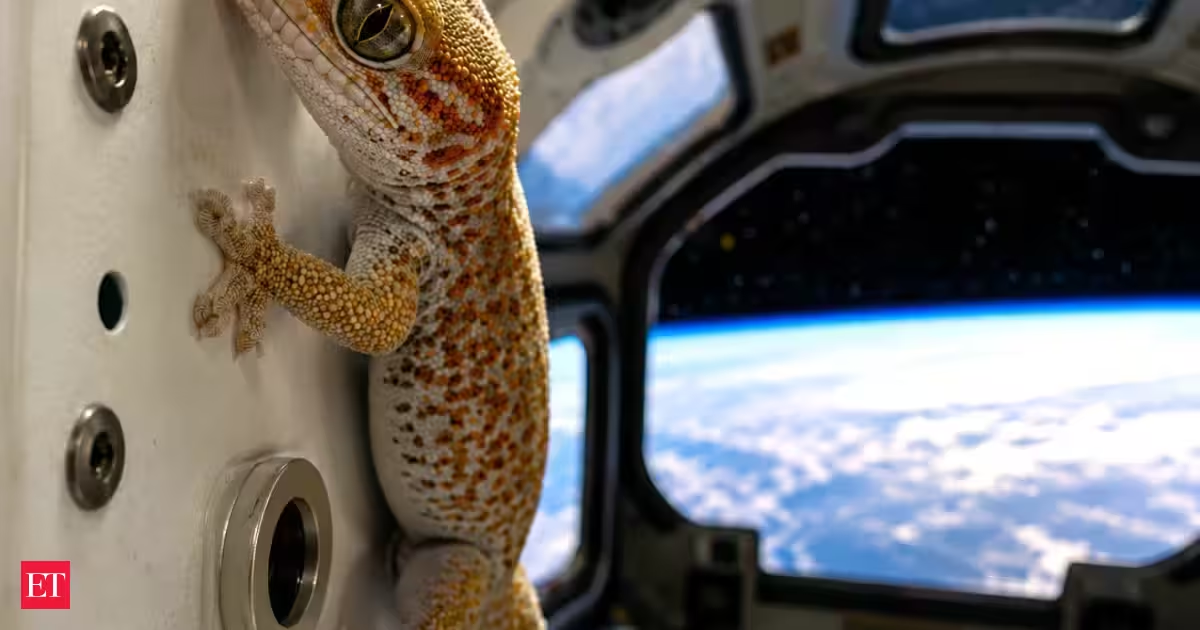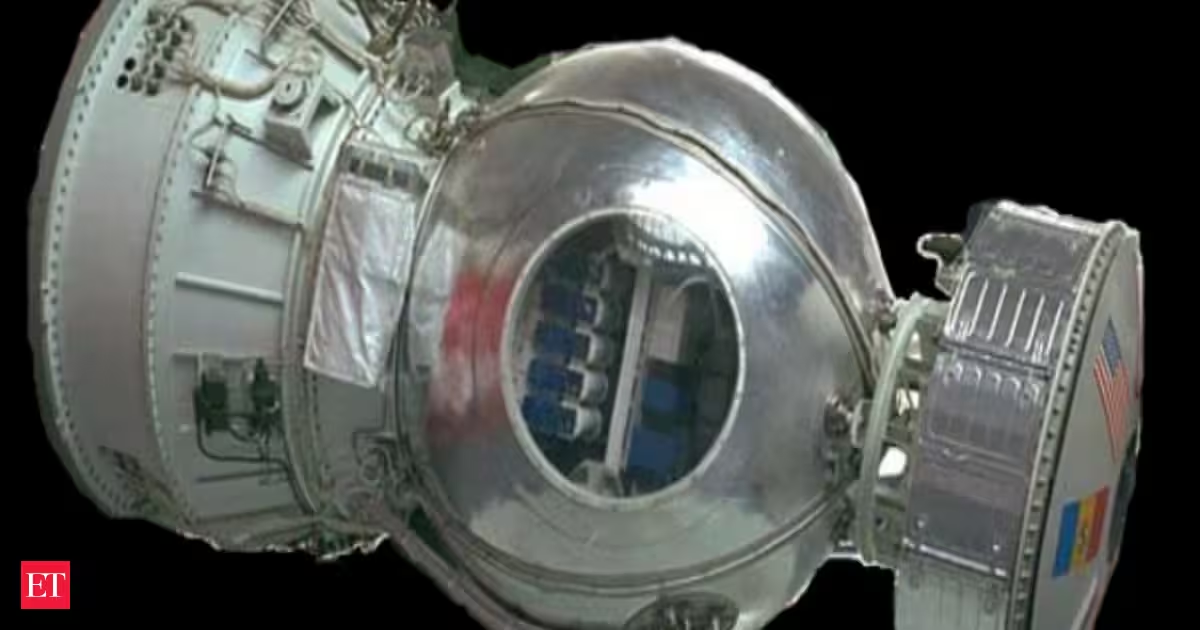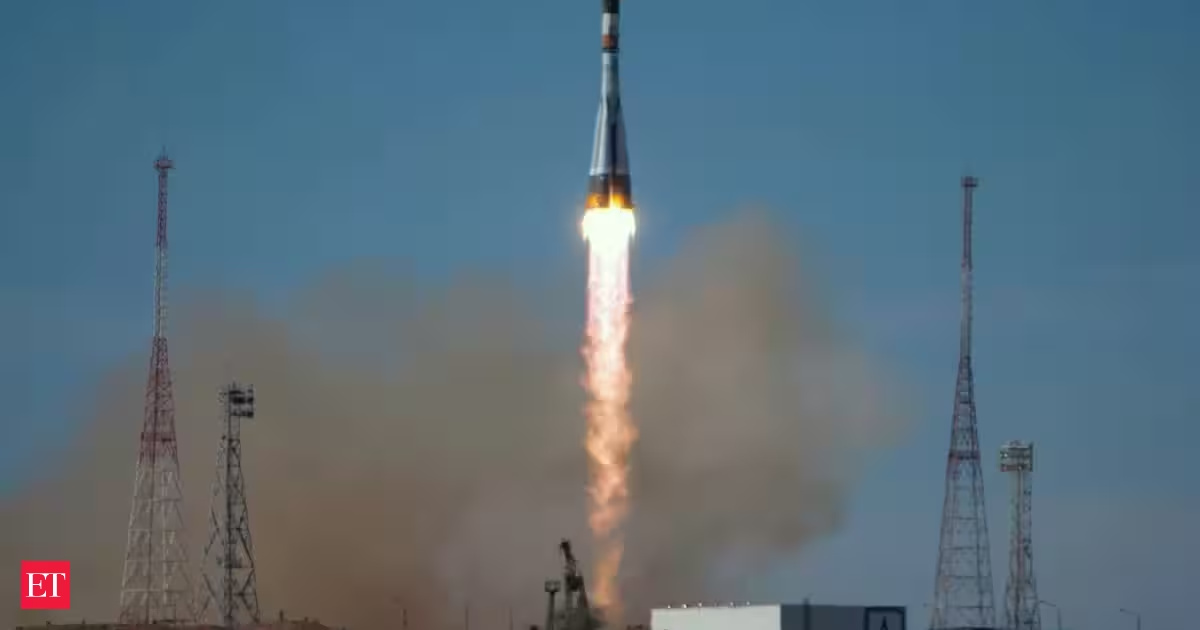
SynopsisIn a space mission conducted by Russia in 2013, a tragic outcome ensued as most of the aboard animals, including mice, gerbils, and fish, could not withstand the challenges of space. Surprisingly, garden snails and geckos made it back unscathed. Scientists believe the snails' remarkable ability to drastically lower their metabolic rates played a crucial role in their survival.The launch of BION-M1. Image credits: Wikimedia CommonsSomewhere inside a lab in Russia in the spring of 2013, scientists prepared to unpack a space capsule only to be greeted with an unforeseen accident. Of all the creatures taken into space aboard the Russian satellite Bion-M1, all of the gerbils, all of the fish, and roughly half of the mice could not return alive. Those that survived seemingly untouched by their adventure were some common garden snails. According to a NASA Ames research report, the overall death rate for all animals involved was approximately 75 percent, while the snails and geckos involved in the mission emerged seemingly unscathed in the short term. It is quite a shocking revelation for us who have been brought up to expect only sleek and well-executed space flights undertaken by astronauts.The Noah's ark that went badly wrongBion-M1 was launched on April 19, 2013, from the Baikonur Cosmodrome in Kazakhstan with a Soyuz-2.1a rocket into a roughly 357-mile-high orbit, considerably higher than that of the International Space Station. Bion-M1 was a joint Russian and NASA biological research project that contained animals such as 45 mice, eight Mongolian gerbils, 15 geckos, a group of snails, fish, plants, and microorganisms in order to study their adaptation to microgravity and cosmic radiation. This was the longest mission of its kind for those animals.A gecko, the animal that survived aboard the Bion-M1. Image credits: Wikimedia CommonsBut not everything went well during the mission. Despite this being a joint project, an equipment malfunction killed each of the eight Mongolian gerbils, as stated in a 2013 Space.com article, quoting Russian space officials who confirmed this after the capsule returned to Earth. All the fish had died too. Half of the mice did not survive either, although scientists had some expectations about it because there were already dead mice in previous flights. Only geckos and snails seemed to survive this flight without significant problems when the capsule landed on May 19 near Orenburg.How did some of the animals surviveIt is not mere luck. The same NASA report notes that the land snails, as a species, have a high tolerance level when it comes to extreme cold, changes in gravity, and exposure to 200 Gray of radiation; mainly because they can reduce their own metabolic rate to near zero when things go sour, just like some species that use hibernation as a survival strategy for years on end to avoid starvation. This is a general physiological trait of snails rather than a description of conditions inside the capsule itself. In contrast, a mouse or a gerbil is a highly metabolic animal that would need constant provision of food, water, and regulated body temperature to stay alive. Any single failure to provide even one of those needs, and the rodent is dead meat.A snail. Image credits: Wikimedia CommonsA 2014 peer-reviewed paper titled “Mice in Bion-M 1 Space Mission: Training and Selection,” published in the journal PLoS One, reveals the amount of work, health selection process, and habitat preparations involved in just trying to keep the rodents alive during the mission, but sadly it could not save them from equipment malfunction. Separately, follow-up research on the mice that did survive found a lasting cost: studies of their skeletons after landing showed significant loss of bone density and bone mineralization following the 30-day flight.The uncomfortable partWhen sending living beings into space, it is important to accept mortality levels that are unacceptable for practically any other branch of science on Earth, and the example of Bion-M1 is not an exception, as in this case, "equipment failure" is quite literally death for the beings, who do not have any say in the whole mission at all. And that should perhaps be considered before one gets caught up in the entertaining facts about winning space snails: this was also an experiment in which most of the onboard organisms expired when the life support failed them.What this means for the missions still to comeThe message that scientists got out of this is that maybe there needs to be a revision of the types of animals suited to go on such long and uncertain space voyages. The NASA report also states that future spaceflight missions need to focus more on creatures that have "metabolic flexibility," that is, animals that can regulate their own metabolism down, since they are less likely to be affected by inconsistent life support systems.Read More News on(Catch all the US News, UK News, Canada News, International Breaking News Events, and Latest News Updates on The Economic Times.) Download The Economic Times News App to get Daily International News Updates....moreless
In 2013, Bion-M1 carried land snails in orbit for 30 days; hardware failures killed many other animals, but the snails survived
In a groundbreaking 2013 space mission, Bion-M1, land snails astonishingly survived while the majority of other animals onboard perished due to hardware failures. Scientists explore the implications for future space travel and the need for selecting more resilient species.
828 words~4 min read