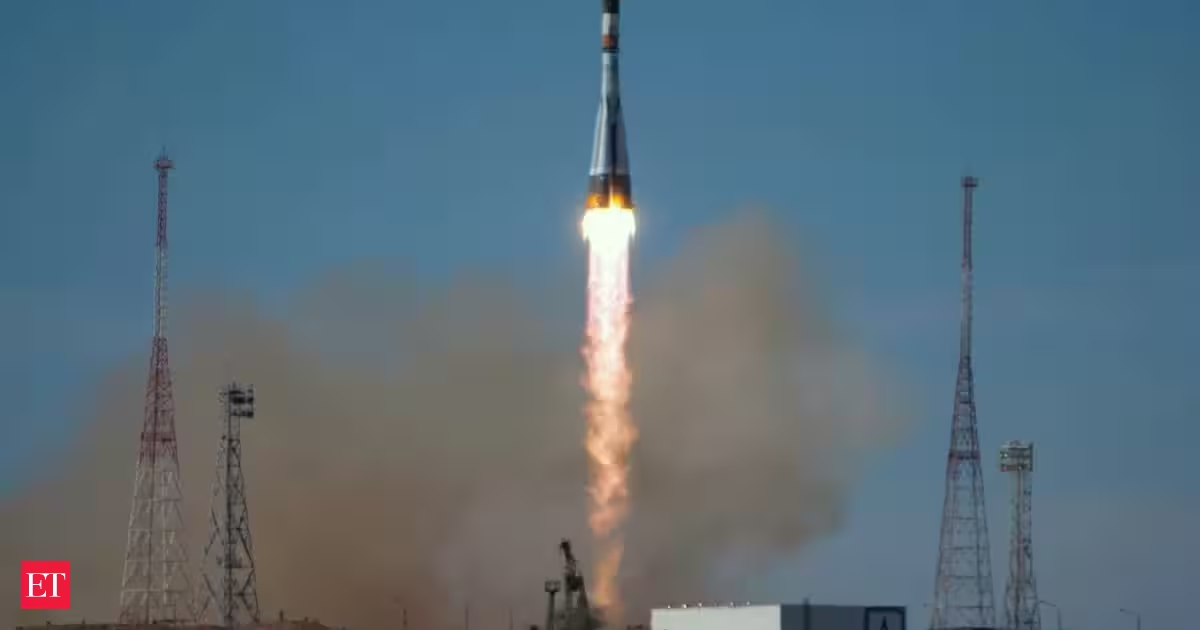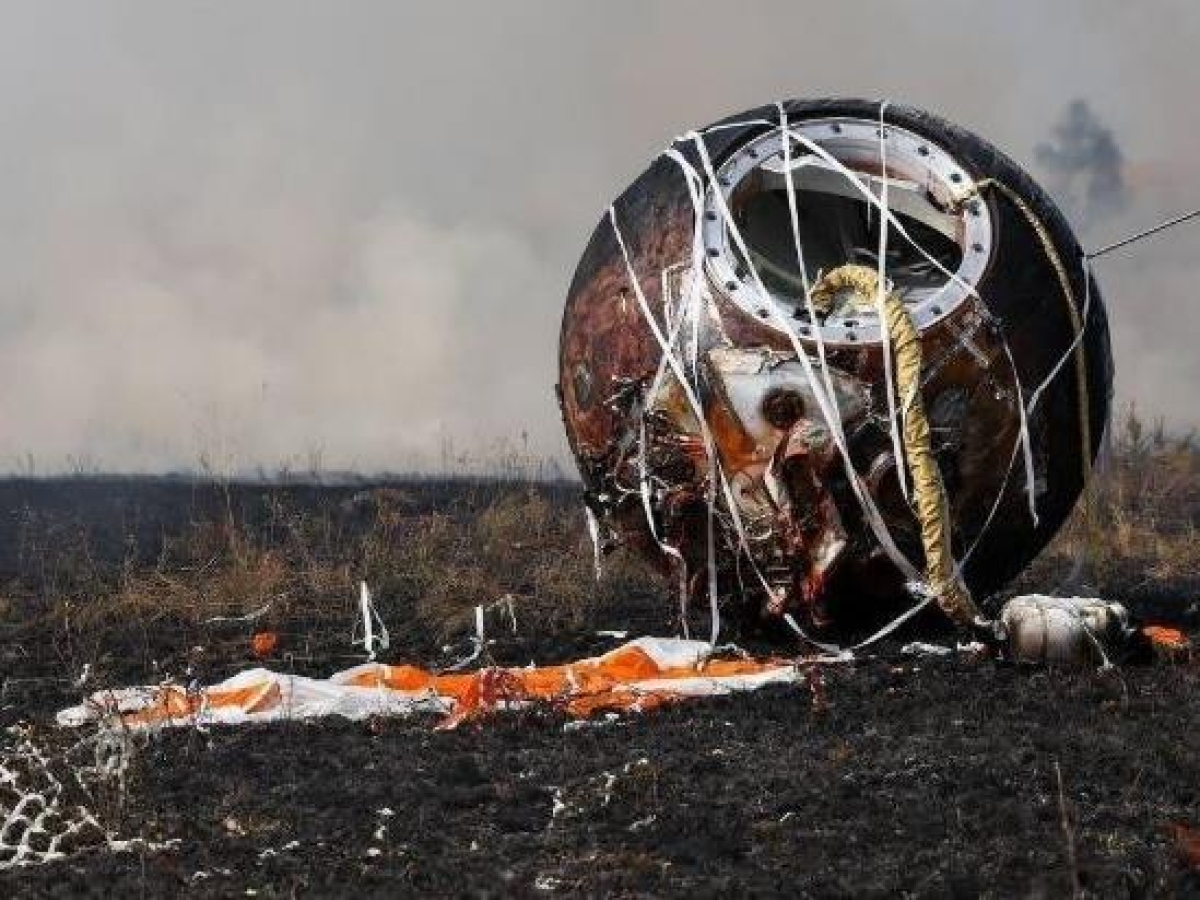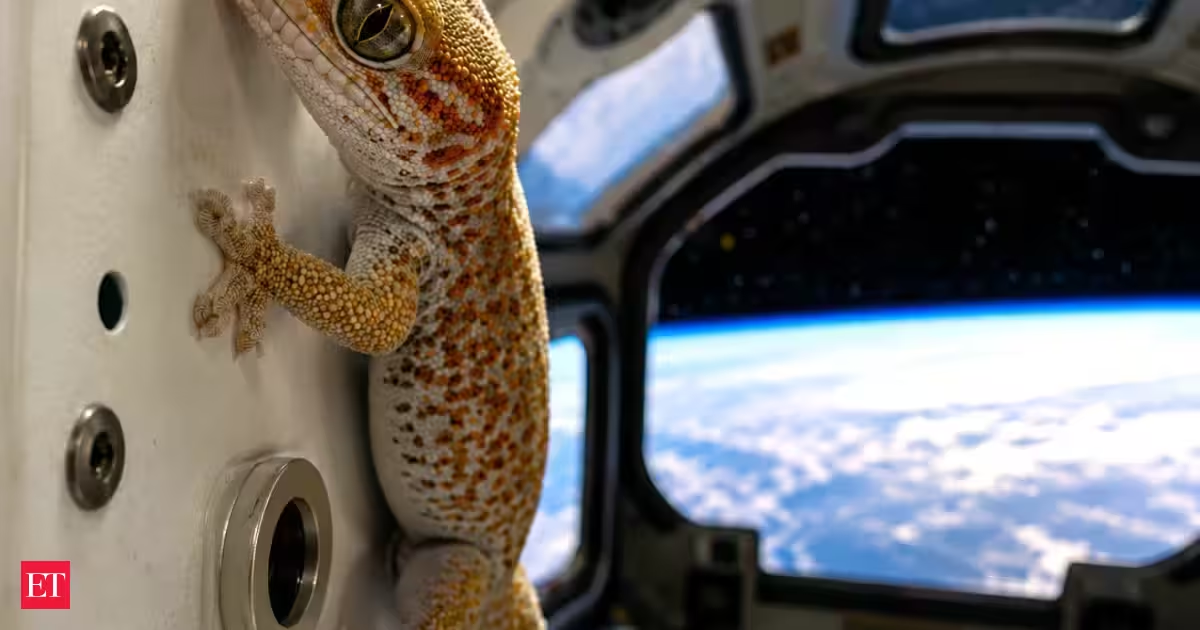
On May 31, 2005, a Russian spacecraft called Foton-M2 lifted off with an unusual cargo: five thick-toed geckos. The little lizards circled the Earth for 16 days with no food or water. All five were alive when the capsule parachuted down onto the Kazakh steppe, and researchers saw no obvious signs of illness or distress. The flight was part of a joint NASA-Russian project detailed in a study titled ‘Development of the Gecko (Pachydactylus turneri) Animal Model during Foton M-2 to Study Comparative Effects of Microgravity in Terrestrial and Aquatic Organisms’ published in the Journal of Gravitational Physiology, which used the geckos to study how weightlessness affects small, cold-blooded animals.Why scientists chose a gecko for the jobFor decades, space agencies have used mice and rats to study how bodies respond to weightlessness. This time, the researchers chose a species of thick-toed gecko, Pachydactylus turneri, for a different reason. The study's authors explain that geckos are similar in size and body shape to the newt Pleurodeles waltl, an amphibian already a useful model for studying microgravity effects on bone and muscle. Geckos are cold-blooded animals, so they can go moderate periods without food and regenerate damaged tissue. They can also survive much longer without water than most animals. The latter quality made them especially useful for a mission without any built-in feeding or watering system.Reptiles are rarely used in space research, but those that have flown, including thick-toed geckos, have generally adapted well to weightlessness, according to a 2019 review in the International Journal of Molecular Sciences titled ‘Reptiles in Space Missions: Results and Perspectives.’ The flight of Foton-M2 was a useful first test case for a model organism scientists hoped to use again.Sixteen days with no food or waterAs Foton-M2 was an uncrewed capsule, there were no astronauts on board to look after the animals during the flight. The geckos weren’t the only test subjects on the ride, either. A survey of the mission titled ‘[Biological experiments in flights of unmanned space craft Foton-M2 and Foton-M3]’ published in Aerospace and Environmental Medicine notes that the spacecraft also carried snails, newts and microorganisms as part of the same round of Russian-American experiments, all designed to understand how living systems behave, grow and heal in orbit. The gecko habitat had no built-in feeding or watering system by design. Researchers wanted to see how the animals would cope in actual spaceflight under the same minimal conditions, as the species can naturally survive for long stretches without food or water.The thick-toed gecko (Pachydactylus turneri), the species chosen for NASA and Russia's 2005 microgravity study. Image Credits: Wikimedia CommonsWhat scientists found when the geckos came homeOn the face of it, the results were reassuring. All five geckos made it through the 16-day trip and appeared healthy when they returned to Earth, but the NASA-Russian team went beyond a visual check. Using a scanning technique called micro-computed tomography, they looked closely at the animals’ bones and saw something the naked eye couldn’t.Geckos that flew in space and a second group that remained on the ground but were kept in the same food-and-water-free conditions lost a significant amount of spongy bone tissue in the thigh and upper-arm bones. The researchers also examined liver cells collected about 30 hours after landing, and observed an alteration in how those liver cells were cycling through growth, again in both the flight group and the ground-based comparison group. Because the same changes appeared in animals that never left Earth, the study’s authors concluded that fasting and enclosure conditions, not weightlessness alone, were likely driving the bone loss. It was a reminder that 'no apparent negative health effects' may not tell the whole story from the outside.Small lizards, big lessons for future missionsThe Foton-M2 gecko experiment was not a one-flight affair. Thick-toed geckos then flew on two more missions, Foton-M3 in 2007 and Bion-M1 in 2013, surviving all three trips and each time adapting reasonably well to life without gravity, the review in the International Journal of Molecular Sciences found. The results of Foton-M2 changed the flight paths of other missions. For subsequent gecko missions, such as Foton-M4 (2014), food and water were supplied to prevent the bone and tissue modifications observed during the initial mission.For readers accustomed to hearing about astronauts and rovers, this small experiment shows that useful space science can come from less familiar test subjects. A few lizards, sealed in a capsule with no food or water for more than two weeks, provided researchers a peek into a problem that matters for every future long-duration mission: figuring out just what spaceflight does to a living body, and how much of that is really about gravity in the first place.
In 2005, NASA flew five thick-toed geckos aboard Foton-M2 for 16 days without food or water; all were recovered with no apparent negative health effects
In 2005, NASA and Russia’s Foton-M2 mission took five thick-toed geckos on a 16-day journey in microgravity without food or water, revealing surprising insights into how weightlessness affects living organisms.
781 words~4 min read