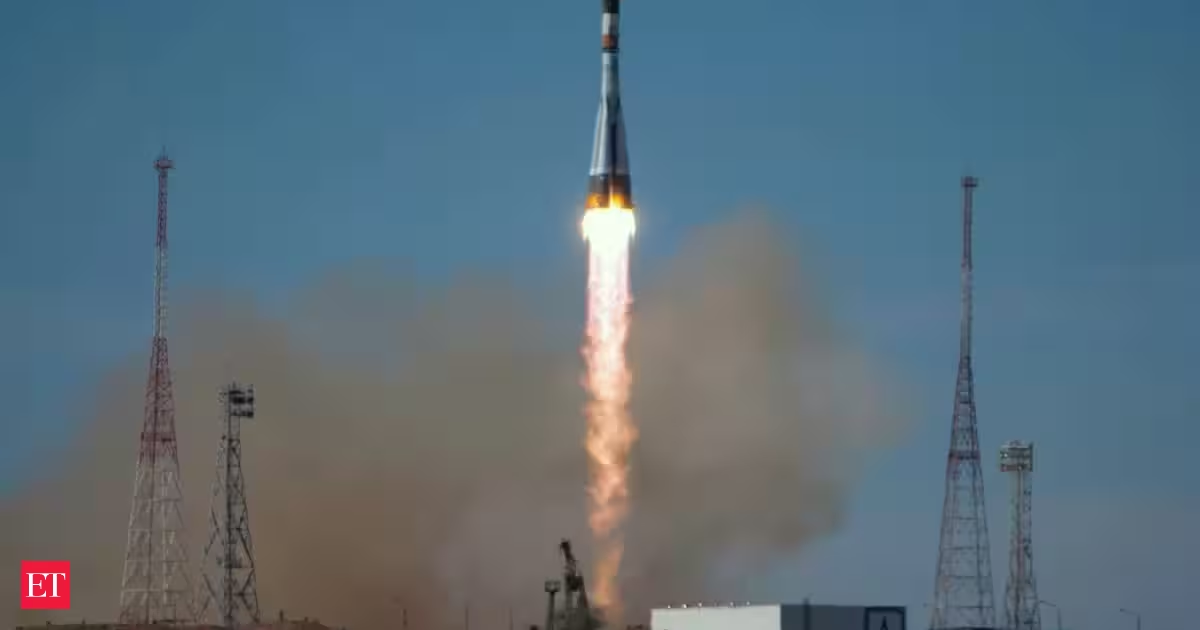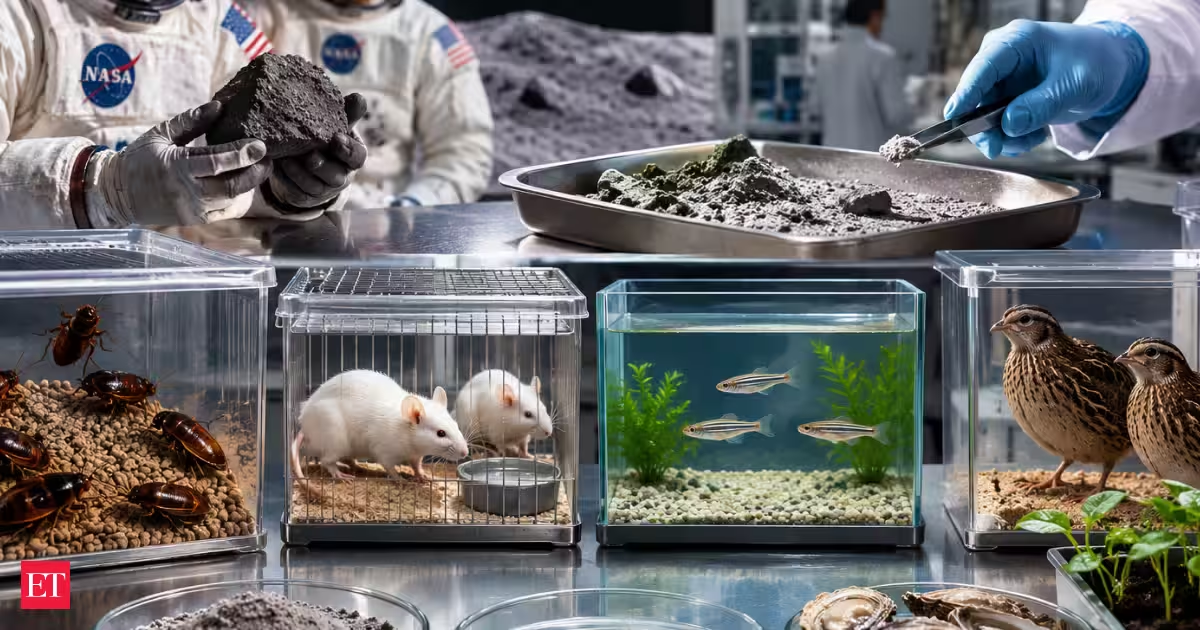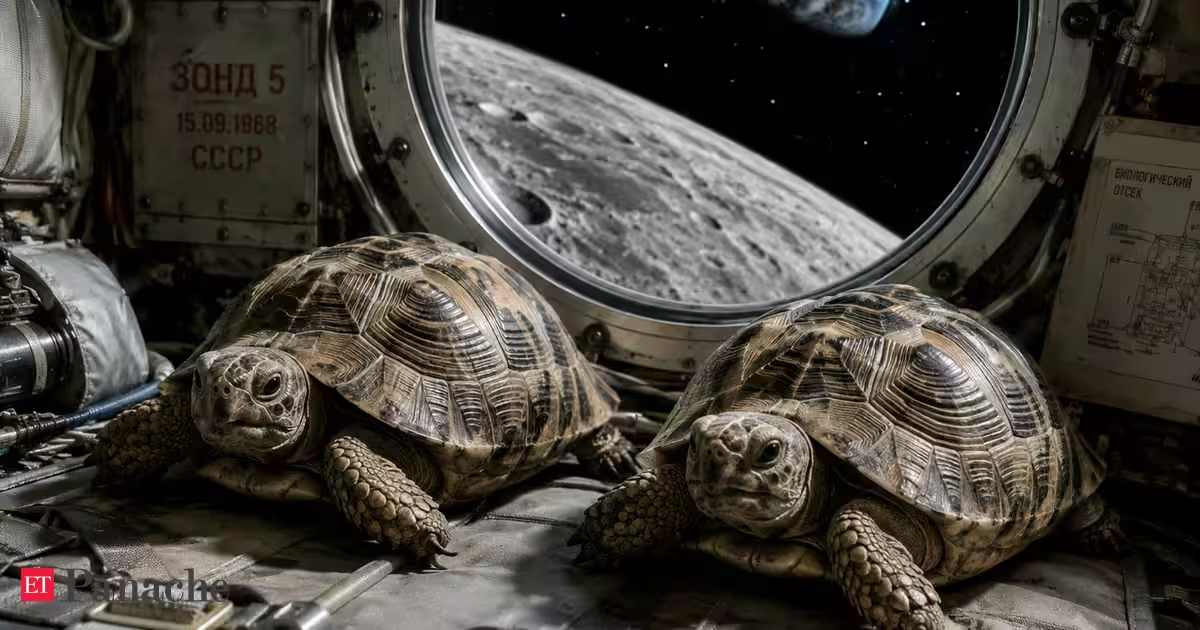
Months before humans took their first voyage around the Moon, two unusual space travellers had already accomplished the trek. They were not cosmonauts, but rather Russian steppe tortoises hidden inside the Soviet Union's Zond 5 spacecraft. Launched in September 1968, the creatures travelled beyond Earth, swept around the Moon, and returned alive despite a failure that forced the spaceship into a painful 20G ballistic re-entry. The expedition proved that biological beings could survive a journey around the Moon and return to Earth.Why Did the Soviets Send Tortoises Around the Moon?Zond 5 was part of the Soviet Union's effort to create a spaceship capable of transporting cosmonauts around the Moon during the Space Race. Scientists also wanted to know what travelling outside Earth's protective environment would do to biological beings. According to NASA's history of the Soviet lunar program, the biological experiment focused on two steppe tortoises weighing between 0.34 and 0.4 kilos each. Tortoises were practical trial passengers since they did not necessitate complex onboard support systems.They weren't alone. The spacecraft carried fruit-fly eggs, plants, seeds, bacteria, and other biological materials, allowing researchers to study how circumlunar spaceflight affects many types of life.Zond 5 Headed for the MoonZond 5 launched from the Baikonur Cosmodrome on September 15, 1968, using a Proton rocket. After departing Earth, the spacecraft spent nearly three days travelling to the Moon. On September 18, it crossed around 1,950 kilometres above the lunar far side before returning home. It also imaged Earth from a distance of around 90,000 kilometres. Zond 5 is officially listed by NASA as the first successful circumlunar mission to transport biological organisms.Then Something Went WrongReturning safely proved much more difficult. Due to failures in the spacecraft's attitude-control system, Zond 5 was unable to conduct its anticipated guided re-entry. Instead, it entered the Earth's atmosphere with a much steeper ballistic trajectory. That subjected its biological occupants to forces of about 20 G, or nearly 20 times Earth's typical gravitational acceleration. According to NASA history, the animals weathered the terrible plummet before the capsule's parachutes were released. Instead of landing on Soviet territory, Zond 5 splashed down in the Indian Ocean on September 21, some 105 kilometres from the nearest Soviet surveillance ship. The capsule was found, and the tortoises were eventually delivered to Moscow alive.The timing made their journey particularly remarkable. Zond 5 completed its lunar flyby in September 1968. It was not until December 24, 1968, that Apollo 8 astronauts Frank Borman, Jim Lovell and William Anders became the first humans to orbit the Moon. The tortoises had therefore made their historic journey roughly three months earlier.An Unusual Milestone in the Space RaceZond 5 did not transport humans, and its problematic return indicated that Soviet engineers still had significant issues to address before launching a crewed version of the mission. However, its biological passengers achieved something unprecedented. Two little tortoises travelled farther from Earth than any living creature before them, circled the Moon, and survived an extremely violent return. Today, NASA describes Zond 5 as proof that a living crew can go around the Moon and safely return to Earth. Before the first humans viewed the Moon, two tortoises had been there and back.
In 1968, two Russian steppe tortoises travelled around the Moon before humans did. They survived a punishing 20G force while returning to Earth
In a remarkable journey, two Russian steppe tortoises embarked on a mission aboard Zond 5, orbiting the Moon in September 1968. This pioneering endeavour demonstrated that biological life could endure the challenges of circumlunar spaceflight and successfully return. Despite facing intense gravitational stress during re-entry, the resilient tortoises emerged unscathed, making their voyage a historic precursor to mankind's lunar exploration.
531 words~2 min read