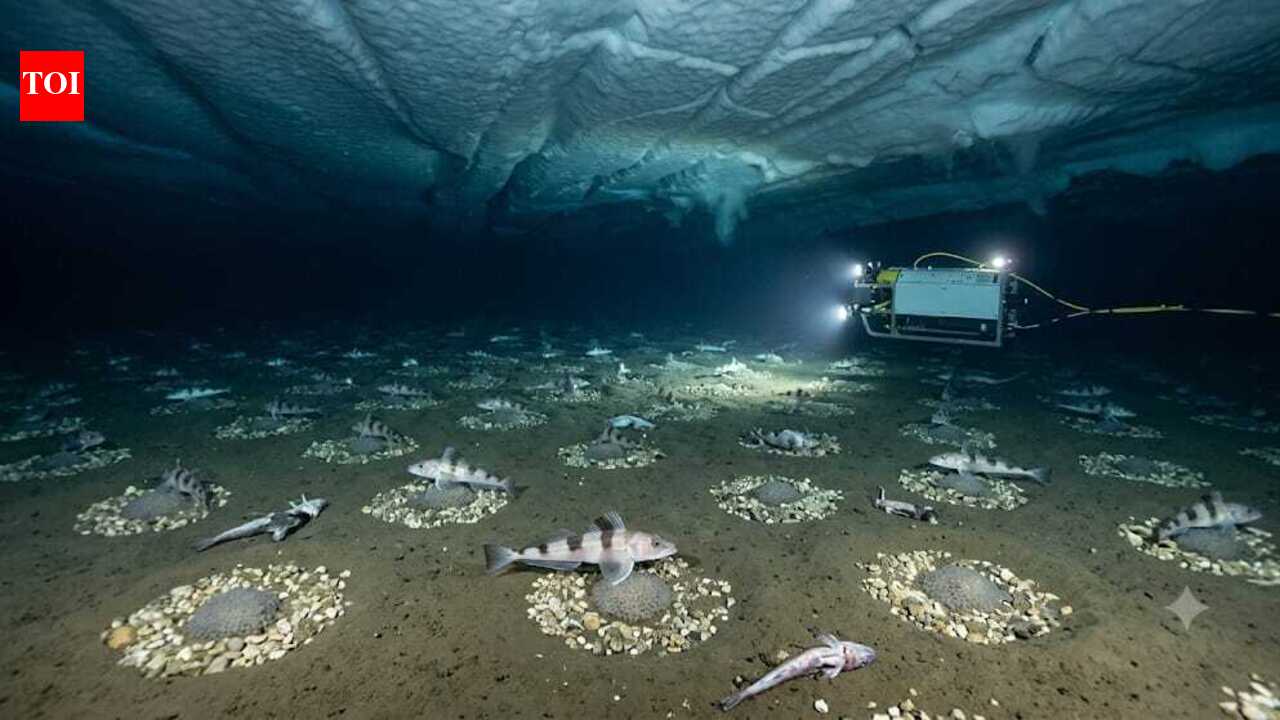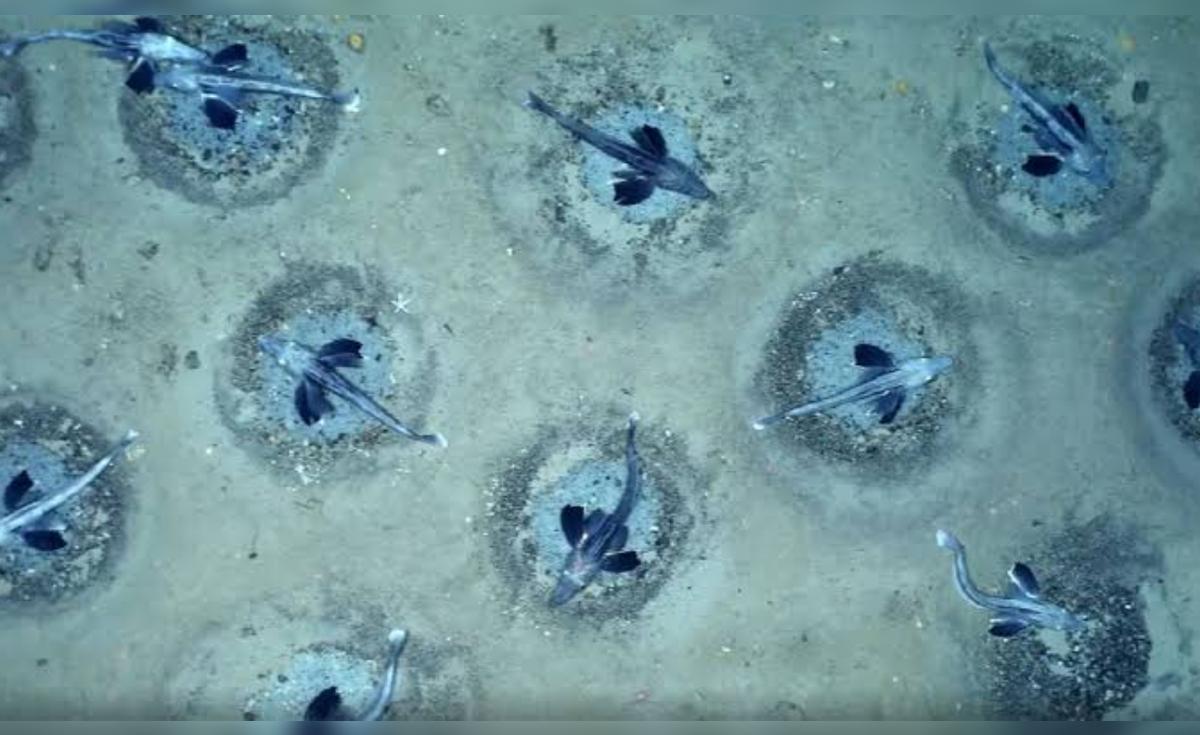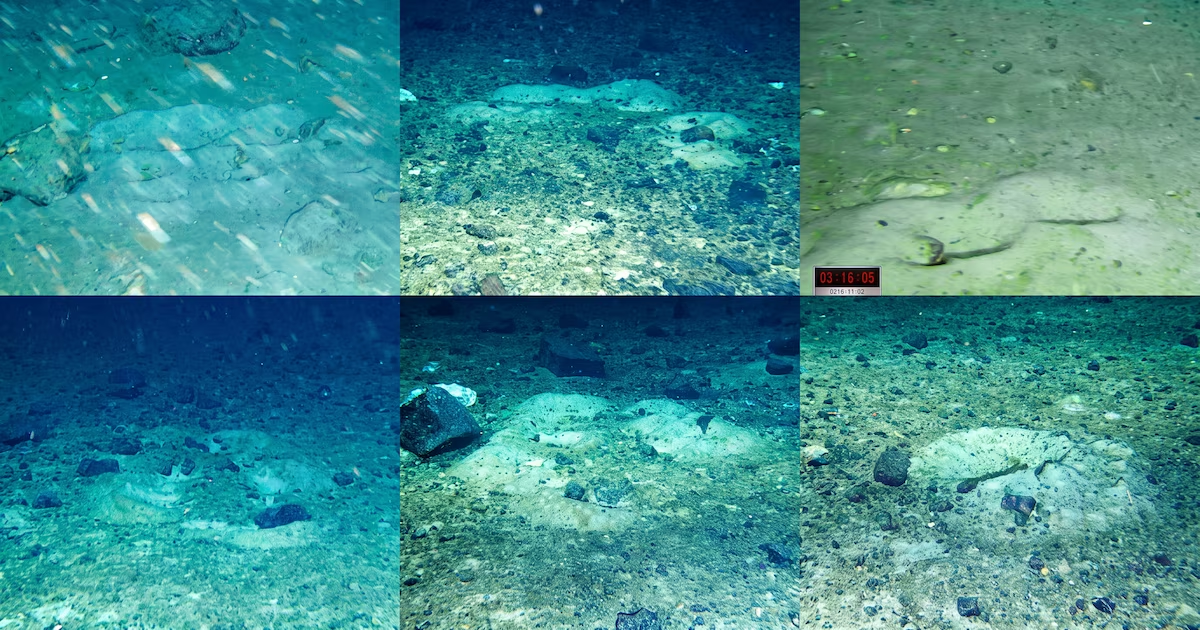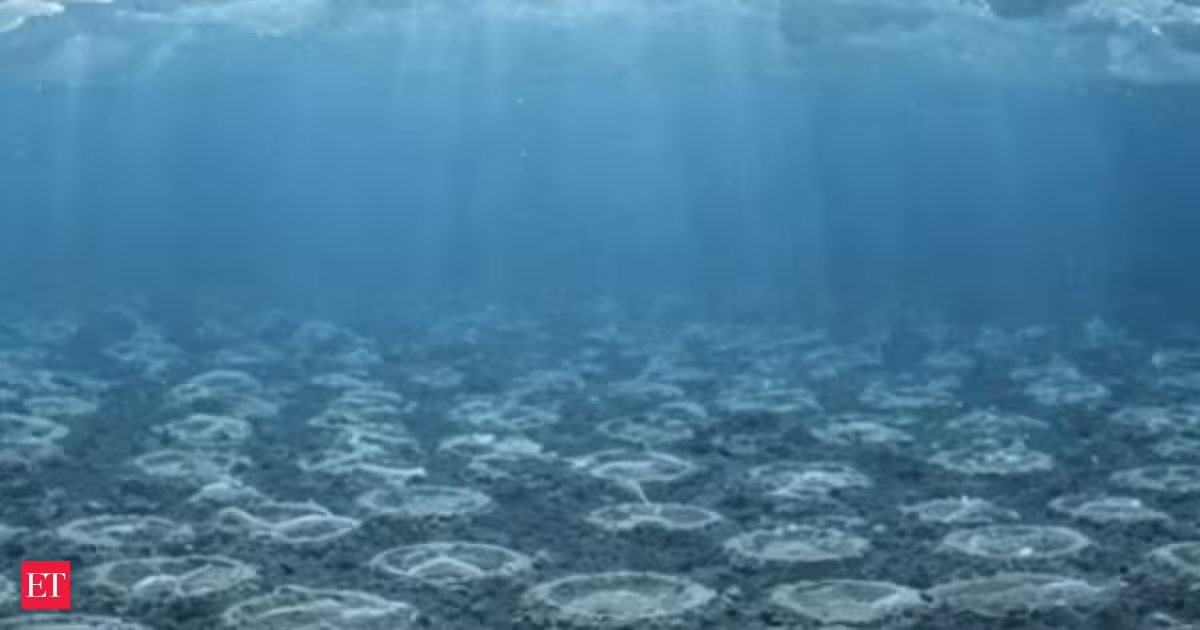
The depths of the ocean continue to reveal ecosystems that remain largely unknown to humans. One of the most striking discoveries was made beneath the Antarctic ice, where scientists found a vast colony of Antarctic icefish nests spread across the seafloor of the Weddell Sea.The discovery was made in 2021 during an expedition aboard the research icebreaker Polarstern. A year later, biologist Autun Purser and colleagues published a scientific study detailing the remarkable finding.In 2021, when scientists were exploring Antarctica’s Filchner Ice Shelf seafloor, they discovered 'underwater city' with 60 million fish nests The researchers were exploring the seafloor near the Filchner Ice Shelf using an Ocean Floor Observation and Bathymetry System (OFOBS), a towed camera and sensor system.Read more - Forget 10,000 steps, cycling or gym: Best exercise for taking care of your heart & improving blood circulationThe system was lowered to depths ranging from about 420 to 535 metres, allowing scientists to observe the seafloor beneath the Antarctic waters.What they found was unexpected: thousands of Antarctic icefish nests covering a vast area.Researchers recorded 16,160 nests across an area of approximately 45,600 square metres. Based on these observations, they estimated that the wider colony could contain around 60 million nests.60 million Antarctic icefish nests found beneath the iceThe density of the nests was extraordinary. The observations indicated roughly one nest every three or four metres across the colony, which extended over an area of approximately 240 square kilometres.The nests were not empty. Scientists estimated that each nest contained between 1,500 and 2,500 eggs.The researchers also observed adult icefish beside around 75% of the nests. The presence of an adult fish next to the nests indicated that the eggs were being guarded.Why did the icefish choose this location?The location of the colony was one of the findings that surprised the scientists most.The enormous concentration of icefish nests was not found randomly across the seafloor. The colony was located near the entrance of a flow of comparatively warm water.The water in this area was measured at up to 2°C warmer than the surrounding waters, suggesting that the unusual conditions may have played an important role in the location of the colony.Scientists describe the colony as an Antarctic ‘thermal oasis’The concentration of life in the area stood out against the harsh Antarctic environment.Researchers described the colony as a ‘thermal oasis’ within one of the ocean’s most hostile environments. The warmer water created conditions that distinguished the area from the surrounding seafloor.The discovery also highlighted how a particular underwater environment can support a remarkably large concentration of marine life beneath Antarctic ice.Icefish colony supports a huge concentration of biomassAlongside the estimated 60 million active nests, scientists reported a concentration of around 60 million tonnes of biomass in the area.This enormous concentration of life also attracted predators. Researchers found a large number of icefish carcasses around the colony, providing evidence of the feeding activity taking place within this ecosystem.The abundance of fish and eggs created a significant food source, linking the icefish colony to other species living in the region.Weddell Sea seals were linked to the icefish colonyThe researchers also located Weddell Sea seals in the area. Their observations suggested that the seals' deepest dives were generally directed towards the location of the icefish colony.This provided another indication of the colony's importance within the local food chain. The concentration of icefish and their nests appeared to create a productive feeding area for predators in the surrounding waters.
In 2021, when scientists were exploring Antarctica’s Filchner Ice Shelf seafloor, they discovered 'underwater city' with 60 million fish nests & its own natural energy source
Filchner Ice Shelf Fish: Scientists discovered a vast Antarctic icefish colony beneath the ice of the Weddell Sea, revealing millions of nests spread across the seafloor. The colony was located near a flow of warmer water, creating what researchers described as a ‘thermal oasis. The area supported an immense concentration of biomass and attracted predators such as Weddell Sea seals.
573 words~3 min read