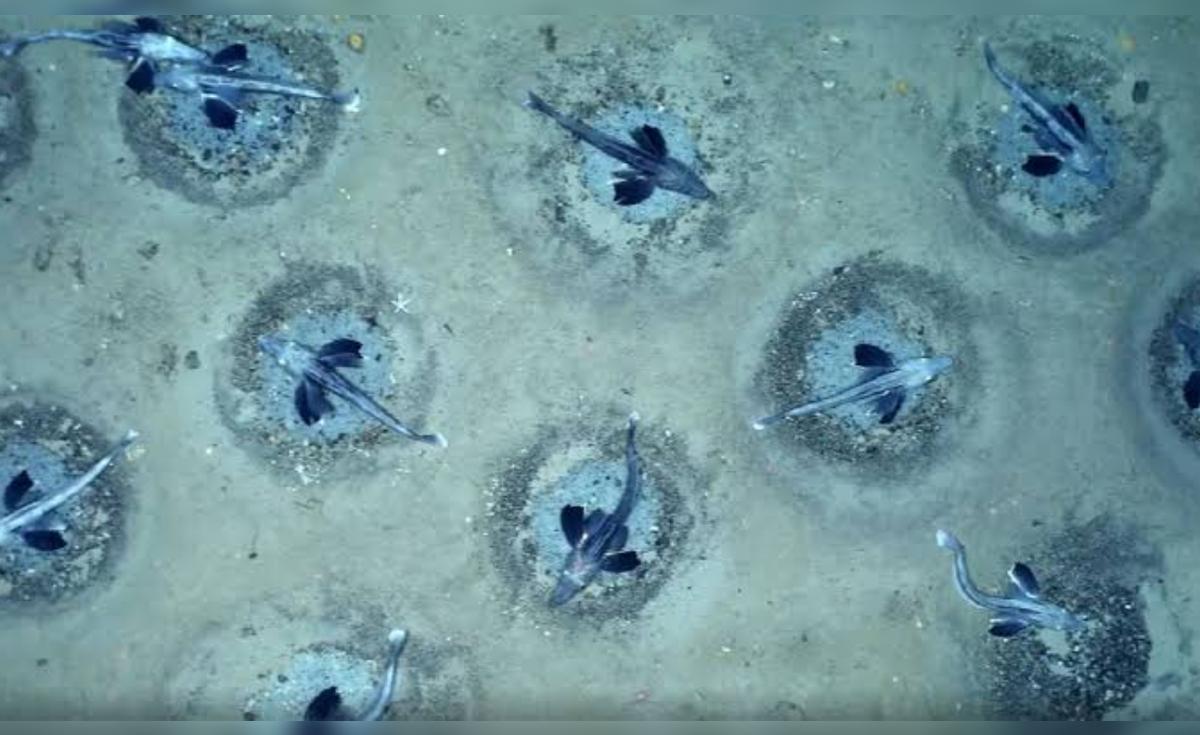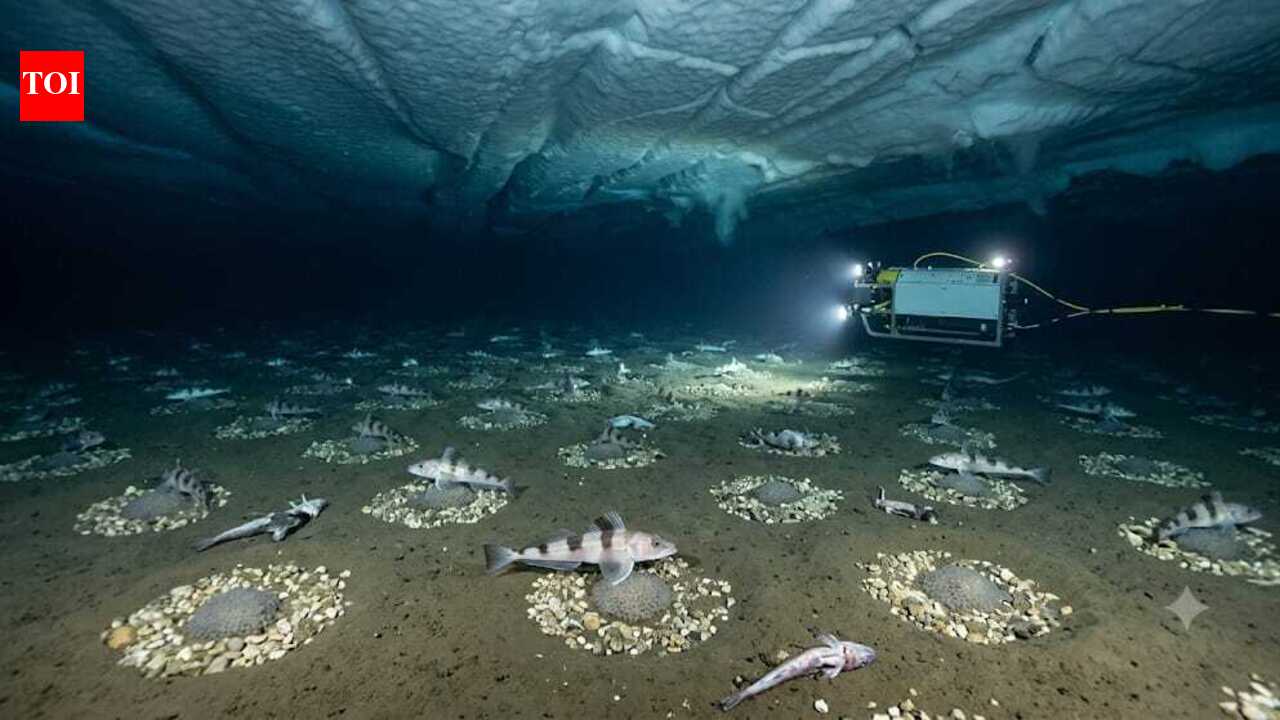
Representative ImageScientists have uncovered a hidden fish breeding ground in Antarctica. The discovery was made beneath the ice of Antarctica's Weddell Sea after the A68 iceberg broke away from the Larsen C Ice Shelf in 2017. This incident exposed the seabed that had been covered by around 200 metres of ice. Using underwater robots, including the remotely operated vehicle (ROV) "Lassie," researchers documented thousands of organised fish nests, adding to evidence of a much larger breeding habitat stretching across the seafloor.The discovery was made during the 2019 Weddell Sea Expedition, which employed autonomous underwater vehicles (AUVs) and the remotely operated vehicle "Lassie" to explore the newly accessible area. The researchers found more than 1,000 circular nests in organised formations, each cleared of plankton debris covering the surrounding seabed. The findings support previous studies that indicate the area is one of the largest known fish breeding colonies in the world.How the iceberg exposed the hidden ecosystemThe opportunity to study the region arose after the A68 iceberg, which covered about 5,800 square kilometres, calved from the Larsen C Ice Shelf in 2017. The event opened access to a section of the seafloor that had previously remained hidden beneath the ice shelf.Scientists aboard the South African polar research vessel SA Agulhas II used AUVs and the ROV "Lassie" to survey the seabed. Images captured by the underwater vehicles showed circular nests arranged in geometric clusters rather than randomly scattered across the seafloor. Each nest had been cleared of phytoplankton detritus, suggesting active maintenance by the fish.Yellowfin notie fish build and guard the nestsResearchers identified the nest builders as yellowfin notie (Lindbergichthys nudifrons), a species of Antarctic rockcod. Each nest is guarded by an adult fish that protects its eggs from predators.According to the expedition, the nesting pattern may reflect the "selfish herd" theory, in which fish nesting near the centre of the colony gain additional protection from predators. At the same time, larger individuals occupy nests along the edges, where defence is more challenging.Expedition also searched for Shackleton's EnduranceThe 2019 Weddell Sea Expedition had two objectives: conducting scientific research near the Larsen C Ice Shelf and searching for Sir Ernest Shackleton's ship, Endurance, which sank in 1915.Although heavy sea ice prevented the team from locating the wreck during the expedition, the experience gained from operating underwater vehicles in difficult conditions contributed to the Endurance22 mission, which located the wreck in March 2022 at a depth of 3,008 metres.Findings could support conservation effortsScientists say the nesting grounds provide further evidence that the region contains a Vulnerable Marine Ecosystem that supports Antarctic biodiversity. The findings also expand on work published by Purser and colleagues in 2022 that found one of the largest known fish breeding colonies on Earth in the Weddell Sea.Researchers say documenting these underwater habitats could help proposals to make the Weddell Sea a Marine Protected Area, conserving breeding grounds that are part of Antarctica’s marine ecosystem.
Scientists found millions of fish nests stretching across the seafloor like a vast city, how underwater robot 'Lassie' helped in the discovery beneath the ice of Antarctica’s Weddell Sea
Representative ImageScientists have uncovered a hidden fish breeding ground in Antarctica. The discovery was made beneath the ice of Antarctica's Weddell Sea after the A68 iceberg broke away from the Larsen C Ice Shelf in 2017. This incident exposed the seabed that had been covered by around 200 metres of ice. Using underwater robots, including the remotely operated vehicle (ROV) "Lassie," researchers documented thousands of organised fish nests, adding to evidence of a much larger breeding habitat stretching across the seafloor.The discovery was made during the 2019 Weddell Sea Expedition, which employed autonomous underwater vehicles (AUVs) and the remotely operated vehicle "Lassie" to explore the newly accessible area. The researchers found more than 1,000 circular nests in organised formations, each cleared of plankton debris covering the surrounding seabed. The findings support previous studies that indicate the area is one of the largest known fish breeding colonies in the world.How the iceberg exposed the hidden ecosystemThe opportunity to study the region arose after the A68 iceberg, which covered about 5,800 square kilometres, calved from the Larsen C Ice Shelf in 2017. The event opened access to a section of the seafloor that had previously remained hidden beneath the ice shelf.Scientists aboard the South African polar research vessel SA Agulhas II used AUVs and the ROV "Lassie" to survey the seabed. Images captured by the underwater vehicles showed circular nests arranged in geometric clusters rather than randomly scattered across the seafloor. Each nest had been cleared of phytoplankton detritus, suggesting active maintenance by the fish.Yellowfin notie fish build and guard the nestsResearchers identified the nest builders as yellowfin notie (Lindbergichthys nudifrons), a species of Antarctic rockcod. Each nest is guarded by an adult fish that protects its eggs from predators.According to the expedition, the nesting pattern may reflect the "selfish herd" theory, in which fish nesting near the centre of the colony gain additional protection from predators. At the same time, larger individuals occupy nests along the edges, where defence is more challenging.Expedition also searched for Shackleton's EnduranceThe 2019 Weddell Sea Expedition had two objectives: conducting scientific research near the Larsen C Ice Shelf and searching for Sir Ernest Shackleton's ship, Endurance, which sank in 1915.Although heavy sea ice prevented the team from locating the wreck during the expedition, the experience gained from operating underwater vehicles in difficult conditions contributed to the Endurance22 mission, which located the wreck in March 2022 at a depth of 3,008 metres.Findings could support conservation effortsScientists say the nesting grounds provide further evidence that the region contains a Vulnerable Marine Ecosystem that supports Antarctic biodiversity. The findings also expand on work published by Purser and colleagues in 2022 that found one of the largest known fish breeding colonies on Earth in the Weddell Sea.Researchers say documenting these underwater habitats could help proposals to make the Weddell Sea a Marine Protected Area, conserving breeding grounds that are part of Antarctica’s marine ecosystem.