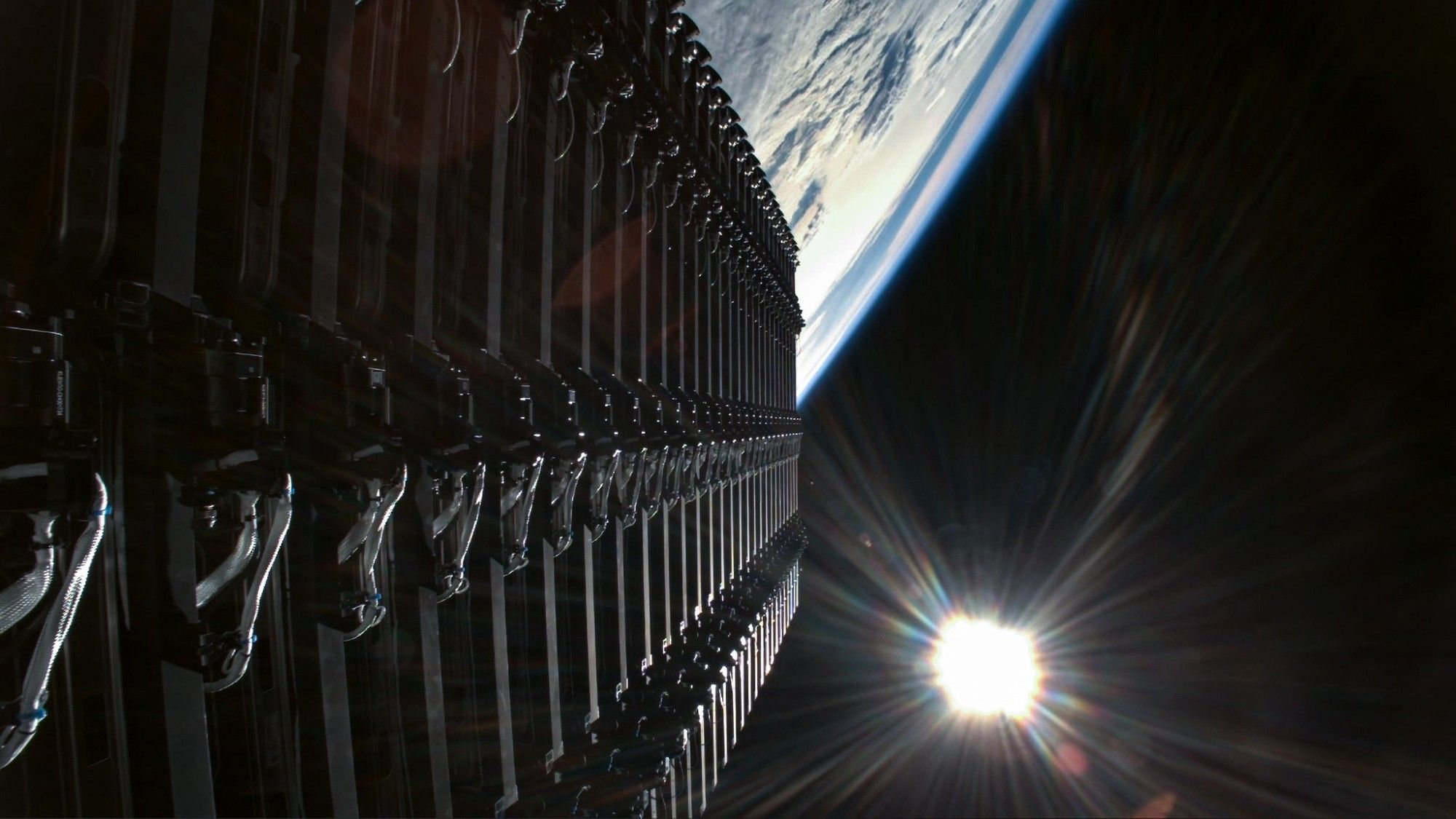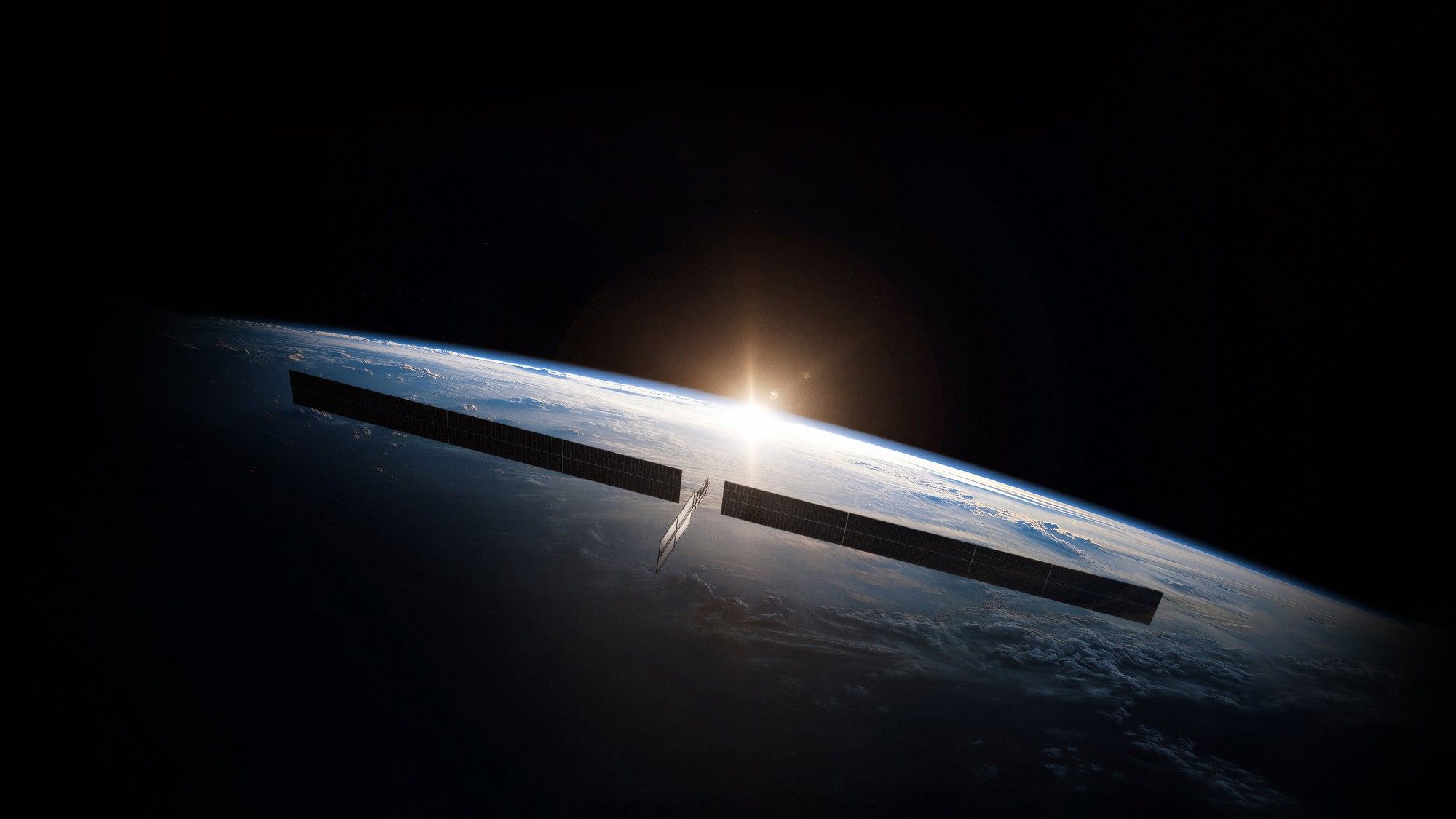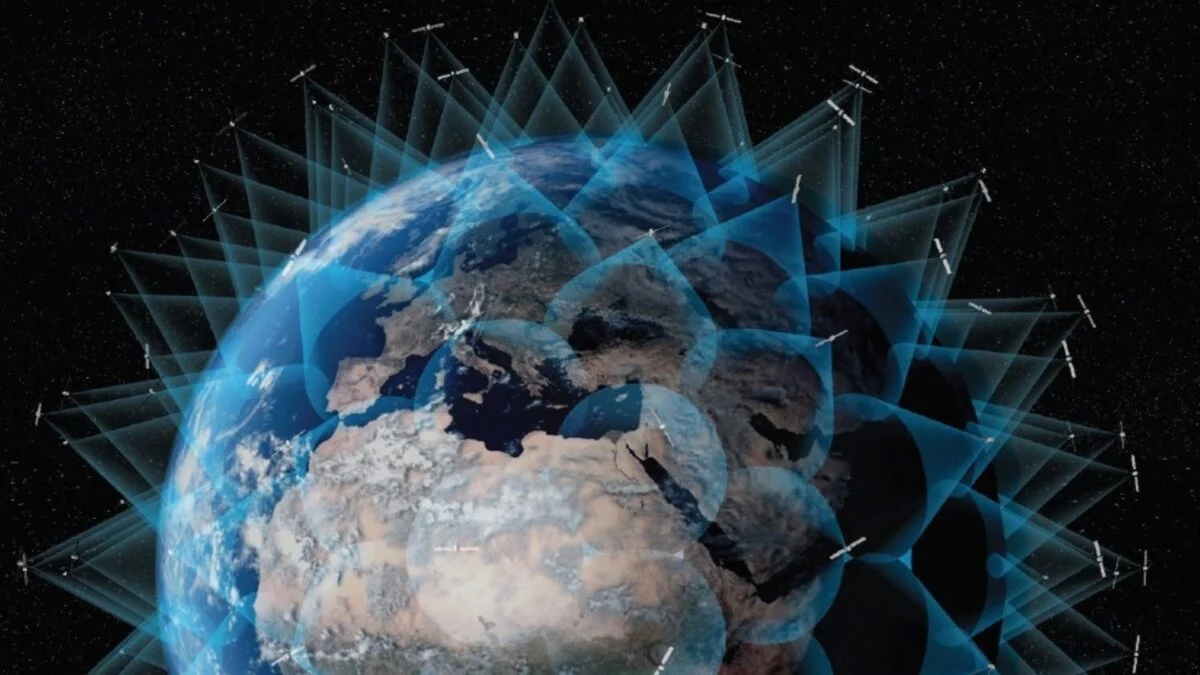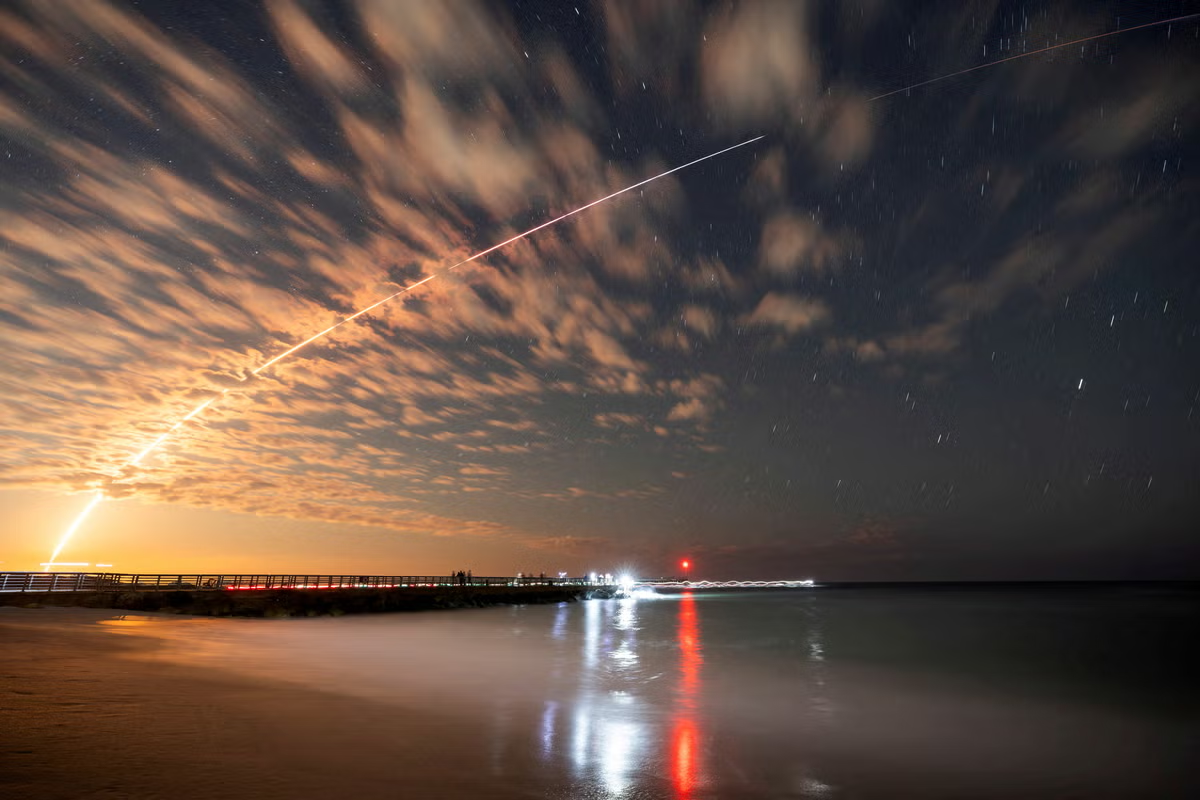
Low-Earth orbit, the region of space spanning up to about 1,200 miles above the planet, is increasingly filling up with satellites, raising the risk that an unintentional crash or action from a bad actor could cause a chain reaction that knocks out vital technical infrastructure or sends debris crashing to Earth.“I think we’re heading towards a situation where there will be a collision involving an operational satellite in the constellation,” Hugh Lewis, professor of astronautics at the University of Birmingham, recently told Space.com. “And it will not be for the lack of trying to avoid those things. It will be in spite of all those maneuvers.”There are more than 30,000 objects in low-Earth orbit — more than 10,000 of which are tied to Elon Musk’s company SpaceX, according to an analysis from The Wall Street Journal.SpaceX operates the largest satellite cluster in history and provides satellite-based internet via its Starlink service. The company says its satellites constantly evaluate their trajectories and perform maneuvers when the chance of a collision exceeds three out of 10 million. SpaceX satellites have performed more than 355,000 collision avoidance maneuvers throughout the last year, according to federal disclosures. Low-Earth orbit is filling with satellites, and Elon Musk’s SpaceX is leading the way (Reuters)The Independent has contacted SpaceX for comment.Collisions between satellites remain extremely rare, though risks remain. The density of satellites in low-Earth orbit could grow faster than the rate at which defunct satellites and pieces of man-made space debris burn up in the atmosphere, making each successive generation of satellite launches more complicated.At various points, U.S. adversaries have destroyed their own satellites, including a 2007 incident when China hit a weather satellite with a ground-launched mission and 2021 test where Russia used a missile to destroy one its satellites, generating more than 1,500 pieces of debris. The space and scientific community continues debate whether there is an upper limit of how many satellites should operate in low-Earth orbit and whether the world has already crossed that threshold.“To me, the risk is not the number,” Jonny Dyer, chief executive of satellite company Muon Space, told the Wall Street Journal, arguing there’s more room in space for satellite traffic than there is airspace for terrestrial airplanes.“It’s whether there are bad actors explicitly doing bad things or are negligent,” he said.Satellite crashes are extremely rare, though experts warn the risk of a crash is rising with the proliferation of smaller, more easily launched satellites (Getty)The number of satellites in space is expected to continue to grow rapidly, as companies seek to catch up with SpaceX and firms eye orbit data-centers for artificial intelligence. The declining cost of space launches and shrinking size of satellites themselves is expected to further increase the density of objects in space. China has filed plans for 200,000 new satellites this year, while SpaceX and Amazon and Blue have filed applications with U.S. officials to eventually put more than one million orbital data centers in space across the next decade. No single international body governs orbital traffic, though companies, governments and scientific entities seek to coordinate their satellites trajectories.“So far it seems manageable,” Giovanni Lavezzi, an orbital capacity researcher at the Massachusetts Institute of Technology, recently told Scientific American. “The problem is how much can we push.”
Elon Musk’s satellites are clogging up space, risking massive collision: analysis
A dramatic increase in man-made materials circling the planet, including 10,000 objects related to SpaceX, raise collision risks
544 words~2 min read