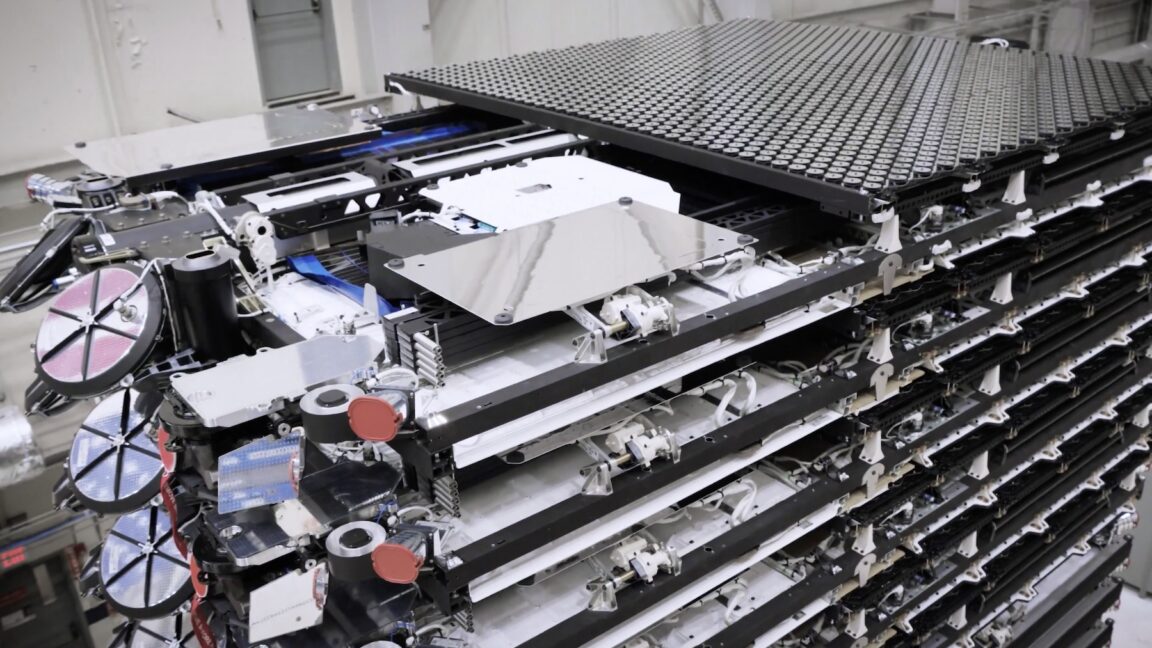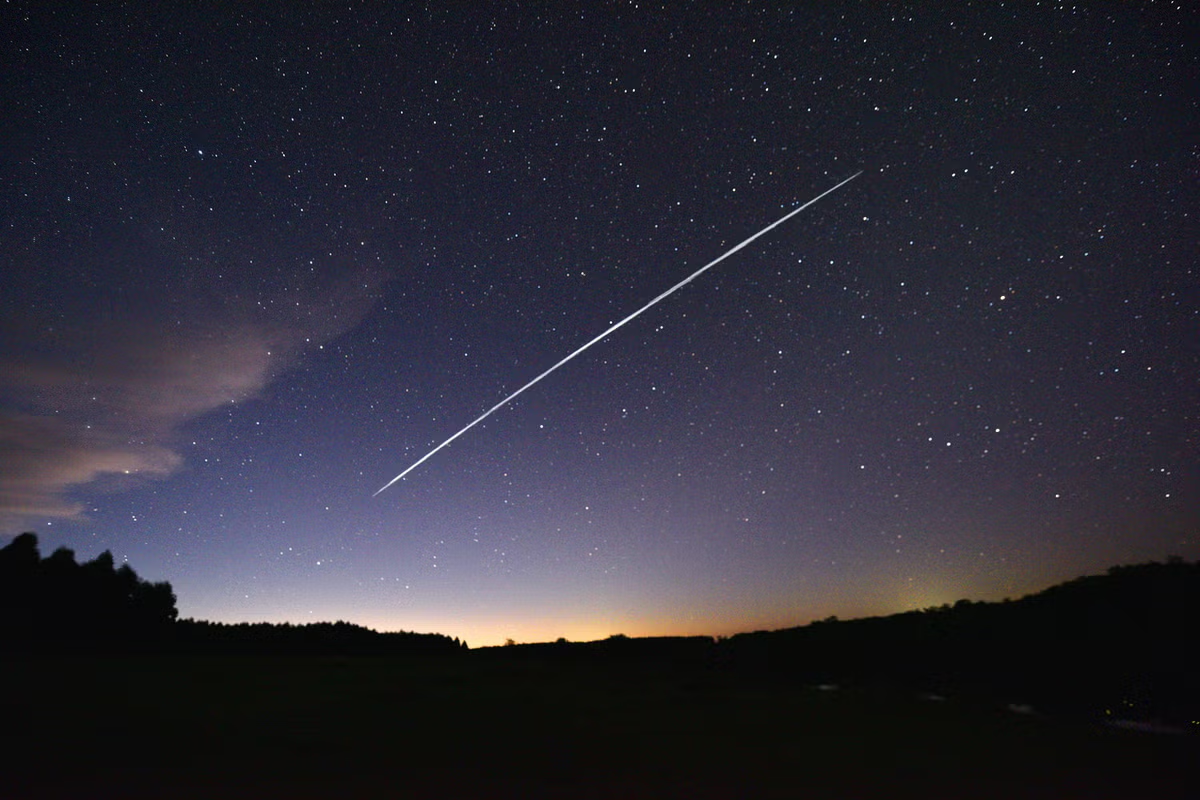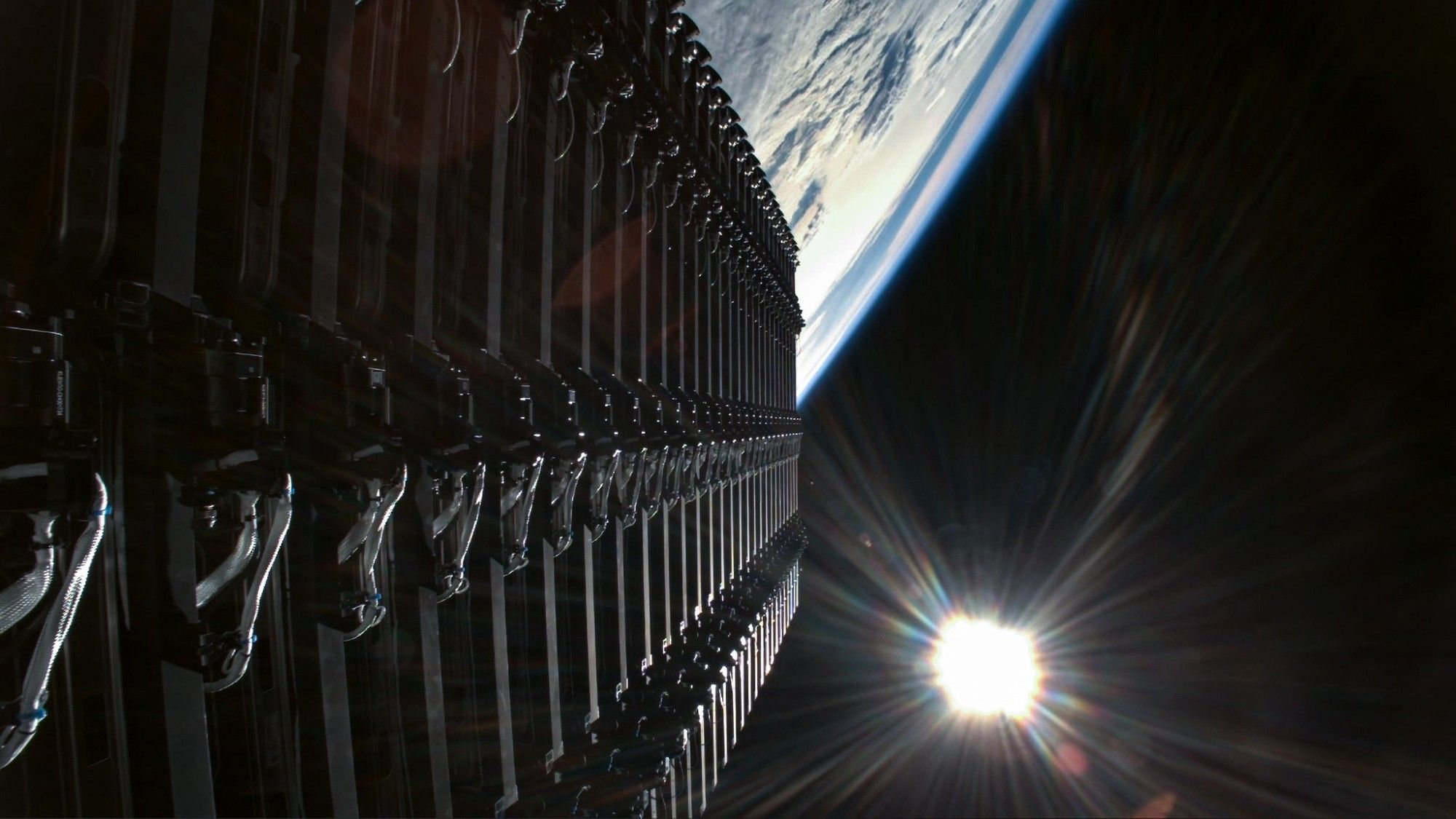
A group of Starlink satellites awaiting deployment after launch.
(Image credit: SpaceX)
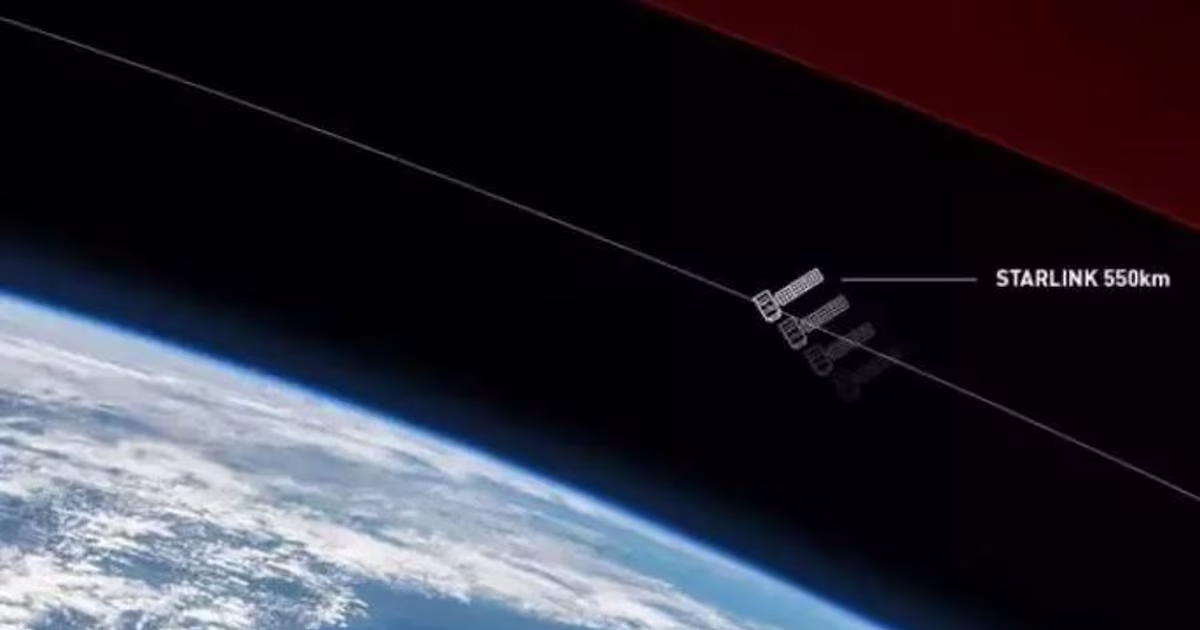
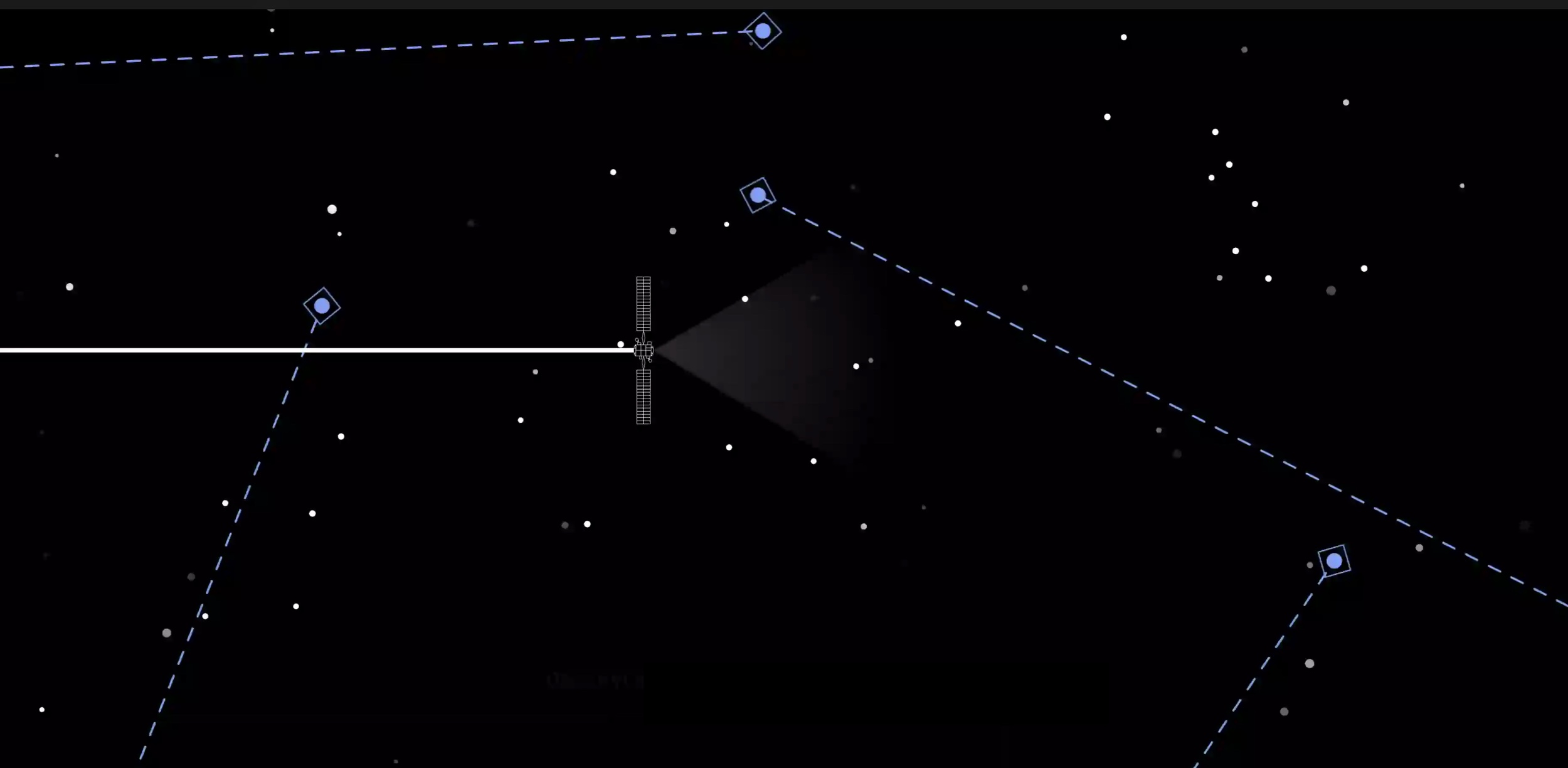
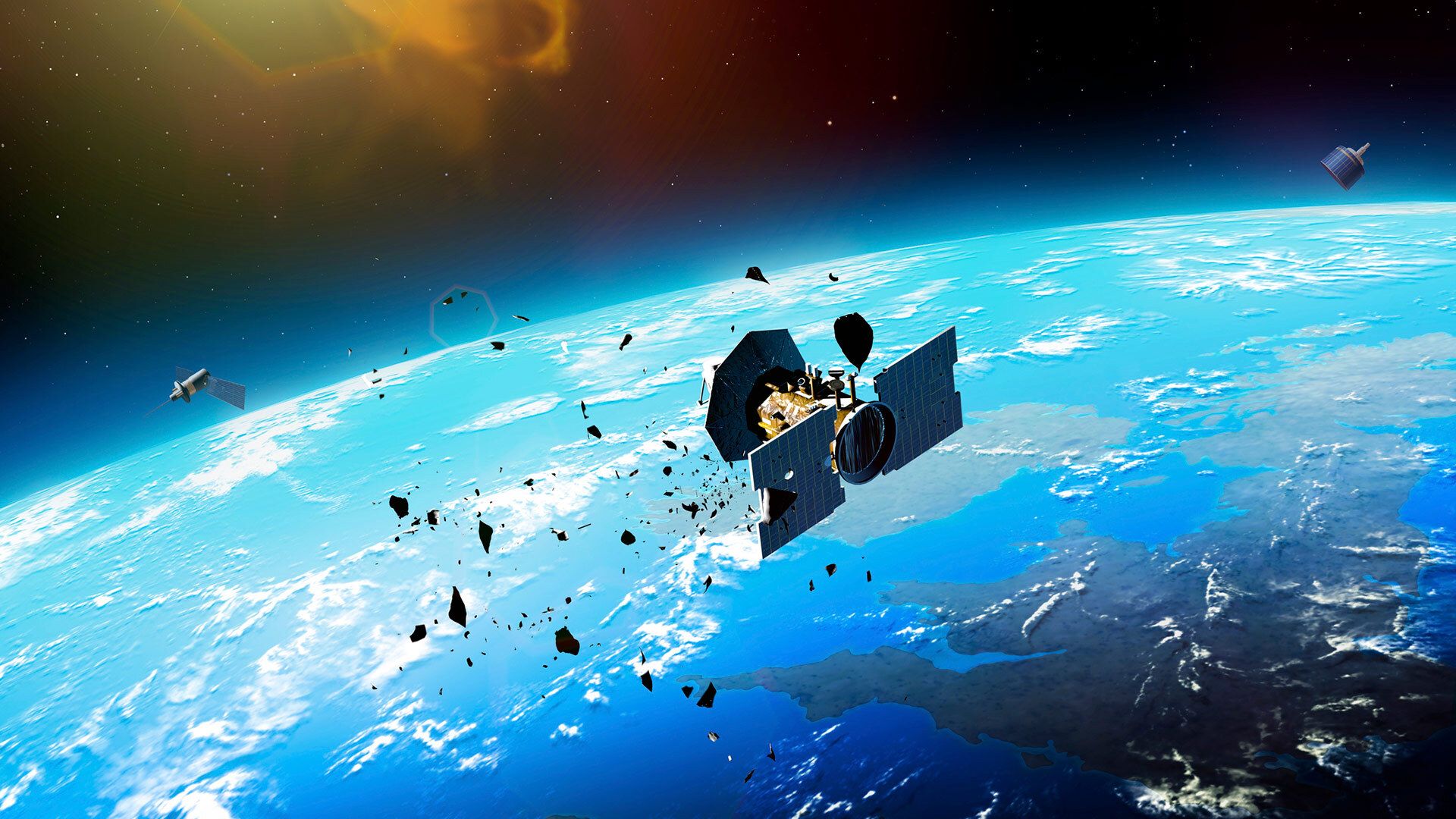
SpaceX's Starlink satellites made over 355,000 collision avoidance maneuvers throughout the past year, with each satellite now dodging debris and other spacecraft on an almost weekly basis.The numbers are based on disclosures made by SpaceX in its latest semiannual report to the Federal Communications Commission (FCC). According to the latest report, Starlink satellites performed an overall 207,152 avoidance maneuvers between December 2025 and May 2026, up nearly 60,000 from the 148,696 reported in the previous half year. That brings the yearly total to over 355,000, more than three times as many as the constellation performed in 2024. On average, each Starlink satellite performed more than 40 space dodging maneuvers per year between June 1, 2025 and May 31, 2026.Experts fear the situation might soon get out of hand. "I think we're heading towards a situation where there will be a collision involving an operational satellite in the constellation," Hugh Lewis, a space sustainability expert and professor of astronautics at the University of Birmingham in the U.K., told Space.com. "And it will not be for the lack of trying to avoid those things. It will be in spite of all those maneuvers."The increase coincides with the growth of the internet-beaming constellation and the overall number of satellites in space in the past five years. Starlink grew from about 6,000 satellites in 2024 to more than 10,000 as of June 2026. Over the same time period, the overall number of operational spacecraft in orbit rose from around 10,000 to about 16,000.The SpaceX constellation orbits at altitudes between 298 miles (480 km) and 342 miles (550 kilometers) and uses an autonomous collision avoidance system that initiates a maneuver when the probability of a collision appears higher than 3 in 10 million. Lewis says that although SpaceX is "doing an excellent job" managing orbital traffic, the steep growth cannot continue without risks."The avoidance maneuvers reduce the probability of a collision to about one in a million, which is so small that it's negligible," Lewis said. "The problem is that if you make a million maneuvers and you have a residual probability of one in a million, you end up with an aggregate risk across your entire constellation that you can't get rid of."Lewis points out that with the expected continued rise in avoidance maneuvers (SpaceX has applied to the FCC to increase the size of its constellation to 100,000 satellites), SpaceX will have made a million avoidance maneuvers over the lifetime of the Starlink constellation as early as June 2027. By 2030, the constellation may be making more than a million maneuvers every year. At that point, the one in a million risk of a collision may no longer be negligible at all.