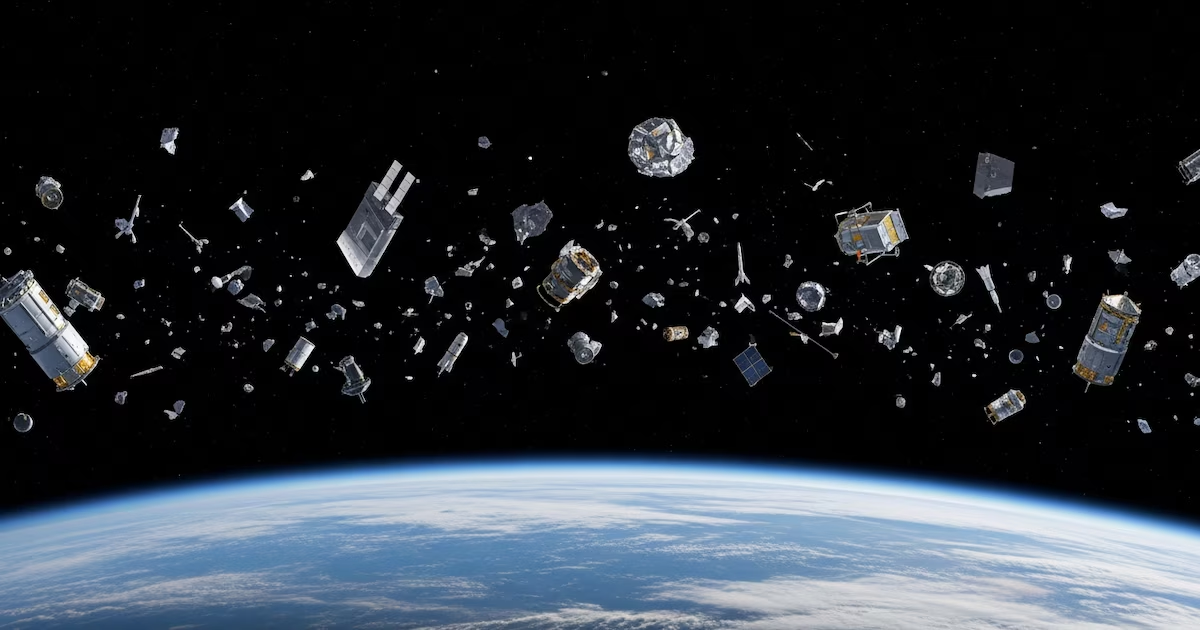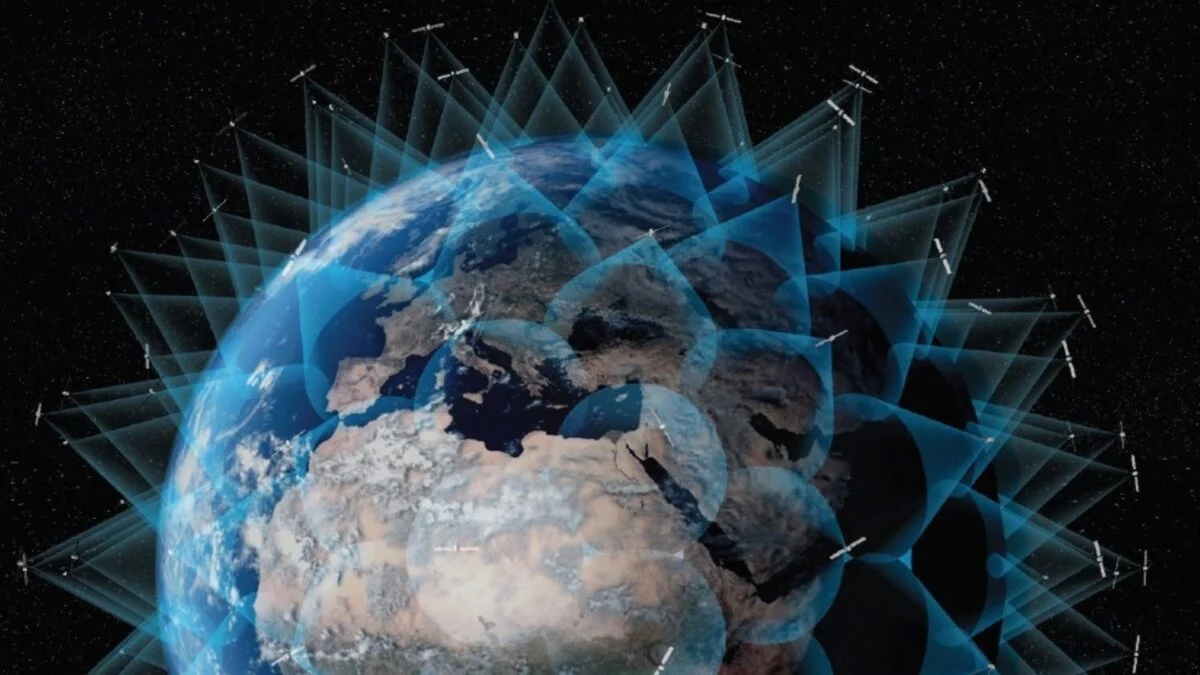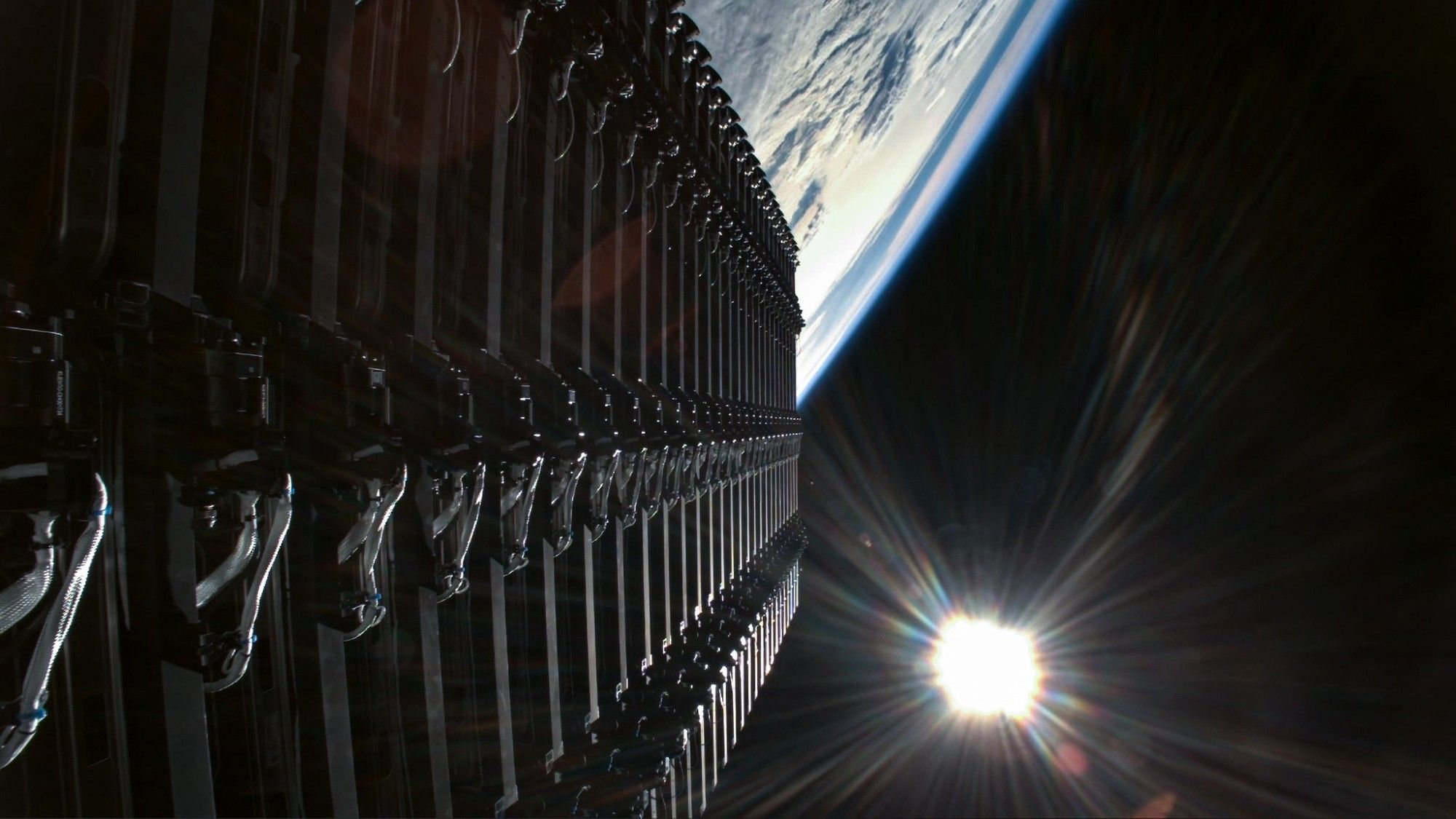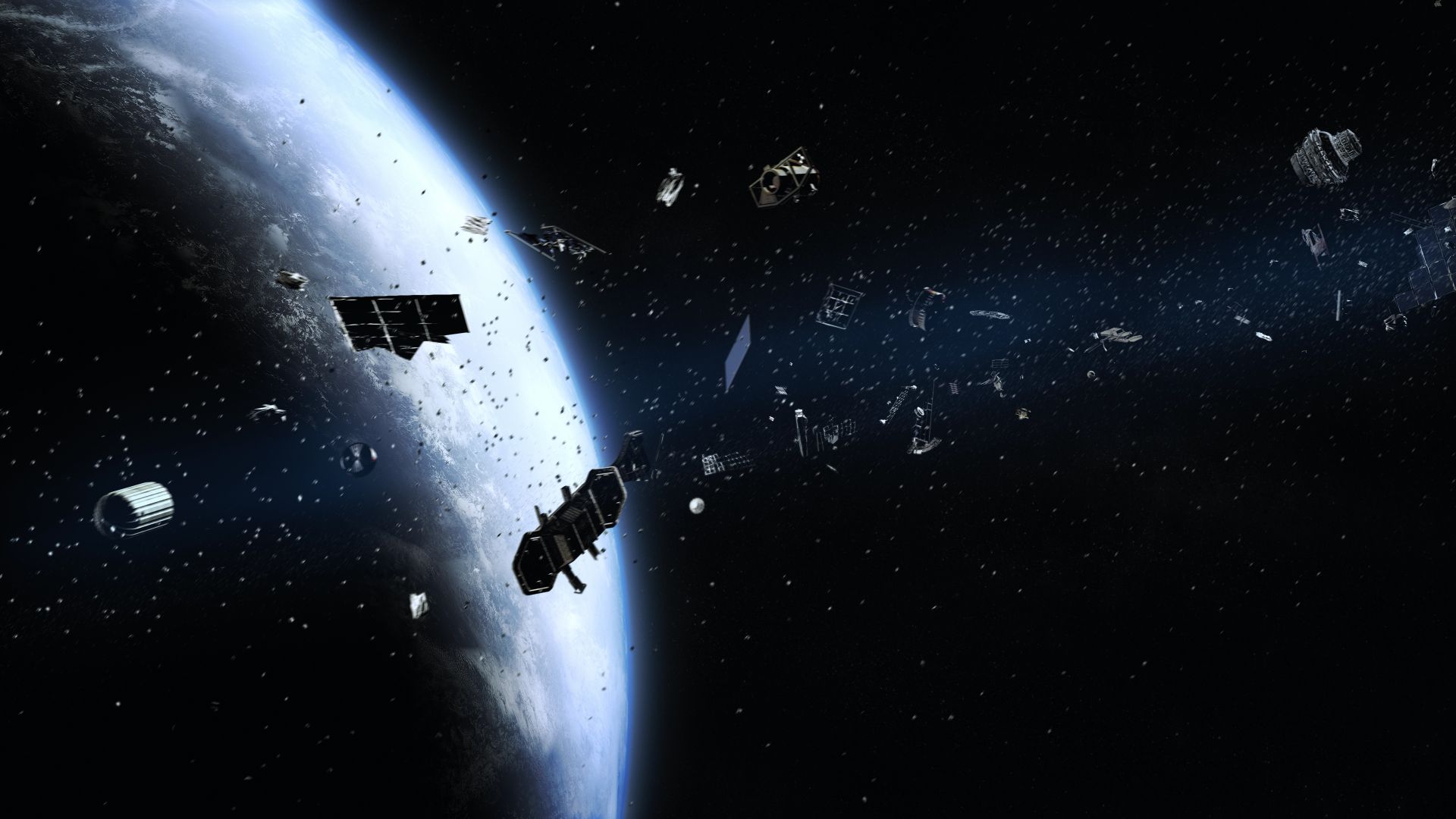
Space debris is only going to get worse as satellite companies ramp up production. What might this mean for our science observation satellites?
(Image credit: janiecbros/Getty Images)
On the morning of Jan. 8, 2025, a red dot popped up on NASA's Fire Information for Resource Management System. It was the first sign of what would become one of California's worst wildfires in history, going on to claim a dozen lives and burn down thousands of homes in the Palisades. All the while, the Aqua satellite was orbiting above, scanning the planet and beaming data down to ground stations in Alaska and Svalbard.This satellite carries infrared sensors that capture changes on Earth impossible to see with the human eye, making it vital for coordinating emergency responders during natural disasters. Upon detection, NASA converts Aqua's infrared wave data into GPS coordinates, allowing officials to plot the spread of fire as points on a map. These coordinates make up what's known as the Moderate Resolution Imaging Spectroradiometer (MODIS), an instrument that spots fires on the Earth’s surface. This process often alerts emergency services faster than 911 calls from the ground.Missing data is a problem for scientists trying to explain the Earth's climate to politicians and business leaders who make decisions on what to do about climate change. While the data loss is currently small, scientists say the problem will only get worse over time as space debris increases.But Aqua isn't alone. It's one of three main satellites that make up the core of the Earth Observing System (EOS), a constellation that coordinates orbit to measure the land, ocean and atmosphere simultaneously.The EOS fleet has allowed us to understand how aerosols affect cloud formation, map the deforestation of the Amazon, and discover how the Earth's oceans have darkened thanks to phytoplankton blooms. And indeed, all three satellites — Aqua, Terra and Aura — are at risk from space junk. Starting in 2005, the EOS fleet swerved to avoid space debris on at least 32 occasions. The maneuvers may have left corrupted climate data in several of those instances, according to data logged by the Land Data Products Evaluations Assessment. Even beyond data, there is also the loss of precious fuel."Even without collisions, space debris has an economic cost," Andrew Bonwick, vice president at Relm Insurance, which offers satellite insurance and has to price in the risk of collision, told Space.com. "Each time a satellite has to maneuver to avoid a potential collision, it uses fuel which is a finite and precious resource."