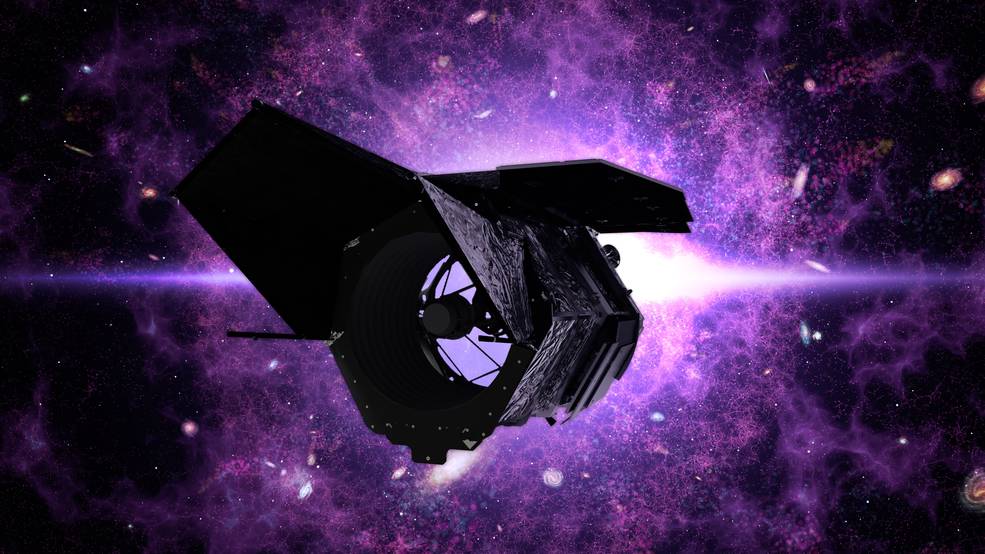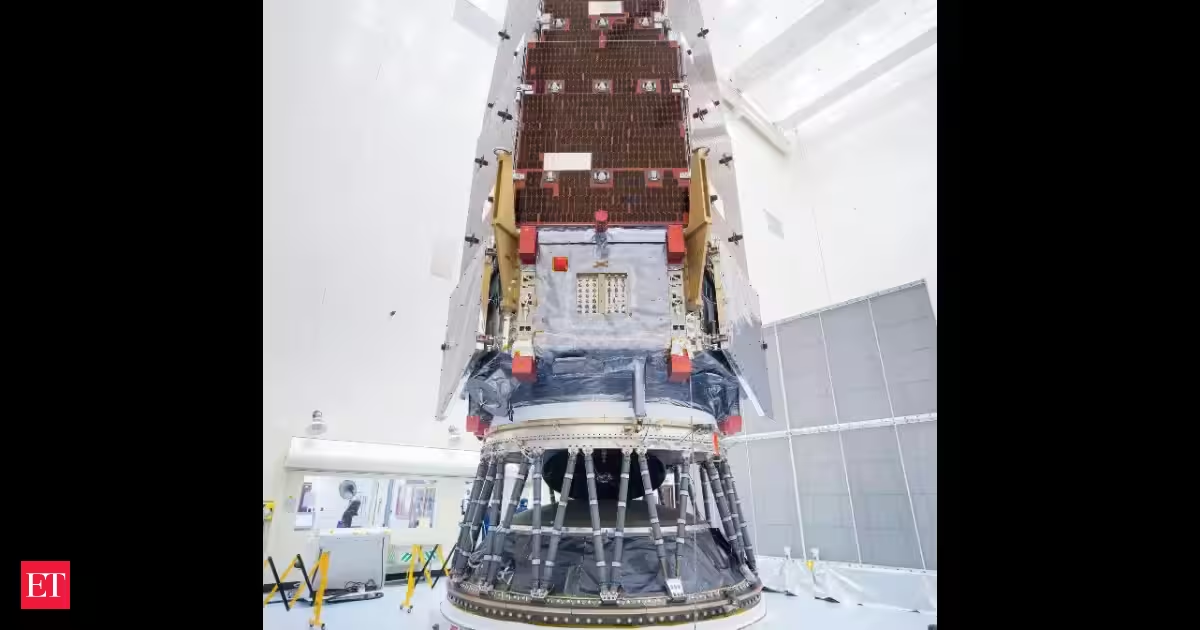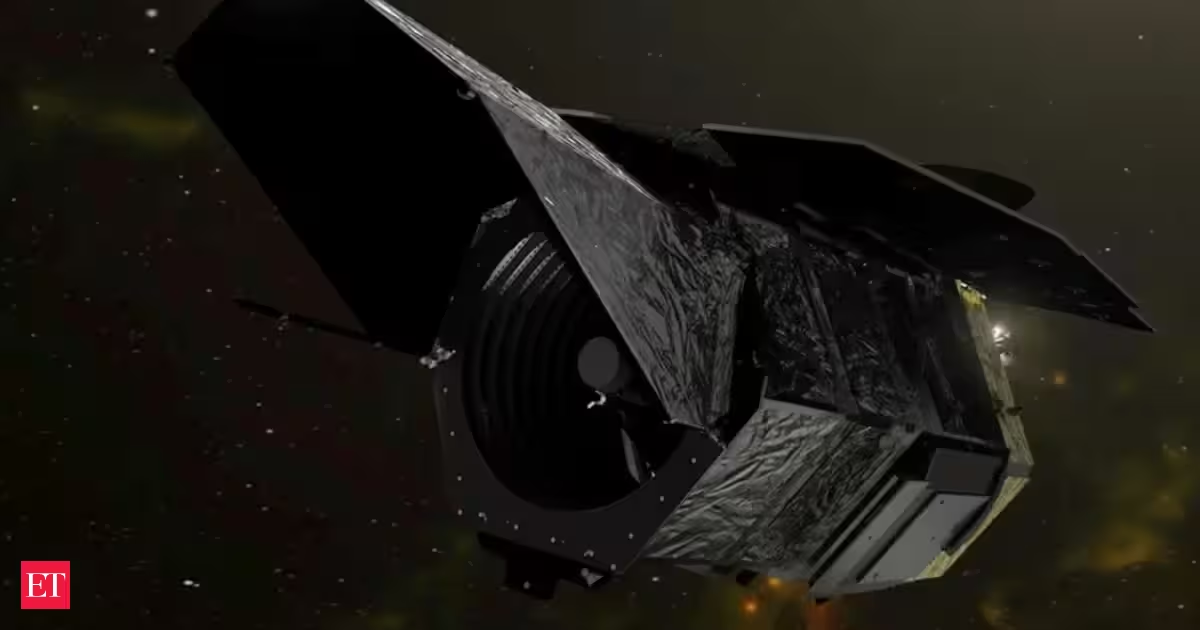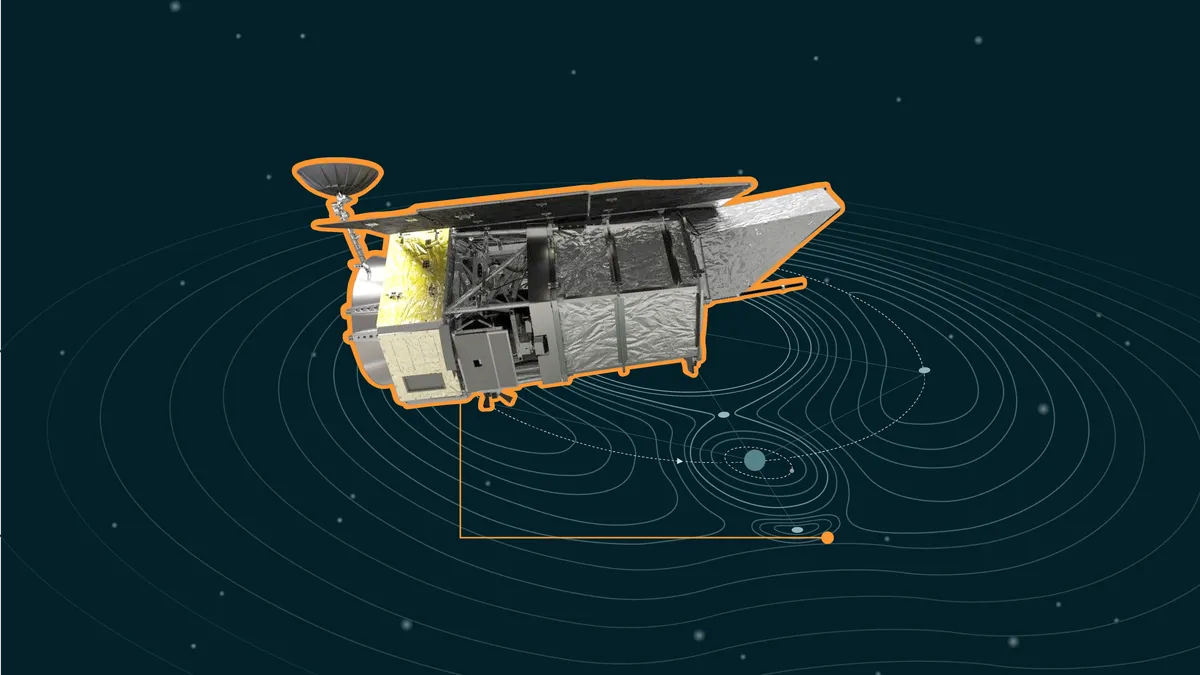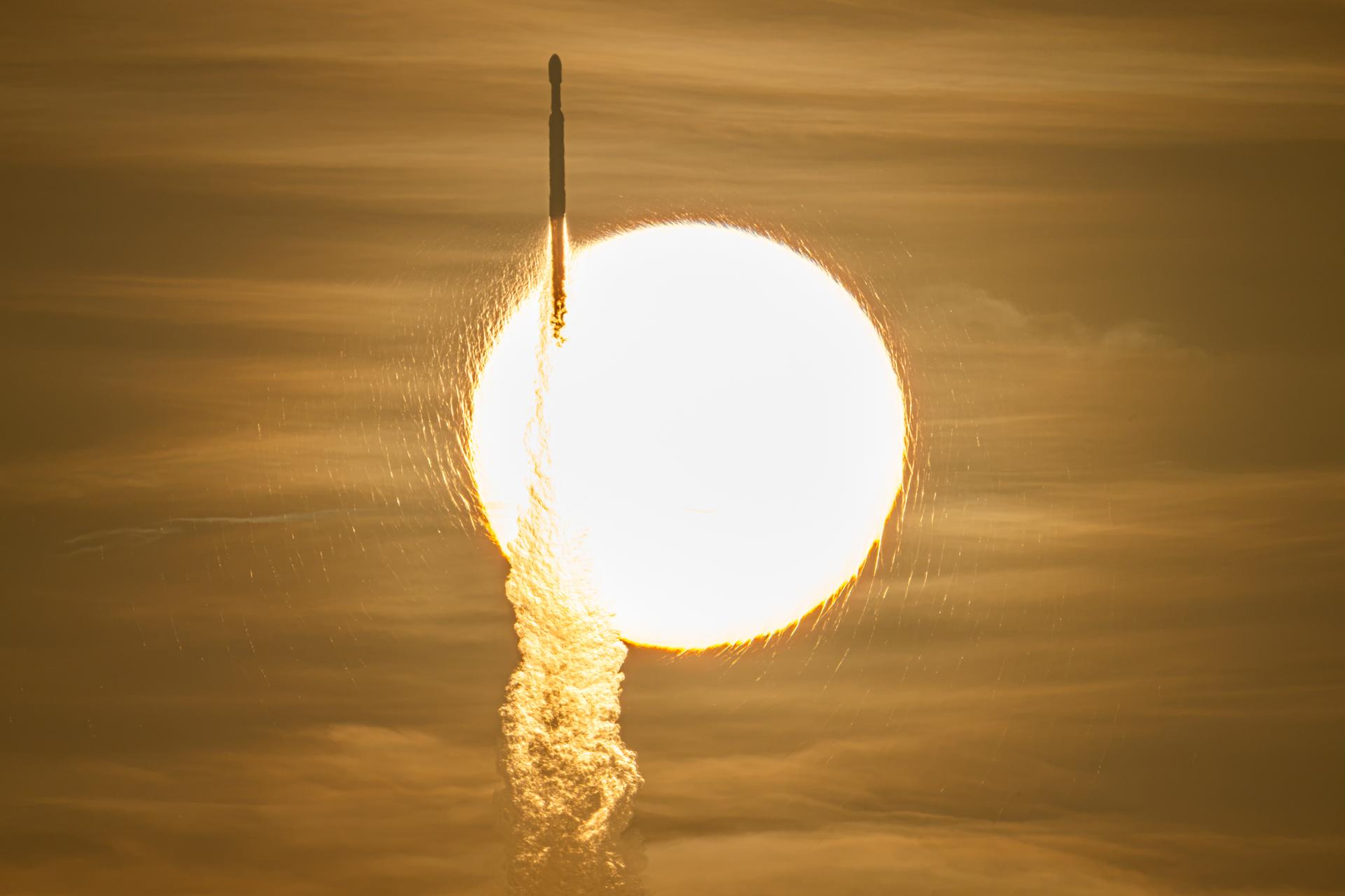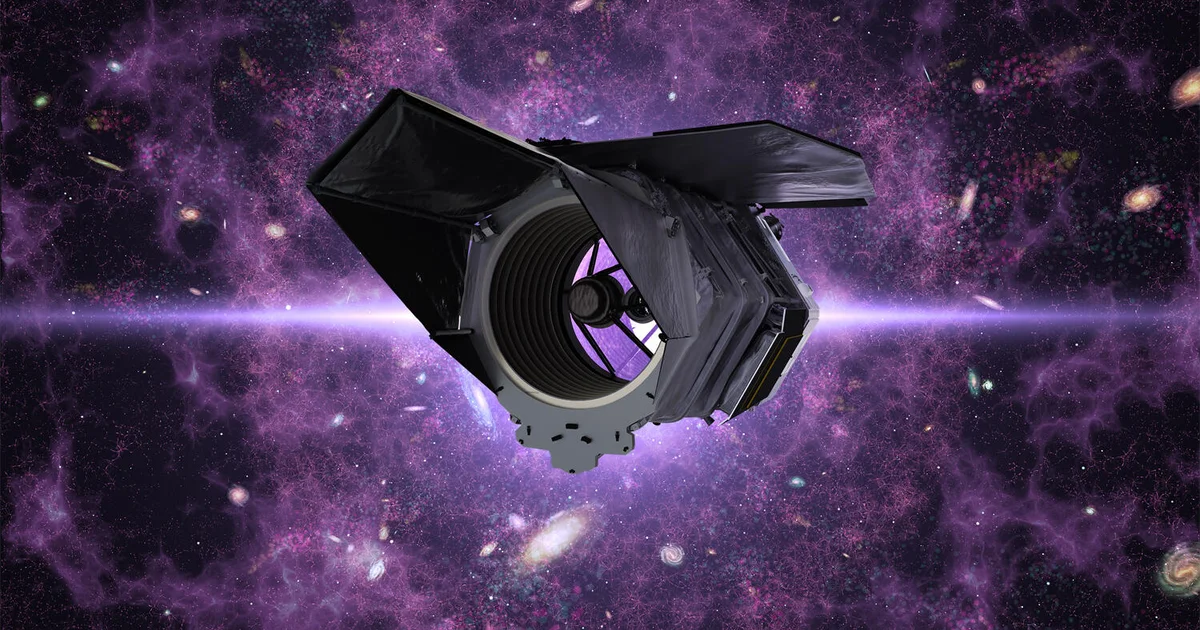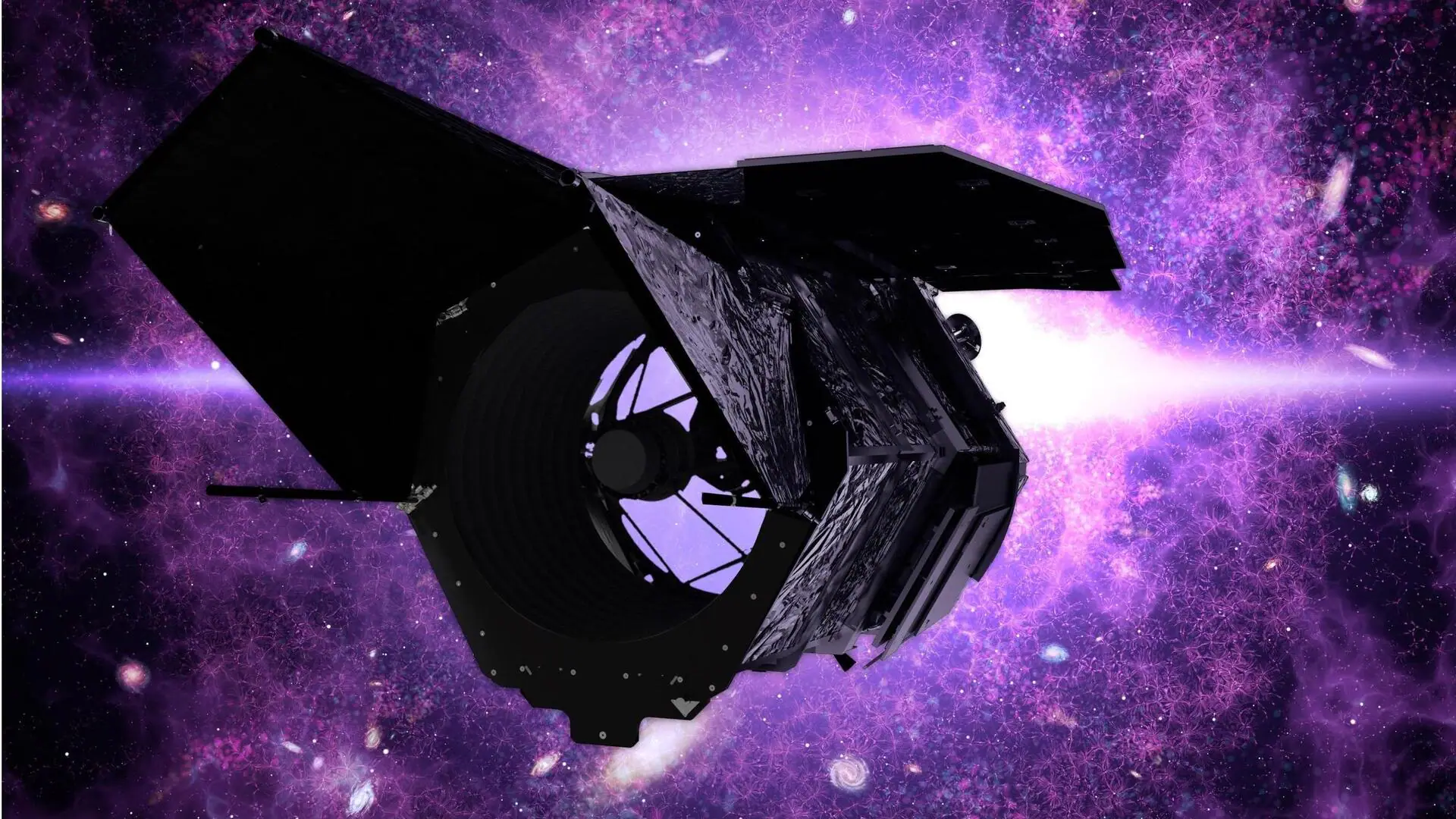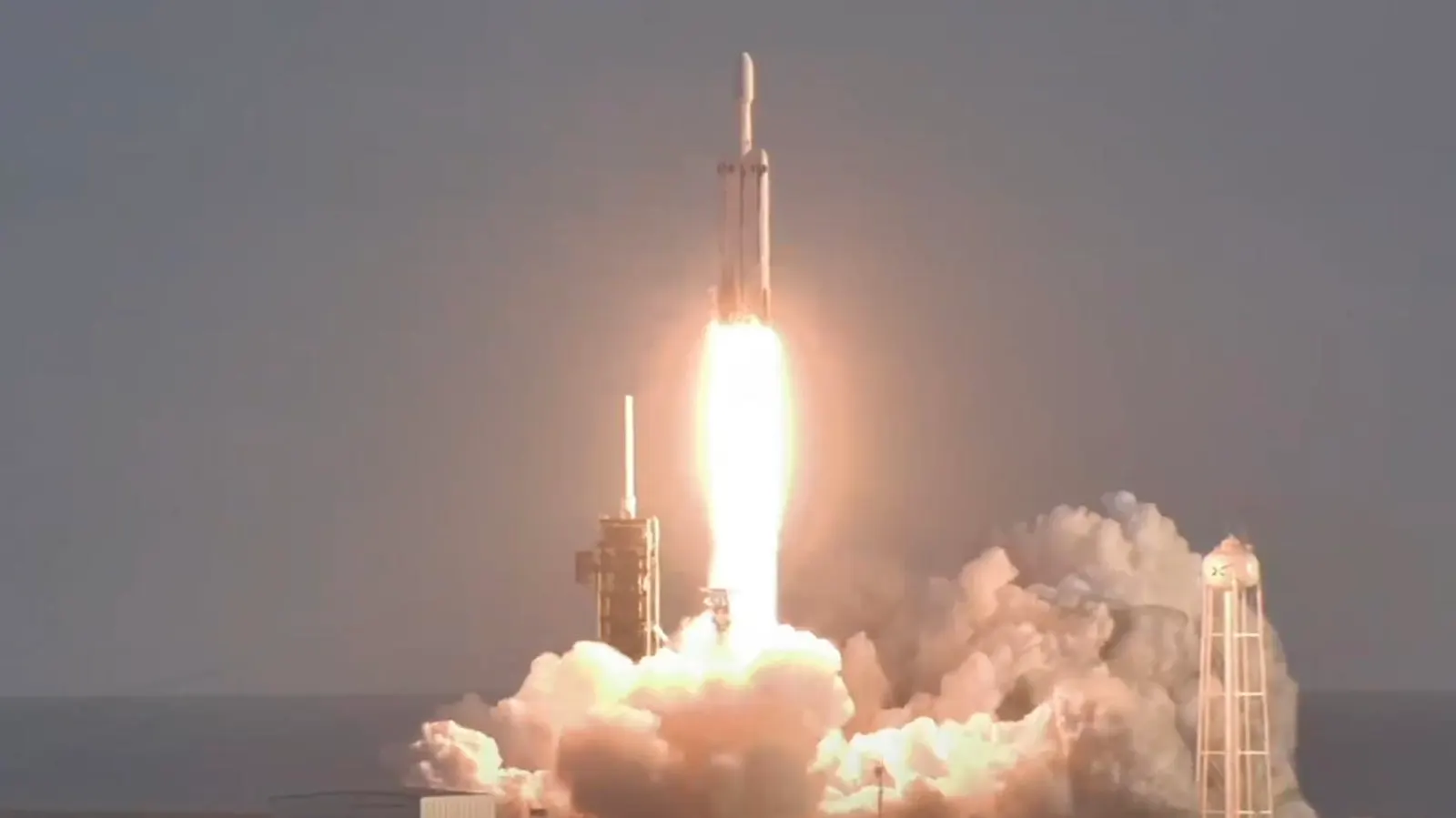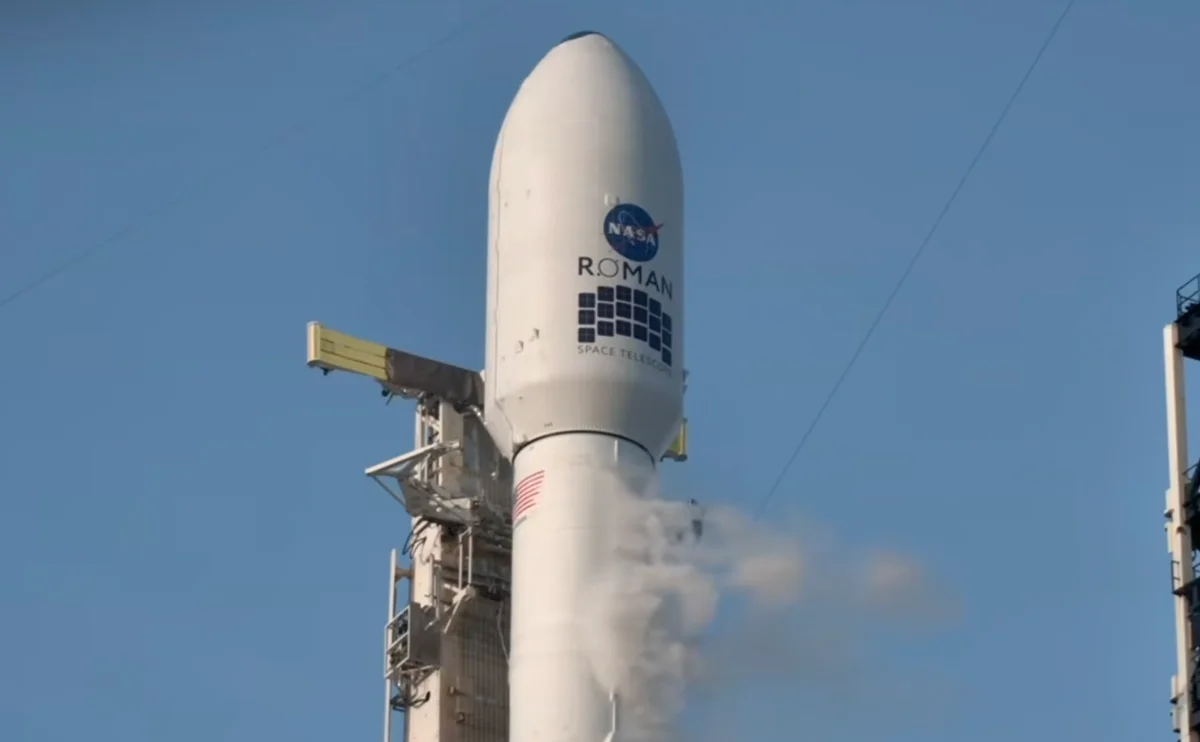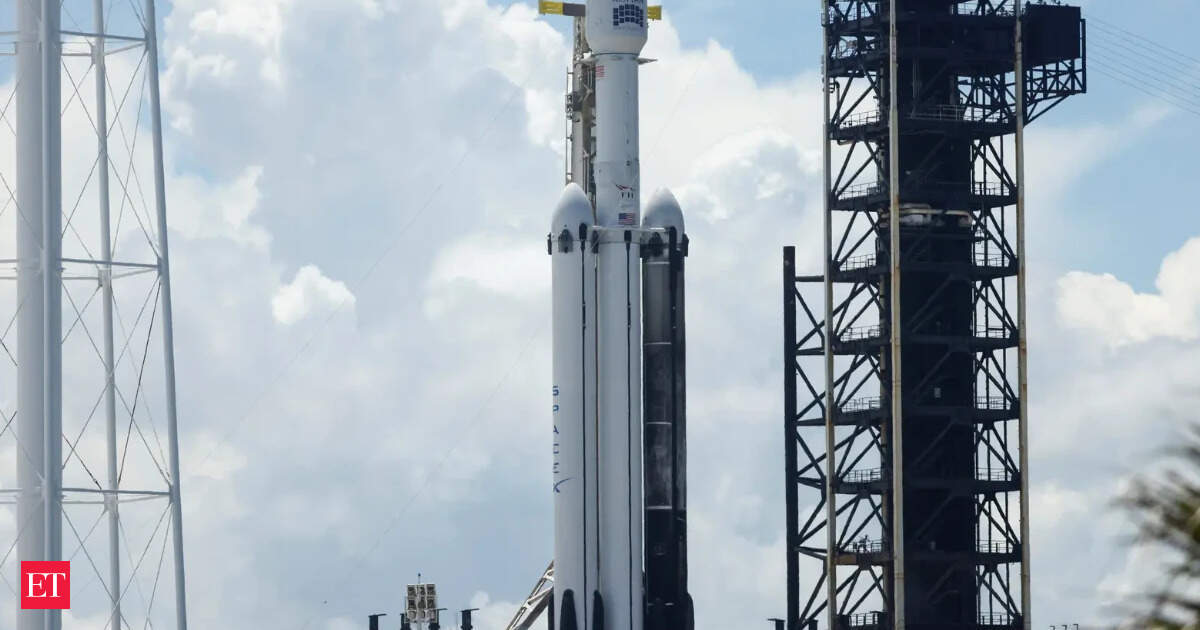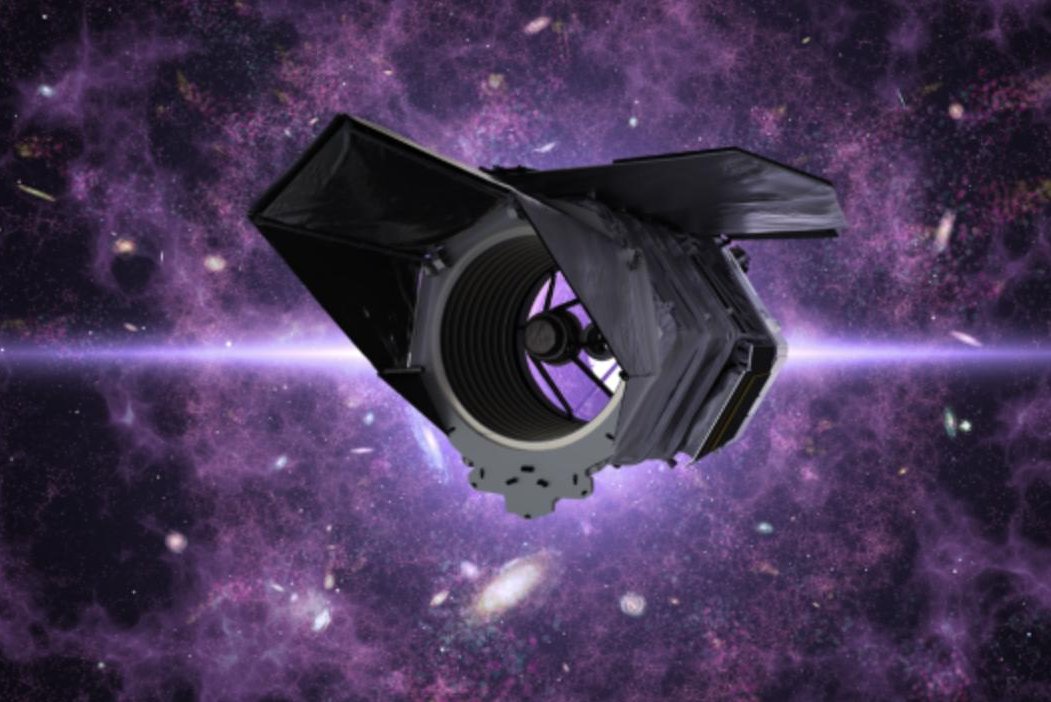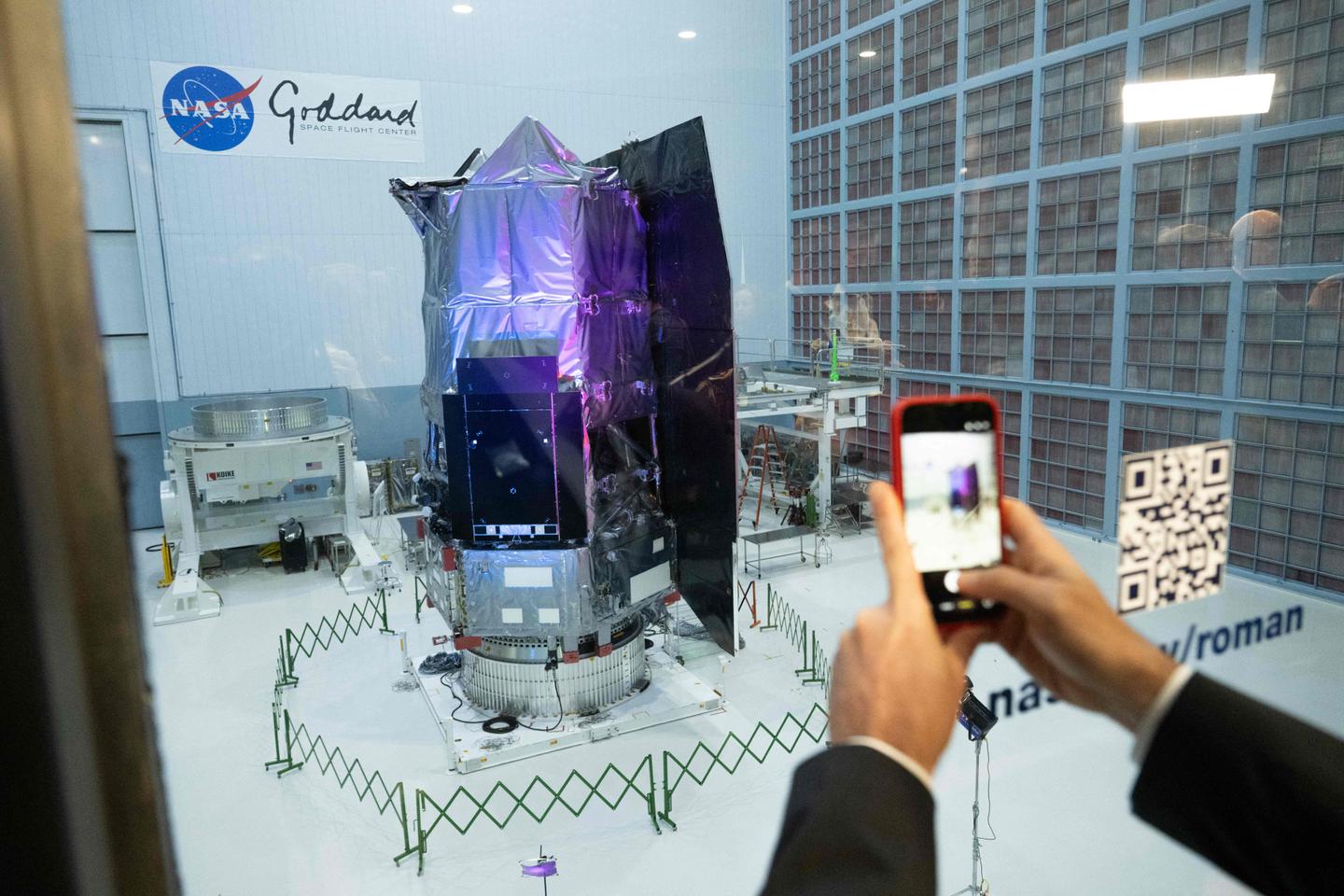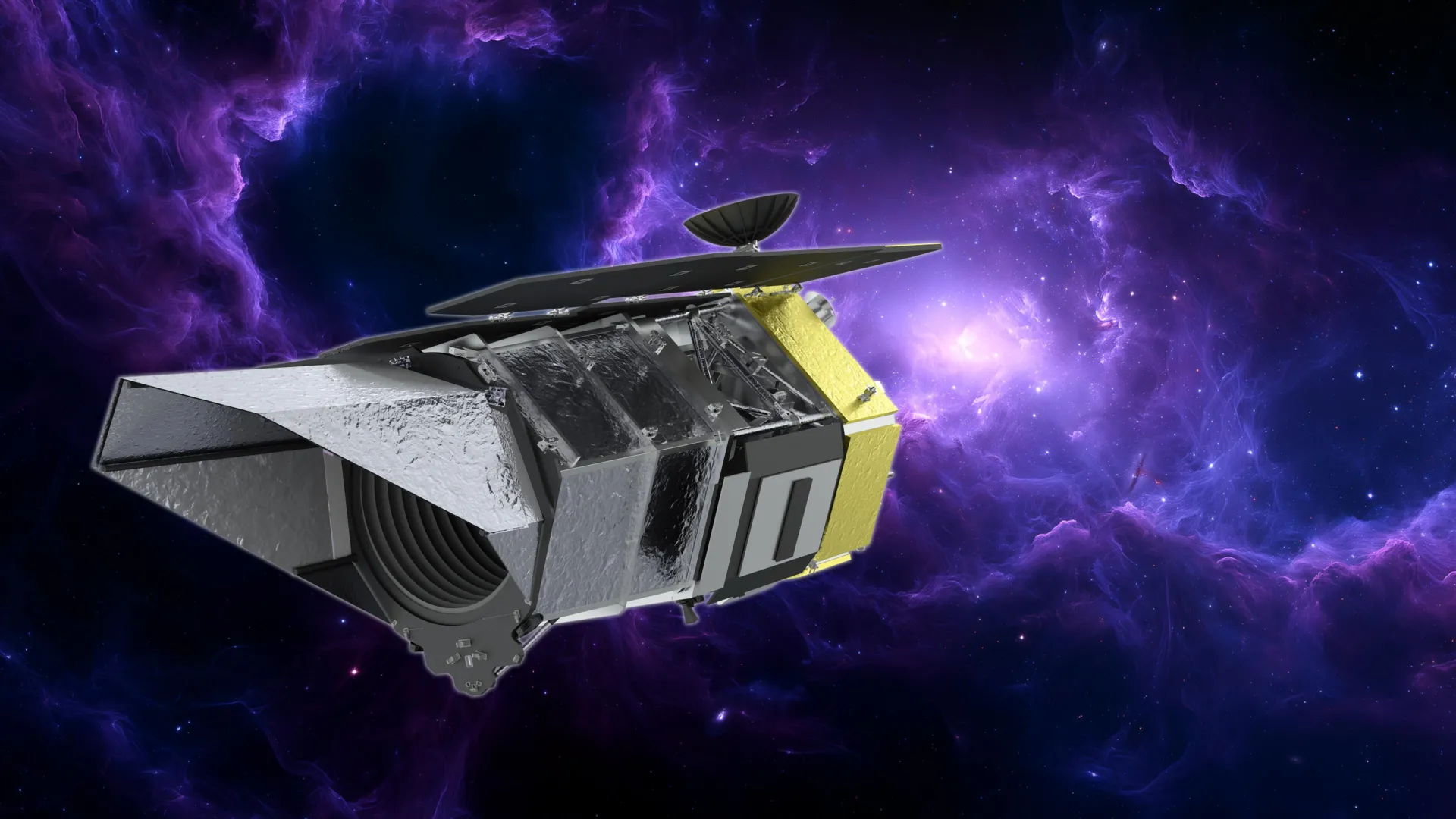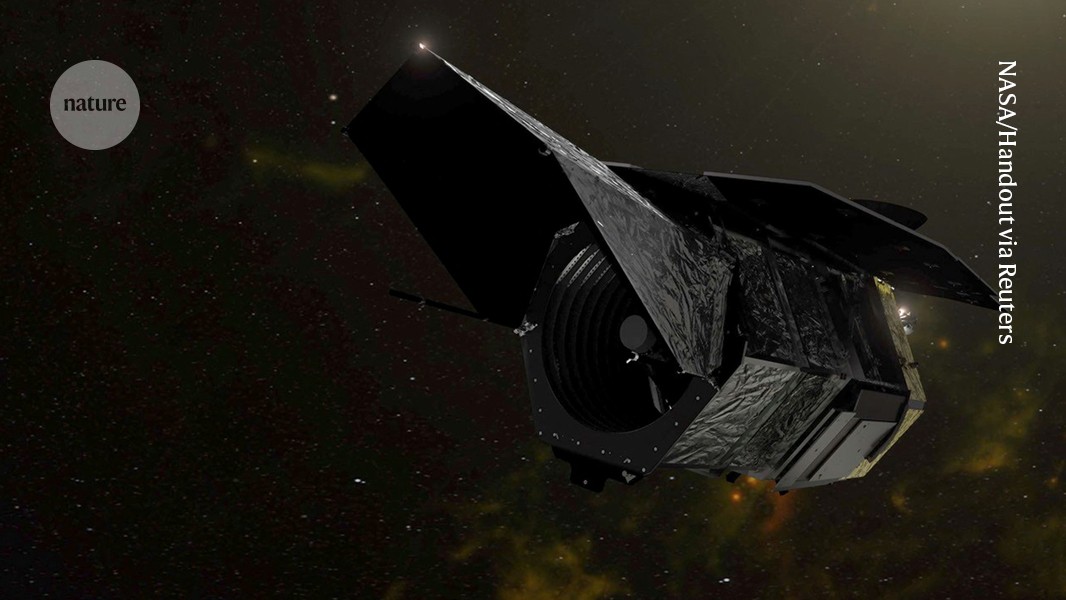
The field of view of the Nancy Grace Roman Space Telescope (artist’s illustration) will be roughly 100 times bigger than that of the Hubble Space Telescope. Credit: NASA/Handout via ReutersThe largest infrared digital camera ever built and its scientific companion, a massive mirror originally designed for a spy satellite, are now safely in orbit, after the flawless launch of NASA’s newest flagship telescope. The US$4.3-billion Nancy Grace Roman Space Telescope lifted off atop a SpaceX rocket at 7:35 a.m. local time today from NASA’s Kennedy Space Center in Florida, and it will soon be on its way to its final location.The observatory is expected to yield a wealth of discoveries, from insight into the nature of ‘dark energy’, the force causing the Universe’s expansion, to millions of stars in the Milky Way and the planets that orbit them. It is named after Nancy Grace Roman (1925–2018), NASA’s first chief astronomer and a leading figure in many of the agency’s most impactful scientific programmes, including the Hubble Space Telescope.The Roman telescope is the final member of a trio of complementary sky-mapping observatories. It is joining the US-led Vera C. Rubin Observatory in Chile, which was inaugurated in 2025, and Euclid, a space telescope launched by the European Space Agency in 2023 (see ‘Complementary skills’). Together, these observatories are expected to change the face of astronomy, with unprecedented amounts of data and immense, astoundingly detailed images.Complementary skillsThe Nancy Grace Roman Space Telescope has a bigger primary mirror than the Euclid telescope. It also has keener vision, which can be measured using a property called angular resolution with the unit arcseconds: the lower the number, the higher the resolution. Euclid has a bigger field of view, which is often measured in square degrees and describes how much of the sky a telescope sees.Nancy Grace Roman wide-field instrumentEuclid visible cameraMirror diameter2.4 metres (primary mirror)1.2 metresAngular resolution0.11 arcseconds per pixel0.18 arcsecondsField of view0.28 square degrees0.57 square degreeBetween the three sky-surveying projects, Roman’s unique capability is taking frequent, deep images in the infrared — the part of the light spectrum that consists of wavelengths slightly too long to be seen by the human eye — with its 300-megapixel camera (see ‘Wide eye on the Universe’). “It’s going to be revolutionary,” says Tony Tyson, a physicist at the University of California, Davis.Into the infraredRoman’s infrared vision is key: the light from the Universe’s most distant objects is transformed into longer, ‘redder’ wavelengths by billions of years of cosmic expansion. But most infrared light is blocked by Earth’s atmosphere. This means that for infrared astronomy, space is the place to be.Roman’s sensitivity to infrared light means that it will be able to peer into the Universe’s deep past and observe highly reddened galaxies that are difficult for Rubin or Euclid to see, says Rachel Mandelbaum, an astrophysicist at Carnegie Mellon University in Pittsburgh, Pennsylvania. Mapping the Universe’s galaxies in 3D, as Roman will do, enables cosmologists to reconstruct the expansion history of the Universe (see ‘Wide eye on the Universe’).Moreover, Roman will be an engine for spotting thousands of distant supernova explosions, which cosmologists can use as signposts to measure how the rate of cosmic expansion has varied over the aeons. This will help researchers to understand whether the push of dark energy has been uniform — or has changed over space and time.Closer to home, the telescope will map an unprecedented 20 billion stars in the Milky Way, including many inside and beyond the galaxy’s dusty central region, says Dominic Benford, an astrophysicist at NASA in Washington DC who is the programme scientist on the Roman project. Dust blocks more visible light than infrared radiation. Thanks to Roman’s talent for infrared imagery, “we can see through the galaxy like no other mission before”, Benford says.The James Webb Space Telescope (JWST), which NASA launched at the end of 2021, is also mainly an infrared observatory. But the field of view of Roman’s main instrument can cover the entire Moon, whereas JWST’s takes in an area 100 times smaller. Typically, Roman will make the first discovery of events such as supernovae, and astronomers will then follow up with detailed studies with JWST, as well as with other observatories.The Nancy Grace Roman Space Telescope has a bigger primary mirror than the Euclid telescope. It also has keener vision, which can be measured using a property called angular resolution with the unit arcseconds: the lower the number, the higher the resolution. Euclid has a bigger field of view, which is measured in square degrees and describes how much of the sky a telescope sees.Nancy Grace Roman wide-field instrumentEuclid visible cameraMirror diameter2.4 metres (primary mirror)1.2 metresAngular resolution0.11 arcseconds0.18 arcsecondsField of view0.28 square degrees0.57 square degreesLong road to L2The first concept for the telescope that would eventually become Roman began with the surprising discovery in the 1990s that the Universe’s rate of expansion is accelerating, not slowing down, thanks to dark energy. One of the researchers leading that discovery was Saul Perlmutter at the Lawerence Berkeley National Laboratory in California, who analysed the traits of a few dozen supernovae that formed in the last 7 billion years. Perlmutter and Michael Levi, a physicist also at the Lawrence Berkeley laboratory, proposed a satellite called the Supernova Acceleration Probe (SNAP) that would be able to investigate even older supernovae. This would allow for more precise measurement of dark energy’s effects.Under the new name of WFIRST, the project received a boost in 2012 when the secretive US National Reconnaissance Office called NASA to offer two free half-built space telescopes, each with a 2.4 metre primary mirror — about as large as the one on the Hubble Space Telescope. NASA ended up adopting one of the orphaned mirrors after realizing that its wide-field capabilities, which had been designed to be pointed towards Earth originally, were just what was needed for the dark-energy mission.
Lift-off! NASA launches Roman Space Telescope to tackle dark-energy mysteries
The space observatory will have an expansive view of the Universe as well as sharp resolution.
976 words~4 min read