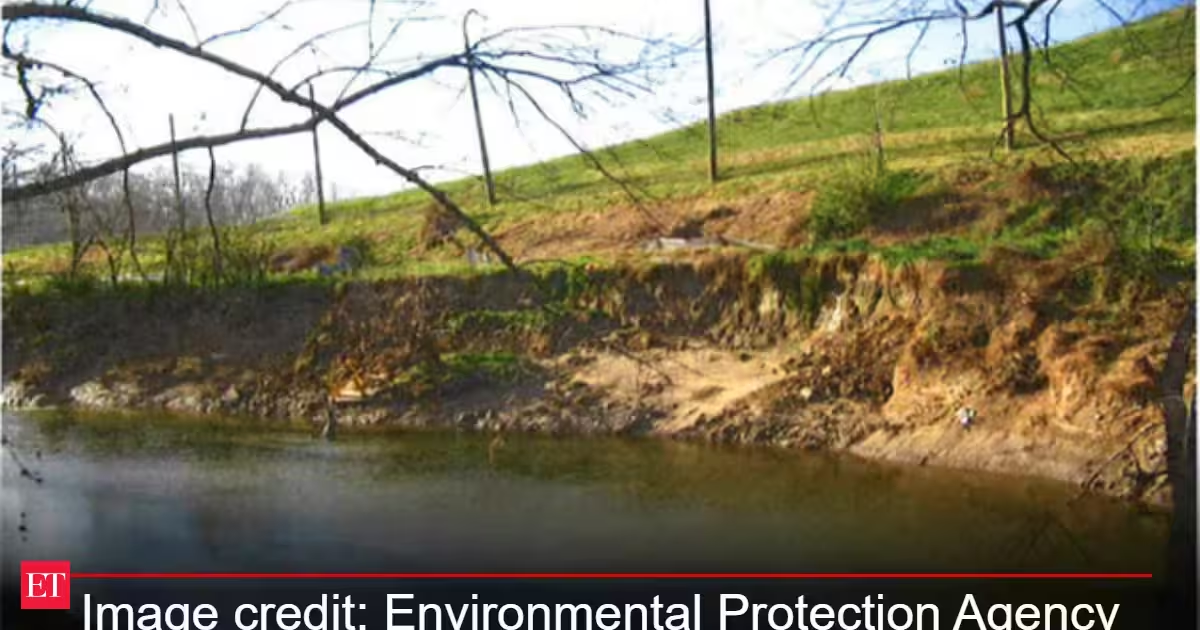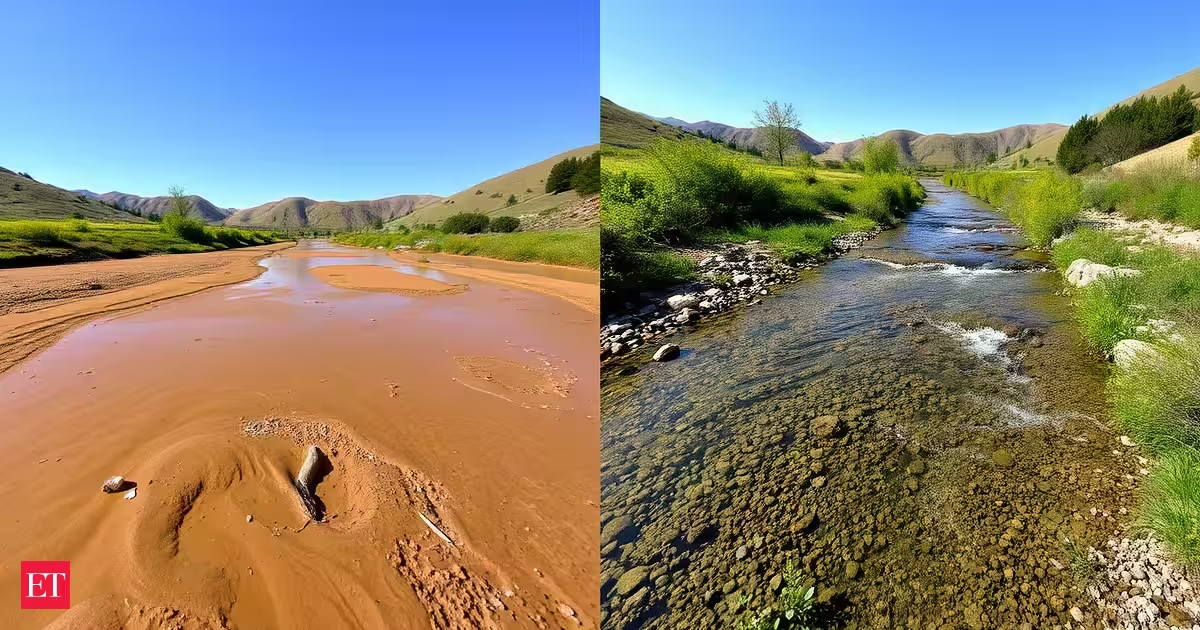
In 1994, Idaho listed Rapid Creek for sediment impairment. 18 years later, restoration improved habitat scores and Lower Rapid Creek was removed from the 2012 impaired waters listSynopsisRapid Creek in southeastern Idaho offers a compelling example of how long-term watershed restoration can transform water quality and aquatic habitat. Rapid Creek ultimately became a useful model of how persistent conservation can restore a degraded stream. The improvement was built over approximately 18 years through agricultural conservation, erosion reduction, stream protection, technical assistance, financial investment and repeated scientific assessment.Global DeskIn 1994, Lower Rapid Creek was placed on Idaho’s Clean Water Act Section 303(d) list because excessive sediment was impairing its ability to support cold-water aquatic life. Nearly two decades later, monitoring showed substantial ecological improvement, and the Idaho Department of Environmental Quality (IDEQ) removed the 5.62-mile Lower Rapid Creek assessment unit from the state’s 2012 list of impaired waters for sediment. The U.S. Environmental Protection Agency (EPA) identifies the creek as a nonpoint-source pollution success story, demonstrating how coordinated conservation, agricultural best management practices and continued monitoring can produce measurable environmental results.The original problem was closely connected to land use across the Rapid Creek watershed. Rangeland dominates the area, and EPA documentation identified livestock grazing, streambank erosion, sheet and rill erosion, and erosion from roads as contributors to excess sediment. Sediment can alter stream-bottom conditions and degrade habitat needed by aquatic organisms, including fish and aquatic insects. In 1995, IDEQ conducted a Beneficial Use Reconnaissance Program (BURP) assessment to evaluate the creek's biological and physical condition. The results highlighted the seriousness of the problem: the Stream Macroinvertebrate Index (SMI) received a score of 0.0, while the Stream Fish Index (SFI) scored 2.0 and the Stream Habitat Index (SHI) scored 3.0. Because the macroinvertebrate score was below the required threshold, Lower Rapid Creek was considered unable to fully support its designated beneficial uses.Restoration ProcessThe restoration process did not depend on a single project or quick fix. Instead, it developed through years of watershed-level conservation work involving landowners and public agencies. From 1989 through 1999, the Portneuf Soil and Water Conservation District implemented a State Agricultural Water Quality Program project covering the 16,195-acre Upper Rapid Creek watershed. Approximately 3,839 critical upland acres received best management practices designed to reduce soil erosion.Later, from 2001 through 2007, the Portneuf Soil and Water Conservation District led a Clean Water Act Section 319 project that helped landowners address impaired stream segments and expand conservation measures. These efforts included off-stream livestock watering, livestock-use exclusion, stream crossings, critical-area plantings, water and sediment basins, and channel vegetation.You Might Also Like:Impact and BenefitsA major part of the strategy was changing how agricultural activities interacted with waterways. Rather than simply responding to sediment after it entered the stream, restoration partners worked to prevent erosion at its source and reduce the movement of soil into Rapid Creek. According to the EPA success story, landowners treated 59 percent of the watershed’s identified critical acres using several integrated funding and conservation programs.Monitoring conducted in 2006 and 2007 also indicated measurable improvements in water quality. Suspended-solids loading on the West Fork and North Fork of Rapid Creek declined by an estimated 26 pounds per day, or about 8 percent, while concentrations of Escherichia coli and nitrogen also decreased. These results illustrate why watershed restoration often requires sustained cooperation rather than one isolated intervention.Lower Rapid CreekThe most significant evidence emerged through biological monitoring. IDEQ conducted BURP assessments on Lower Rapid Creek in 2001, 2004 and 2012. The 2012 assessment was especially important because it examined all three major multimetric indices together. The creek achieved an SMI score of 3.0, an SFI score of 3.0 and an SHI score of 2.0, producing an overall average score of 2.67. Under the assessment framework described by EPA, an average score of at least 2.0 indicates support for cold-water aquatic life. The improvement was particularly striking when compared with the 1995 SMI score of zero. The biological data therefore provided evidence that conditions had moved from impairment toward full support.Sediment measurements provided another important piece of evidence behind the delisting decision. In 2012, IDEQ reported that 7.83 percent of the stream substrate consisted of material 2.5 millimeters or smaller. That figure was well below the 30 percent threshold identified in IDEQ’s sediment-target guidance as indicative of impairment. Earlier water-quality monitoring also found that total suspended solids at the mouth of Rapid Creek averaged 23.6 milligrams per liter under high-flow conditions in 2007, below the 80 milligrams-per-liter high-flow sediment target associated with the watershed’s TMDL. Together, the biological and sediment evidence indicated that restoration efforts were producing measurable improvements rather than merely changing the appearance of the stream.Rapid Creek - A Succes StoryThe regulatory history is equally important because it shows how environmental restoration is evaluated through established water-quality standards. IDEQ developed a sediment Total Maximum Daily Load (TMDL) for the Portneuf River Subbasin in 1999, and EPA approved it in 2001. Under the Clean Water Act framework, states identify waters that do not meet applicable standards and develop plans to address pollutants responsible for impairment. Idaho’s current explanation of its TMDL process notes that water bodies failing to meet water-quality standards are identified through the state’s Integrated Report and that TMDLs are developed to establish water-quality improvement goals. In Rapid Creek’s case, subsequent monitoring demonstrated that the Lower Rapid Creek assessment unit had improved sufficiently for IDEQ to remove it from the 2012 impaired waters list for sediment.The EPA lists Rapid Creek among Idaho’s nonpoint-source success stories, emphasizing documented water-quality improvements following restoration. The lesson extends beyond southeastern Idaho: healthy waterways frequently depend on conditions throughout an entire watershed, and meaningful recovery may take years of coordinated action. Rapid Creek’s journey from sediment impairment in 1994 to removal from the 2012 impaired waters list demonstrates that restoration can deliver measurable ecological gains when communities, landowners and government agencies work toward a common water-quality objective.Read More News on(Catch all the US News, UK News, Canada News, International Breaking News Events, and Latest News Updates on The Economic Times.) Download The Economic Times News App to get Daily International News Updates....moreless
In 1994, Idaho listed Rapid Creek for sediment impairment. 18 years later, restoration improved habitat scores and Lower Rapid Creek was removed from the 2012 impaired waters list
Rapid Creek in southeastern Idaho offers a compelling example of how long-term watershed restoration can transform water quality and aquatic habitat. Rapid Creek ultimately became a useful model of how persistent conservation can restore a degraded stream. The improvement was built over approximately 18 years through agricultural conservation, erosion reduction, stream protection, technical assistance, financial investment and repeated scientific assessment.
1,017 words~5 min read