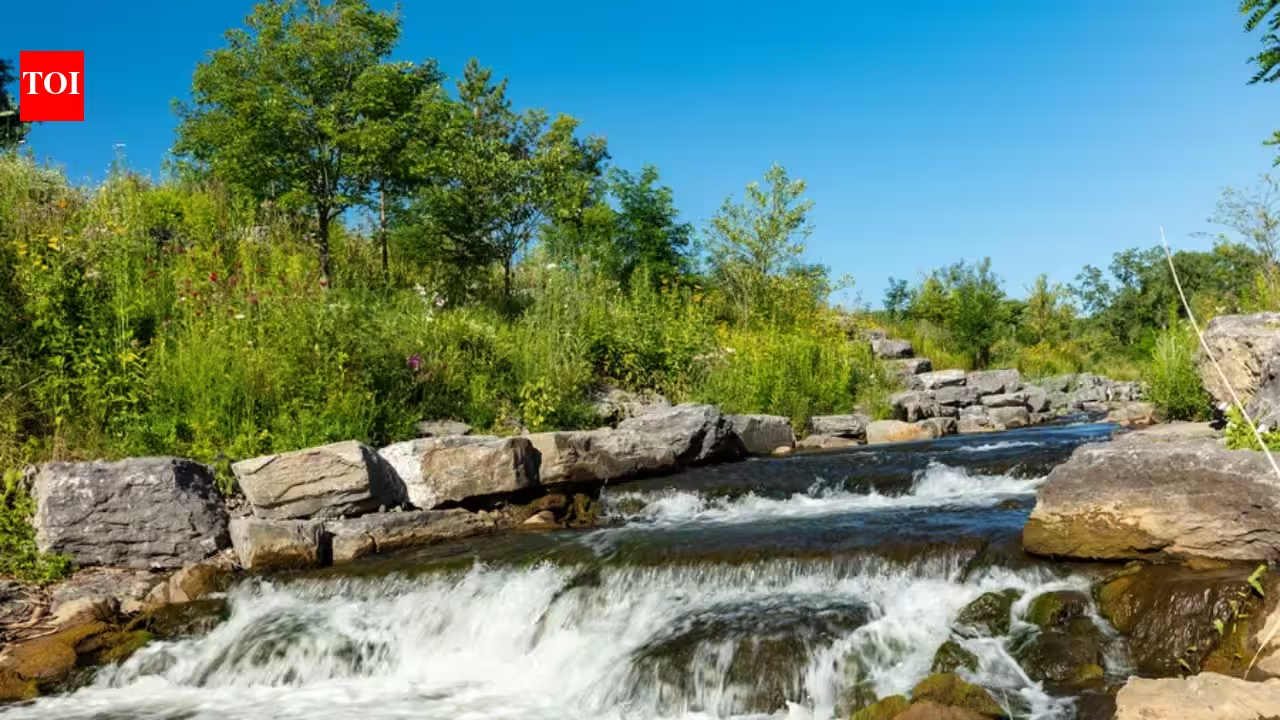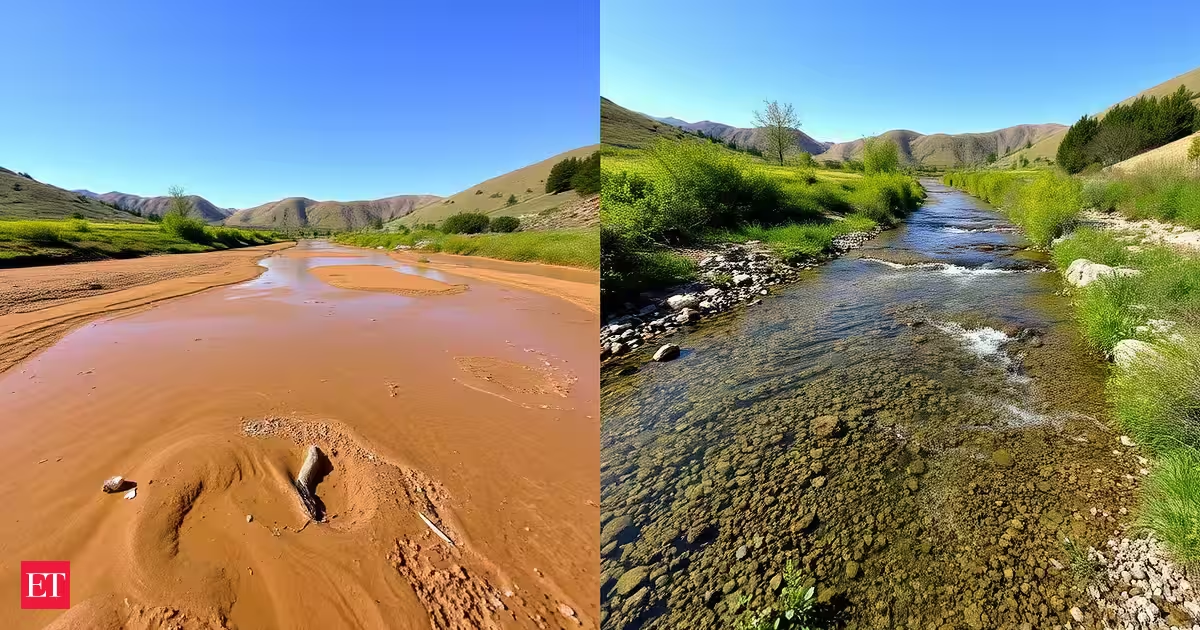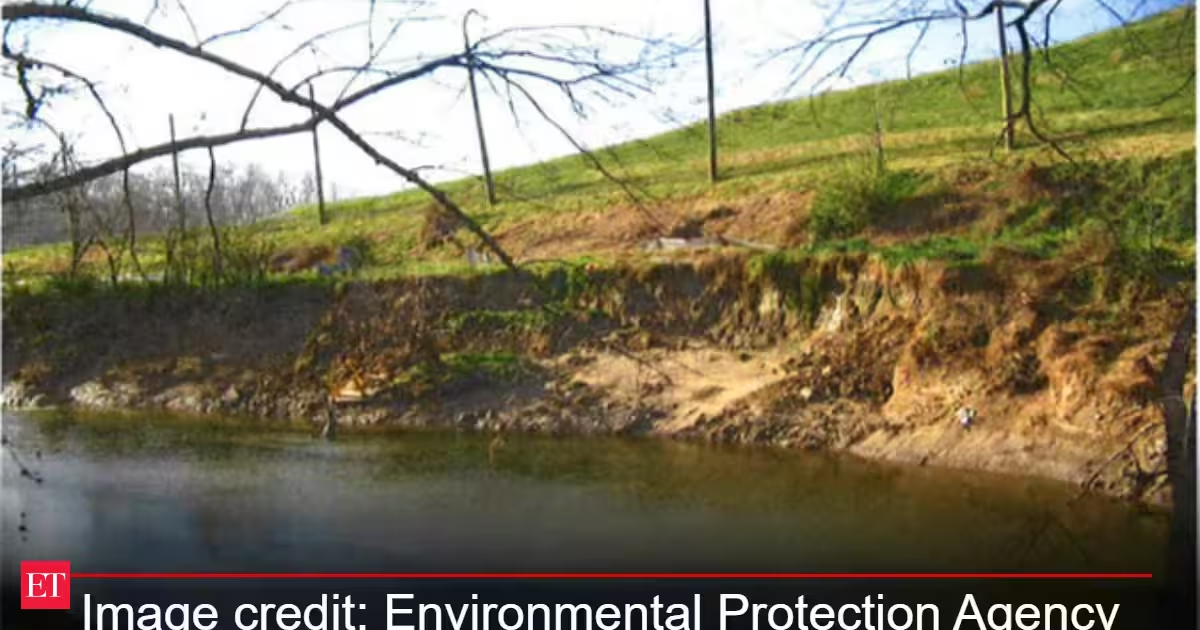
For years, severe erosion and a lack of vegetation left parts of Cahokia Creek in southwestern Illinois struggling with poor stream conditions. In 2006, Illinois placed 10.69 miles of the creek on the Clean Water Act Section 303(d) list because of problems involving instream cover, streamside vegetation, depth and flow velocity, as per U.S. Environmental Protection Agency (EPA), Grants Reporting and Tracking System (GRTS).Beginning in 2011, HeartLands Conservancy and its partners used Clean Water Act Section 319 funding to stabilize streambanks, restore wetlands and reshape part of the creek.The restoration reduced sediment and nutrient pollution and ultimately helped the creek meet the conditions needed to be removed from the impaired waters list.Cahokia Creek runs through the Burrough's Branch-Cahokia Creek watershed in Madison County, Illinois, eventually flowing southwest toward the Mississippi River. Agriculture is the watershed's primary land use.You Might Also Like:The creek's streambanks had become severely eroded because of inadequate vegetation. Those conditions contributed to the creek being listed as impaired in 2006.Illinois identified several problems, including the loss of instream cover, changes to streamside or littoral vegetative cover, and alterations in flow depth and velocity.The Illinois Environmental Protection Agency assessed the impairment through field observations and notes. Its Surface Water Section staff use a Qualitative Habitat Evaluation Index to examine conditions such as the absence of instream cover, channelization without recovery, heavy silt on the substrate, inadequate riparian width and severe bank erosion.These problems can contribute to erosion and increase the amount of sediment and nutrient runoff entering a stream.You Might Also Like:The impaired section covered 10.69 miles of Cahokia Creek and remained on Illinois' Section 303(d) list for years.How did HeartLands Conservancy restore the creek?In 2011, HeartLands Conservancy led a restoration project on a portion of Cahokia Creek near Edwardsville, Illinois.The work was supported through Clean Water Act Section 319 funding and focused on changing the physical condition of the unstable stream channel.The restoration included stabilizing streambanks and streambeds, creating rock riffles and establishing vegetation along previously bare and eroding banks.The rock riffles were designed to create “pool and riffle” sequences, supporting regeneration and improving dissolved oxygen levels while helping prevent degradation farther upstream.Partners also installed 66-foot-wide filter strips along a 3,000-foot reach. These strips were intended to slow runoff and filter nutrients and sediment before they reached the creek.Stone toe protection, or riprap, was added to streambanks to increase reaeration, reduce sedimentation, decrease bank slope and protect vegetation.Between 2011 and 2014, five best management practices were installed to create more stable, vegetated meander bends.The project ultimately transformed a roughly 4,920-foot highly unstable channel into a 3,000-foot stable, meandered stream. The channel was realigned at three locations to create larger-radius curves, while two rock riffles were installed.Approximately 3,390 feet of stone toe protection and suitable woody vegetation were established along the outside banks of the meander bends.A 66-foot-wide vegetated riparian corridor was also established along the entire 3,000-foot reach.The restoration extended beyond the stream channel itself. About 2.5 acres of wetlands were restored from abandoned oxbows.What did the restoration achieve?The restoration work produced measurable reductions in pollution.The 2014 best management practices were estimated to reduce phosphorus by 3,866 pounds per year, nitrogen by 7,733 pounds per year and sediment by 2,133 tons per year.The improvements were largely attributed to BMPs addressing streambank and shoreline modification or destabilization caused by channelization, which had been identified as the primary source of the impairment.After the BMPs were installed, Illinois EPA evaluated Cahokia Creek to determine whether the stream should remain on the Section 303(d) list.Qualified Illinois EPA staff found that the creek was no longer impaired for loss of instream cover, alteration of streamside or littoral vegetative cover, or changes in depth and flow velocity.The supplied project record contains different dates for the creek's delisting. The opening section identifies removal in 2020/2022, the Waterbody Information section lists 2022, while the Results section states that the creek was removed from the Section 303(d) list in 2018. Because these dates conflict within the supplied material, the exact delisting year should be verified against the original record before publication.How did the project continue beyond the creek?The Cahokia Creek work was not limited to construction.Locally led efforts have continued to address the loss of instream cover, changes in streamside vegetation and altered flow conditions throughout the Burrough's Branch-Cahokia Creek watershed.The project also included outreach and education. Two outreach and education activities were recorded as part of the best management practices.In 2013, the work carried out during the Cahokia Creek relocation at the Roxana landfill project was presented at the 9th Annual Erosion and Sediment Control Workshop. A tour of the project site was also provided during the event.The restoration involved several partners. HeartLands Conservancy was the primary grant recipient and led outreach and education while overseeing the grant and work completed through it.The Clean Water Act Section 319(h) grant provided federal support, while Republic Services/Roxana Landfill provided funding for the required match associated with streambank restoration and vegetation of the riparian area.The project ultimately changed a highly unstable portion of Cahokia Creek into a more stable, vegetated stream channel. By addressing erosion, improving streamside habitat and reducing the movement of sediment and nutrients into the creek, the restoration improved the physical conditions that had contributed to its impairment.The work demonstrates how streambank stabilization, channel restoration, wetland restoration and vegetation can work together to address water-quality problems in an impaired watershed.FAQsWhy was Cahokia Creek impaired?Severe erosion and poor streamside vegetation damaged its habitat.What did the restoration accomplish?It reduced sediment and nutrient pollution reaching the creek.
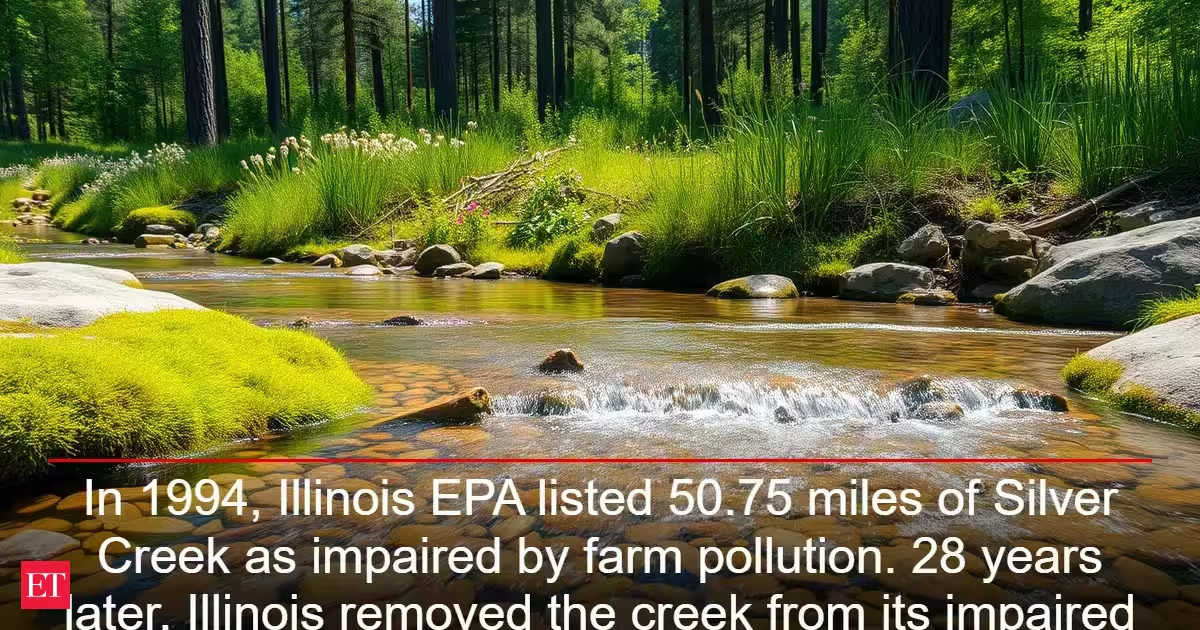
In 2006, Illinois listed 10.69 miles of Cahokia Creek as impaired. 14 years later, Heartlands Conservancy's BMPs improved the stream, leading to delisting in 2020
Cahokia Creek in Illinois was impaired due to severe streambank erosion and lack of vegetation. Heartlands Conservancy used grant funding to implement stream channel and streambed stabilization practices. These efforts included installing rock riffles and establishing vegetated riparian corridors along the creek. The implemented best management practices significantly reduced pollution entering the stream. Consequently, Cahokia Creek was removed from the impaired waters list in 2020/2022.
919 words~4 min read