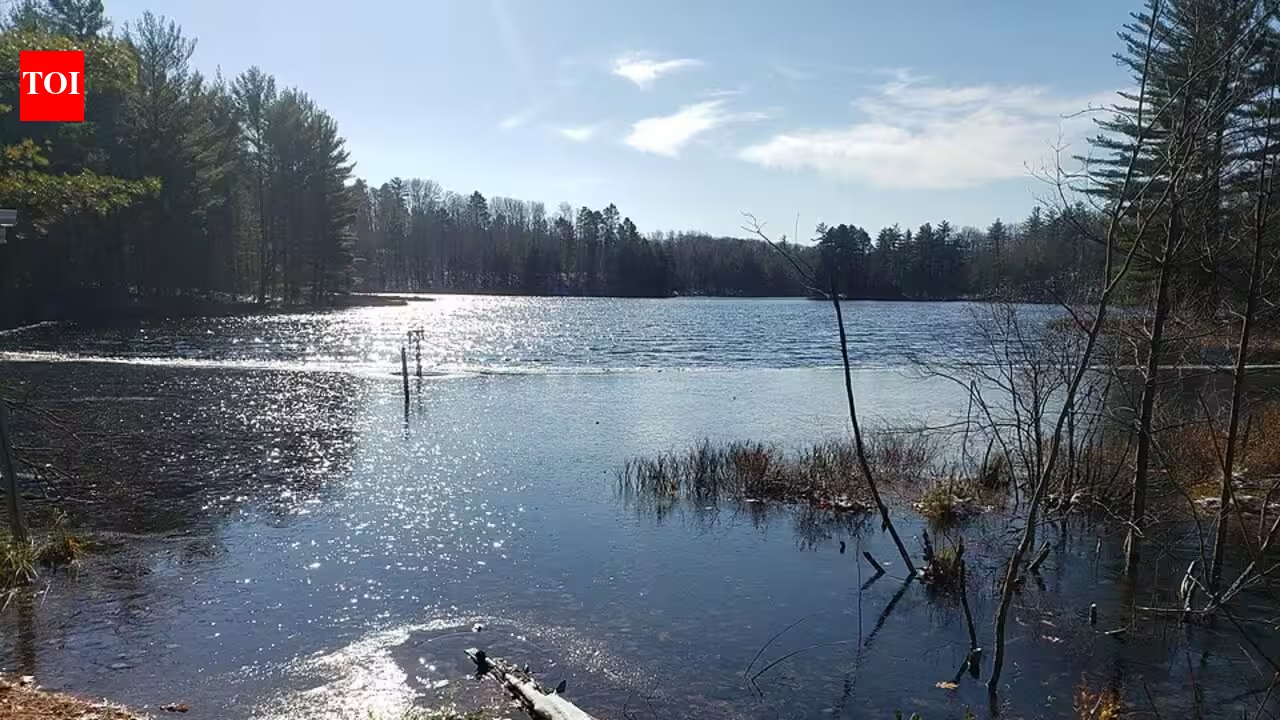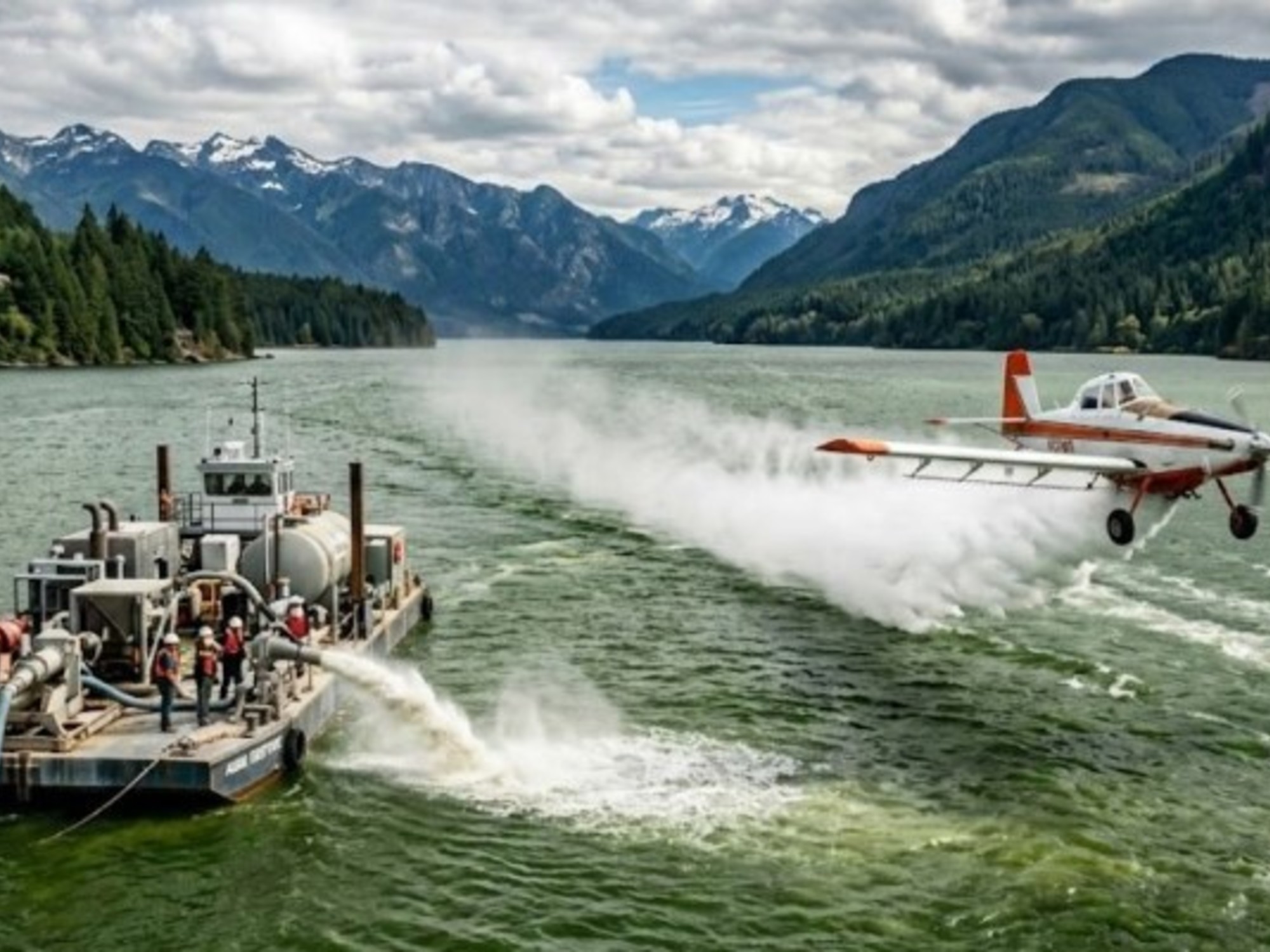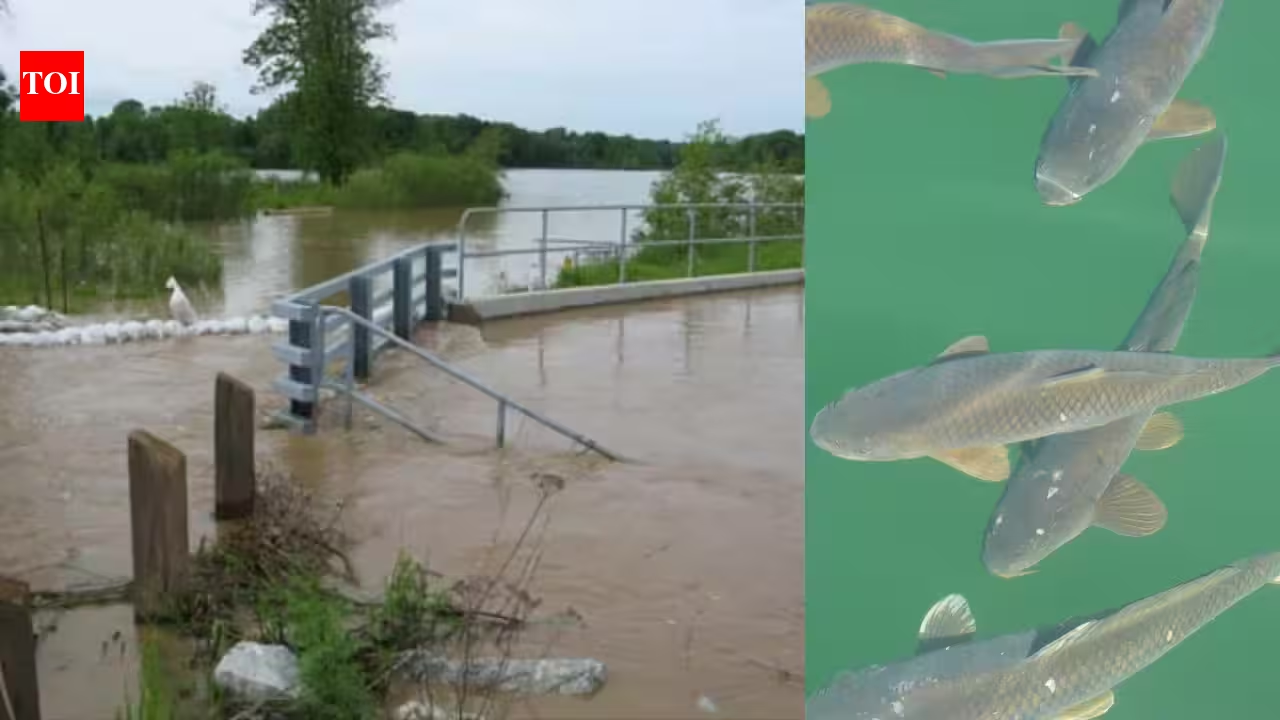
Silver Creek overflowing the berm and entering Silver Lake in June 2008 | Wisconsin Department of Natural ResourcesIn 2003, managers who were restoring Silver Lake in Manitowoc County, Wisconsin used rotenone to eradicate the lake's existing fish community, which was dominated by rough fish such as carp and bullheads. The operation was part of a larger attempt to rescue a 69-acre lake that had suffered decades of heavy phosphorus pollution, persistent algal blooms and occasional fish kills. The treatment was designed to seal deep-water sediments and sharply reduce the release of phosphorus back into the lake. The Wisconsin Department of Natural Resources' final restoration report recorded an 85% reduction in phosphorus levels and a 90% reduction in algal levels after the combined restoration work. The report also said the alum treatment nearly eliminated phosphorus release from deep-water sediments.Silver Creek overflowing the berm and entering Silver Lake in June 2008 | Wisconsin Department of Natural ResourcesThe problem had started decades earlierThe DNR traced a major part of the problem to the 1930s, when Silver Creek was routed directly into the lake after highway construction altered the area's drainage. Before that, wetlands had separated much of the creek's flow from the lake. The creek then carried sediment and nutrients from a much larger agricultural watershed into Silver Lake. By the late 20th century, the lake had frequent algal blooms and poor water quality. It was placed on Wisconsin's list of impaired waters in 1998 because of phosphorus pollution linked to agriculture, internal phosphorus loading and local land use.Watershed management practices were introduced between 1985 and 1995, while a partial diversion of Silver Creek was completed in 1995. Water quality still remained poor. In 2001, managers completely diverted the creek away from the lake. The DNR says this dramatically reduced the drainage area connected to Silver Lake. But cutting off much of the incoming pollution did not remove the phosphorus already stored in the lake system, particularly in its bottom sediments. That meant the restoration required a second stage aimed at internal nutrient loading.Why the lake's fish were deliberately eliminatedRough fish can contribute to poor lake conditions by disturbing sediments and affecting nutrient cycling. Managers used rotenone to eliminate the existing community and then began rebuilding the fishery. Northern pike, largemouth bass, walleye, yellow perch and forage fish were among the species stocked.The DNR report said managers wanted a fish community that would support larger zooplankton. These tiny animals graze on algae, so changes in the fish community could influence the amount of algae in the water, but the biological response was not immediate. Large zooplankton took several years to become more common, and the report noted that the fish community after five years was dominated mainly by yellow perch and bluegills, with smaller numbers of walleye, northern pike and largemouth bass. A Wisconsin DNR grant record from 2003 described four parts of the restoration: rough-fish eradication with rotenone, an alum treatment to reduce nutrient release from sediments, restocking and regulating the sport fishery, and restoring shoreline habitat.Then came the alum treatmentAlum, or aluminum sulfate, was applied to deal with phosphorus already stored in the lake's sediments. Phosphorus can be released from bottom sediments under certain conditions and return to the water column, where it can support excessive algal growth. The treatment was intended to form a barrier that reduced that internal recycling.In the DNR's 2009 assessment of the project, phosphorus levels had fallen by 85% and algal levels by 90%. The report said phosphorus release from the deep-water sediments was nearly eliminated, yet the restoration did not produce identical improvements across every part of the ecosystem. Submerged aquatic vegetation did not recover as strongly as expected, with lower species numbers, diversity and coverage than managers had hoped to see.Heavy and persistent rain in June 2008 caused flooding from Silver Creek, which raised Silver Lake's water level by more than three feet and carried sediment and nutrients into the water. Phosphorus concentrations rose from 26 to 57 micrograms per liter, while algae increased and water clarity worsened. The DNR said some of the incoming sediment may have partially buried the alum layer, increasing phosphorus release from deep-water sediments compared with the period immediately after treatment.Picture of the barge applying alum to reduce phosphorus release from the deep water sediments | Wisconsin Department of Natural ResourcesA restoration project with limitsSilver Lake's recovery involved rerouting a creek, removing an entire fish community, rebuilding the fishery and treating the lake bottom to control decades of accumulated phosphorus. The DNR later highlighted the project as a restoration of a lake once described as carp-infested and algae-clogged. Fish were restocked from 2004 through 2009, while shoreline and park improvements continued alongside the ecological work.The strongest numbers from the project remain the 85% reduction in phosphorus and 90% reduction in algae reported after the restoration measures. But the 2008 flooding also showed why lake restoration requires continued monitoring. Even after a major intervention, new sediment and nutrient inputs can alter the results.
In 2003, Wisconsin poisoned every fish in a degraded lake, then sealed its bottom with alum: Phosphorus fell 85% and algae dropped 90%
In 2003, managers who were restoring Silver Lake in Manitowoc County, Wisconsin used rotenone to eradicate the lake's existing fish community, which was dominated by rough fish such as carp and bullheads. The operation was part of a larger attempt to rescue a 69-acre lake that had suffered decades of heavy phosphorus pollution, persistent algal blooms and occasional fish kills.
833 words~4 min read