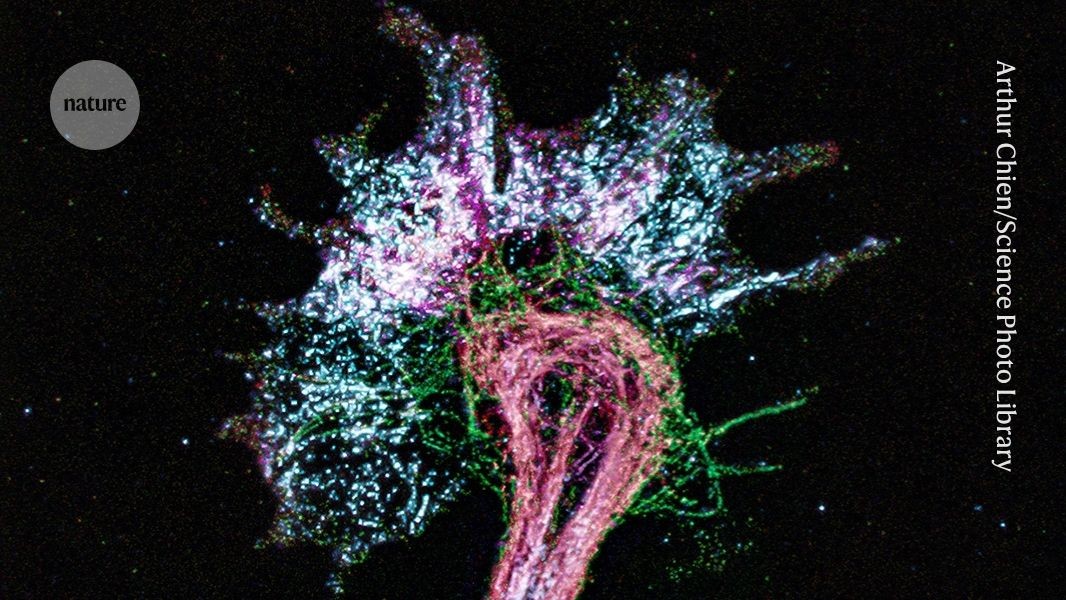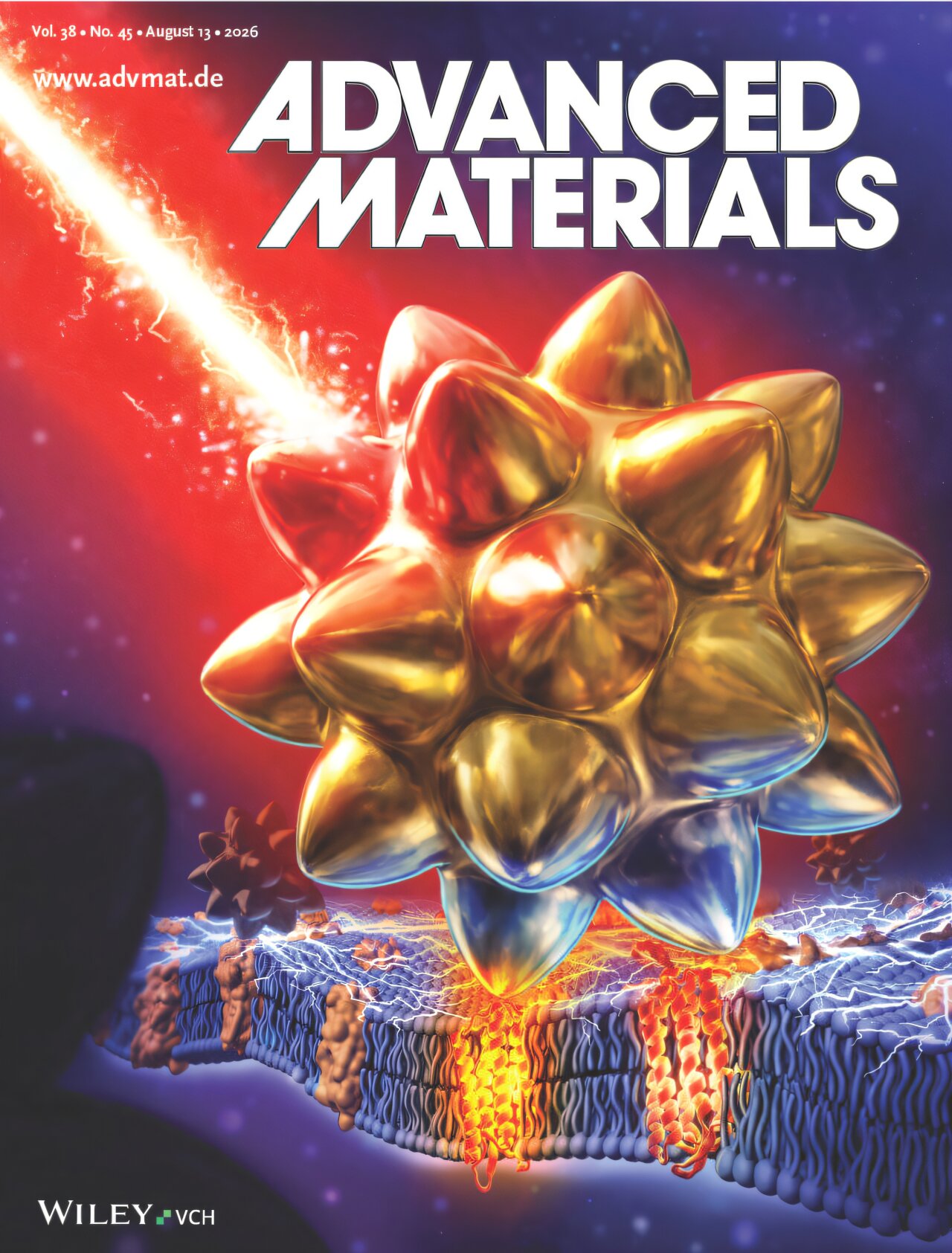
Cover illustration showing a gold nanostar illuminated by laser light. The nanostar amplifies the light emitted by proteins in a cell membrane, making them easier to detect, and influencing the dynamics of the proteins so they respond faster to electrical signals. Credit: 2026 Wiley-VCH GmbH
Researchers at Delft University of Technology have demonstrated for the first time that nano-antennas can enhance the fluorescence of proteins in living human and other mammalian cells. Scientists already use smart fluorescent proteins that light up when the electrical voltage across a nerve cell changes. By placing nano-antennas close to these light-emitting proteins, researchers can monitor processes inside cells with much greater precision. The discovery adds a new tool for revealing electrical signals in the brain through nanotechnology as well as genetic engineering. The research has been published in Advanced Materials.
Monitoring signals in the brain requires both high resolution and rapid imaging. "Existing methods for visualizing voltage changes in cells often do not produce enough light, or they do not respond quickly or strongly enough to the small electrical pulses that occur at synapses," says principal investigator Daan Brinks.