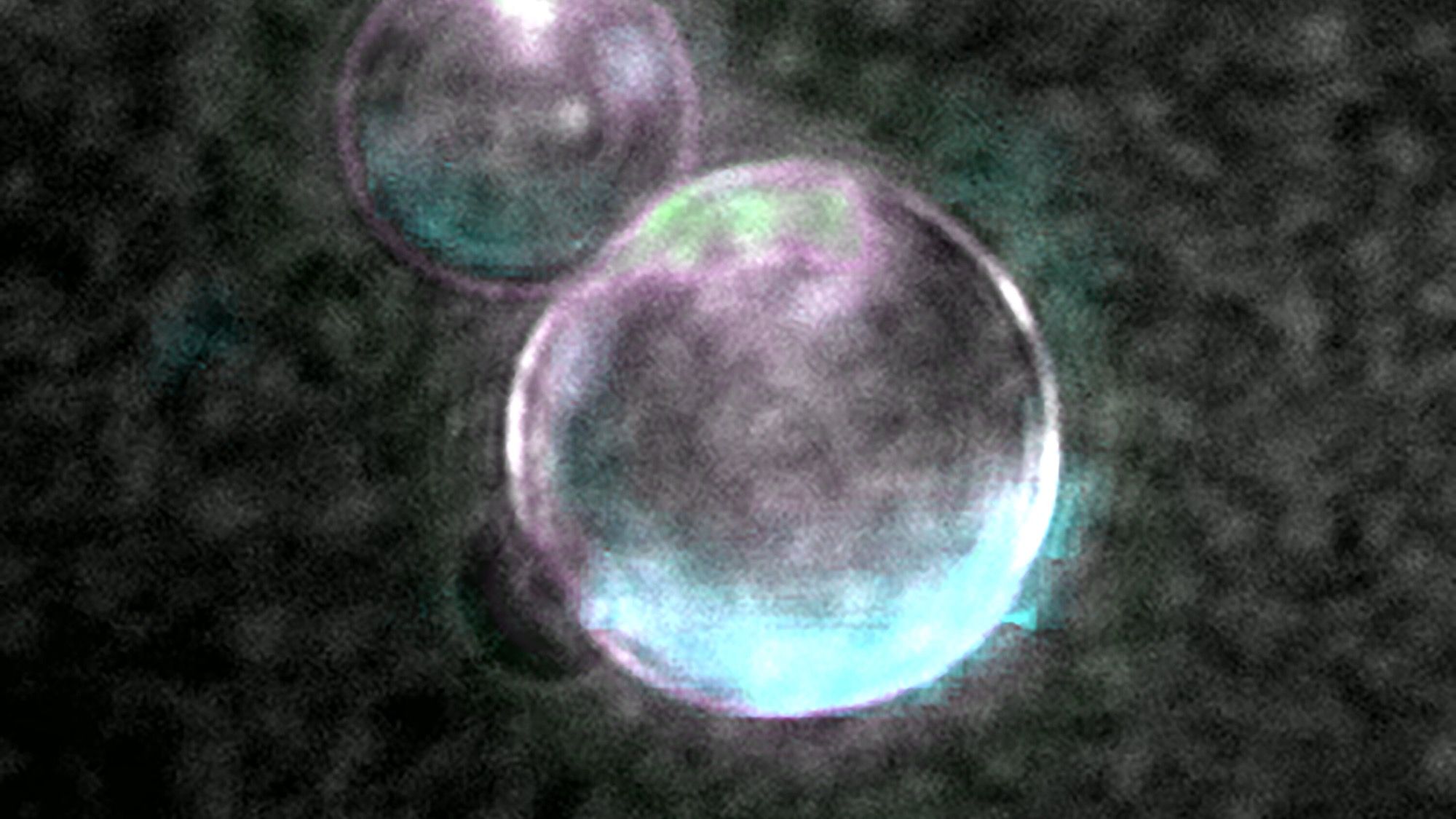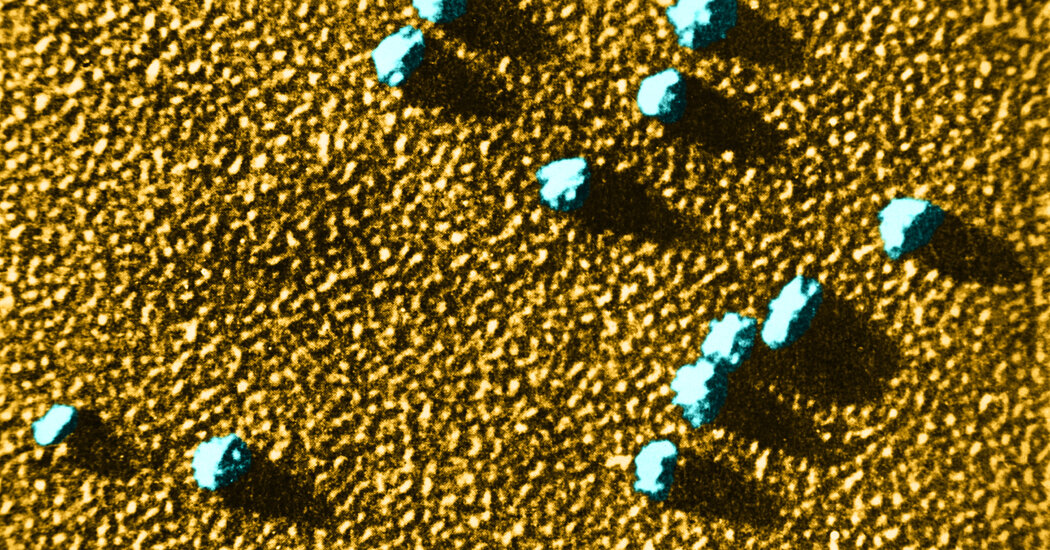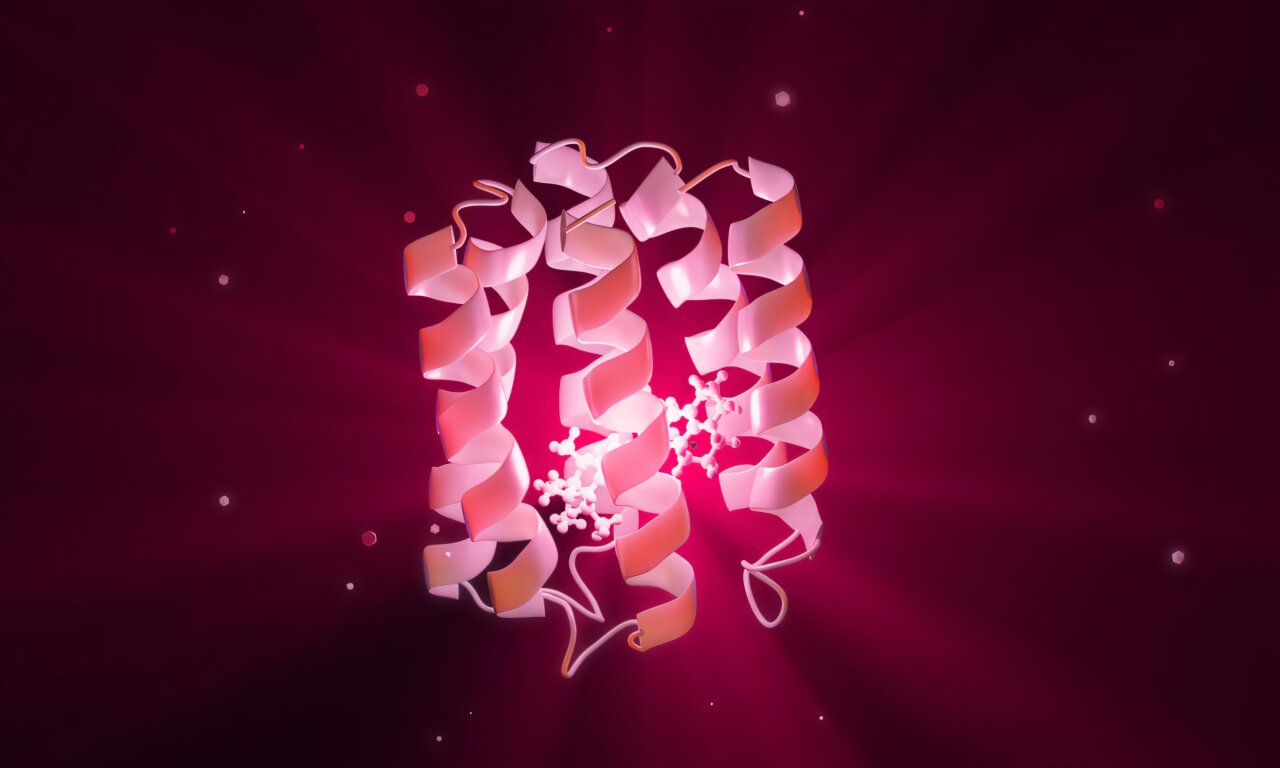
3D rendering of a NovoTag, showing the de novo designed protein around a Janelia Fluor dye. Credit: Steffen Klein/EMBL
Cells are like metropolises, home to millions of molecular residents. If one were to stand atop a high-rise, trying to identify most of its inhabitants would seem an impossible task. Even with the sophisticated imaging tools currently available to scientists, it is challenging to zoom in on specific molecules and view them with a high degree of detail.
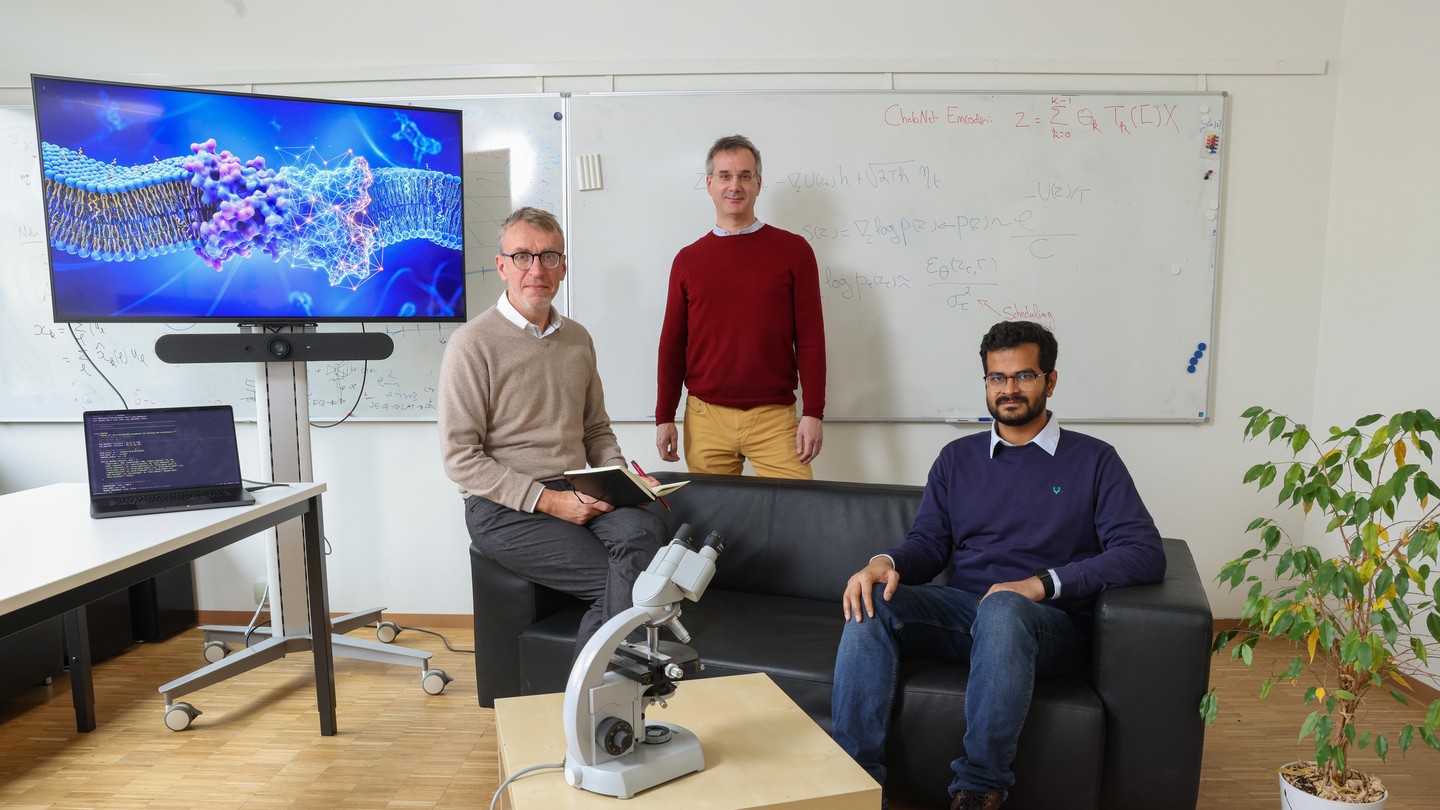
To address this limitation, researchers in the Baker Lab at the Institute for Protein Design, the Lavis Lab at Janelia Research Campus, and the Mahamid Group at EMBL Heidelberg have developed a new class of synthetic fluorescent protein tags called NovoTags. The collaboration culminated in a paper, now published in Science, describing how versatile NovoTags can help locate specific proteins and probe their interactions inside human cells using an array of advanced light microscopy techniques, including super-resolution fluorescence light microscopy.
The project combined two complementary strengths: the AI-driven de novo protein design pioneered by David Baker, who was awarded the Nobel Prize in Chemistry in 2024 for this innovation, and the advanced microscopy technologies at EMBL, especially through the support of EMBL's Advanced Light Microscopy Facility (ALMF).