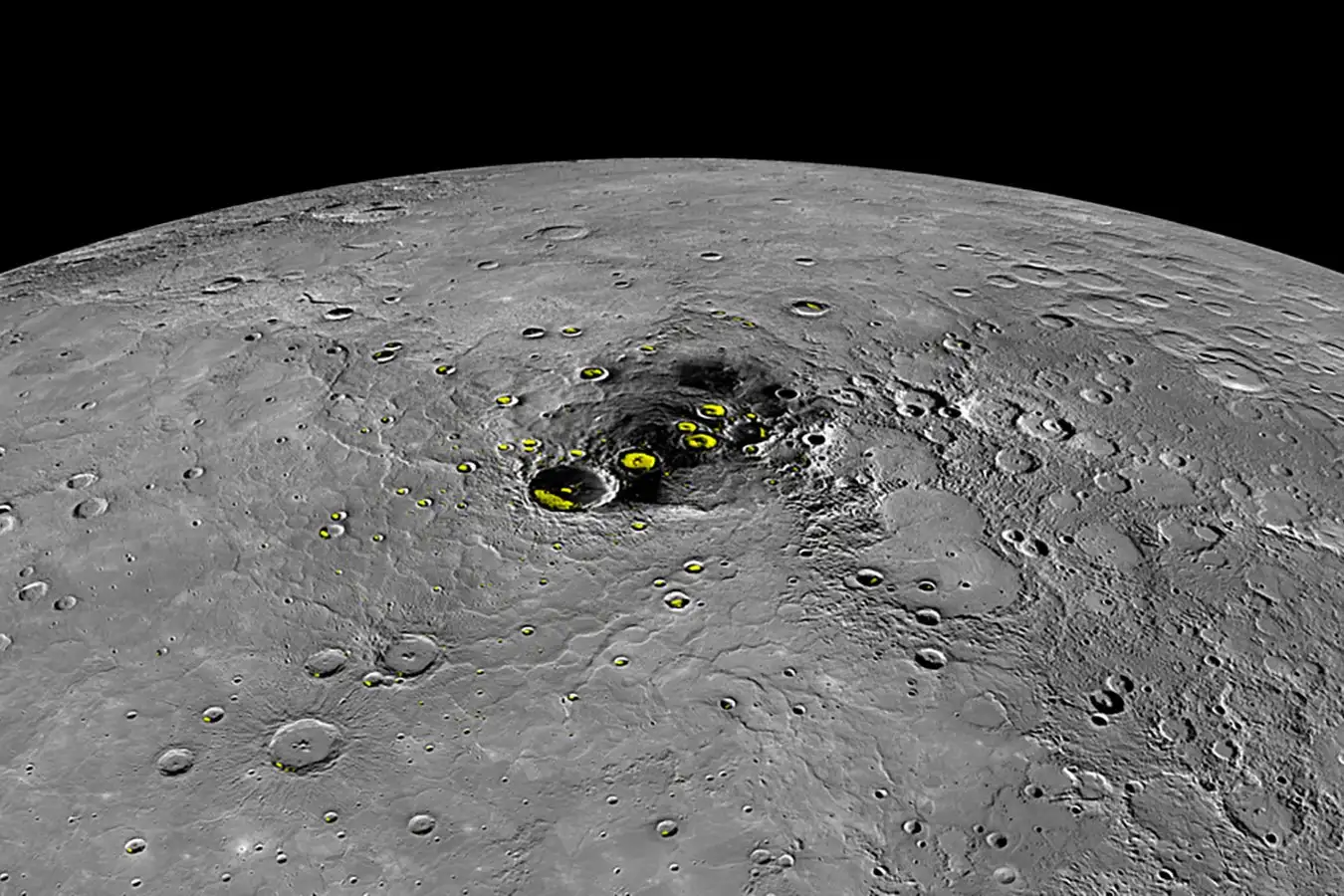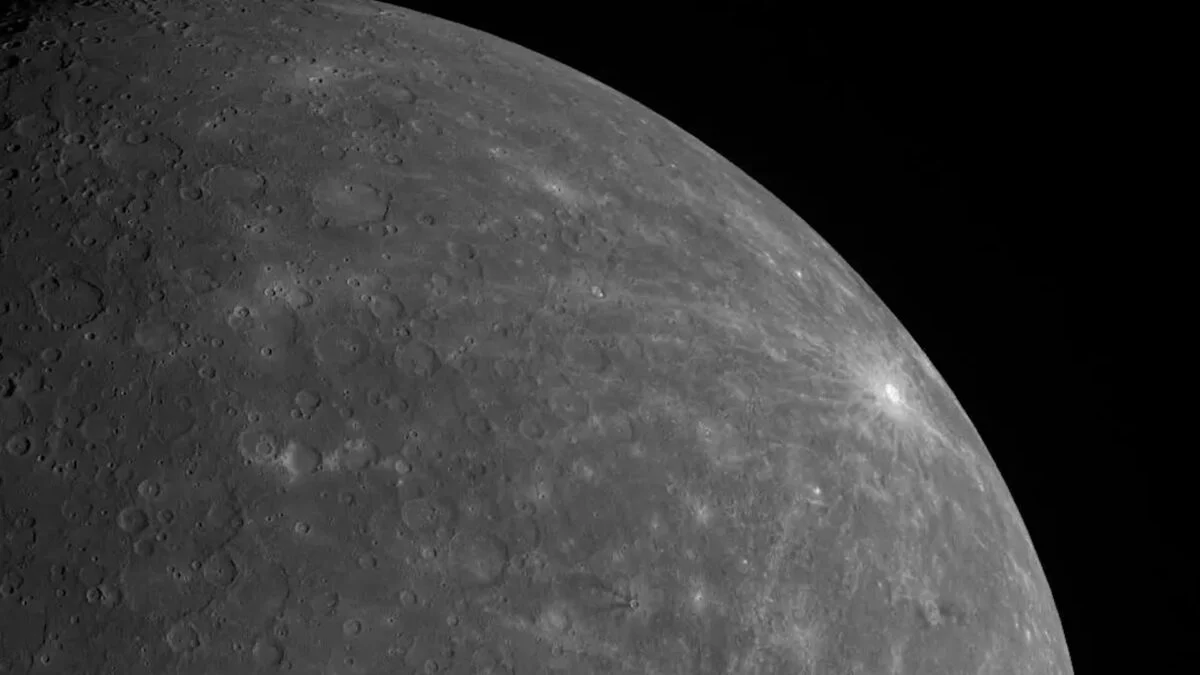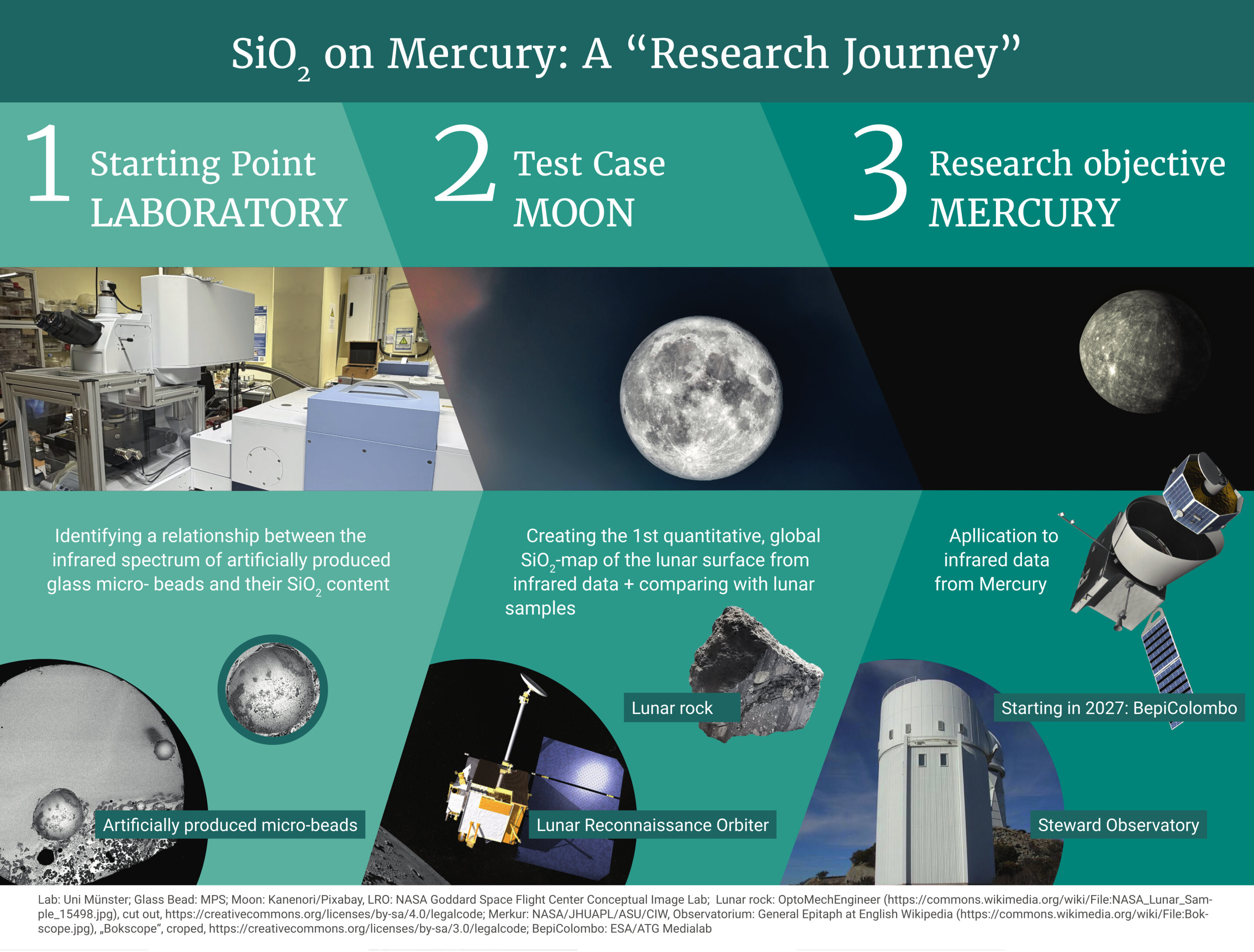
Three steps to Mercury. Step 1: Using laboratory measurements, the researchers established a relationship between infrared radiation and SiO2 content. Step 2: They verified this relationship using measurement data from the Moon and lunar samples. Step 3: Using infrared data from Mercury, the researchers were then able to determine the SiO2 content of Mercury's surface. Credit: MPS / hormesdesign.de
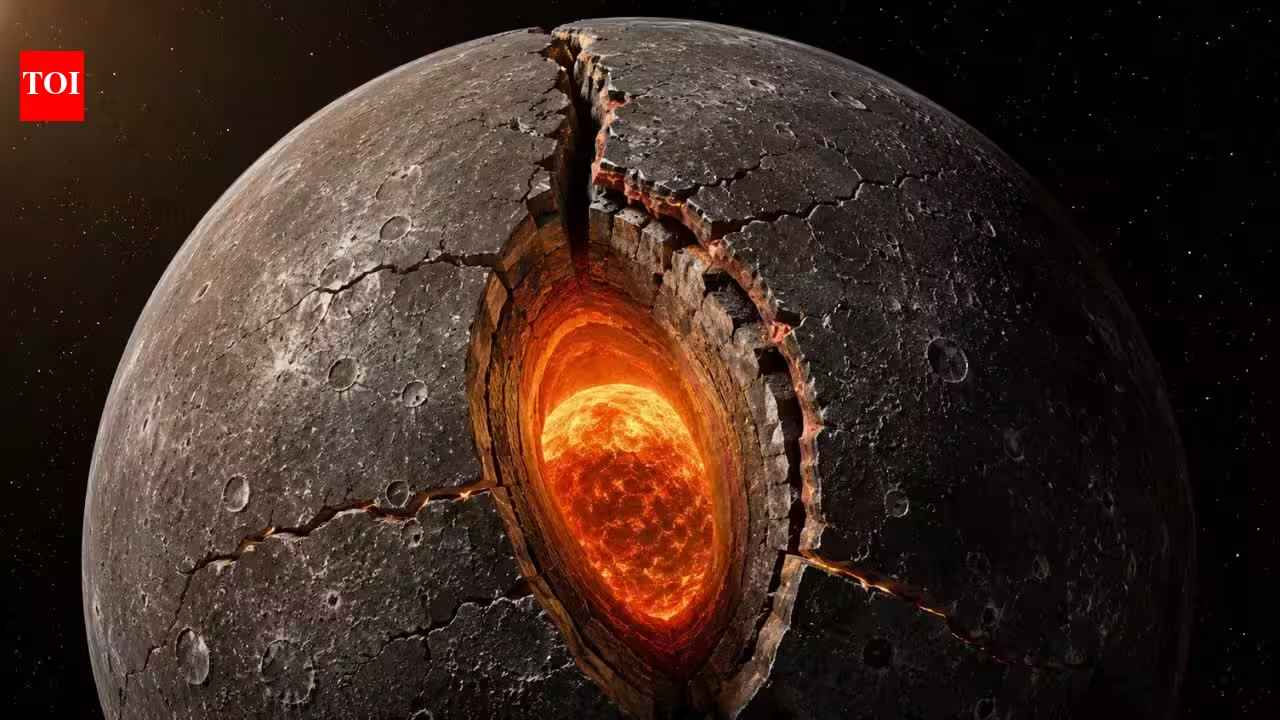
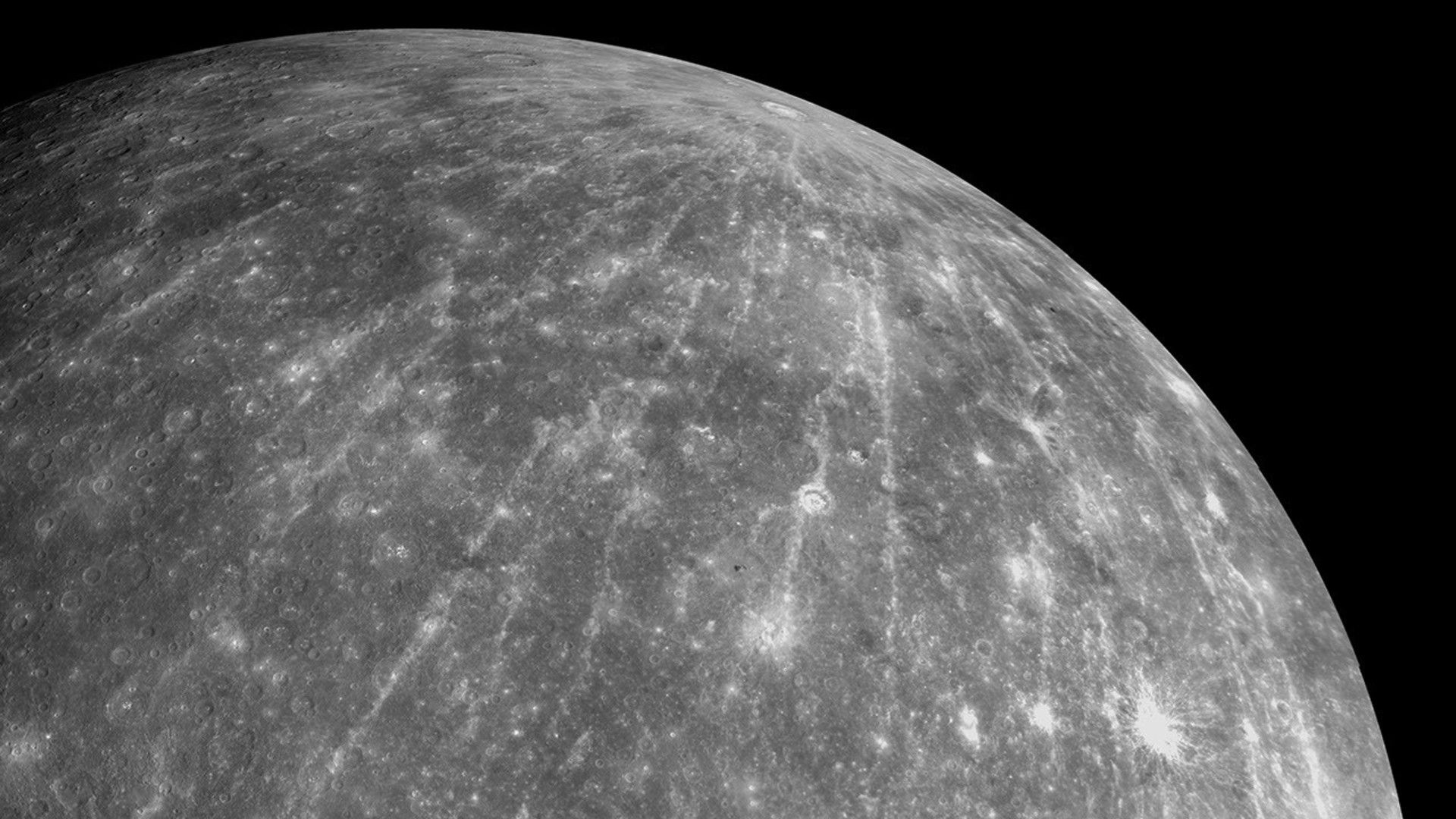
The evolutionary histories of Earth and Mercury differ fundamentally. The smallest planet, closest to the sun, likely began cooling early on, much like a setting pudding: As early as about 1 billion years after its formation, Mercury's volcanic activity came to a halt, and a solid, continuous "rock skin" formed on the planet's surface. Earth's crust, on the other hand, is still in motion: Volcanism and plate tectonics are constantly stirring up the "Earth pudding." Exactly what Mercury's unique volcanic past looked like and how it shaped its current appearance remain unclear. However, researchers can gain important clues from the composition of its surface.
In a new study, researchers from the Max Planck Institute for Solar System Research in Germany and the Universities of Münster and Göttingen, also in Germany, have determined the proportion of silicon dioxide on Mercury's surface with greater accuracy than ever before. Their findings are published in the journal Planetary Research.