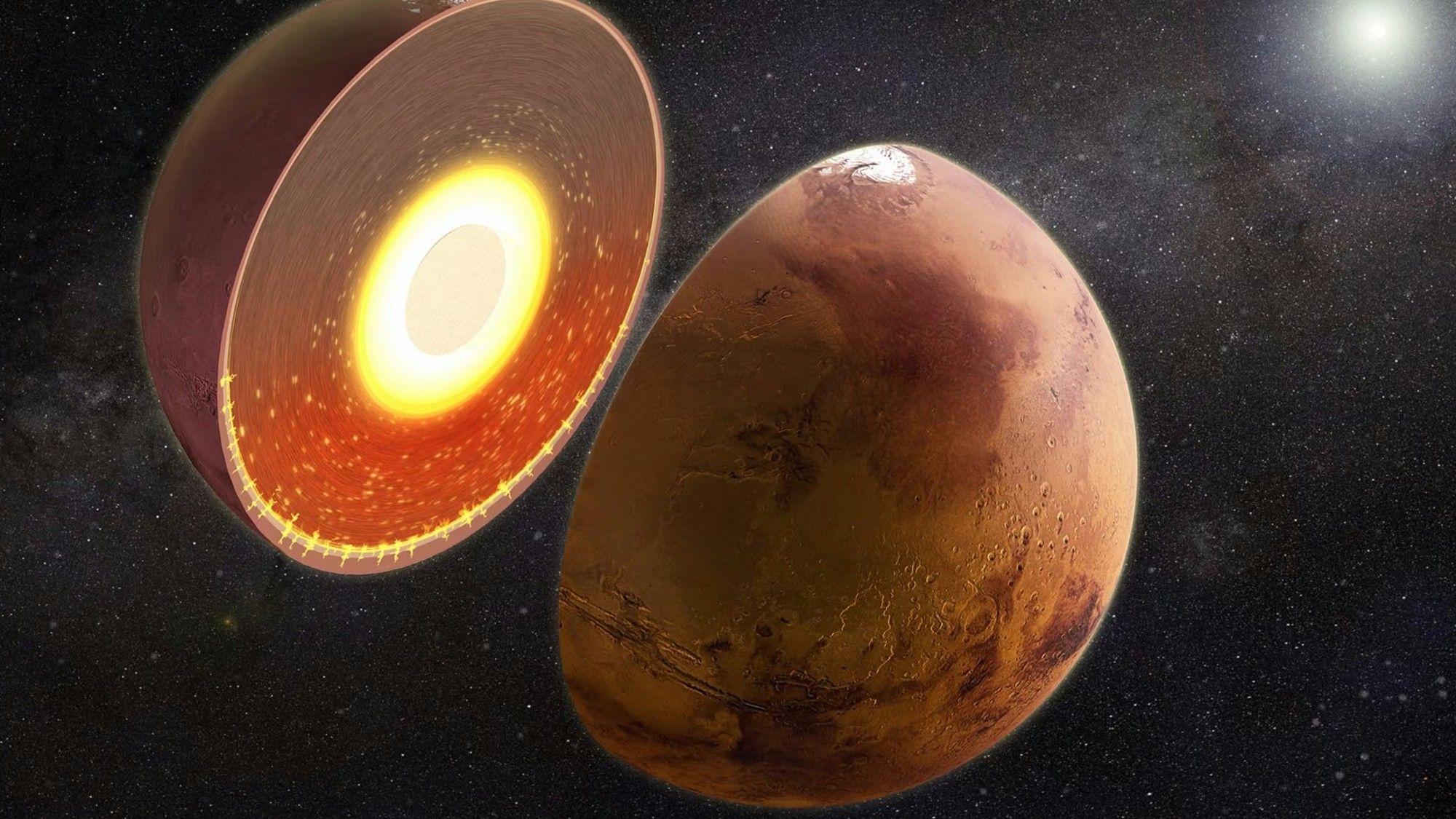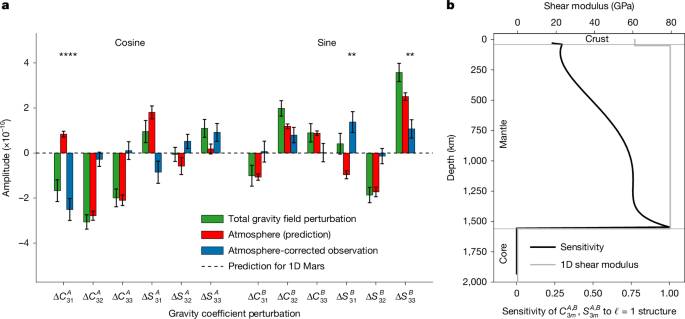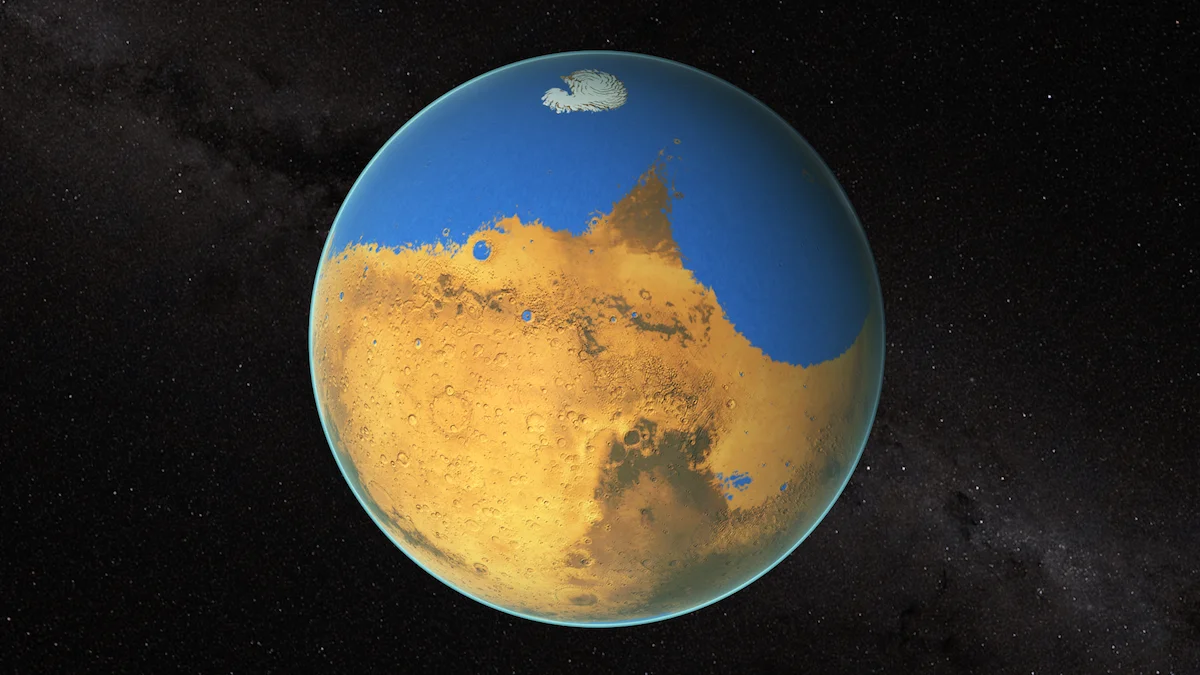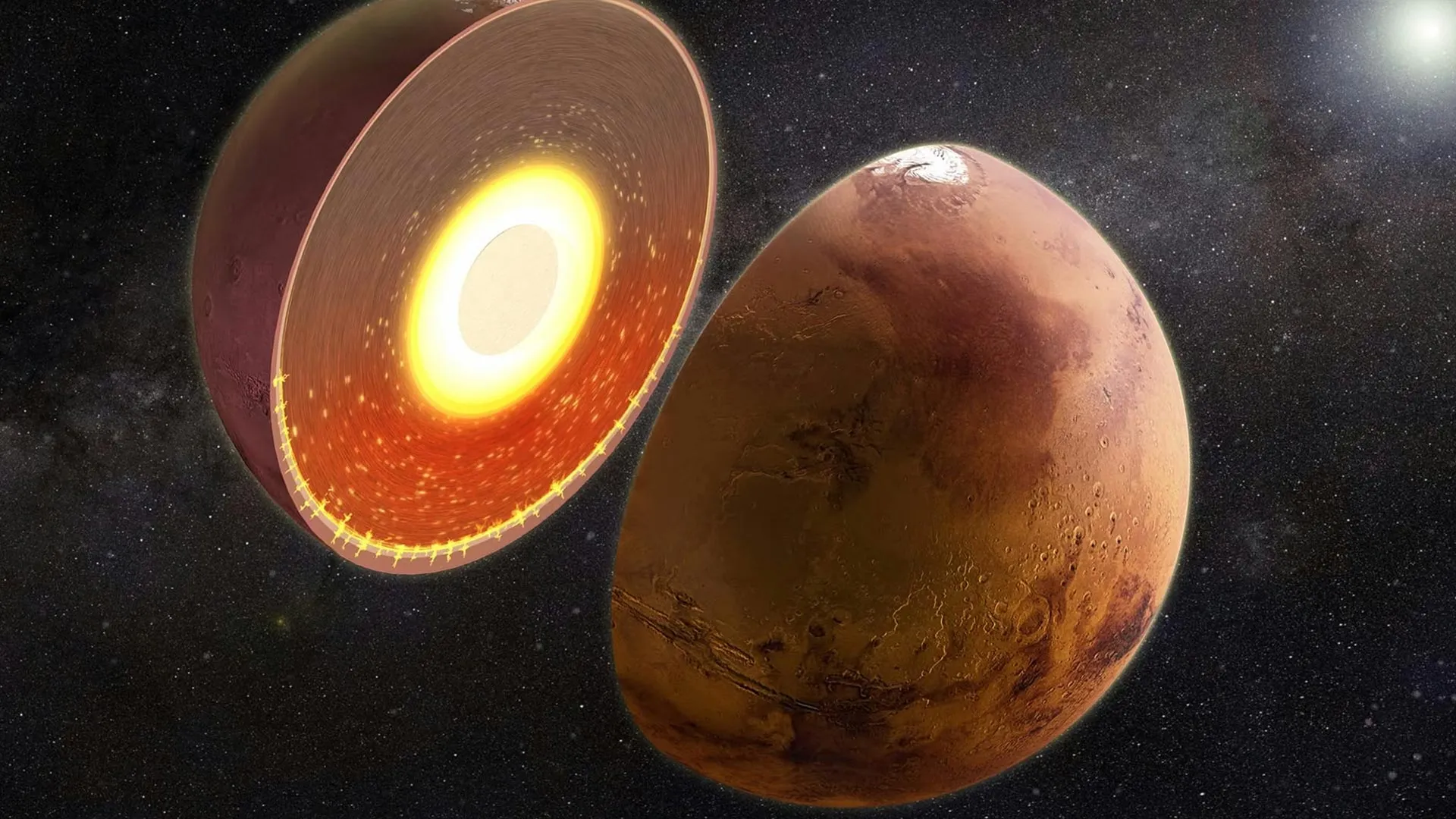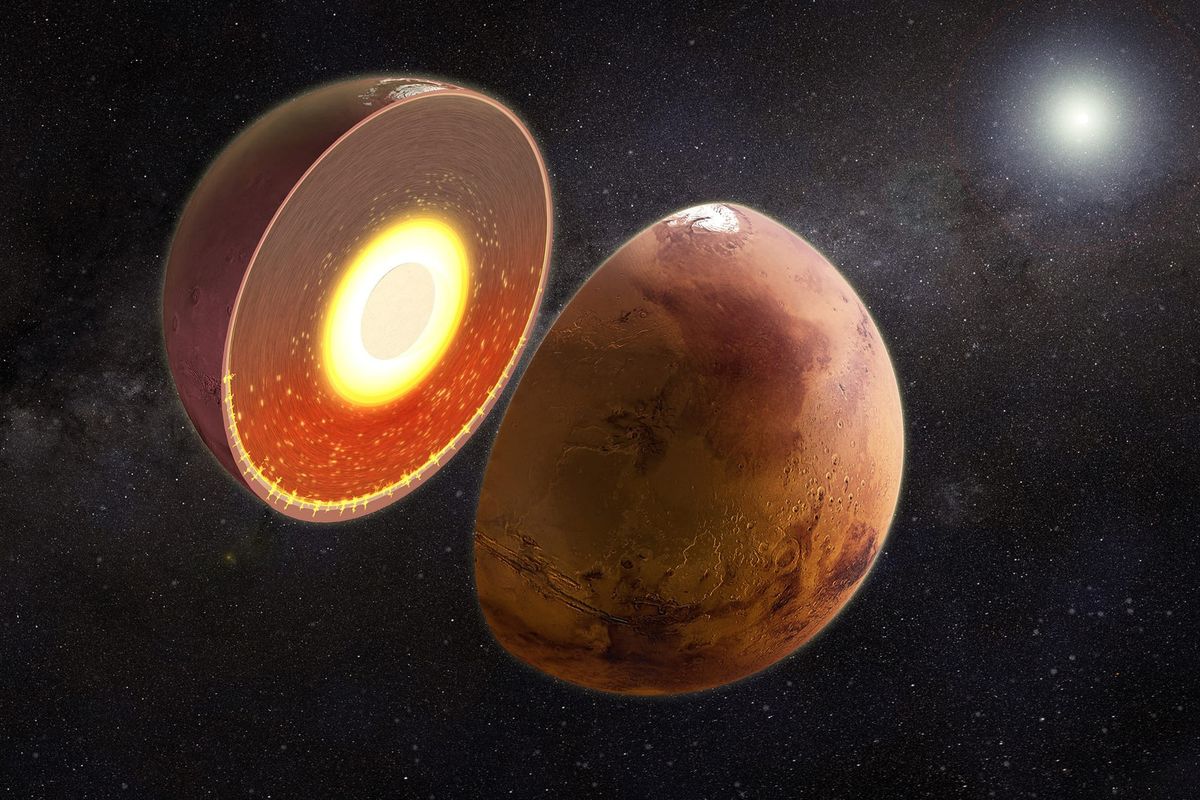
Scientists have discovered a thermal “anomaly” deep underground on Mars that could help explain the red planet’s divided geography and shed light on whether it once hosted alien life, according to a study published Wednesday in Nature.Using a novel approach involving three Martian orbiters, the team peered into the interior of the planet and detected that its mantle—the layer between its crust and the core—is 400 to 750°F hotter in the southern hemisphere compared with its northern half.The temperature anomaly could help explain the longstanding mystery of the so-called “Martian dichotomy,” the term for the bizarre difference between the Martian north and south hemispheres. Whereas Mars’ northern half is dominated by lowlands that may have once hosted a giant ocean, the southern half is covered in highlands that are miles higher in average elevation. For decades, scientists have puzzled over whether this dichotomy originates from an ancient impact, or if it might have emerged from early internal processes in the mantle, such as convection or plate tectonics. By tracking tiny changes on Mars during its orbit around the Sun, scientists detected much higher temperatures in the planet’s southern mantle; the crustal dichotomy is at least partly a reflection of a similarly divided interior.The origin of the dichotomy “is still an ongoing question in Mars science, and a pretty fundamental one,” said Nick Wagner, a planetary scientist at Brown University who co-authored the study, in a call with 404 Media. “This study doesn't provide an answer to it, but adds another line of evidence to figure out what is actually going on underneath Mars.”To get a look under Mars’ hood, Wagner and his colleagues used a novel approach called tidal tomography. The team analyzed 16 years of tracking data from three NASA orbiters—Mars Global Surveyor, Mars Odyssey, and Mars Reconnaissance Orbiter—to measure the slight gravitational wobbles of Mars during its orbit around the Sun.
Scientists Discover Vast Underground 'Anomaly' on Mars
Scientists have used a novel technique to detect a major temperature asymmetry under the surface of Mars that could shed light on the evolution and past habitability of the red planet.
786 words~4 min read