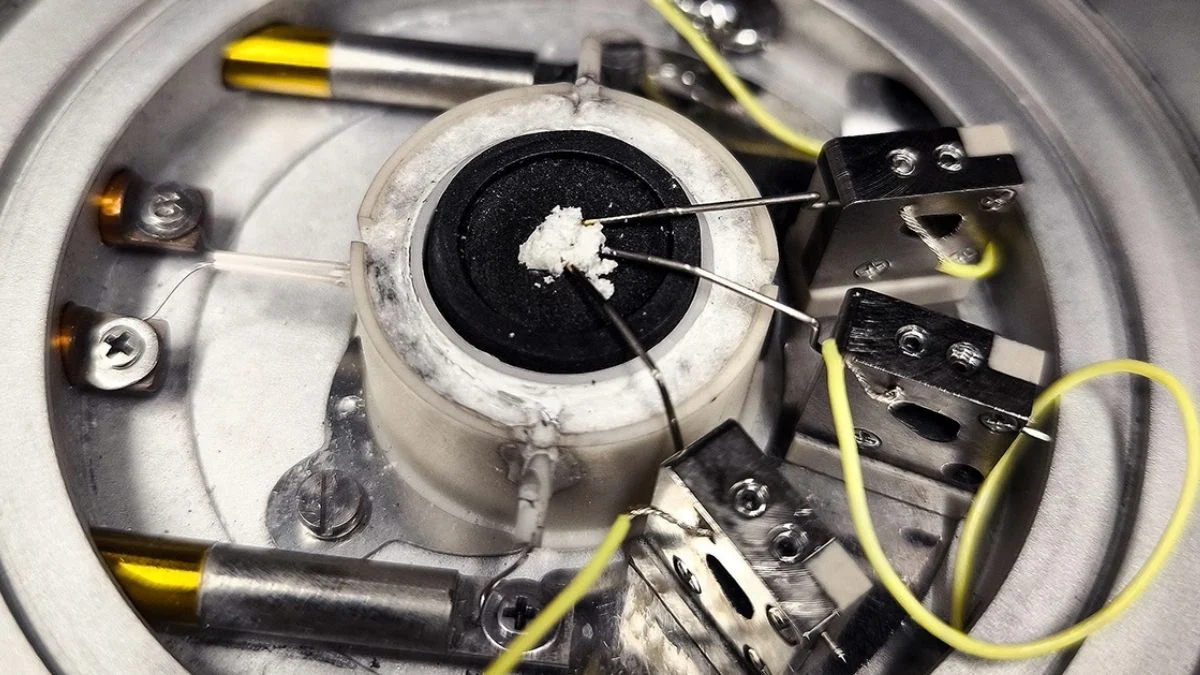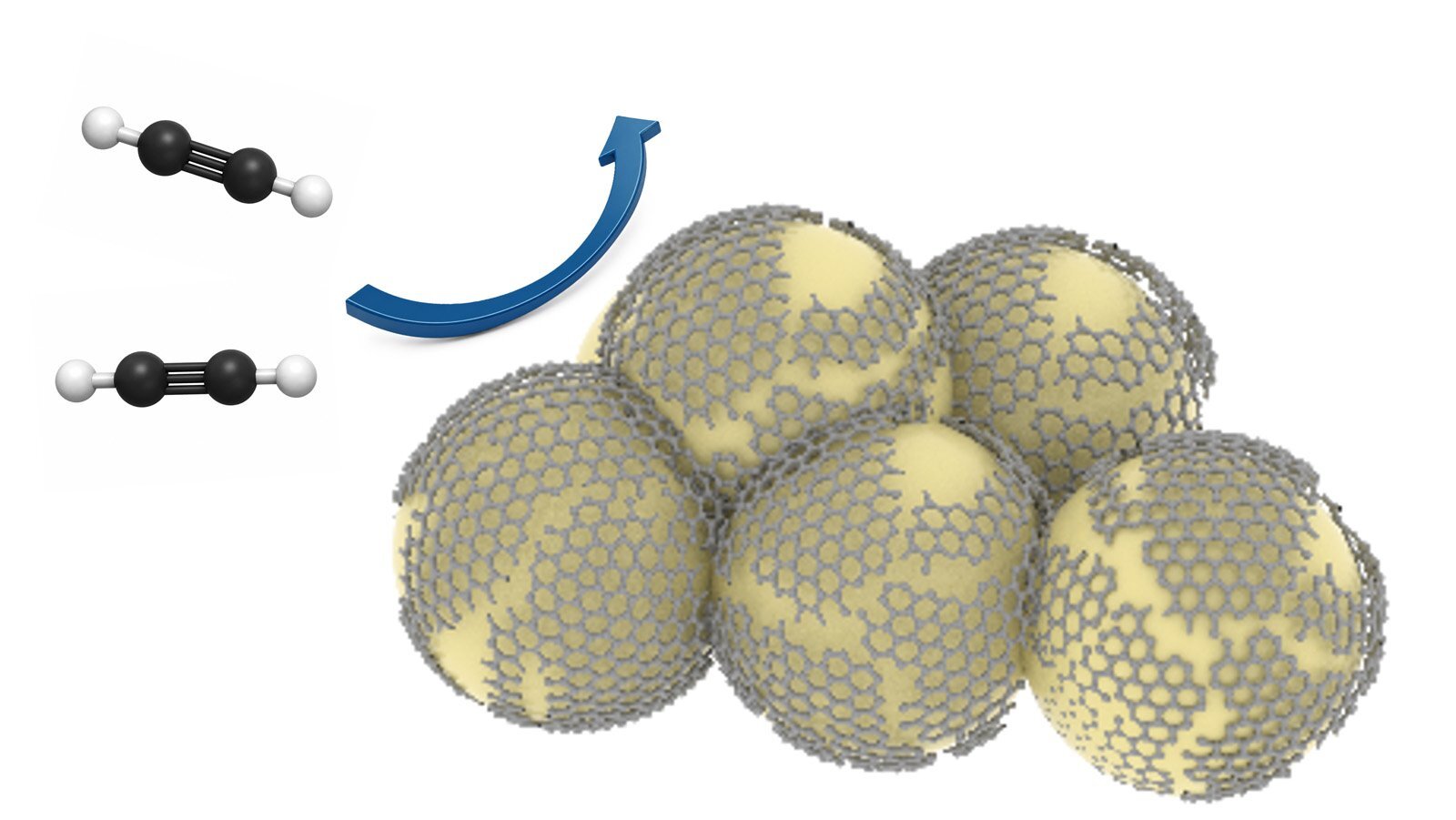
Acetylene molecules are converted into graphene on cerium oxide nanoparticles through low temperature chemical vapor deposition. Credit: Mengxuan Zhang et al.
Graphene is an exceptionally useful material for creating batteries, catalysts and electronic devices. Yet producing graphene typically requires temperatures as high as 900°C (1,652°F), limiting energy efficiency and making structural control difficult. To make graphene production more practical, a recent study has overcome this long-standing temperature barrier.
In a study published in the Journal of the American Chemical Society, a joint research team from Tohoku University and Queen Mary University of London successfully synthesized graphene-based materials at temperatures as low as 300°C (572°F). They achieved this by using acetylene gas over a cerium oxide (CeO₂) surface.
How cerium oxide changes the reaction
The key lies in the interaction between acetylene and cerium oxide. Since cerium oxide readily forms oxygen vacancies on its surface, acetylene begins to decompose at temperatures as low as 113°C (235°F). As the temperature reaches 300°C (572°F), the acetylene extracts oxygen from the catalyst, generating additional oxygen vacancies that serve as active catalytic sites for graphene growth.