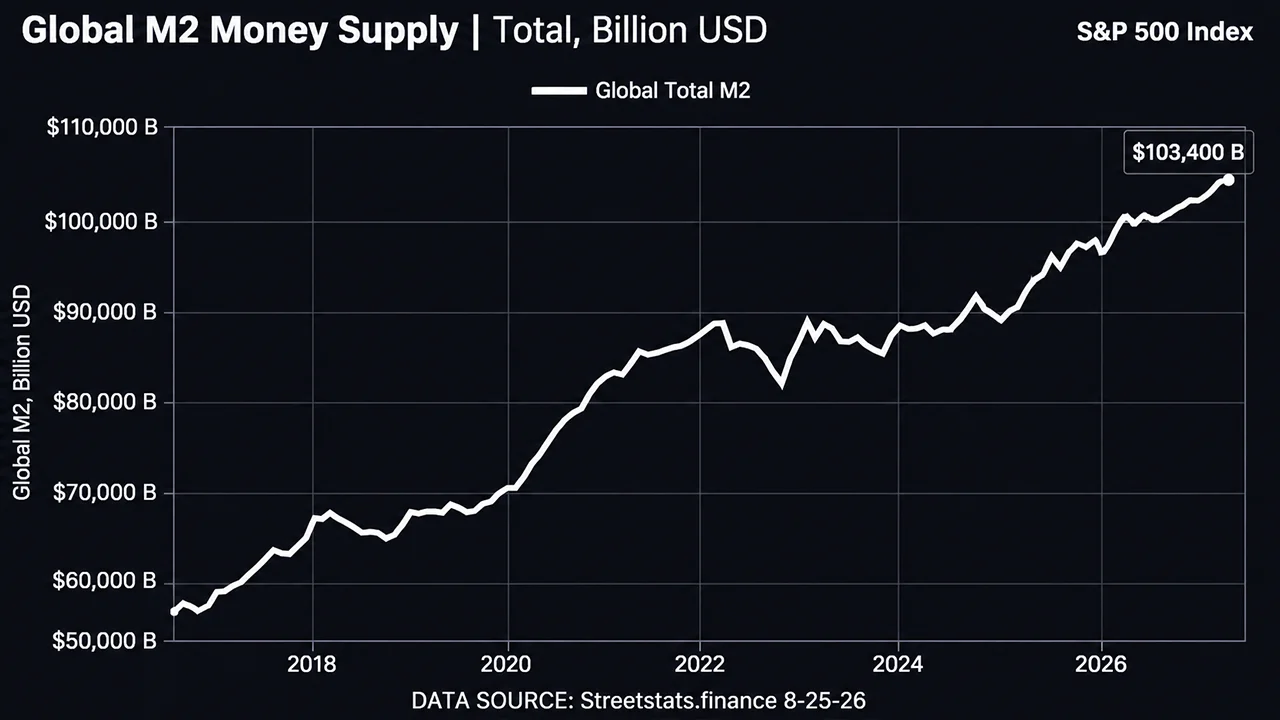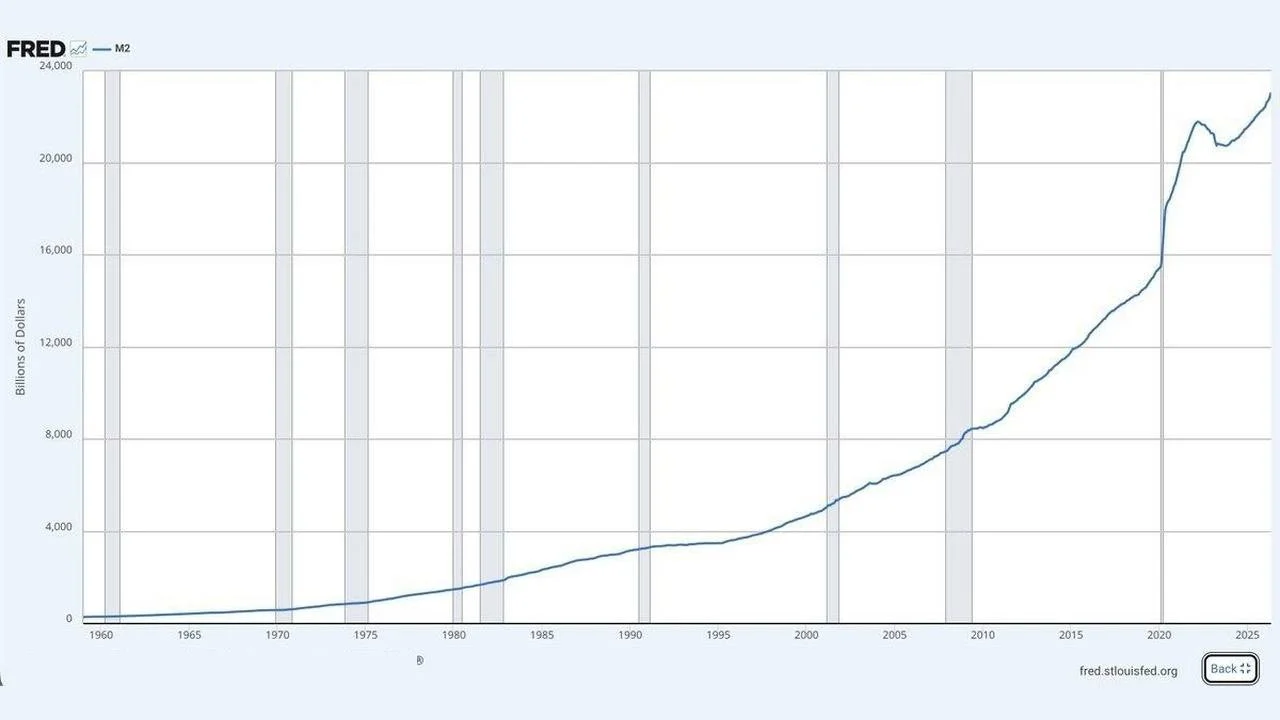
The Federal Reserve’s latest H.6 report confirms what liquidity watchers have been tracking for months: there’s more money in the system than ever before. US M2 money supply climbed $102.8 billion in July to reach $23.218 trillion, a fresh record that eclipses the previous month’s $23.115 trillion.
Year-over-year, the money supply is now expanding at roughly 5.4%. That’s the fastest pace since mid-2022, back when the post-pandemic liquidity hangover was still in full swing.
What M2 actually measures, and why it matters
M2 is the Fed’s broadest commonly cited measure of money supply. It bundles together currency in circulation, demand deposits (your checking account), savings deposits, small denomination time deposits, and retail money market funds.
Between 2022 and 2023, M2 experienced its first annual decline since the Great Depression. The Fed was aggressively hiking rates, quantitative tightening was draining reserves, and the pandemic-era stimulus was being reabsorbed. For a metric that had basically gone up in a straight line since 1959, the contraction was historic.